Camp Carroll: The Firepower Hub of Vietnam's DMZ
Set on a quiet hill, Camp Carroll today feels calm and peaceful. It is hard to believe that more than fifty years ago, this place played an important role during the war as a large U.S. artillery base. The name Camp Carroll may no longer be familiar to many visitors, but it was once closely connected to the wartime history of Quang Tri. So, where is Camp Carroll, and why did this place become such an important site in the past?
Camp Carroll - A Key Wartime Site in Quang Tri
Camp Carroll, also known as Carroll Camp or Tan Lam Base, is located in Cam Lo District, Quang Tri Province. Sitting at an elevation of 241 meters above sea level, the site is often referred to as Hill 241. During the war, it was known as Base 241 and played an important strategic role. Because of its location and significance, the area was frequently targeted during intense military attacks.
The Historical Role of Camp Carroll
In the past, Camp Carroll held an important position along Route 9, a key strategic road connecting Dong Ha to Khe Sanh. The site played a dual role in defense and fire support during the war. It was part of the U.S. DMZ defense system - a network of military bases and artillery positions established near the Demilitarized Zone (DMZ) around the 17th parallel. This system aimed to control the battlefield, protect major transportation routes, and limit movement across the region.
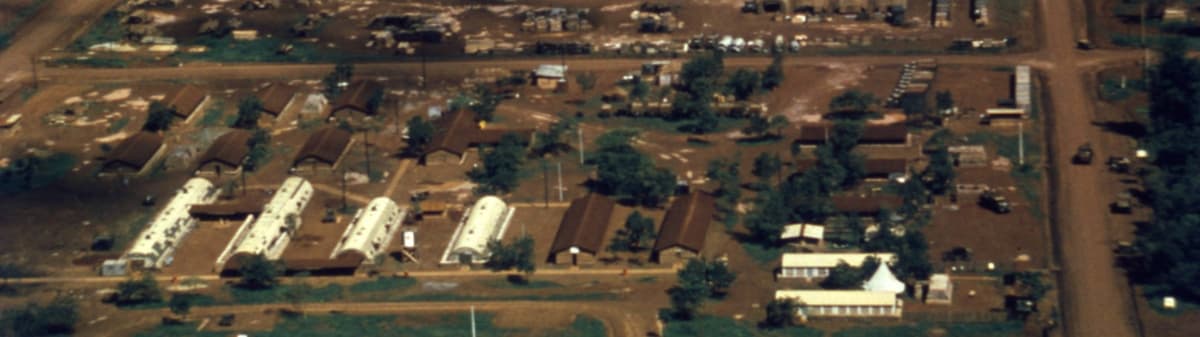
Thanks to its elevated location at Hill 241, Camp Carroll was built as a well-fortified base. It featured large artillery platforms, ammunition storage built deep into the hillside, and multiple layers of defensive earthworks. From here, long-range artillery support could be provided to other nearby bases. Camp Carroll had strong firepower and an important strategic position. Because of this, it was known as an “artillery stronghold.” The base played a key role in the heavy fighting in Quang Tri in 1972.
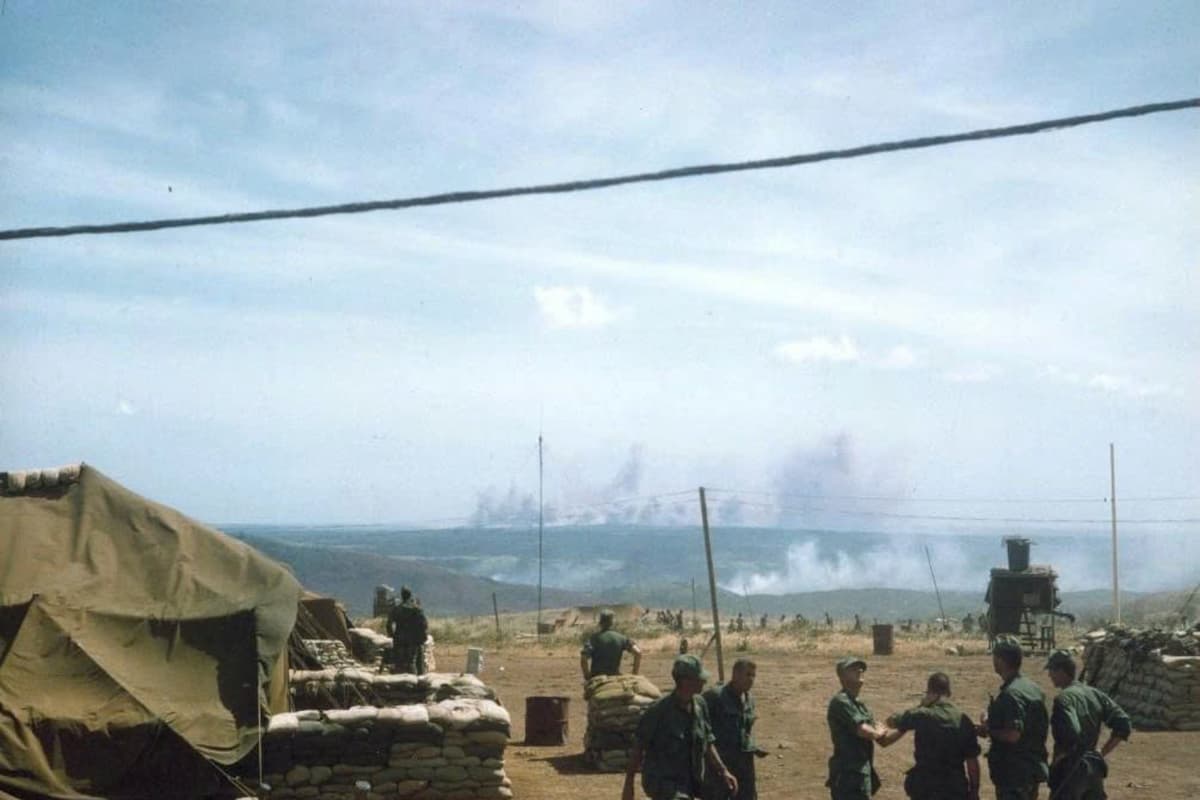
Images of Base 241 (Camp Carroll) During the War.
The Fall of Camp Carroll - A Moment of Change in 1972
In the summer of 1972, during a difficult period in Quang Tri, Camp Carroll reached a major turning point. As pressure increased and supply lines became harder to maintain, the situation at the site grew more challenging.
At that time, Camp Carroll was under the command of Lieutenant Colonel Pham Van Dinh, with forces from the 56th Regiment stationed at the base. Facing unfavorable conditions, the decision was made to surrender the position. This event ended Camp Carroll’s role as an important military site. It also brought major changes to Route 9 and the Cam Lo area. These changes influenced what happened in Quang Tri during that period.
Camp Carroll today
Today, Camp Carroll has a quiet and reflective atmosphere as a historical site set among the hills of Cam Lo. The Victory Monument at Hill 241 stands as a meaningful place to remember those who lived through the war and to mark an important moment in history.
When visiting Camp Carroll, many travelers offer incense at the monument. They also take time to enjoy the surrounding scenery. Some visitors take photos to remember their visit to this meaningful historical site in Quang Tri.
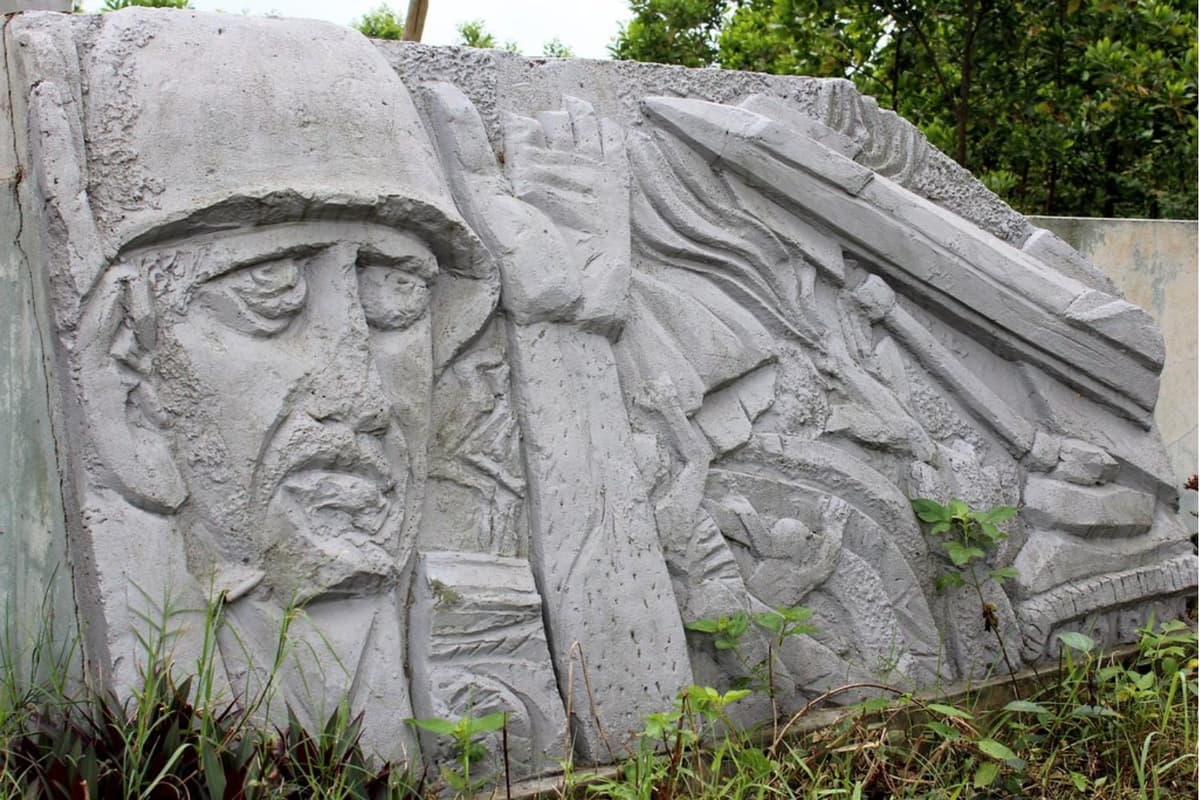
An image of an Army of the Republic of Vietnam (ARVN) soldier raising his hand in surrender, engraved on the Hill 241 Victory Monument.
Camp Carroll Travel Guide: What You Should Know Before Visiting
Camp Carroll is located along Route 9 (AH16), a major trans-Asian highway in Quang Tri Province. Thanks to this convenient location, it is often included in one-day DMZ tours or combined with visits to other historical sites in the former Demilitarized Zone (DMZ).
From Dong Ha City, visitors can travel about 28 kilometers toward Cam Lo District. The journey takes around 40 minutes by motorbike. When you see the sign for “Base 241 (Carroll),” turn left and continue uphill into the Tan Lam plantation area. The road is surrounded by rubber tree hills and offers a calm, scenic atmosphere. This route is also part of the popular road leading to Khe Sanh.
Entrance Fees & Visiting Experience
There is no entrance fee to visit Camp Carroll, and visitors can freely explore the Hill 241 Victory Monument. The site remains simple and undeveloped, allowing visitors to experience a quiet and reflective atmosphere rather than a busy tourist destination.
Visitors are encouraged to combine Camp Carroll with other nearby landmarks such as Truong Son National Cemetery, Route 9 National Cemetery, Quang Tri Ancient Citadel, or continue their journey deeper into the DMZ area. For added convenience, travelers may join a Quang Tri DMZ tour offered by local operators such as DMZ Vina Travel, Sovaba Travel, or Phong Nha Tourist.
Best Time to Visit
The ideal time to visit Camp Carroll is during the dry season, from March to August, when the weather is stable, and roads in the hilly area are easier to travel. It is best to avoid the rainy season from September to December, as roads may become slippery and visibility can be limited.
Important Travel Tips
As Camp Carroll is a historical memorial site rather than a fully developed tourist area, visitors are encouraged to come with a respectful mindset. Wear comfortable and modest clothing, choose suitable footwear, and bring essentials such as drinking water, a hat, and sunscreen. Please avoid restricted areas, take care of personal belongings, and help keep the environment clean and peaceful.
Attractions Near Camp Carroll
Camp Carroll is often chosen as an important stop on journeys exploring the former Demilitarized Zone (DMZ). Travelers can follow a popular route that begins at Vinh Moc Tunnels (about 57 km away), then continues to Hien Luong Bridge and the 17th Parallel Historical Site (around 44 km). From there, the journey often includes visits to Quang Tri Ancient Citadel (38 km) and Doc Mieu Base (36 km), before stopping at Camp Carroll on the road toward Ta Con Airport and Khe Sanh (approximately 44 km).
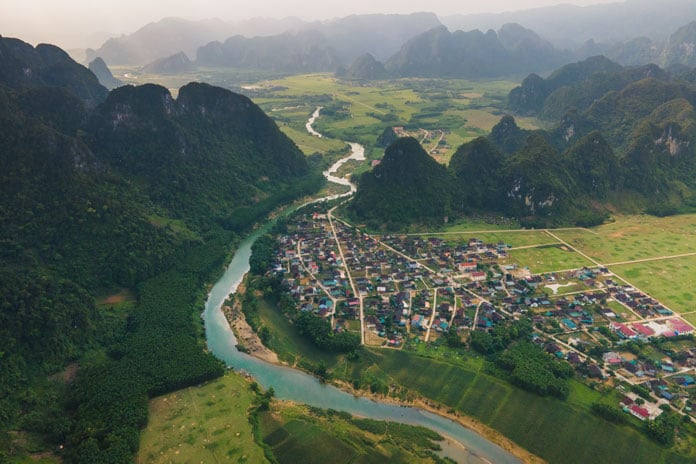
Visitors with more time can extend their itinerary northward along the Ho Chi Minh Road in Quang Tri. Highlights include Commander Cave Museum, a natural limestone cave that was adapted into a multi-level military base connected to the historic Truong Son supply route. This extended route also offers opportunities to stay at nature-based accommodations such as Chay Lap Farmstay, Blue Diamond Retreat, Oxalis Home, or Tu Lan Lodge.
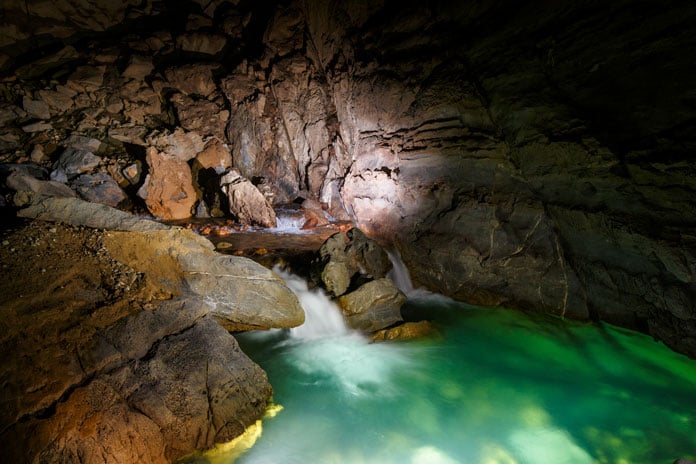
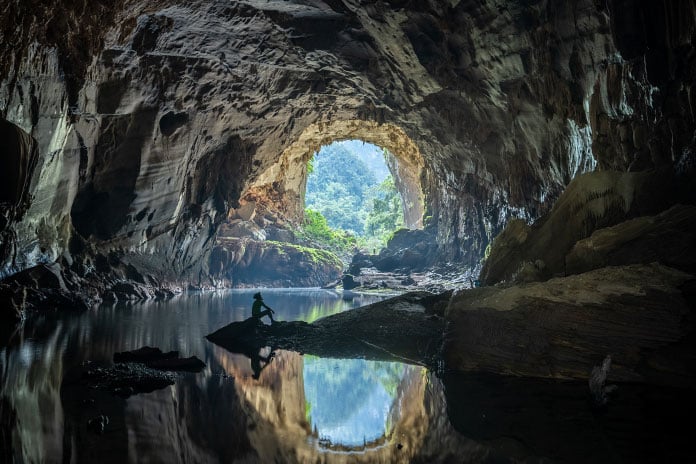
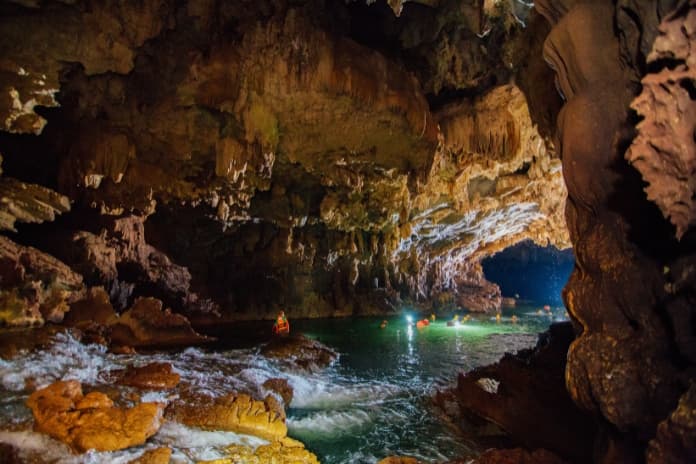
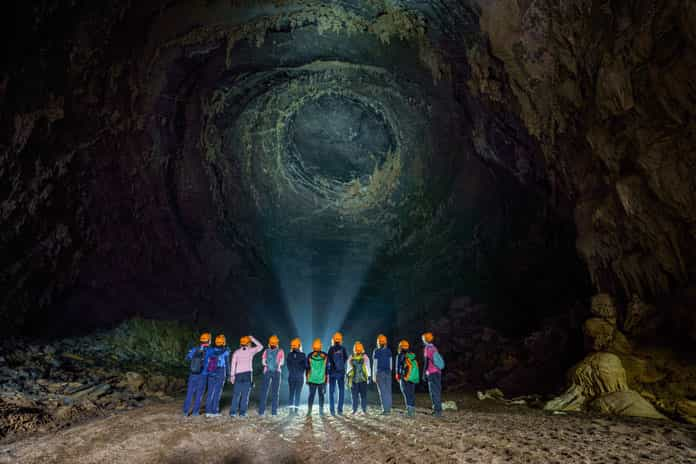
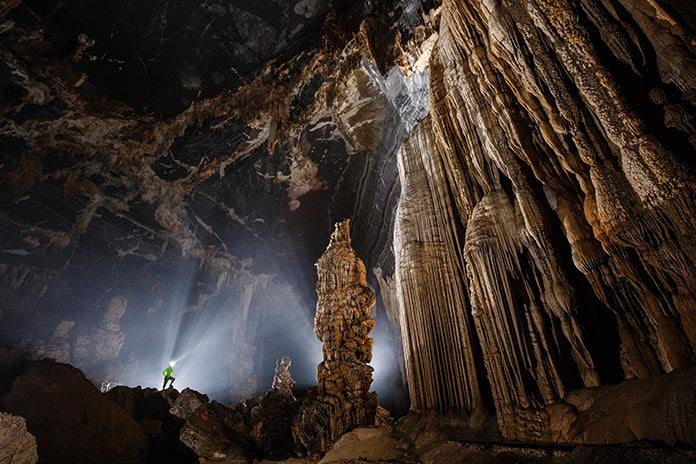
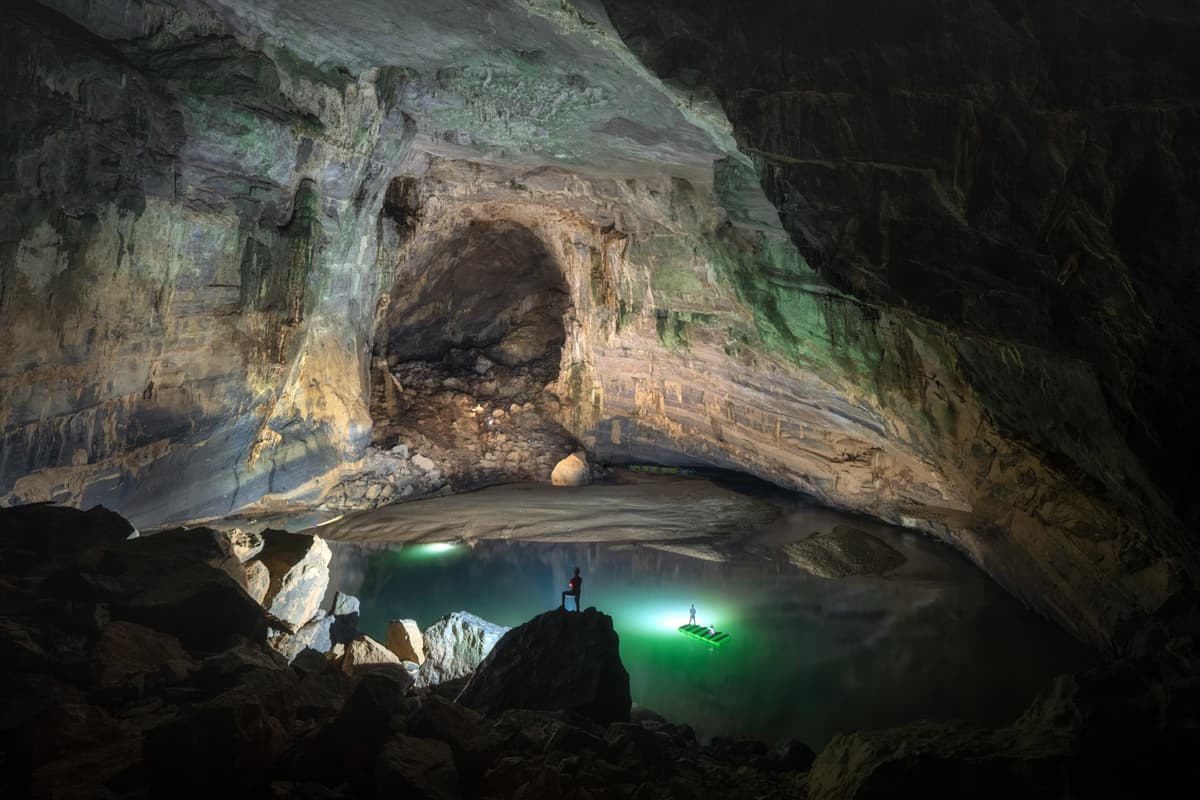
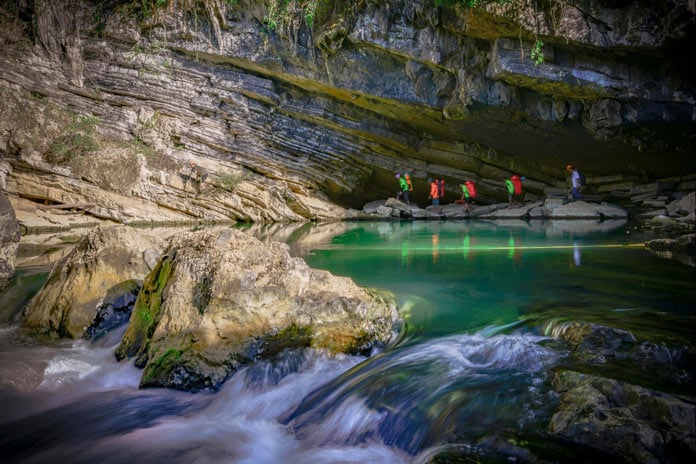
From these locations, travelers can easily combine their visit with natural attractions like Phong Nha Cave and Mooc Spring, or take part in a wide range of cave adventure tours. Options range from easy experiences, such as the Tu Lan Cave Discovery or Hang Tien Cave Day Trek, to more challenging expeditions like the Son Doong Cave Expedition or Hang Ba Deep Jungle Expedition.


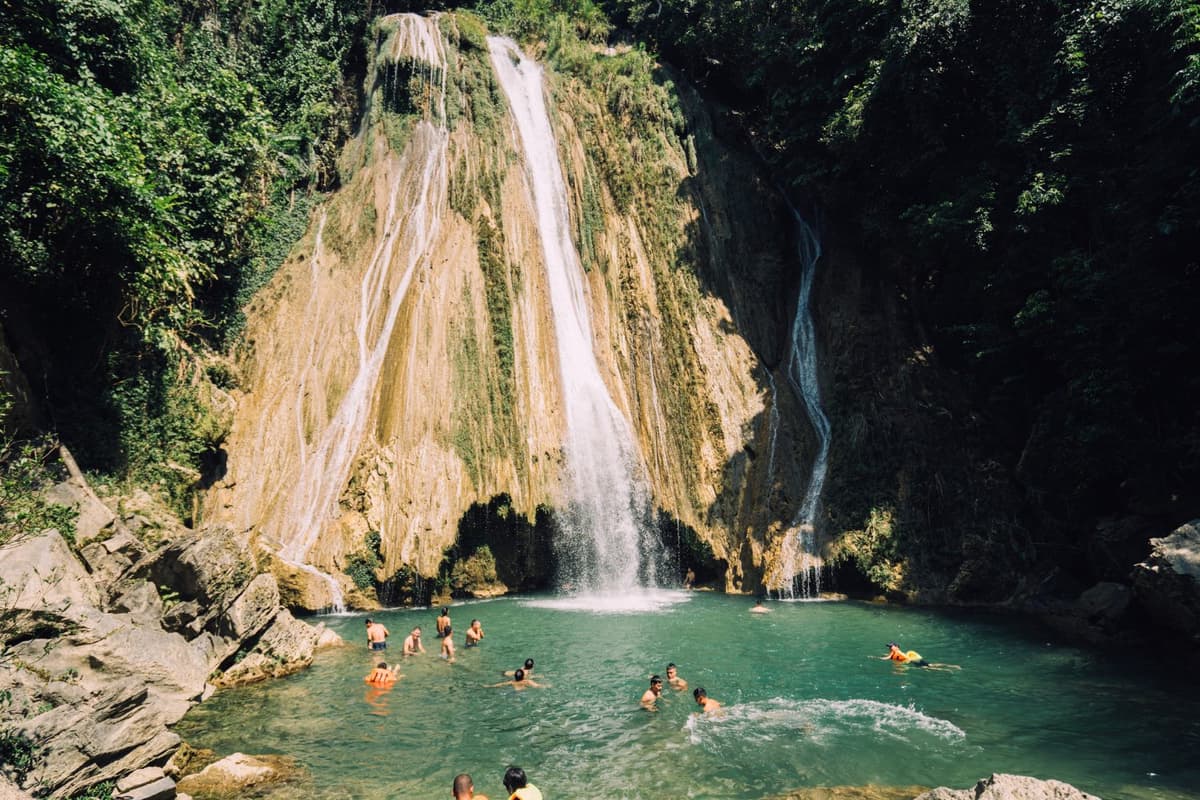

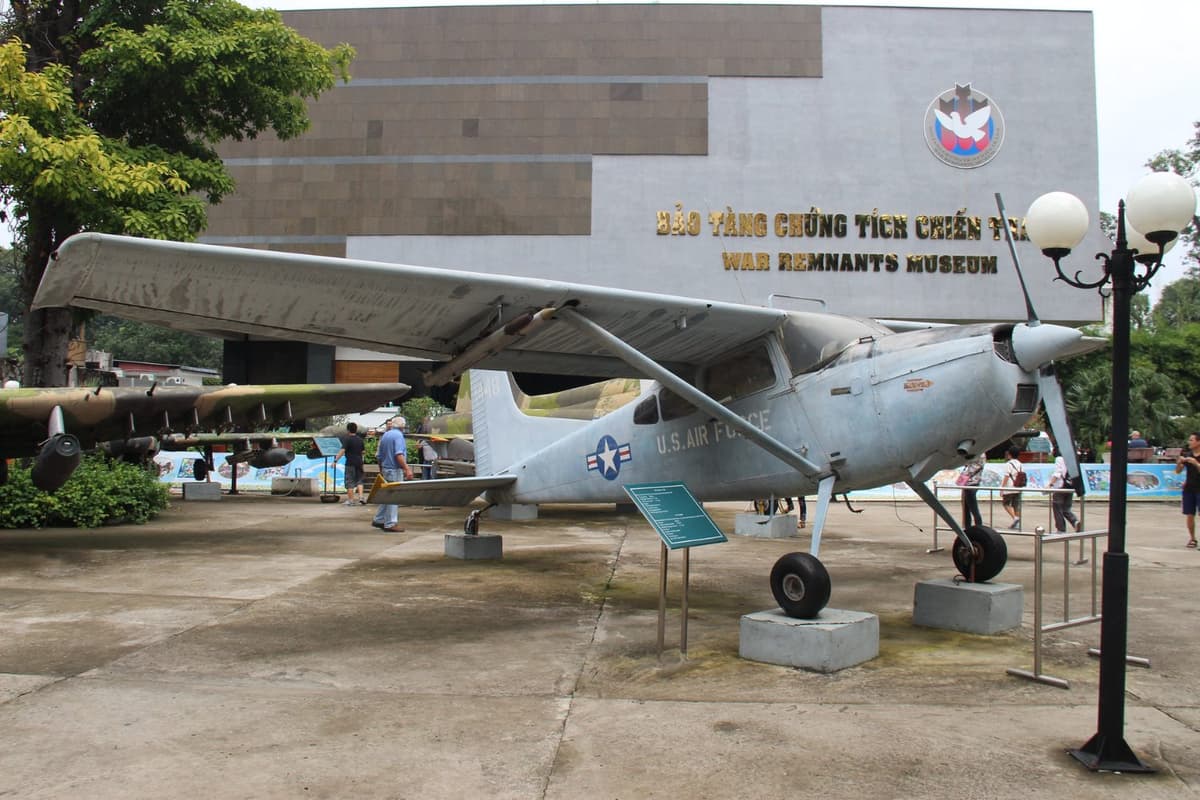

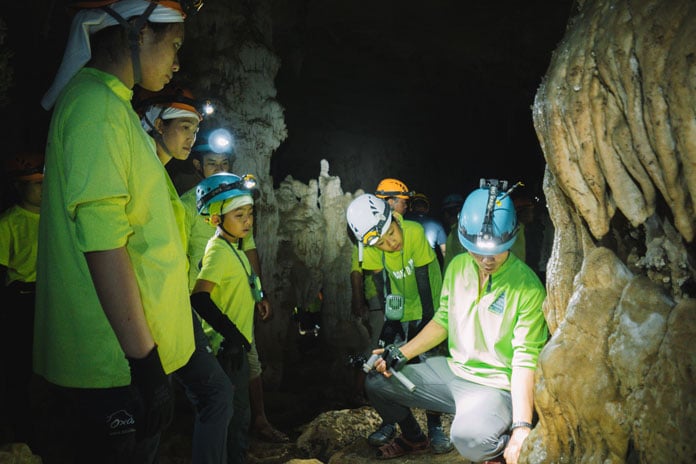
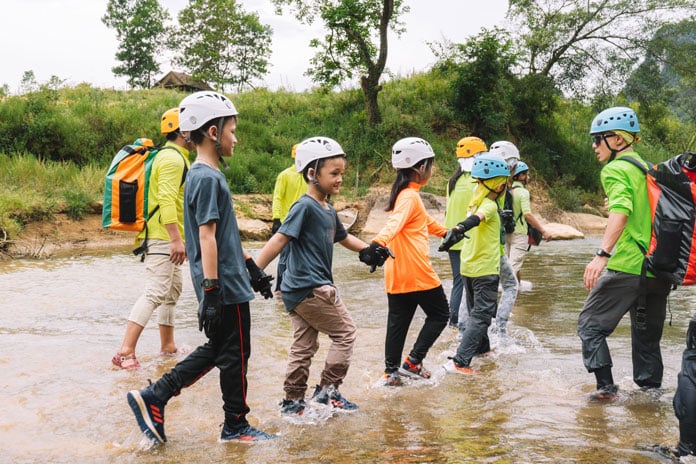
Whether you prefer long treks, camping in a cave, sleeping under the stars in the jungle, swimming underground in river caves, explore the huge dry caves or just taking an exploratory day trip, Oxalis Adventure Tours can provide the right amount of adventure just for you.
__637051782550081035.jpg)
__637051780703588520.jpg)
__637051765075307793.jpg)
__637051774329206026.jpg)
__637740499994967442.jpg)