17th parallel: The boundary that divided Vietnam for more than two decades
The 17th Parallel in Vinh Linh District, Quang Tri Province, is far more than a line on a map. It is one of the most important places for anyone who wants to understand the history of the North-South Vietnam division during the mid-20th century. Stretching along the Ben Hai River and the Hien Luong Bridge, this area served as the temporary boundary separating the country for more than twenty years (1954 - 1975). For travelers interested in history, geopolitics, or the stories of daily life on both sides of a divided land, the 17th Parallel is a unique place where the past becomes tangible.
A historic landmark of a special period
Around the world, the 17th Parallel is often known as the Vietnamese Demilitarized Zone (V-DMZ). After the Geneva Agreement in 1954, the Ben Hai River was chosen as the temporary dividing line between the two regions. It was originally meant to last for only 2 years before a nationwide election was held. However, international conditions at the time prevented this plan from happening, and the line remained in place for 21 years. Visiting the 17th Parallel today gives travelers a clear and direct understanding of how this temporary boundary influenced millions of lives. This is why the area has become a highlight of many routes, such as the Quang Tri DMZ Tour, the 1-Day 17th Parallel Tour, or the DMZ Tour from Hue to Quang Tri.
Unusual “battles” at the 17th Parallel
The “paint battle” on Hien Luong Bridge
One of the most unique stories at the site is the “paint battle” on Hien Luong Bridge. When the southern side painted half of the bridge blue, the northern side immediately chose the same color to express unity. The South then changed colors repeatedly, and every time, the North quickly adjusted. By the early 1960s, both sides kept two fixed colors - blue in the north and yellow in the south, creating a symbolic image of division that visitors can still see on the restored bridge today.
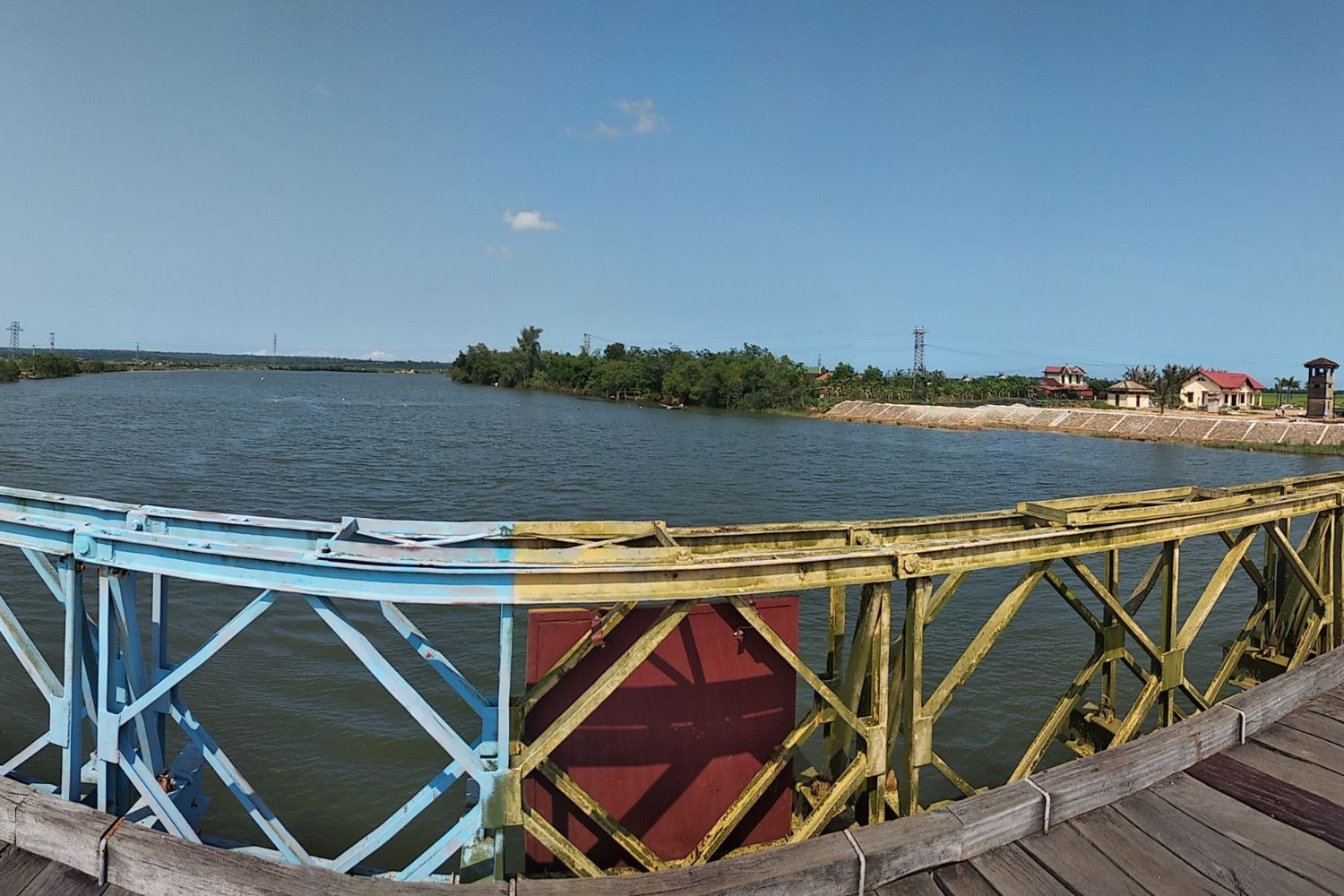
The two different paint colors mark the dividing line between the two regions on Hien Luong Bridge.
The flagpole duel
Another remarkable event was the 17th Parallel flagpole duel. Each side built taller and taller flagpoles to show presence and determination at the boundary. In 1962, the northern side constructed a 38.6-meter steel flagpole, the tallest ever built here, and flew a flag about 134 m² in size. This competition eventually ended in 1967.
The loudspeaker battle
From 1954 to 1964, there was no direct fighting at the 17th Parallel, but the area remained extremely tense. Both sides broadcast messages across the Ben Hai River, creating what later became known as the 17th Parallel loudspeaker battle. Both sides continuously upgraded their loudspeaker systems to “compete in sound” across the water. The North broadcast programs from the Voice of Vietnam, the Vinh Linh radio station, and various musical performances to boost morale and patriotism. On the opposite side, broadcasts frequently spread distorted information and propaganda praising the Ngo Dinh Diem government. This intense “loudspeaker duel” continued until 1965, when it finally ended as the United States began bombing the North.
What to see at the 17th Parallel?
A visit to the 17th Parallel takes travelers to one of the most historically rich areas in Vietnam, once known globally as the V-DMZ. Here, visitors can learn how a temporary boundary shaped daily life for two decades. For anyone who loves history or simply wants to see places that appear in books and documentaries, the area is an unforgettable stop along their journey.
Hien Luong Bridge
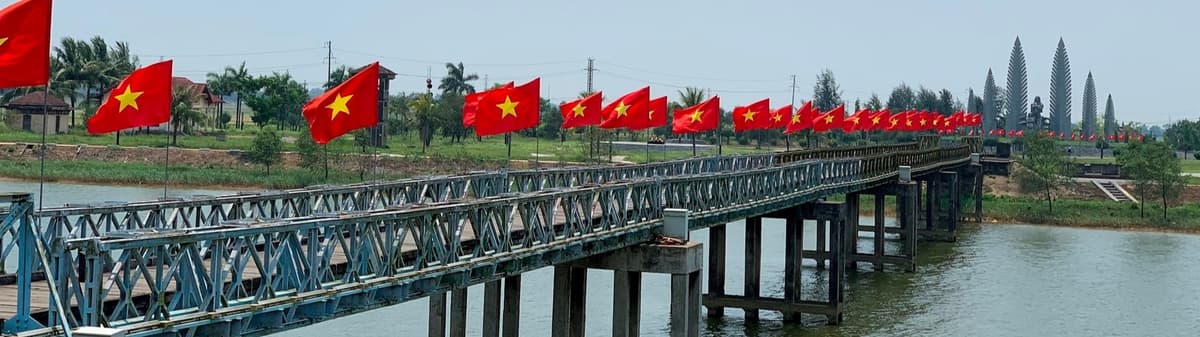
Next to the Ben Hai River, visitors can walk across the restored Hien Luong Bridge, painted in its original blue and yellow colors. Every step reflects stories of separation, communication, and daily life on both sides of the river. Beside the old wooden bridge is the modern Hien Luong Bridge, offering a striking contrast between the divided past and today’s peaceful landscape.
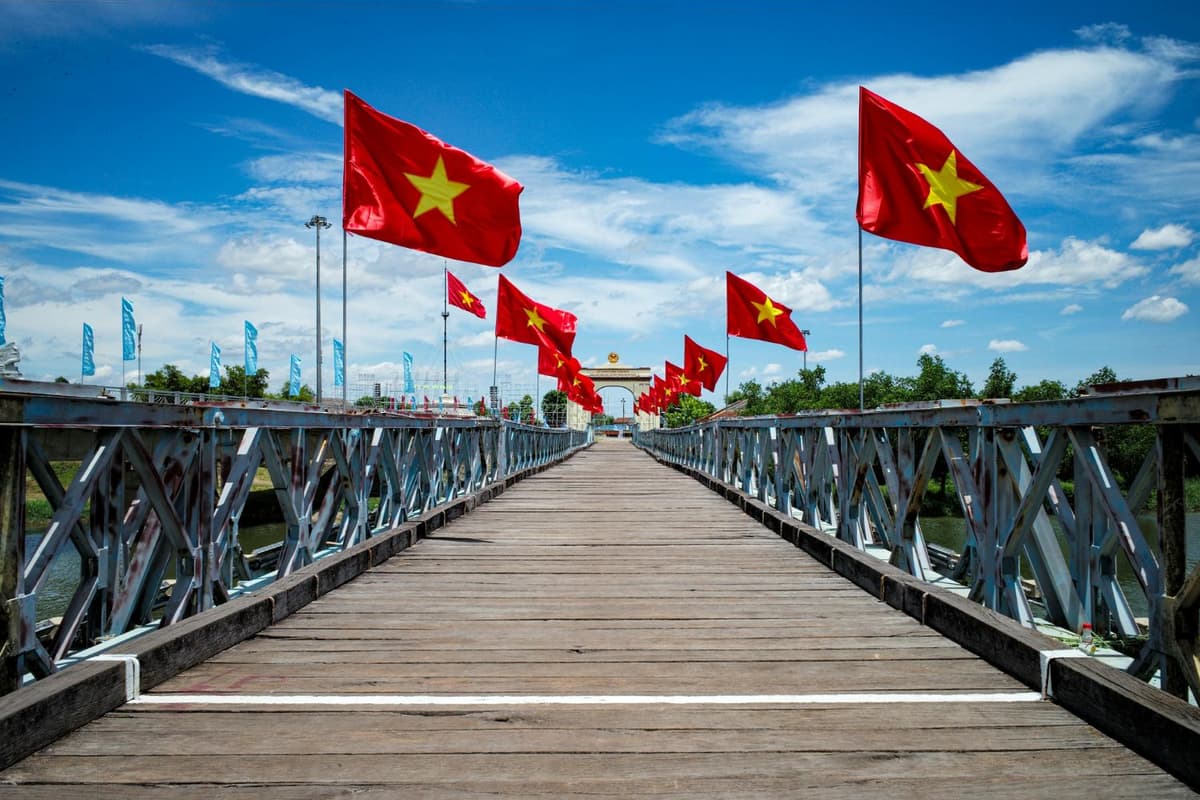
The painted line on the Hien Luong Bridge marks the dividing boundary between North and South Vietnam.
The Border Flagpole
On the northern bank stands one of the most iconic symbols of the Hien Luong - Ben Hai River Historical Relic Site. During the years of division, the flagpole was at the center of the symbolic competition between the two sides. The steel structure, built in 1962, reached 38.6 meters, flying a huge flag that weighed 15 kg. Today, the flagpole has been reconstructed at a height of about 28 meters, allowing visitors to imagine how powerful this symbol once was.
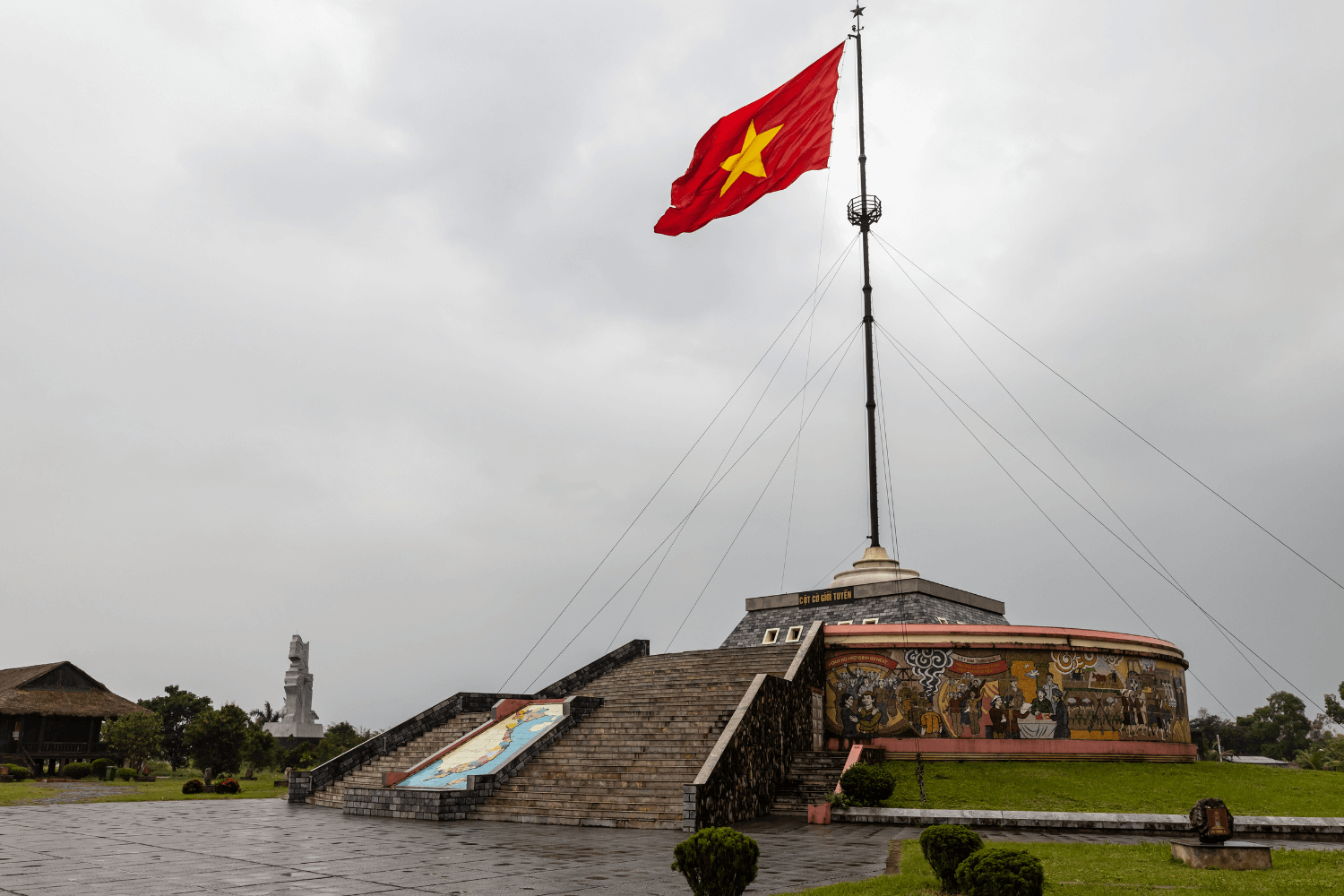
The border flagpole at the 17th Parallel Historical Site, once the focal point of the intense “flagpole duel.”
Exhibition House: “17th Parallel and the Aspiration for Reunification”
This exhibition house is an essential stop for international visitors. Inside, more than 50 original items and documents are displayed, including photos, military maps, the Geneva Agreement, related papers, and personal belongings collected from both sides of the Ben Hai River. One of the most impressive items is a replica of the 500-watt loudspeaker used during the 17th Parallel loudspeaker battle. These materials help visitors understand how a temporary line became a defining part of life for two decades.
“Aspiration for Reunification” Monument
On the southern bank stands the monument showing a mother and her young son looking toward the north. The design reflects the longing and hope shared by countless families during the years of separation. The imagery of the coconut-leaf shaped relief beneath them represents the southern region and adds emotional depth to the site.
Ticket prices for visiting the Hien Luong - Ben Hai Historical Relic Site
The Hien Luong - Ben Hai River Historical Relic Site is open daily from 7:00 to 17:00, including weekends. The entrance fee for the full complex, including Hien Luong Bridge, the exhibition house, the border flagpole, and the monument, is 50,000 VND per adult.
Other historical sites near the 17th Parallel
Travelers often combine their 17th Parallel Vietnam tour with nearby sites to create a fuller experience. Popular options include:
- Vinh Moc Tunnels, 14 km away, are the largest tunnel system in Vietnam. This is why many travelers choose to combine the Vinh Moc Tunnels with the 17th Parallel in the same trip.
- Quang Tri Ancient Citadel, 34 km away, is known for its intense 1972 battles.
- Truong Son National Cemetery, 16 km away, is the resting place of more than 10,300 soldiers.
- Ta Con Airport (Khe Sanh), 82 km away, is preserved with runways, bunkers, and aircraft.
- Lao Bao Prison, 98 km away, built during the French colonial era, is now open for visitors.
- Commander Cave Museum, 132 km away, is a reconstructed 7-level cave used to coordinate operations on the historic Ho Chi Minh Trail.
Travel tips for visiting the 17th Parallel
If you’re wondering how to visit the 17th Parallel, the area can be reached from either Dong Hoi (75 km) or Dong Ha (27 km). Visitors without personal transport often choose a car rental for the DMZ Tour to explore comfortably and visit several nearby locations. The best times to visit are early morning or late afternoon, as the area has strong sunlight and limited shade. Since the 17th Parallel preserves many sensitive historical sites, wearing respectful clothing is recommended.
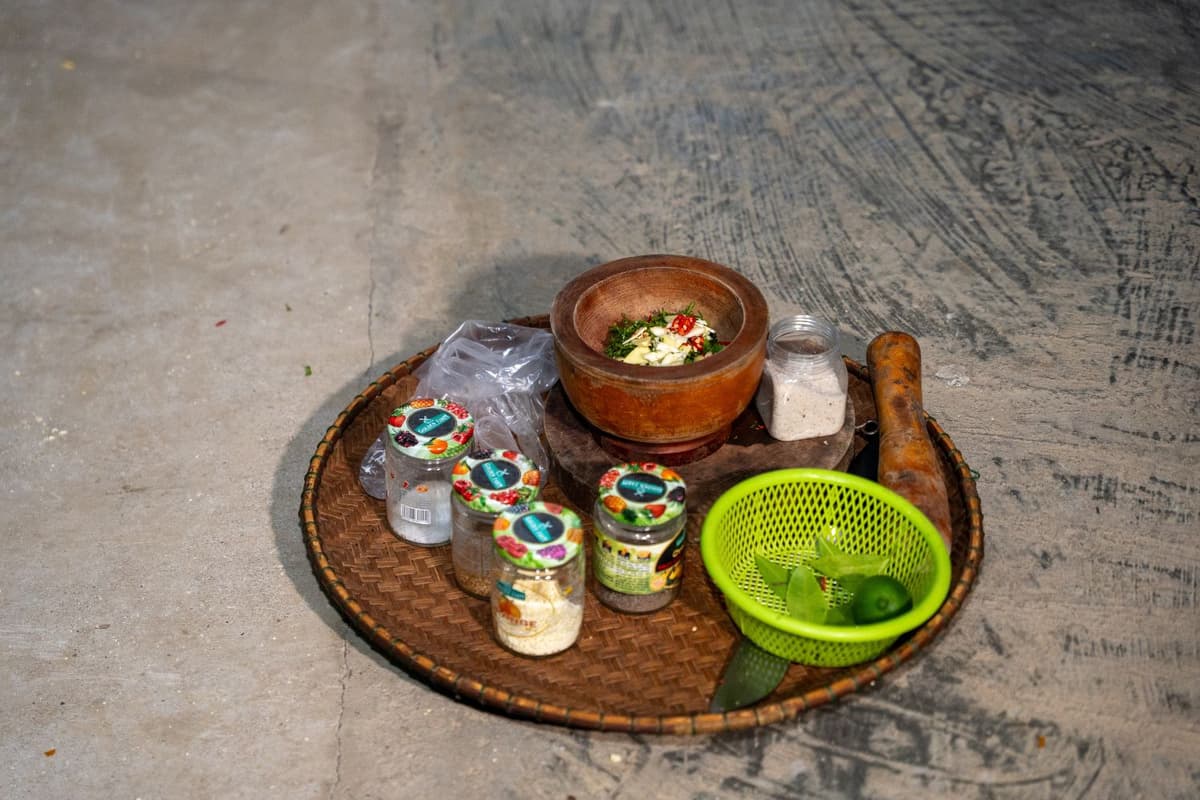
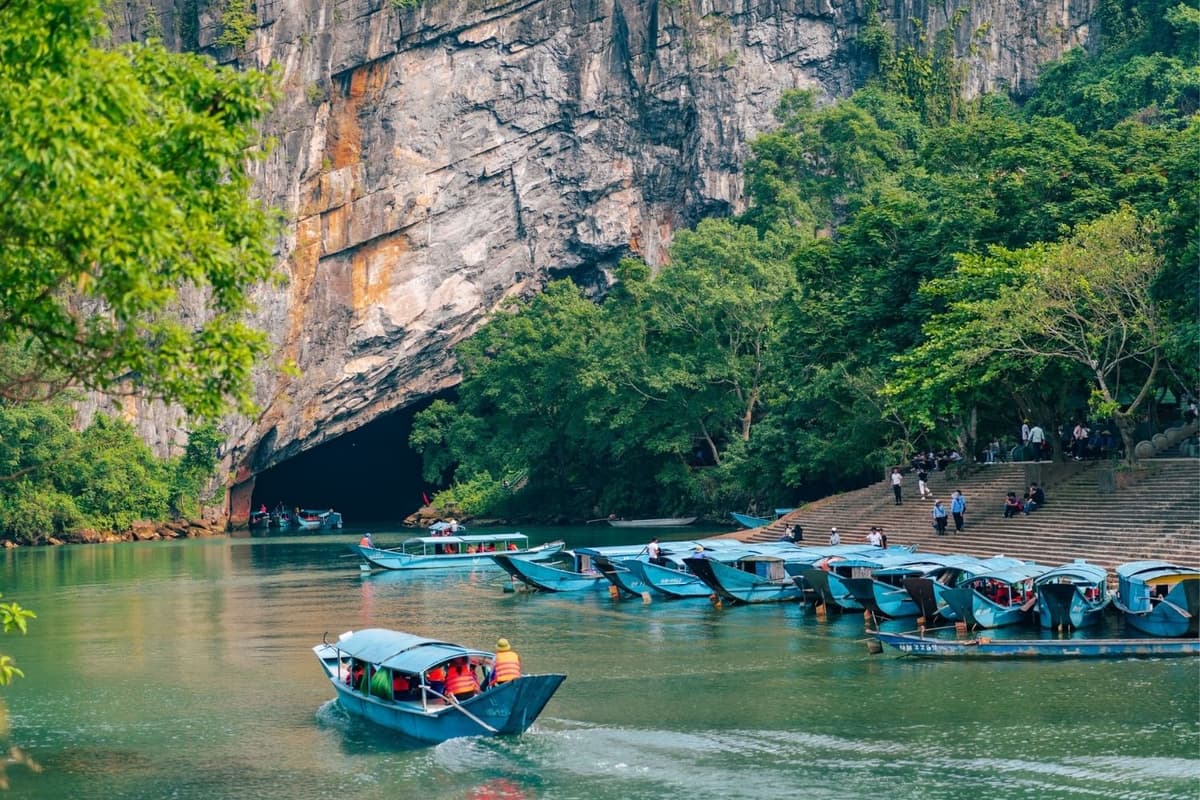


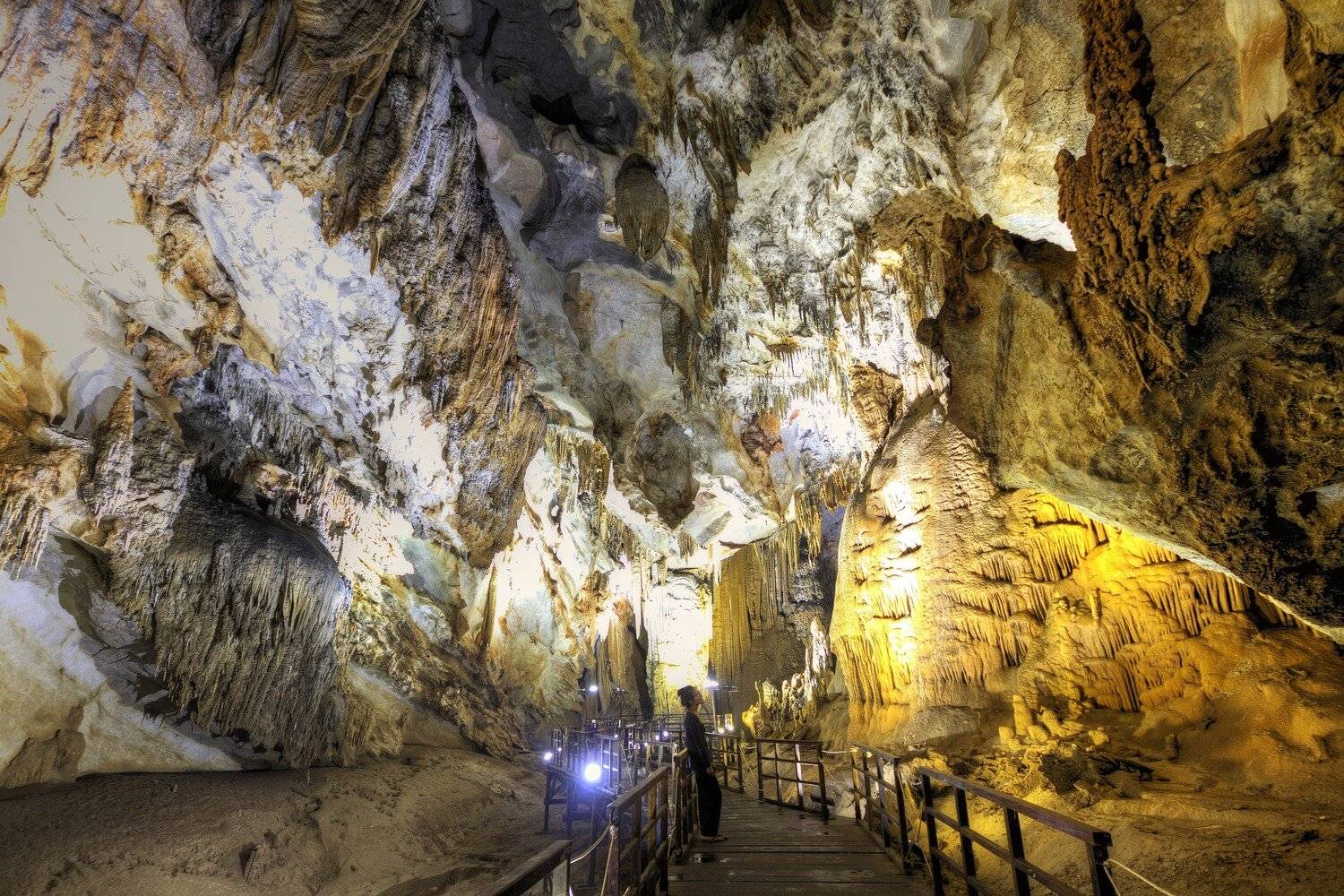
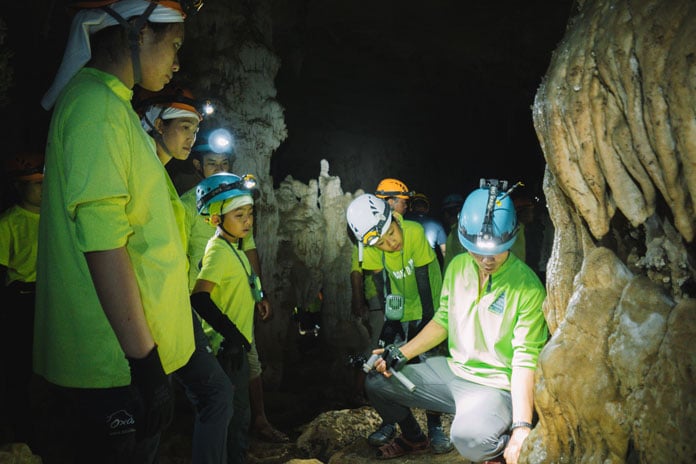
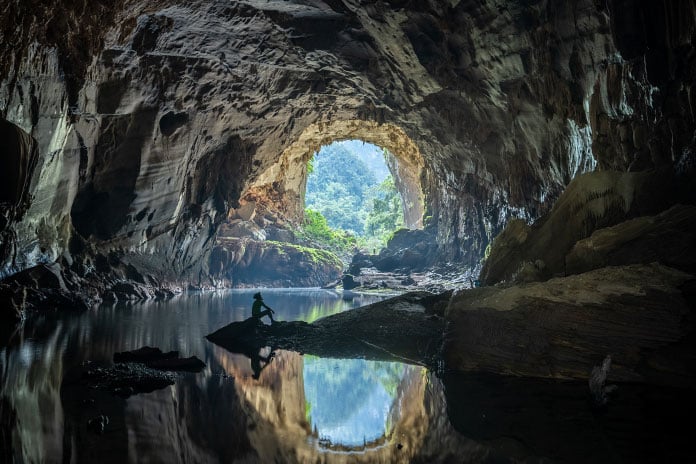
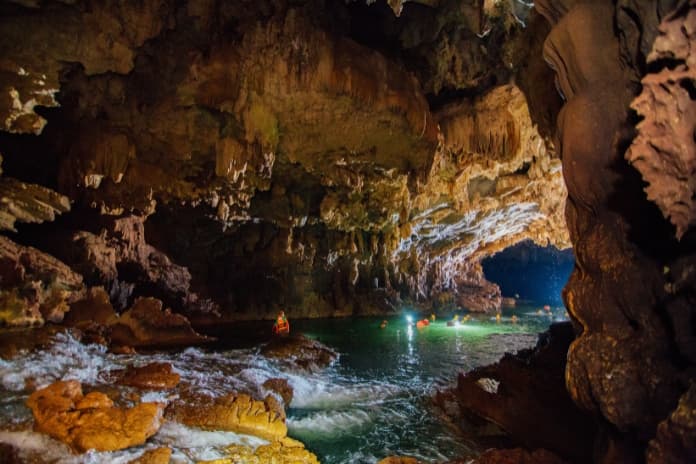
Whether you prefer long treks, camping in a cave, sleeping under the stars in the jungle, swimming underground in river caves, explore the huge dry caves or just taking an exploratory day trip, Oxalis Adventure Tours can provide the right amount of adventure just for you.
__637051782550081035.jpg)
__637051780703588520.jpg)
__637051765075307793.jpg)
__637051774329206026.jpg)
__637740499994967442.jpg)