Nho Que River: Epic Boat Tour Guide for Ha Giang Loop
If you're planning the Ha Giang Loop, chances are you've already seen photos of an unreal emerald river winding through towering limestone cliffs. That's the Nho Que River, one of the route's biggest highlights beneath Ma Pi Leng Pass. While the boat ride looks effortless on Instagram, reaching the docks is often the most challenging part of the journey, with steep roads and dozens of tight hairpin bends. This guide covers everything you need to know about the Nho Que River, including the safest way to reach the boat docks, ticket prices, the best time to visit, and practical tips for a smooth trip.
Nho Que River at a Glance: Geography, History, and Highlights
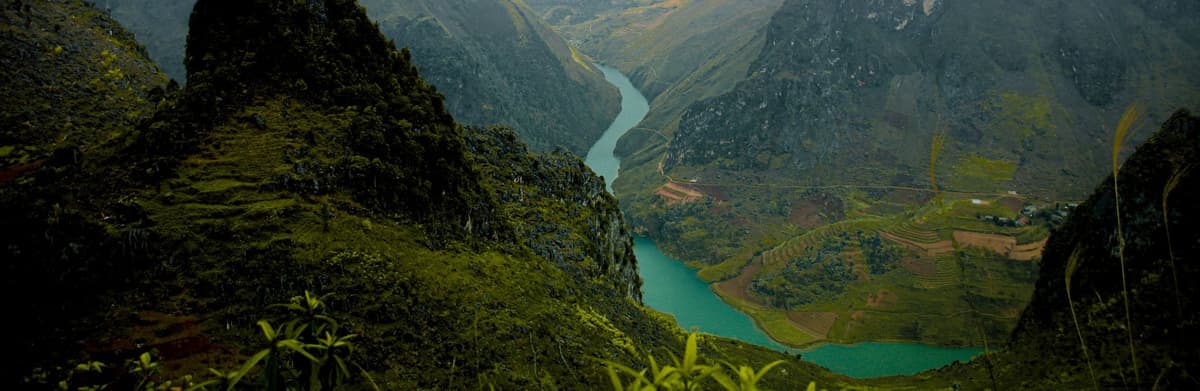
Nho Que River is one of the most spectacular rivers in northern Vietnam, famous for its emerald-green water flowing through the dramatic Tu San Canyon beneath Ma Pi Leng Pass. The river begins in the Nghiem Son Mountains of Yunnan, China, at an elevation of around 1,500 meters, before traveling a total of 192 km. About 46 km of its course flows through Ha Giang and Cao Bang provinces, passing the Dong Van Karst Plateau before joining the Gam River.
One of the river's most striking features is its vivid emerald color. This is not simply a reflection of the sky but the result of several natural factors. The riverbed is covered with light-colored limestone, while the mineral-rich water and the absence of major industrial pollution keep the water exceptionally clear. Since the Nho Que hydropower plants began operating around 2012, the slower flow has allowed more sediment to settle on the riverbed, making the water appear even clearer during the dry season.
According to local legend, the river was created when the River God wanted to bring water to the dry plateau but was blocked by the Mountain God. The Jade Emperor then sent the Thunder God to split the mountains with a mighty sword, forming Tu San Canyon and allowing the Nho Que River to wind through the towering limestone cliffs.
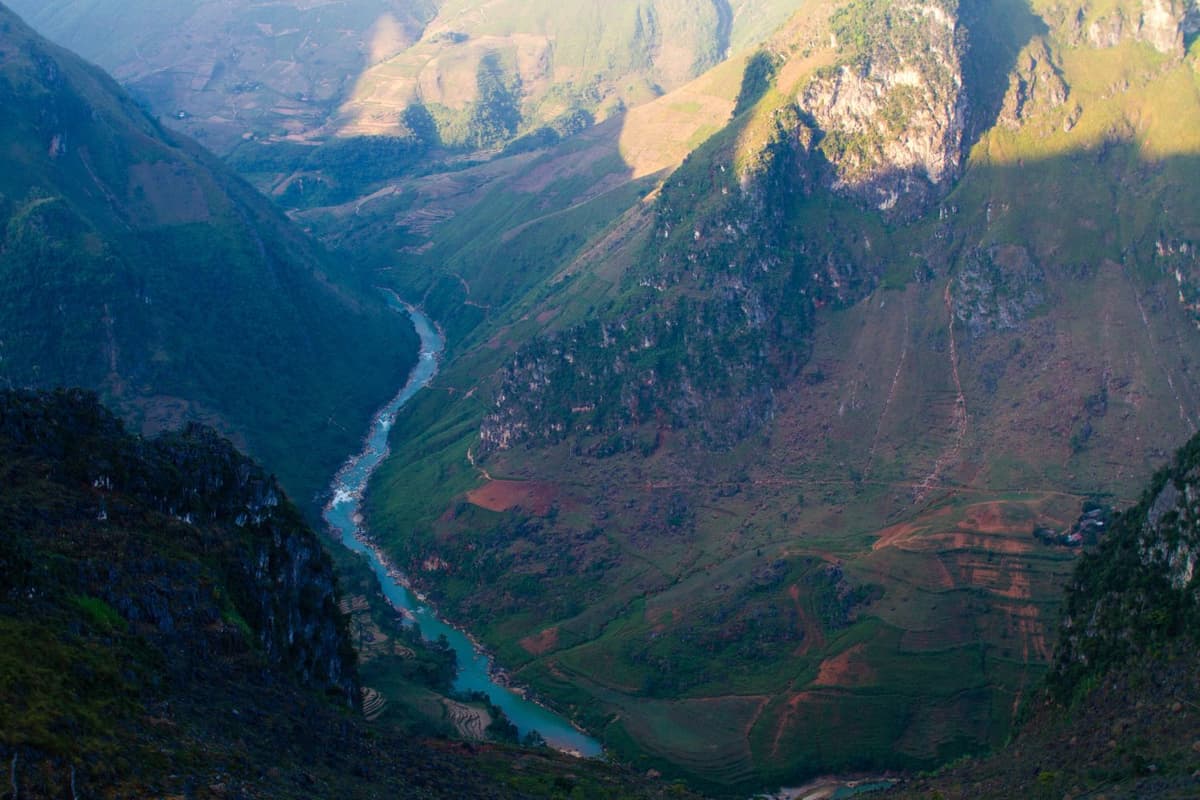
The stunning Nho Que River snakes through deep limestone canyons.
The river has long supported the lives of Hmong, Tay, Nung, Giay, and Lo Lo communities living along its banks. In the past, families relied on the river for fishing and farming. Today, tourism has become an important source of income, with many locals operating boat tours, transport services, and homestays for visitors exploring the Ha Giang Loop.
In 2009, the Ma Pi Leng Pass, Tu San Canyon, and Nho Que River were recognized together as a National Scenic Heritage Site. Beyond its breathtaking scenery, the valley is also home to diverse limestone ecosystems, supporting native plants, butterflies, birds, and other wildlife unique to Vietnam's northern mountains.
Best Time To See The Emerald Green Water in Nho Que River
The best time to see the emerald green water of the Nho Que River is during the dry season, from October to April. During these months, the river is at its clearest, revealing the vibrant turquoise color that makes it one of the most photographed places on the Ha Giang Loop. October and November are especially beautiful, as the buckwheat flowers bloom across the surrounding mountains.
From June to August, heavy rainfall often turns the river muddy and fast flowing. Landslides and slippery roads can also make the steep descent to the boat docks more dangerous, especially for motorbike riders. If you're visiting during the rainy season, check the weather forecast carefully and consider joining a guided tour instead of traveling independently.
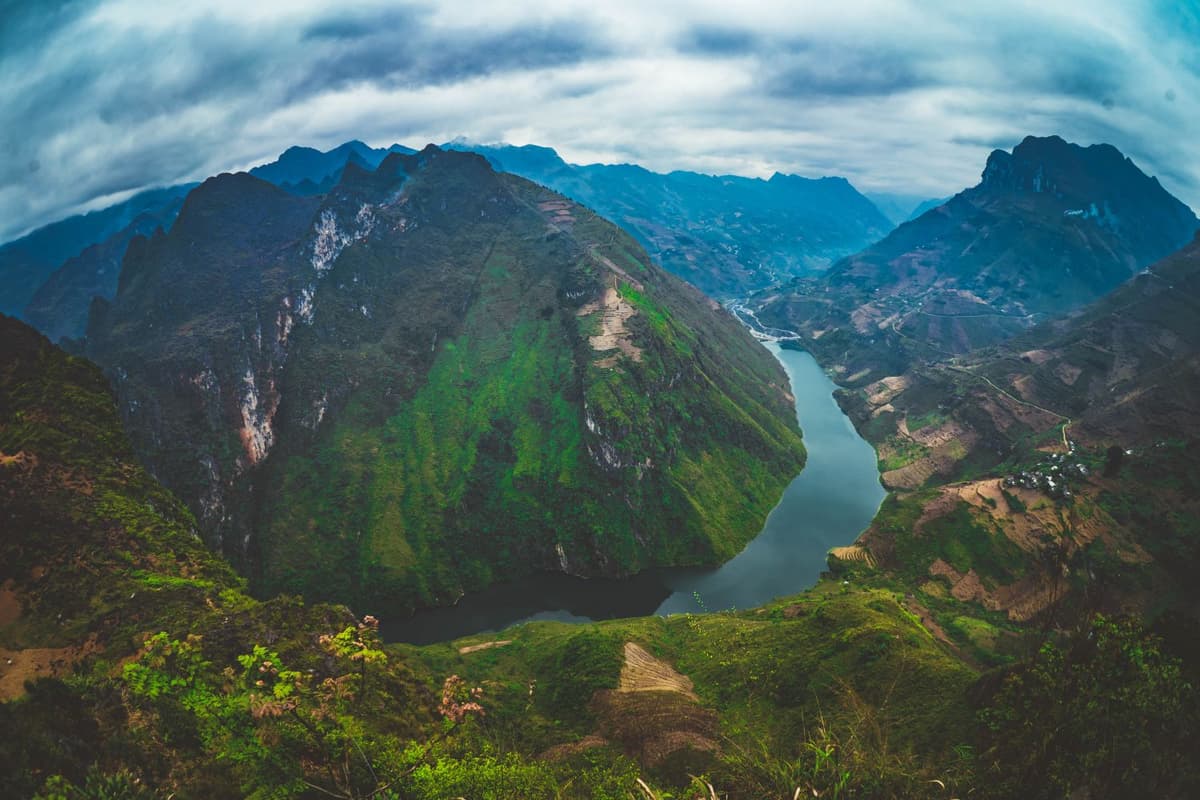
The dry season, Oct to April, offers the river's best turquoise views.
How To Reach The Nho Que River Boat Docks Safely (Read Before You Ride)
Reaching the Nho Que river is often more challenging than the boat ride itself. Travel from Hanoi to Ha Giang to witness one of Vietnam's most scenic wonders. Flowing beneath Ma Pi Leng Pass through the UNESCO-listed Dong Van Karst Plateau Geopark, this emerald river sits at the bottom of a steep limestone canyon. Most travelers visit on the second or third day of the Ha Giang Loop, after crossing Ma Pi Leng Pass.
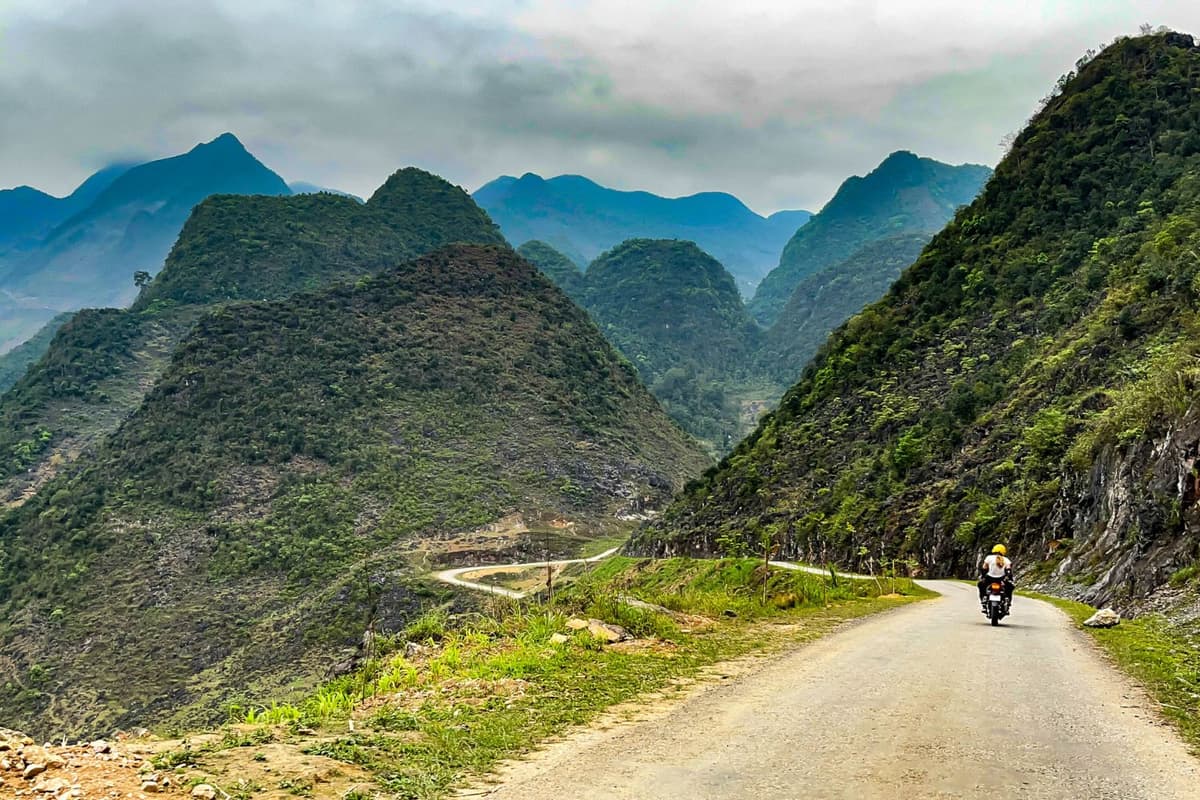
Ride the iconic Ma Pi Leng Pass down to the emerald Nho Que River.
There are two main boat docks: Ta Lang Wharf and Xin Cai Wharf. Each offers a different route, and choosing the right one can make your trip much safer.
Ta Lang Wharf Route (From Dong Van)
Ta Lang Wharf is the closest dock if you are coming from Dong Van, but it also has the most demanding access road. The concrete road is only about 8 km long, yet it twists through 47 tight hairpin bends with gradients reaching 15 to 20% in places. Many corners are blind, and several sections have no guardrails beside steep drops.
Unless you are an experienced rider on manual or semi-automatic motorbikes, avoid riding down yourself. Automatic scooters are not recommended on this road.
The safest option is to park your motorbike near Trang Huong Bridge on the main road and hire a local Hmong or Dao motorbike driver to take you to the dock. A round trip usually costs around 150,000 VND. Local riders know every corner, pothole, and loose gravel, allowing you to enjoy the scenery without worrying about the descent.
Xin Cai Wharf Route (From Meo Vac)
If you are approaching from Meo Vac, Xin Cai Wharf is generally the easier and safer choice. Turn left near the Meo Vac side of Ma Pi Leng Pass and continue for about 5 km. The road is wider, the gradients are gentler, and there are fewer sharp bends than the Ta Lang route.
After reaching the parking area, you'll need to walk 1.5 to 2 km along a mountainside trail to reach the river and boat dock. The walk is relatively easy, shaded by bamboo groves, and offers beautiful views of the surrounding limestone landscape, making it an enjoyable part of the experience rather than just the route to the boat.
Nho Que River Entrance Fees, Boat Tour Prices and Opening Hours
A boat trip on the Nho Que River is one of the highlights of the Ha Giang Loop, and prices are clearly posted at the ticket office, making it easy to budget your visit. Here are the latest costs and practical details to help you plan ahead.
- Shared motorboat: 150,000 VND/adult (over 1.2 m) and 80,000 VND/child (under 1.2 m). The trip lasts around 45 to 60 minutes through the spectacular Tu San Canyon.
- Private boat: Ideal for groups of 6 to 15 people, with prices ranging from 400,000 to 1,500,000 VND depending on boat size. This option gives you more flexibility for photos and extra time in the canyon.
- Kayak or SUP rental: Adventurous travelers can rent a kayak or stand-up paddleboard for 50,000 to 150,000 VND per person, depending on the operator and rental duration.
The shared boat ticket includes the boat ride, round-trip shuttle transfers between the parking area and the wharf, life jackets, basic insurance, and VAT. Food, drinks, and English-speaking guides are not included, as most boat operators are local residents.
Opening Hours
Ticket counters are generally open from 7:00 AM to 6:30 PM. However, you should arrive before 4:00 PM to allow enough time for the boat trip and the return journey up the mountain before dark. Driving the steep access roads after sunset or in heavy fog is not recommended, especially if you're riding a motorbike. Morning and early afternoon usually offer the safest road conditions and the clearest views of the Nho Que River.
How To Book Your Boat Tour Safely
Booking a Nho Que River boat tour is straightforward, and you can choose the option that best fits your Ha Giang Loop itinerary. During peak travel months, especially October and November, it's worth booking ahead to avoid waiting or missing the last departures.
- Buy tickets at the wharf: The easiest option is to purchase your ticket directly at the ticket counters near the parking areas at Ta Lang Wharf or Xin Cai Wharf. Walk-in tickets are usually available outside peak periods.
- Book through your homestay or tour operator: If you're staying in Dong Van or Meo Vac, ask your homestay, hotel, or motorbike rental shop to reserve your boat seats in advance. This is the most convenient option during busy weekends and the buckwheat flower season.
- Contact a local boat operator: Independent travelers can also arrange a trip directly with local boat owners. Arriving between 7:00 - 9:00 AM or 3:00 - 5:00 PM often means fewer crowds, and if a shared boat isn't full, operators may offer discounted seats so the boat can depart sooner. However, avoid arriving too close to 5:00 PM, as services may finish early if there are not enough passengers.
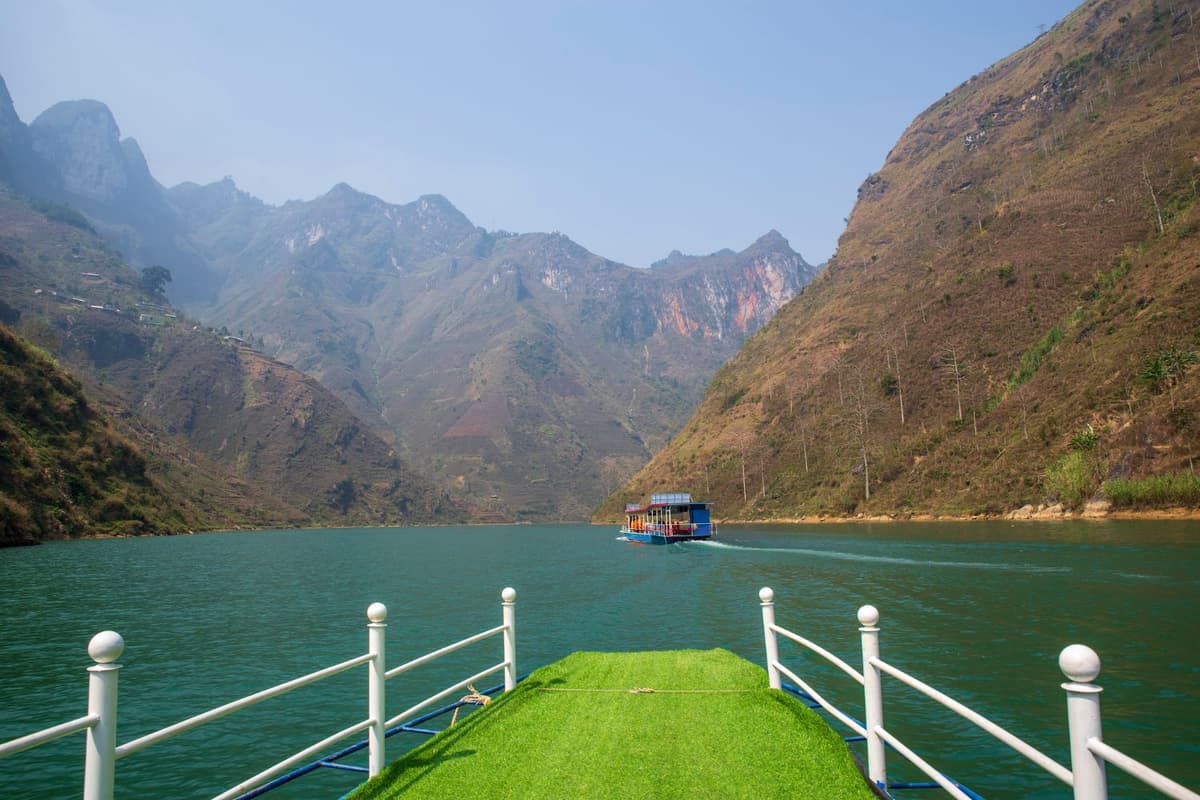
If you are traveling with a large group, consider booking a private boat to have full flexibility over your travel time and more freedom to take photos in the canyon.
Top Unforgettable Things to Do On Nho Que River
A boat ride is only the beginning. The best things to do on Nho Que River range from floating through Southeast Asia's deepest canyon to experiencing local Hmong culture and spending a night beneath towering limestone cliffs.
1. Cruise Through Tu San Canyon by Motorboat
A motorboat ride is the signature Nho Que River experience and the easiest way to appreciate the scale of Tu San Canyon, the deepest canyon in Southeast Asia. As the boat glides across the emerald water, you'll pass between towering limestone cliffs rising 700 to 1,000 meters above the river.
The journey usually lasts 45 to 60 minutes, giving you plenty of time to admire the scenery. Most boat operators stop for 10 to 15 minutes at the narrowest and most photogenic part of the canyon, allowing passengers to move to the front of the boat for photos. Looking up from the river, the sky becomes a thin ribbon between the cliffs, creating one of the most dramatic landscapes anywhere on the Ha Giang Loop.
If you're traveling with a group or enjoy photography, consider arranging a private boat in advance. Without a full boat of passengers, you'll have more flexibility to slow down or spend longer at the best viewpoints.
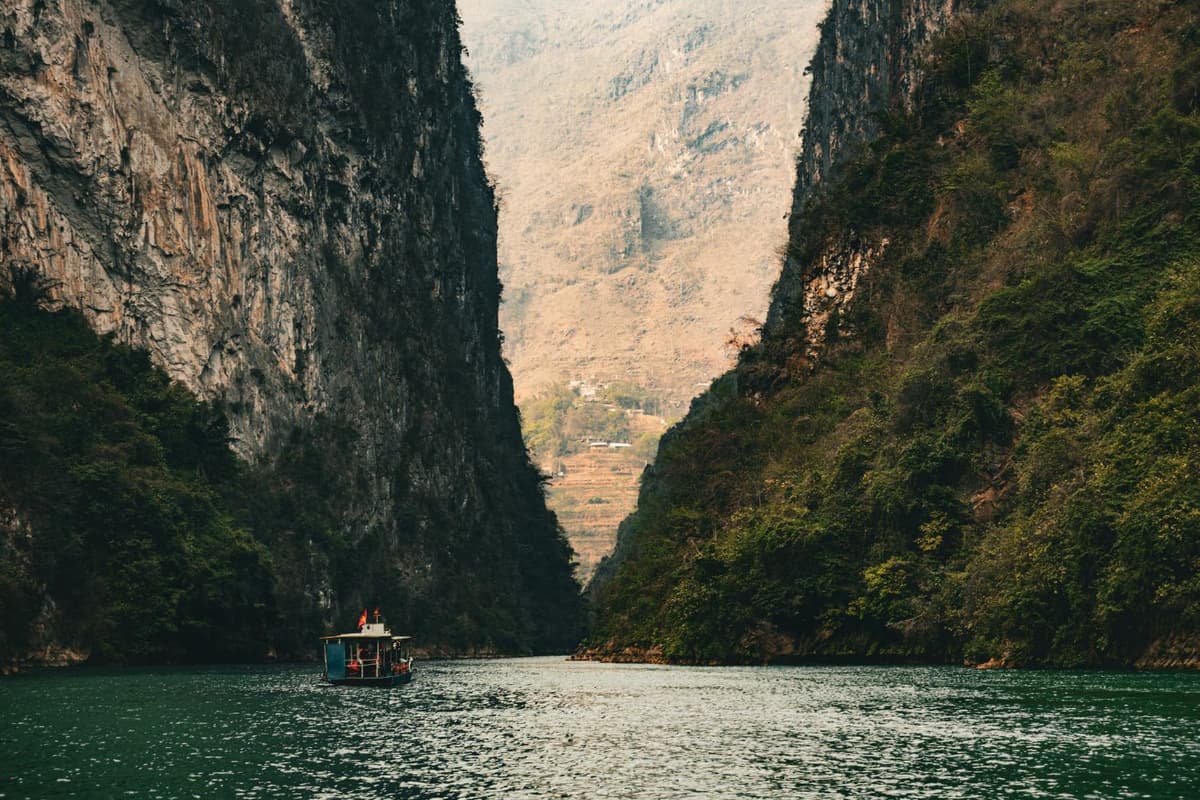
Boat rides offer the best perspective of the iconic Tu San gorge walls.
2. Explore the River by Kayak or Stand Up Paddleboard
For travelers who prefer a more active adventure, kayaking or stand up paddleboarding offers the closest connection to the river. Without the sound of an engine, you'll hear nothing but your paddle cutting through the calm water and birds echoing around the limestone walls.
During the second and third lunar months, bright red bombax flowers bloom along parts of the riverbank, creating a striking contrast against the emerald water. It's one of the most beautiful times to paddle close to shore.
Because the river is extremely deep and remains cold throughout the year, wearing a life jacket is mandatory. If you plan to kayak or paddleboard, it's also worth booking ahead, as equipment availability can be limited during busy travel periods.
3. Wear Traditional Ethnic Clothing and Discover Local Life
Traditional Hmong, Dao, and Tay costumes are available to rent near the boat docks, making them a popular choice for memorable photos on the river. Colorful embroidery and silver accessories create beautiful contrast against the canyon's gray cliffs and turquoise water.
Beyond the photos, take time to observe daily life along the riverbanks. During the dry season, water is scarce on the rocky plateau, so local families often bring months' worth of clothing and blankets down to the river to wash, leaving them spread across huge riverside boulders to dry.
You may also spot local people climbing steep limestone cliffs to collect grass and leaves for livestock. Watching them navigate these near-vertical slopes offers a powerful reminder of how generations have adapted to life in one of Vietnam's harshest landscapes.
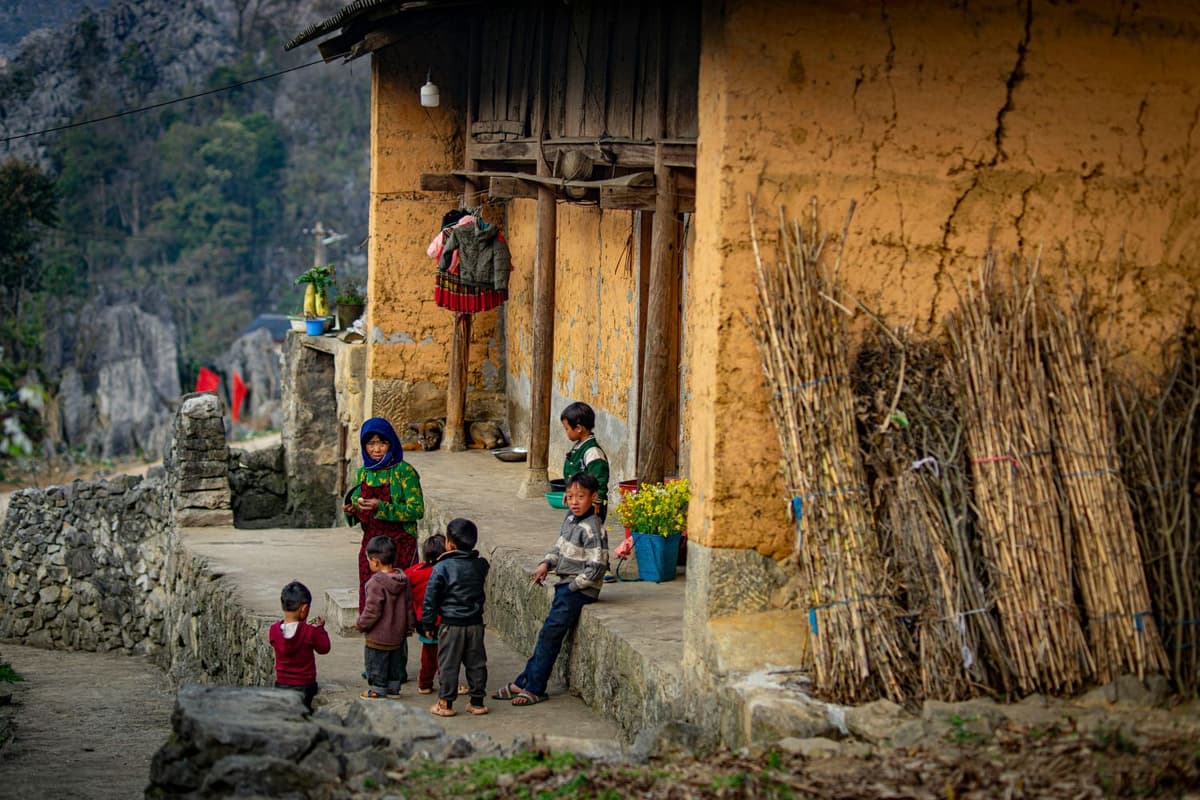
Take time to simply observe to truly understand the quiet rhythm of daily life in one of Vietnam’s most challenging landscapes.
4. Camp Beside the Nho Que River
Camping near the Nho Que River, particularly around the White Cliff area, is one of the most rewarding experiences for travelers seeking complete peace and isolation. Surrounded by mountains, you'll fall asleep to the sound of flowing water and wake up beneath a sky filled with stars.
The area remains largely untouched by commercial tourism, making it an ideal place for a digital detox with no Wi-Fi and very limited phone signal. Campfires, cool mountain air, and the silence of the canyon create an atmosphere that's difficult to find elsewhere in Vietnam.
Because facilities are limited, come prepared with warm clothing, drinking water, food, and camping essentials. Temperatures drop noticeably after sunset, even during warmer months, and visitors should always follow Leave No Trace principles to protect the fragile environment.
5. Taste Authentic Northeastern Vietnamese Food
A trip to the Nho Que River isn't complete without trying the local food. Near the parking areas, small family-run stalls serve simple but satisfying snacks such as grilled sweet potatoes, roasted corn, grilled eggs, and pork skewers wrapped in wild mustard greens, perfect after the walk back from the docks.
If you're staying overnight in Dong Van or Meo Vac, explore more of northeastern Vietnam's traditional cuisine. Khau Nhuc, slow-braised pork belly cooked with herbs and five-spice, is one of the region's signature dishes. Pho Chua, a refreshing cold noodle dish with roast pork, peanuts, fresh vegetables, and sweet-sour dressing, is another local favorite.
Don't miss Seven-Spice Roast Duck, marinated with a traditional blend of herbs before being roasted until the skin is crisp and the meat remains tender and juicy. These dishes offer a deeper taste of the culture that has shaped life across the Dong Van Karst Plateau for generations.
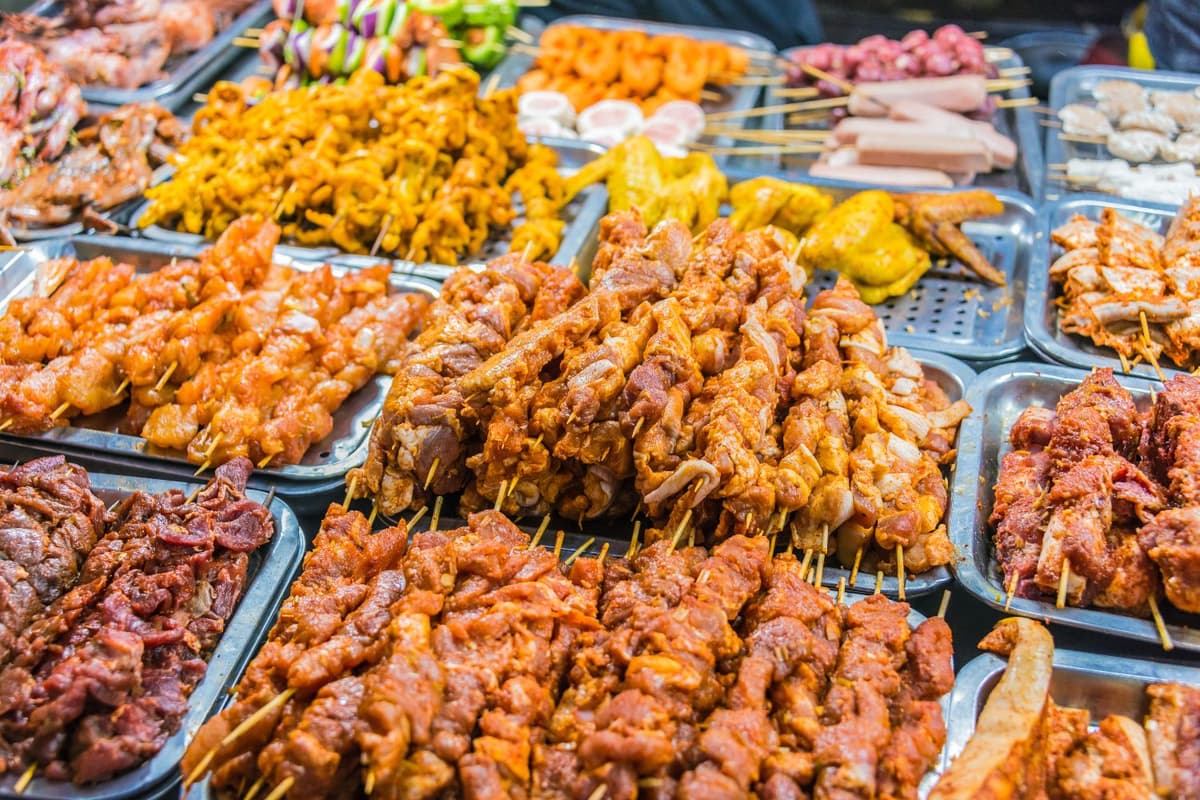
Grilled food stalls near the docks provide a perfect snack after your walk.
Insider Tips For Travelers To Avoid Scams
The Nho Que River boat trip is easy to enjoy if you know what to expect before arriving. These local tips will help you avoid confusion, overpaying, and common mistakes at the boat docks.
- Bring cash in VND. The docks sit deep below the canyon, where phone signal is weak and there are no ATMs or card machines. Carry enough cash for tickets, drinks, snacks, and motorbike taxi fees.
- Follow the listed prices. Boat fares are officially posted by local authorities. Most boat drivers are local residents earning a modest income, so avoid aggressive bargaining over small amounts.
- Do not swim in the river. The Nho Que River is deep and cold year round, around 15 - 18°C. Swimming is not allowed, and wearing a life jacket is mandatory on boat tours.
- Do not give money to children. You may meet local children asking for cash along the way. It is better not to give money, as this can encourage dependency. If you want to share something, bring small snacks instead.
- The best time for photos is before 10 AM or in the early afternoon. Avoid going after 3:30 PM, when the sun drops behind the cliffs and the canyon becomes darker and colder.
- Save energy for the walk back. The trail between the parking area and the dock can be around 2 km, and the climb back up is tiring. After the boat ride, reward yourself with local snacks near the parking area, such as grilled sweet potatoes, roasted corn, grilled eggs, or pork skewers wrapped in mustard greens.
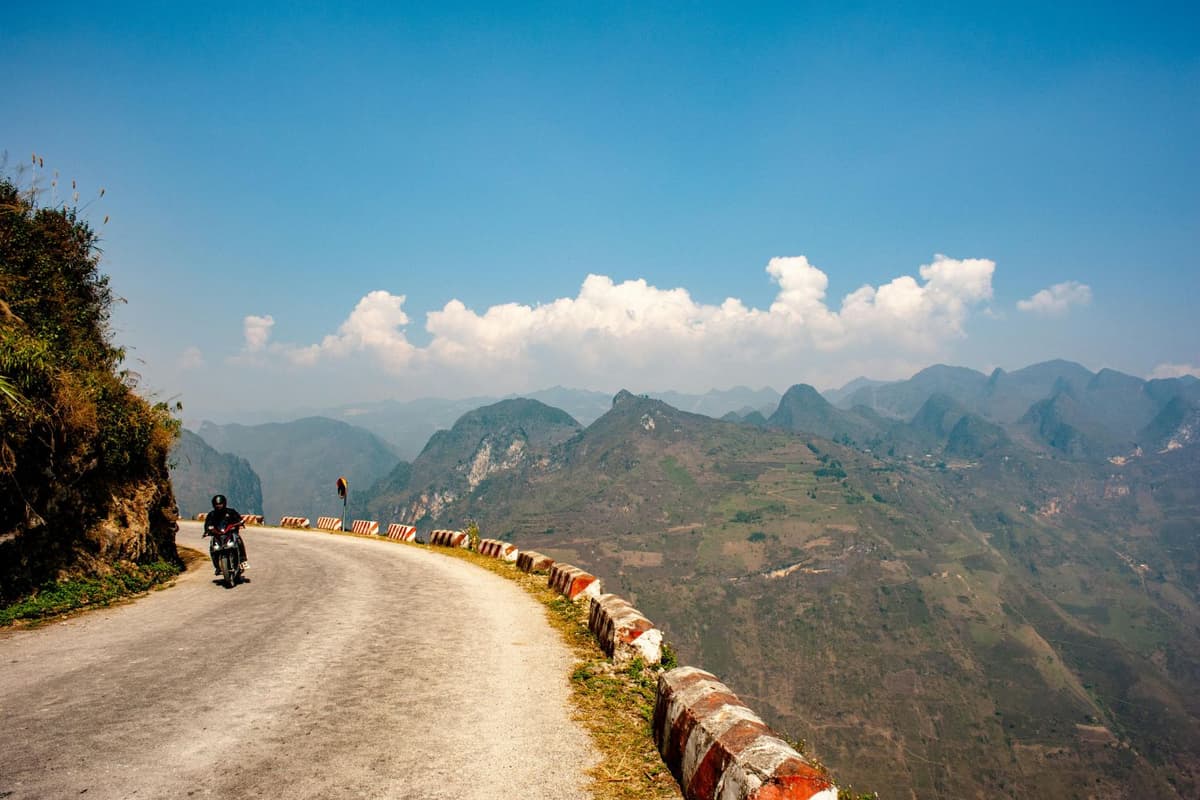
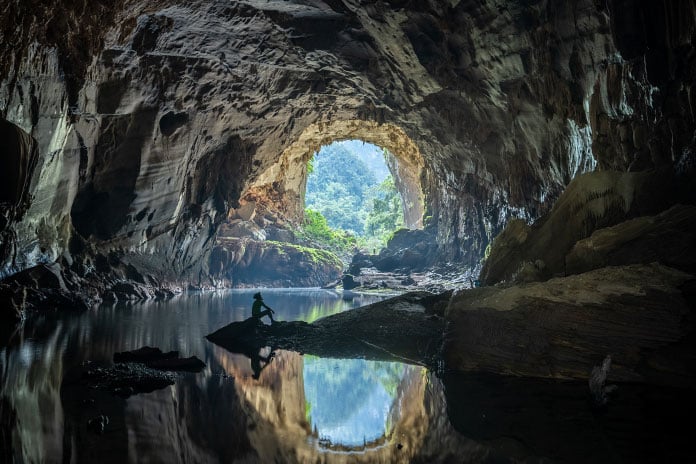
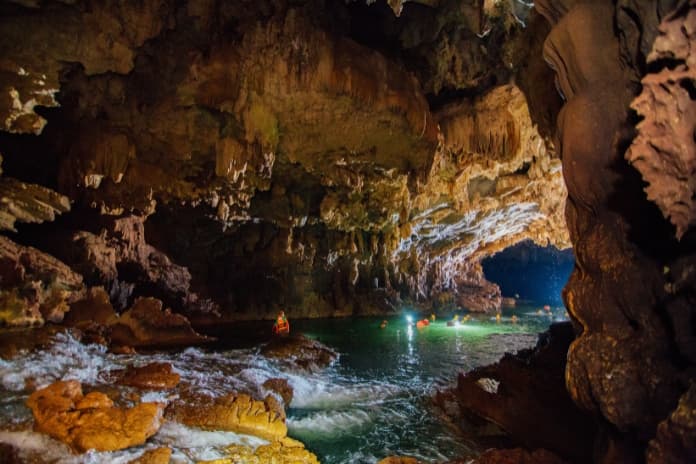
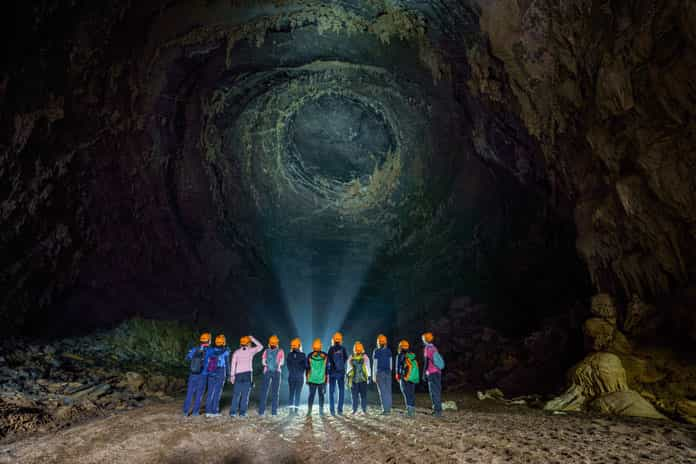
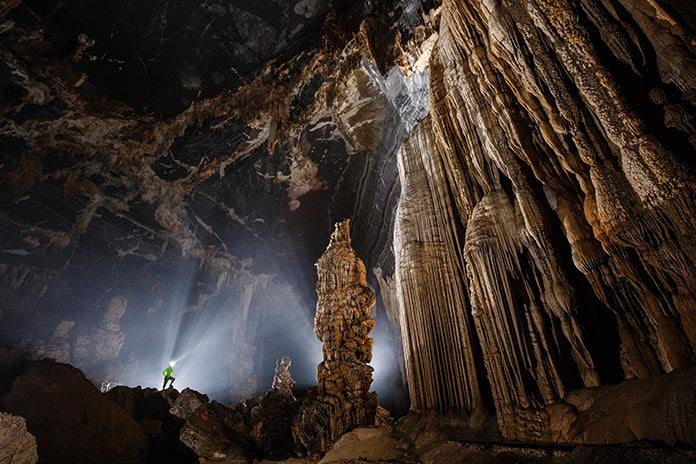
Whether you prefer long treks, camping in a cave, sleeping under the stars in the jungle, swimming underground in river caves, explore the huge dry caves or just taking an exploratory day trip, Oxalis Adventure Tours can provide the right amount of adventure just for you.
__637051782550081035.jpg)
__637051780703588520.jpg)
__637051765075307793.jpg)
__637051774329206026.jpg)
__637740499994967442.jpg)