
Na Hang - Lam Binh: Scenic Eco Tour in Northern Vietnam
While most visitors head straight to Sapa or Ha Giang when travelling Northern Vietnam, Na Hang - Lam Binh remains refreshingly under the radar. Just 5 hours from Hanoi, this protected landscape combines emerald lakes, ancient forests, limestone peaks, and villages where traditions have changed little over generations. With a remarkably rich ecosystem and the cultures of 12 ethnic groups, it is one of the few places where nature and local life remain largely untouched. If you're searching for a quieter adventure close to the capital, keep reading to discover why Na Hang - Lam Binh deserves a place on your itinerary.
Why Visit Na Hang Lam Binh, Tuyen Quang?
Unlike many of Vietnam's better-known destinations, Na Hang - Lam Binh has remained largely untouched by mass tourism. The slower pace, unspoiled landscapes, and living ethnic cultures make it an ideal destination for travelers looking for a more authentic side of northern Vietnam.
A Remarkable Natural Landscape
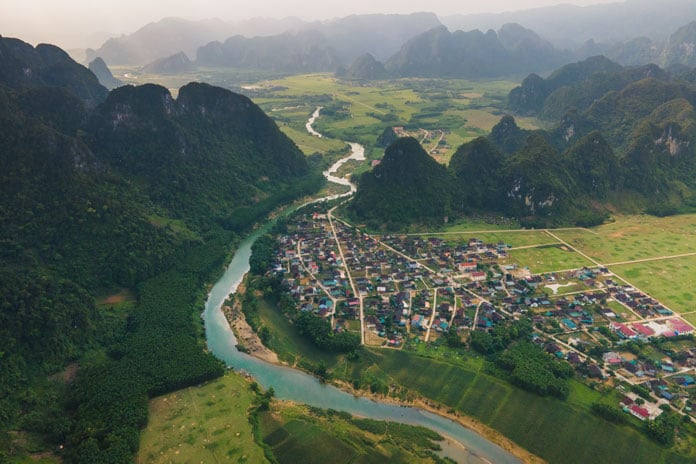
Spanning more than 40,000 hectares, Na Hang - Lam Binh combines over 21,000 hectares of protected forest with nearly 8,000 hectares of freshwater. Towering limestone mountains surround the vast lake, creating a majestic landscape of emerald waters nestled among towering limestone peaks. Its peaceful atmosphere and relatively low visitor numbers make it perfect for boat trips, kayaking, and nature escapes.
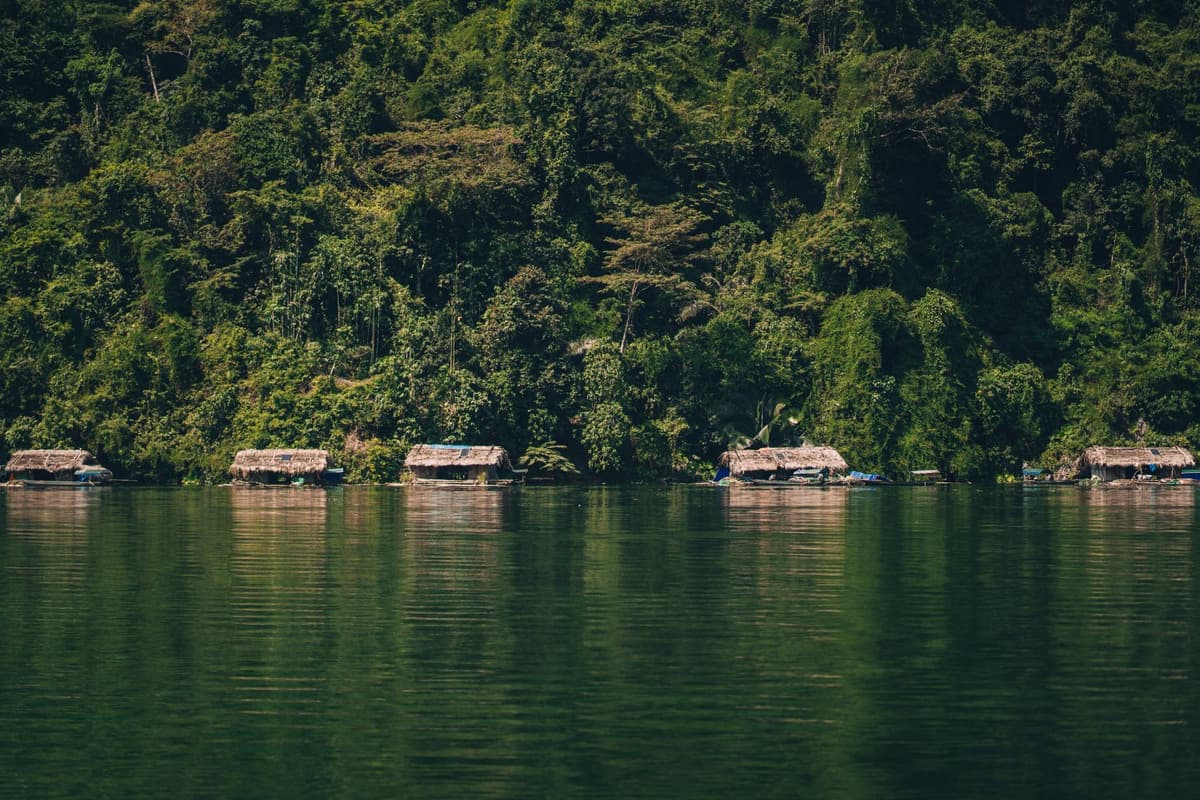
Traditional floating huts on the serene, emerald waters of Na Hang Lake.
One of Vietnam's Richest Biodiversity Hotspots
The reserve is internationally recognized for its ecological importance. WWF-US considers Na Hang - Lam Binh one of the world's most biologically valuable ecosystems. More than 2,000 plant species grow here, including ancient ironwood trees that have survived for centuries. The forests also shelter many endangered animals, most famously the critically endangered Tonkin snub-nosed monkey, one of the rarest primates on Earth, making the reserve a standout destination for ecotourism and wildlife enthusiasts.
Living Traditions of Northern Vietnam
Nature is only part of what makes Na Hang - Lam Binh special. The region is home to 12 ethnic groups, including the Tay, Dao, Hmong, and Pa Then, whose traditions remain an important part of daily life. Visitors can experience local culture through festivals such as the Long Tong Festival, where Tay communities celebrate the start of a new farming season, or the dramatic Fire Dancing Festival of the Pa Then people, a centuries-old ritual that reflects their spiritual beliefs and deep connection with nature.
Best Time To Visit Na Hang - Lam Binh Nature Reserve
The best time to visit Na Hang - Lam Binh depends on the experience you're looking for, but February to September offers the widest range of cultural festivals and outdoor activities.
- Spring (February to April): The best season for authentic cultural experiences, with traditional festivals taking place across the region. In March, pear blossoms cover Hong Thai Commune, around 1,200 meters above sea level, creating one of the area's most beautiful landscapes.
- Summer and early autumn (May to September) is the best time for Na Hang boat trips, kayaking, swimming, and visiting Khuoi Nhi Waterfall. The reservoir is full and the scenery is at its greenest. If traveling in July or August, check the weather forecast as heavy rain can occasionally affect boat services.
- Late autumn and winter (October to January): Cool, dry weather makes this a great time for forest trekking, cloud hunting, and staying in traditional Tay stilt houses, where evenings are often spent around a warm fire with local families.

Early morning mist creates the perfect scene for a peaceful visit.
How to Get to Na Hang Lam Binh, Tuyen Quang From Hanoi
Na Hang - Lam Binh is around 250 to 260 km from Hanoi, and the journey usually takes 5 to 7 hours, depending on traffic and your choice of transport.
Getting to Na Hang Lam Binh By Bus
Taking a bus is the safest and most convenient option for most international travelers. Several operators run direct services from My Dinh Bus Station to Na Hang, while others stop in Tuyen Quang City. Then you can transfer to a local bus or taxi for the final leg. Overnight and daytime departures are both available.
By Car or Motorbike
Driving gives you more flexibility if you plan to explore the region at your own pace. The fastest route follows the Noi Bai - Lao Cai Expressway, exits at IC9, then joins National Highway 2 toward Tuyen Quang. Another popular route passes through Vinh Yen, follows National Highway 2 to Tuyen Quang City, then continues through Chiem Hoa before reaching Na Hang.
Safety Tips
Mountain roads become narrower and more winding after leaving Tuyen Quang City, so self-driving is best suited to experienced drivers. Wear a quality helmet if riding a motorbike, keep your fuel tank topped up before entering remote areas, and avoid driving after dark whenever possible.
During the rainy season, check weather conditions before departure because heavy rain can reduce visibility and make mountain roads slippery.
Top Untouched Attractions in Na Hang - Lam Binh For Eco Tourism Enthusiasts
Na Hang - Lam Binh is filled with attractions that still feel largely untouched by mass tourism. From emerald lakes and hidden waterfalls to ancient forests and sacred temples, these highlights offer a different side of northern Vietnam. Here's what to expect before you go.
1. Cruise Across Na Hang Lake
Na Hang Lake is the heart of the Na Hang - Lam Binh Nature Reserve and one of the top attractions in Tuyen Quang. Covering around 8,000 hectares, the lake was formed where the Gam and Nang rivers meet, creating a spectacular landscape of emerald water and towering limestone peaks. Often praised for its stunning, serene beauty, it is best explored by boat, passing secluded coves, waterfalls, and the area's famous 99 limestone mountains.
Besides sightseeing, adventurous travelers can rent a kayak or SUP to paddle into quiet corners that larger boats cannot reach. Many visitors also choose to enjoy a local lunch on board or camp by the lakeshore for sunset and stargazing, making it one of the most memorable experiences in northern Vietnam.
Best time to visit: A complete boat trip usually takes around 3.5 hours. Early morning offers misty landscapes, while late afternoon brings beautiful golden light across the lake.
Na Hang Entrance fees:
- Nature reserve entrance: 40,000 VND/adult, 20,000 VND/child
- Private boat: Around 1,000,000 VND for a small boat (5 - 10 passengers) and up to 2,000,000 VND for larger boats
- Kayak rental: Starts from 70,000 VND for the first hour
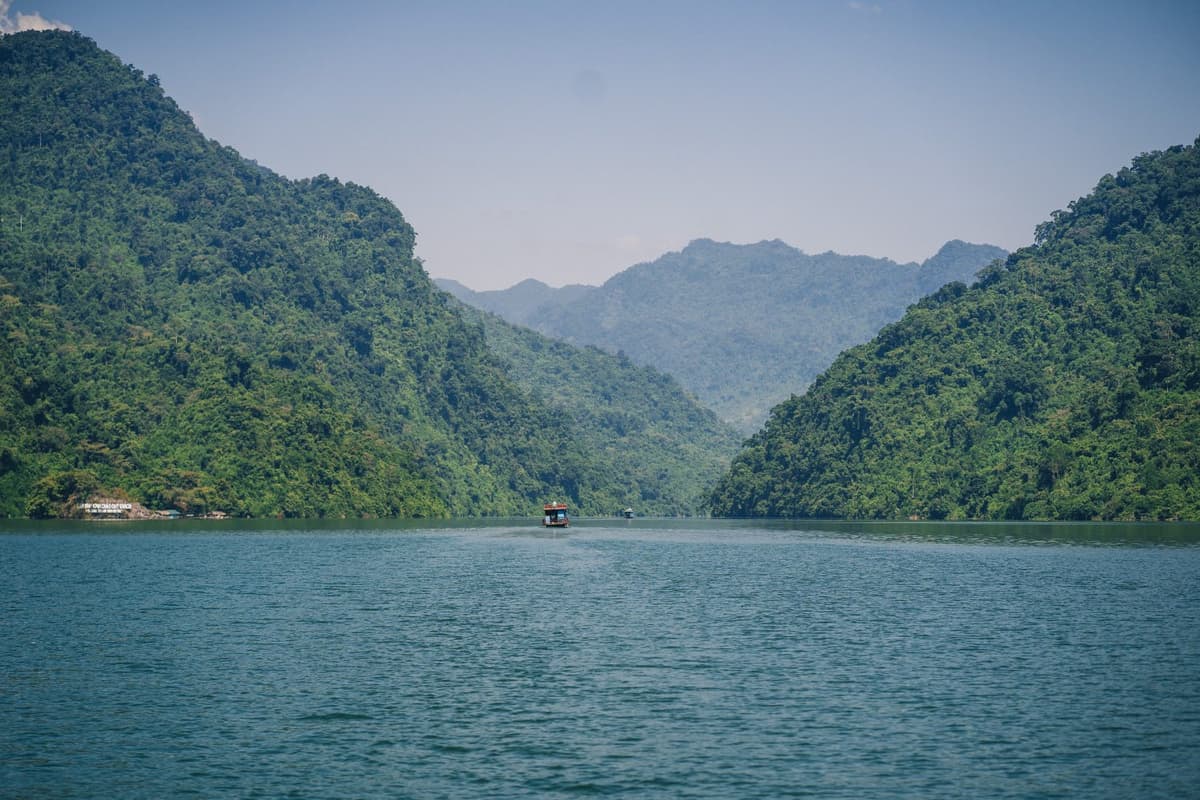
Sailing through the calm, emerald waters of Na Hang Lake.
2. Visit Coc Vai Pha, The Sacred Limestone Pillar
Coc Vai Pha is the most recognizable landmark on Na Hang Lake and one of the most photographed natural attractions in the region. Rising dramatically from the middle of the lake, this towering limestone pillar is known as the "Buffalo Tethering Pole of Heaven" in the local Tay language.
According to legend, it is linked to the giant Tai Ngao, whose story has been passed down through generations. Most boat tours slow down here, allowing visitors to admire the rock formation from every angle and hear the local folklore behind it.
One of the most popular traditions is gently touching the cliff while making a wish for health, happiness, or good fortune. On calm days, you can also paddle around the rock by kayak or SUP for a closer look and a unique perspective of the surrounding limestone landscape.

The sacred Coc Vai Pha pillar, an iconic symbol of the reservoir.
Best time to visit: Coc Vai Pha is included on most Na Hang Lake boat routes and is usually reached 15 - 20 minutes after passing the famous limestone peaks. Sunset is especially beautiful, with warm light reflecting across the lake.
Entrance fees:
- Admission: Free
- Included in: All standard Na Hang Lake boat tours
- Kayak or SUP: Available through local operators if you want to explore around the rock independently.
3. Cool Off At Khuoi Nhi Waterfall And Natural Fish Spa
One of the best things to do in Na Hang is visiting Khuoi Nhi Waterfall, a peaceful cascade hidden deep inside the forest. After a short boat ride across Na Hang Lake, you'll follow a scenic trail for about 10 - 15 minutes to reach the upper sections of the waterfall. Crystal-clear water flows over smooth limestone rocks, creating natural pools that are perfect for cooling off on warm days.
The highlight is the unique natural fish massage. Small wild fish gently nibble away dead skin while you soak your feet in the cool stream, creating a surprisingly relaxing experience that many visitors remember long after their trip. If conditions are safe, you can also swim beneath the lower cascades or simply enjoy the quiet rainforest surroundings.
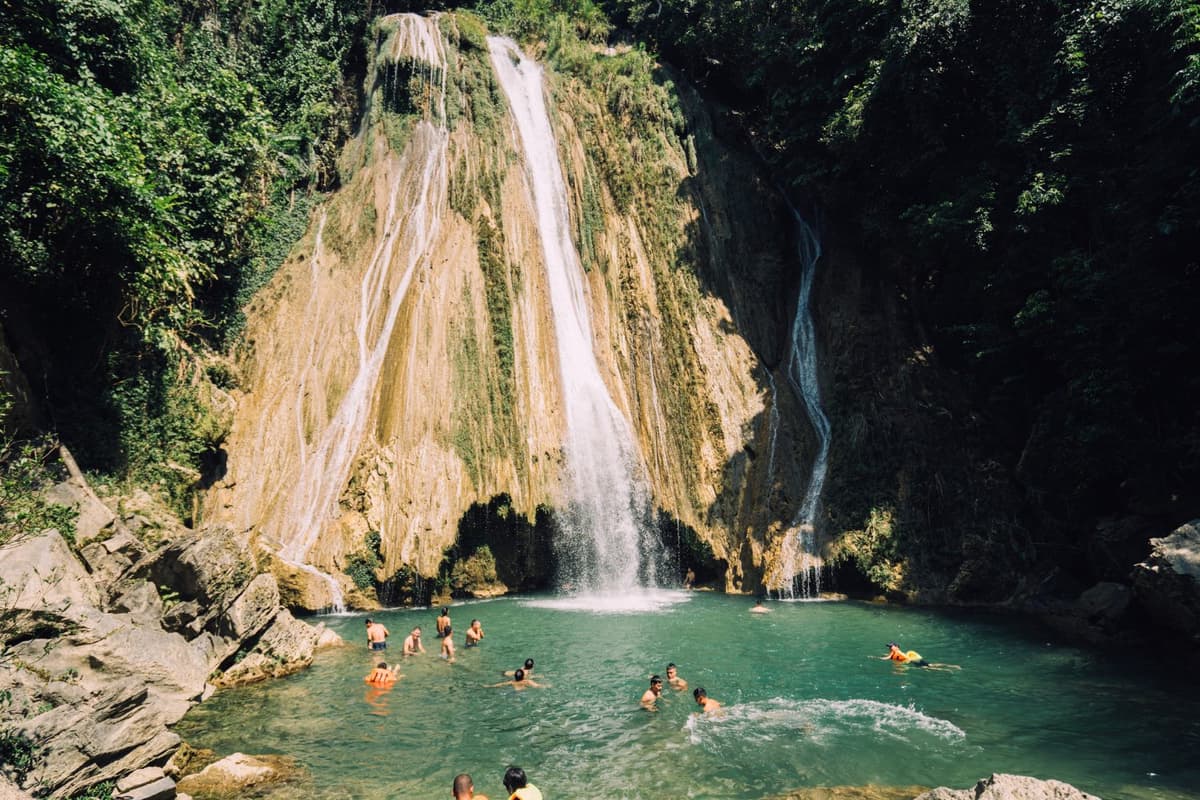
Relaxing in the refreshing, crystal-clear waters of Khuoi Nhi Waterfall.
Best time to visit: The waterfall is at its most impressive between May and September, when water levels are higher. Visit during daylight hours for safer hiking, and allow around 10 - 15 minutes to reach the third tier, which offers the best views.
Entrance fees:
- Natural fish massage: Free
- Plastic sandal rental: Around 5,000 VND, recommended for the slippery rocks
4. Trek Through Tat Ke Ban Bung Nature Reserve
If you enjoy wildlife and rainforest trekking, this is one of the most rewarding experiences in the Na Hang - Lam Binh region. Covering more than 21,000 hectares of special-use forest, Tat Ke Ban Bung Nature Reserve protects one of northern Vietnam's richest ecosystems. Trails lead through ancient forests filled with towering thousand-year-old ironwood trees, limestone valleys, and streams, offering a completely different landscape from the lake.
The reserve is also internationally recognized for its biodiversity. It provides critical habitat for more than 2,000 plant species and many rare animals, including the critically endangered Tonkin snub-nosed monkey, one of the world's rarest primates. While wildlife sightings are never guaranteed, early morning hikes offer the best chance to hear birds and spot native species in their natural habitat.
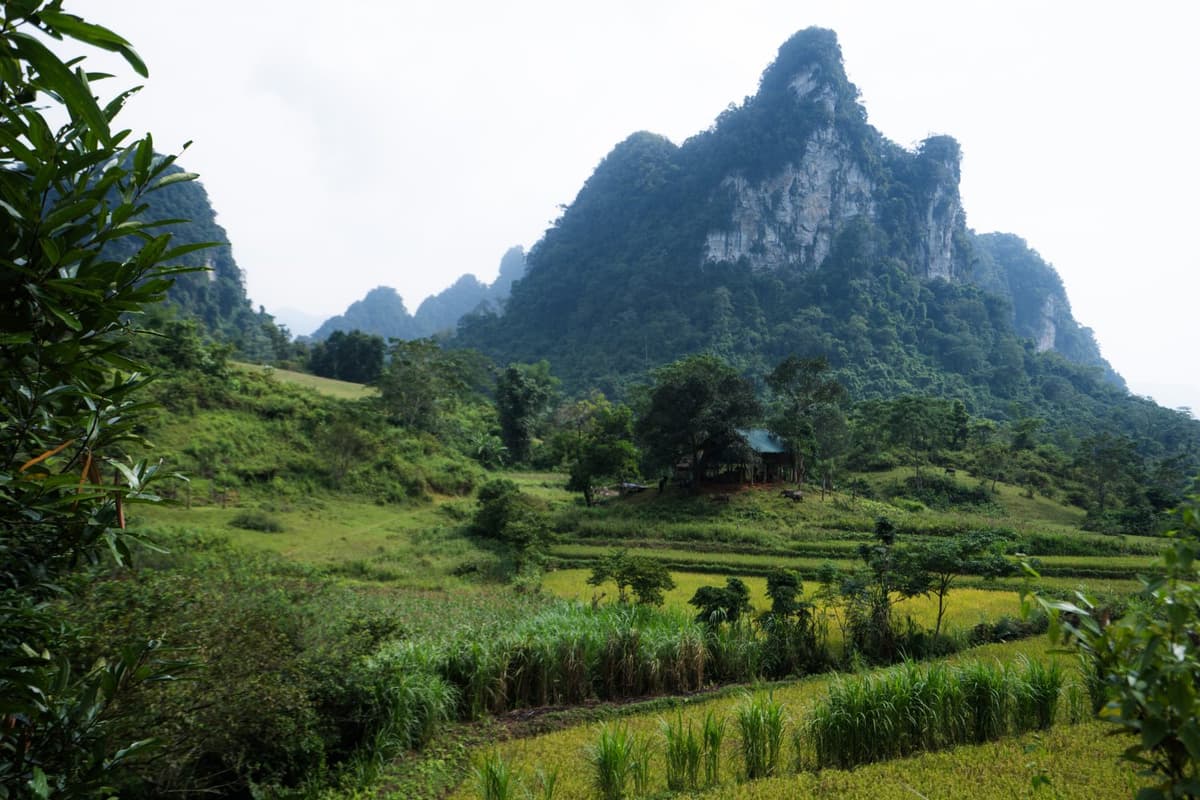
Trek through the ancient forests and remote hamlets of Tat Ke Ban Bung.
Best time to visit: Start trekking early in the morning, especially during the dry season, when trails are safer and wildlife is more active.
Entrance fees:
- Forest entrance: Free
- Local guide: Hiring a local guide is strongly recommended and typically costs 300,000 - 500,000 VND per trip. Guides help with navigation, improve wildlife spotting opportunities, and ensure a safer trekking experience
5. Discover Song Long Cave And The 15 Tiers Of Nam Me Waterfall
For travelers looking beyond the usual boat tours, Song Long Cave and Nam Me Waterfall offer one of the most adventurous day trips in the Na Hang - Lam Binh area. The route combines a spectacular limestone cave with a physically demanding waterfall trek, making it ideal for experienced hikers who enjoy off-the-beaten-path destinations.
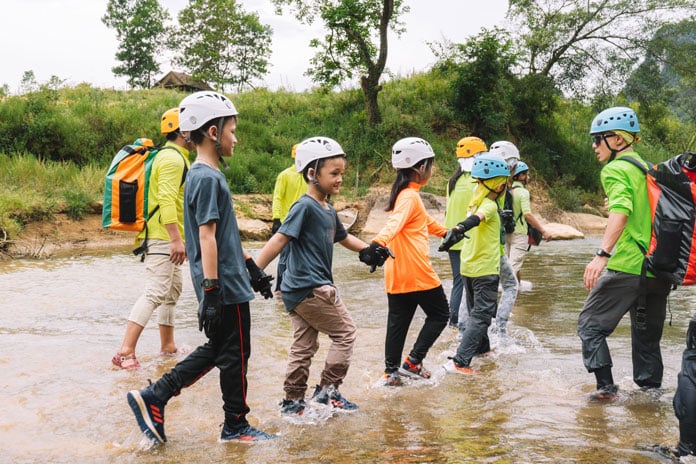
Nam Me Waterfall stretches for more than 4 km across 15 cascading levels, requiring visitors to scramble over rocks, follow forest streams, and climb steep, slippery sections. The hike takes around 5 - 6 hours round trip, so good fitness and stable weather are essential. Only attempt the trek on dry days, as heavy rain can make the rocks and river crossings extremely dangerous.
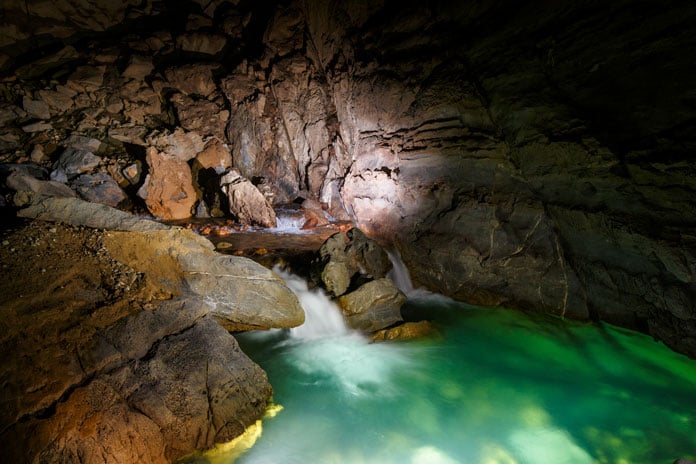
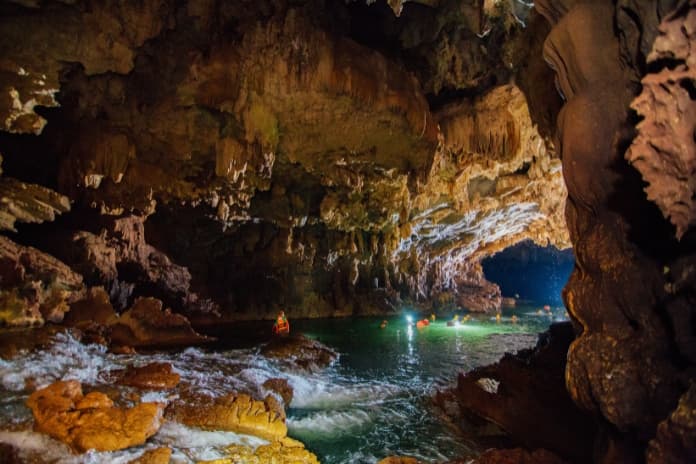
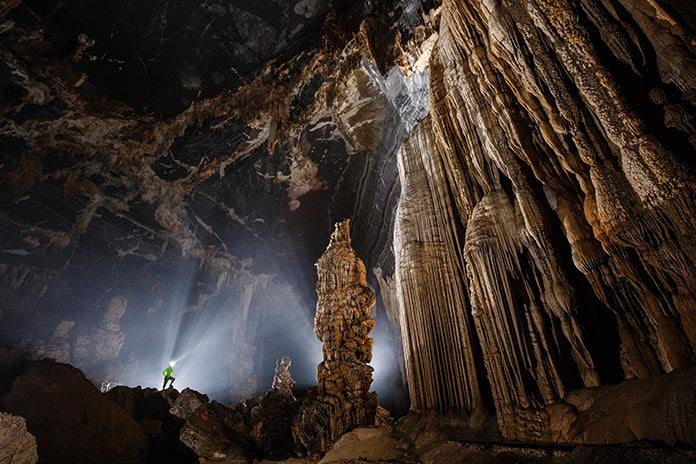
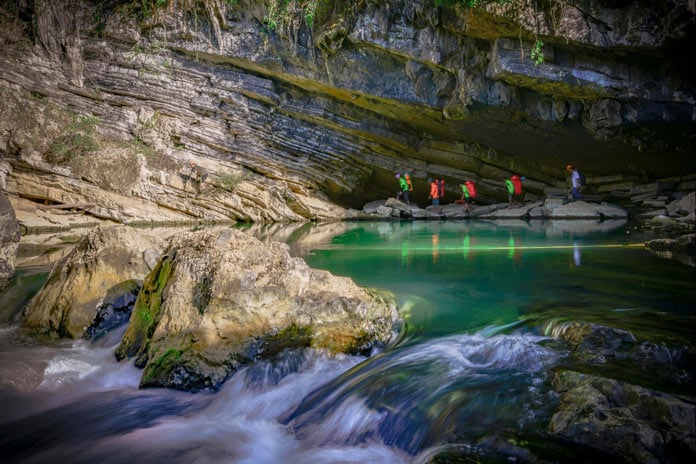
Nearby, Song Long Cave provides a complete contrast. The cave features an impressive 15-meter-high entrance and a vast interior filled with thousands of sparkling stalactites and stalagmites, making it one of the area's most fascinating limestone formations.
Best time to visit: Plan this trip during the dry season and start early in the morning to allow enough time for both the waterfall and cave. Avoid visiting after heavy rainfall.
Entrance fees:
- Song Long Cave: Free
- Nam Me Waterfall: No entrance fee
- Local porter: Required for the waterfall trek, with prices starting at around 800,000 VND for a two-day trip including local support.
Where To Stay In Na Hang, Tuyen Quang
Na Hang - Lam Binh is best experienced by staying close to nature. Most accommodations are locally owned, giving visitors a chance to enjoy traditional Tay hospitality while supporting community-based tourism. Whether you prefer an authentic stilt house or a private hotel room, there are options for every travel style.
Authentic Homestay Experience
Staying in a traditional Tay stilt house is the most memorable way to experience the region. In Thuong Lam Commune, especially Na Tong Village, popular choices include Tai Ngao Homestay, Hoang Tuan Homestay, Khuoi Nhi Homestay, A Phu Homestay, and Anna Homestay. Most offer spacious wooden houses, family-style meals, and easy access to the lake and nearby attractions.
Another excellent option is Nam Dip Community Tourism Village in Lang Can Commune. Nam Dip Homestay stands out with its bamboo architecture, natural stream-fed swimming pool, and peaceful surroundings. Nearby, Anh The Homestay and Chau Xuan Viet Homestay are also well-rated choices.
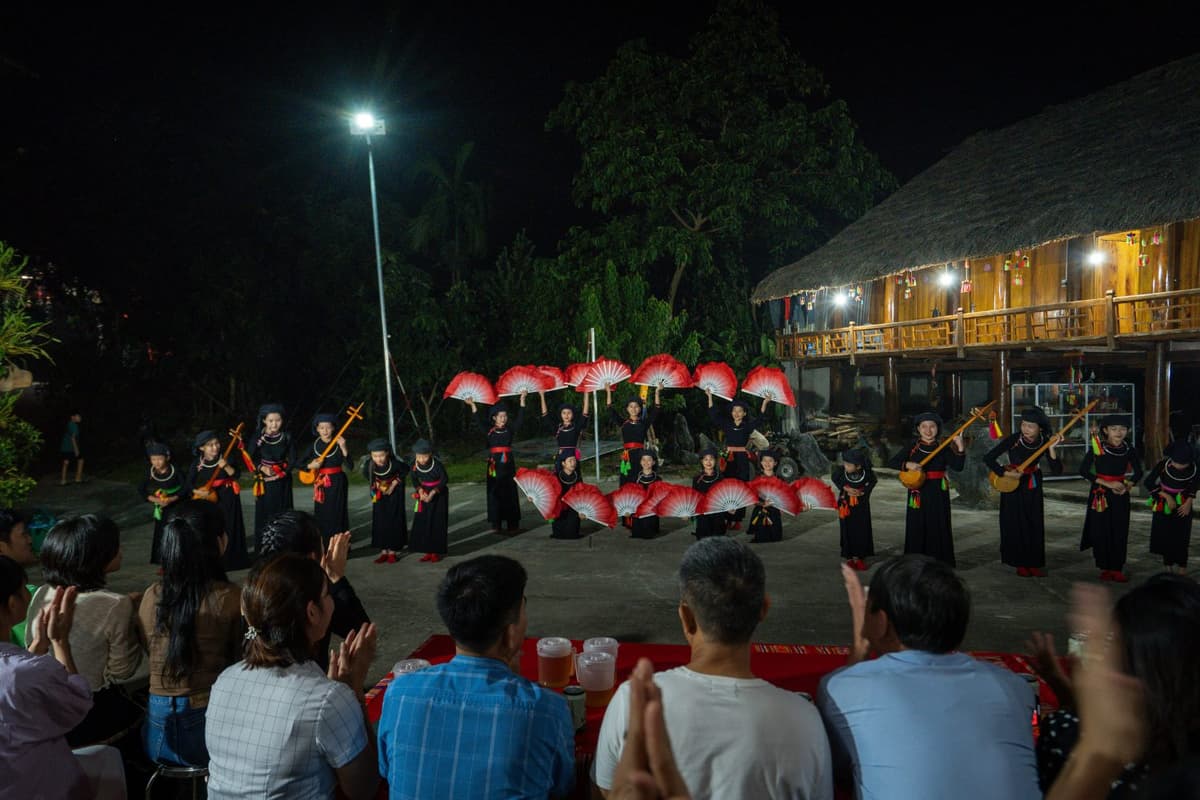
Experience warm Tay hospitality in a traditional wooden stilt house.
Hotels In Na Hang Town
Travelers looking for more privacy or easier transport connections can stay in Na Hang Town. Hotels such as Viet Cuong Hotel, Sao Mai Hotel, and Lien Khu Guesthouse provide simple private rooms within easy reach of bus services, restaurants, and motorbike rentals.
Practical Booking Tips:
- Budget: Dorm beds usually cost 80,000 - 150,000 VND per night, while private rooms range from 300,000 - 600,000 VND.
- Book meals: Most homestays serve home-cooked dinners for around 120,000 - 150,000 VND per person, featuring local specialties such as stream fish, stuffed bamboo shoots, and five-color sticky rice. Hosts can also help arrange boat tours around Na Hang Lake.
- Reserve ahead: Accommodation fills quickly on weekends and during peak travel seasons, so contact your homestay in advance, especially if you would like meals prepared before arrival.
Local Food You Should Try In Na Hang - Lam Binh
Food is an essential part of the Na Hang - Lam Binh experience. Most ingredients come directly from the surrounding forests, rivers, and small family farms, giving every meal a fresh, seasonal character. The best way to discover local cuisine is by sharing a traditional home-cooked feast at a village homestay.
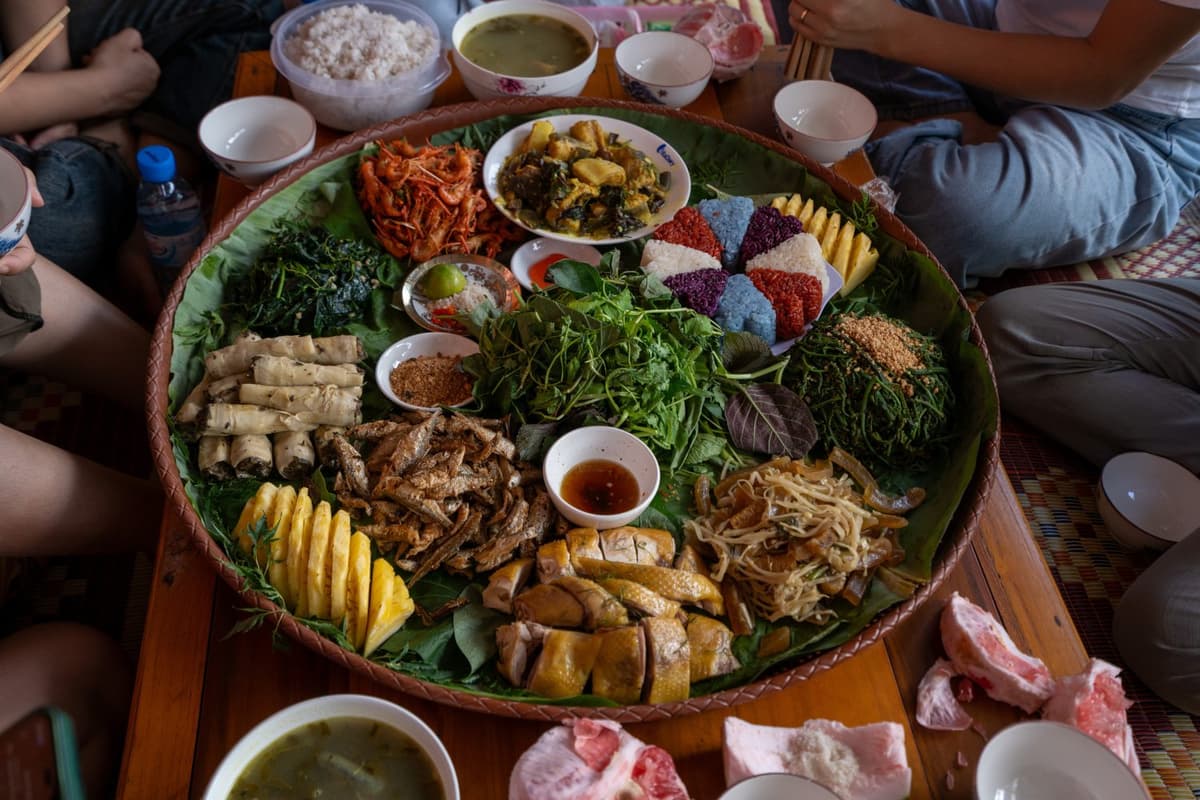
Try local flavors by sharing a traditional home-cooked feast.
A typical meal features bamboo-grilled lake fish, stir-fried wild fern with garlic, free-range "rocket pig" roasted with mac mat leaves, and five-color sticky rice naturally dyed with forest plants. Together, these dishes showcase the distinctive flavors of Vietnam's northern highlands. You can also try some other traditional dishes:
- Smoked buffalo meat: One of the region's signature specialties, buffalo meat is cured over a wood fire and seasoned with mac khen pepper and doi seeds. The result is a smoky, chewy texture with a rich mountain aroma.
- Grilled Gam river fish: Fresh species such as lang fish and bong fish are caught from the lake and grilled over charcoal. Their firm, naturally sweet meat is a highlight of many local meals.
- Corn wine: Traditional corn wine is fermented with a starter made from more than 20 forest herbs, creating a smooth, lightly sweet flavor that locals proudly serve during family meals and celebrations.
- Wild ferns and bamboo shoots: Foraged from nearby forests and streams, these seasonal vegetables are simple, fresh, and pair perfectly with grilled meats and fish.
Adventurous eaters can try ant egg cake, a rare seasonal delicacy with a rich, buttery flavor. Travelers with food allergies should ask about the ingredients before ordering.
A Perfect 2 Day Na Hang Lam Binh Itinerary
If you only have a weekend, this 2-day, 1-night Na Hang - Lam Binh itinerary covers the region's highlights while leaving enough time to enjoy its slower pace and local culture.
Day 1: Hanoi to Na Hang and Lake Exploration
Leave Hanoi early in the morning for the 5 - 7 hour journey to Na Hang. After lunch in town, head to the boat pier for an afternoon cruise across Na Hang Lake.
Along the way, stop at Coc Vai Pha, the iconic limestone pillar where many visitors make a wish, then continue to Khuoi Nhi Waterfall for a short forest walk, a refreshing swim, or the area's famous natural fish massage.
In the evening, stay at a traditional Tay homestay in Thuong Lam Commune or Nam Dip Community Tourism Village.
Enjoy a home-cooked dinner featuring local specialties before watching a traditional Then singing and Tinh lute performance, one of the cultural highlights of northern Vietnam.
Day 2: Village Life or Adventure Trekking
Wake up to mist-covered mountains and spend the morning exploring the countryside. A leisurely bike ride through Nam Dip Village offers a chance to visit traditional stilt houses, meet local families, and learn about Tay handicrafts.
If you prefer adventure, swap the cycling trip for a guided trek in Tat Ke Ban Bung Nature Reserve, or challenge yourself with the 5 - 6 hour hike to Nam Me Waterfall. This route requires good fitness and a local guide but rewards you with one of the region's most untouched landscapes.
After lunch, return to Na Hang Town and begin your journey back to Hanoi, arriving in the evening.
Essential Travel Tips For Visiting Na Hang Lam Binh
Na Hang - Lam Binh remains one of northern Vietnam's lesser-known destinations, which is part of its charm. Tourism infrastructure is still developing, so a little preparation goes a long way. These practical tips will help you travel more comfortably while protecting the region's pristine landscapes and local communities.
- ATMs are limited outside Na Hang Town, and many homestays, boat operators, and small local shops only accept cash. So bring enough cash.
- Download offline maps before you go. Mobile signal can become weak or disappear completely around the lake, waterfalls, and remote forest trails. Offline navigation makes exploring much easier.
- Pack the right outdoor gear. Wear trekking shoes or sandals with good grip, especially if you plan to visit waterfalls or hike through the forest. Don't forget insect repellent, as mosquitoes are common in warmer months.
- Dress respectfully and ask before taking photos. Wear modest clothing when visiting Pac Ta Temple or Pac Vang Temple. In local villages, always ask for permission before photographing residents, especially older people and children.
- Take all rubbish with you, avoid single-use plastics whenever possible, and stay on marked trails. Respect the lake and forest ecosystem by leaving wildlife and plants undisturbed, helping preserve Na Hang - Lam Binh for future visitors.



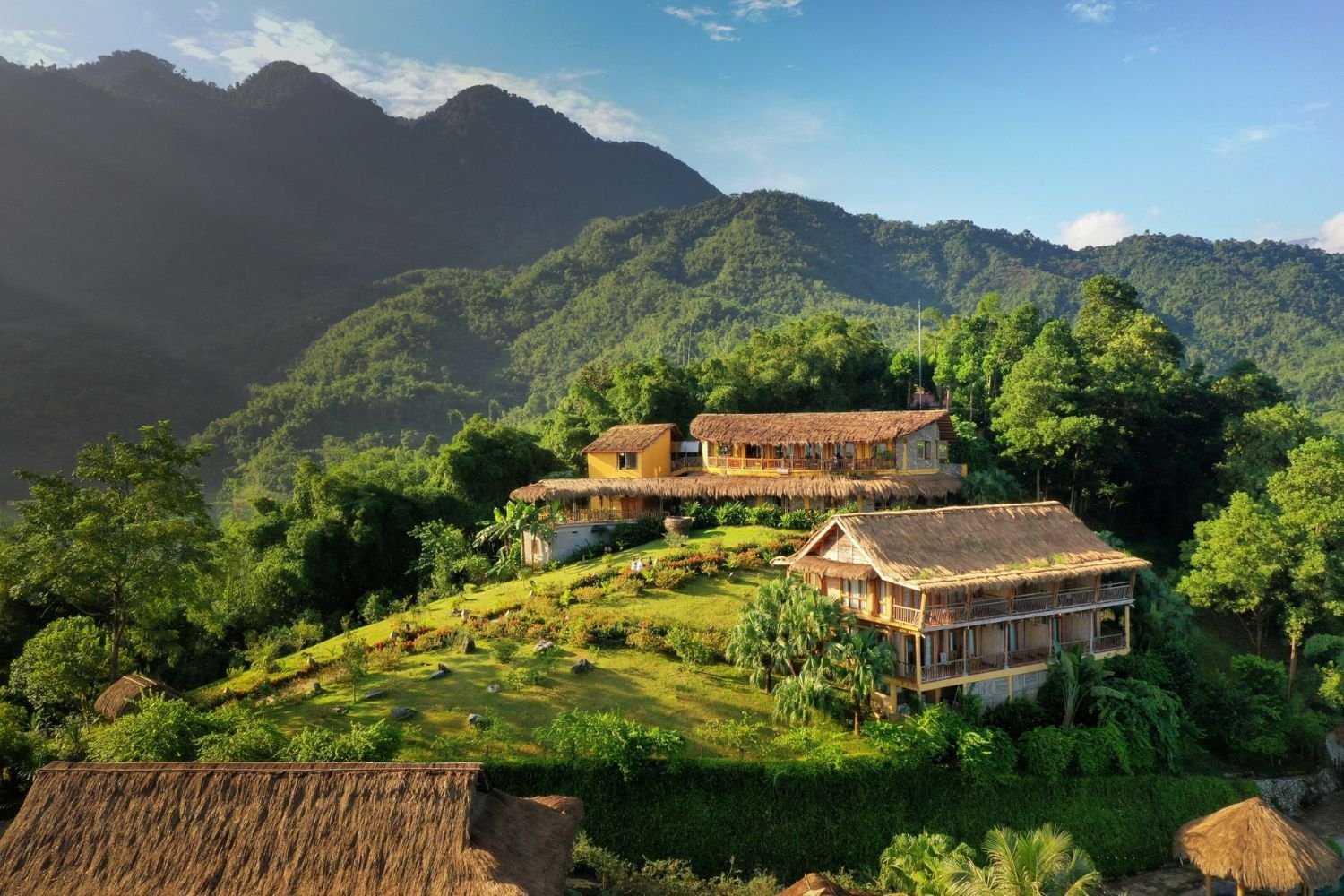
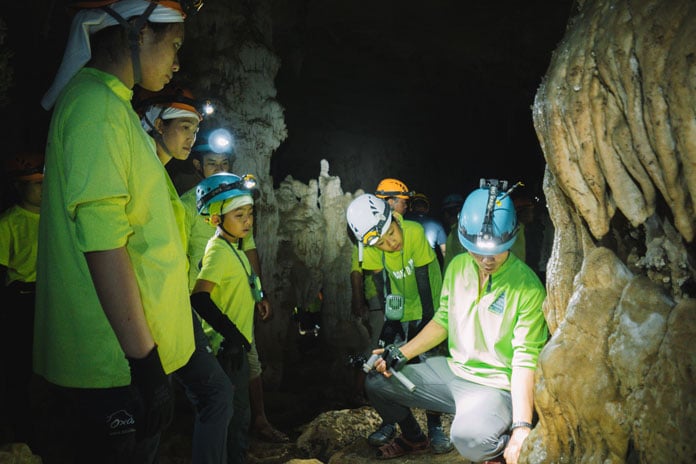
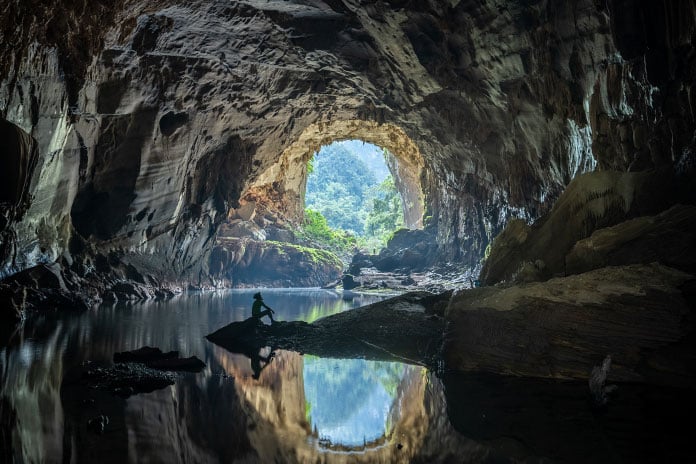
Whether you prefer long treks, camping in a cave, sleeping under the stars in the jungle, swimming underground in river caves, explore the huge dry caves or just taking an exploratory day trip, Oxalis Adventure Tours can provide the right amount of adventure just for you.
__637051782550081035.jpg)
__637051780703588520.jpg)
__637051765075307793.jpg)
__637051774329206026.jpg)
__637740499994967442.jpg)