Ta Con Airfield: A military fortress of Khe Sanh battlefield
Ta Con Airfield sits in the heart of the Khe Sanh basin in Quang Tri. Once considered an impregnable fortress by the U.S. military, it held a strategic position that made it a critical hub for supply operations and frontline defense.
And it was here that the fortress ultimately collapsed under the relentless advance of the Vietnamese forces. This prompted the U.S. Secretary of Defense James R. Schlesinger to admit: "Though we have thrown out the US reputation to retain Khe Sanh and forced the Chairman of the Joint Chiefs of Staff to make a blood pledge, but ultimately we have had to retreat."
Today, when visiting Ta Con Airfield, travelers can immerse themselves in a vivid historical setting. Through the story of Ta Con Combat Base, they can learn about each battle, each victory, and truly feel the unyielding spirit of the heroes who defended every inch of this sacred land.
The historical role of Ta Con Airbase: Where the Giant fell
Ta Con Airfield was constructed by U.S. forces between 1965 and 1966 on a vast plain, forming the core of the Khe Sanh defensive complex. The location of Ta Con Airfield held exceptional strategic importance, positioned near the 17th Parallel demilitarized zone, along the Ho Chi Minh Trail, and only about 80 km from the Vietnam – Laos border.
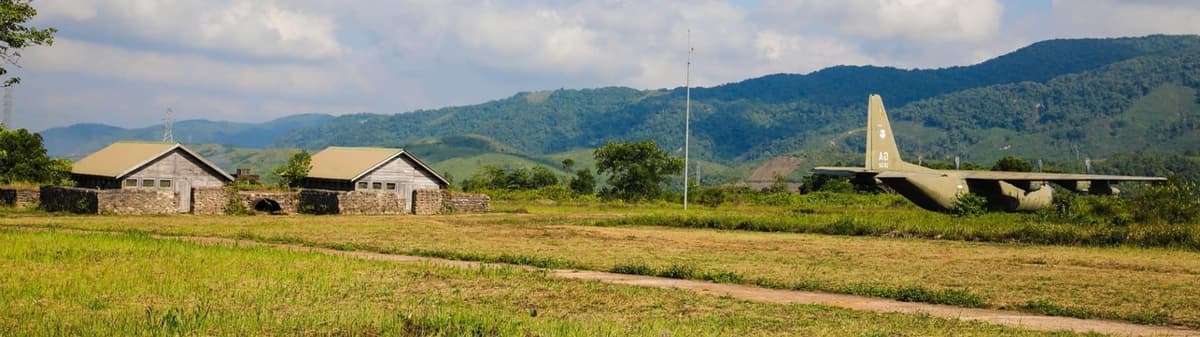
Ta Con Airfield in Khe Sanh covers a total area of approximately 10,000 m², featuring a fortified defense system, bunkers, and a makeshift runway of about 3km. The runway was paved with thousands of tons of metal planks to accommodate heavy aircraft. There are the C-130 and C-123, as well as various other aircraft, including fighter jets, transport planes, and reconnaissance aircraft.
The Route 9 – Khe Sanh Campaign began on January 20, 1968. More than 40,000 Vietnamese soldiers were mobilized. They include infantry divisions, artillery regiments, air defense units, armored battalions, and, notably, elite snipers. The coordinated deployment of multiple military branches, supported by hundreds of artillery pieces and dozens of tanks and armored vehicles, took U.S. forces completely by surprise. This revealed the scale, strength, and remarkable precision of the Vietnamese army.
The Khe Sanh battle unfolded in four major offensive phases. By February 7, 1968, liberation forces had seized control of multiple strongholds along Route 9, completely isolating Ta Con Airfield within the Khe Sanh basin. On March 22, 1968, Vietnamese artillery launched an intense, continuous assault on the command center of the Ta Con defensive cluster, though it had not yet succeeded. Finally, on July 9, 1968, liberation forces achieved a decisive victory and successfully reclaimed Ta Con Airfield.
The grueling battle at Ta Con Airfield played a crucial role in weakening U.S. firepower and disrupting their supply lines. More than 197 aircraft and countless armored vehicles and tanks were shot down or destroyed, delivering significant losses to U.S. forces.
Among the most devastating blows was the incident on February 11, 1968. Two C-130 aircraft were struck by artillery and exploded while attempting to land at Ta Con Combat Base. A moment delivered a severe psychological shock to U.S. forces.
The victory at Ta Con Airfield played a pivotal role in the resounding success of the Route 9 – Khe Sanh Campaign. It created the momentum that ultimately pressured the United States to sit down at the negotiating table during the Paris Peace Accords.
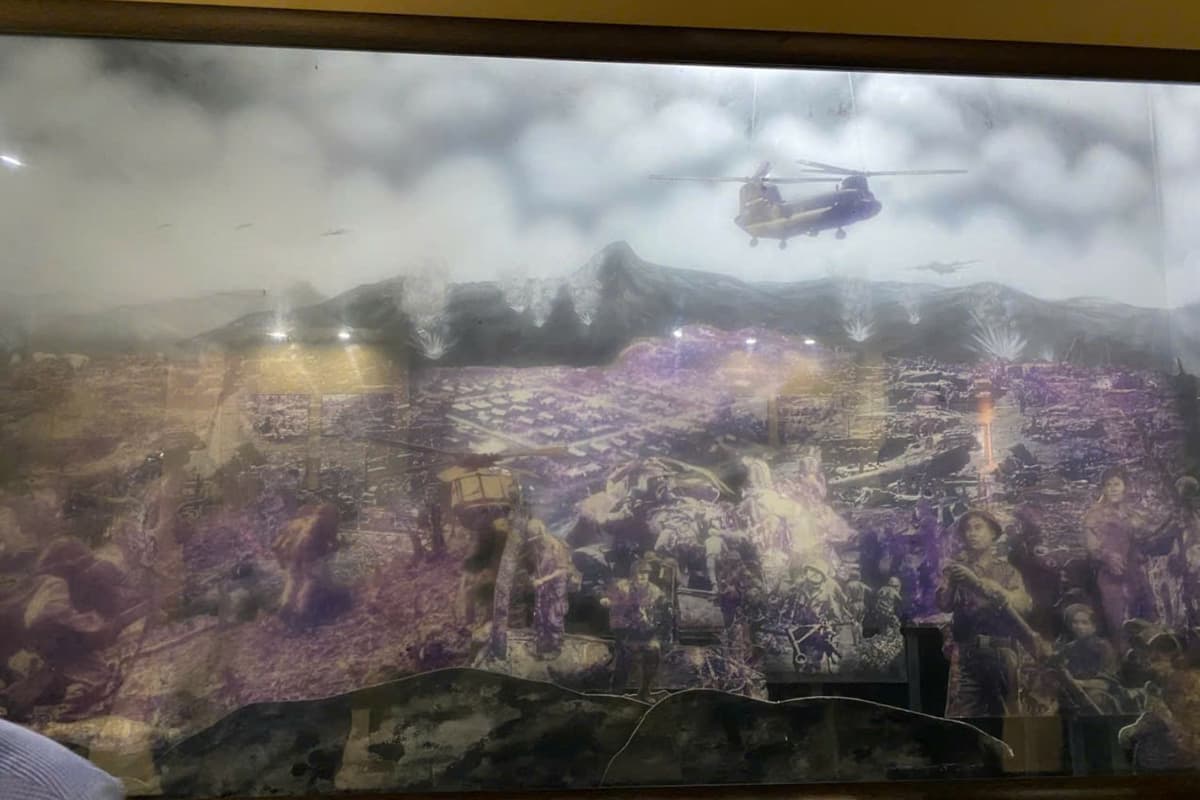
Historical records vividly recreate the brutal battlefield and the devastating power of artillery at Khe Sanh
Things to do at Ta Con Airport – Khe Sanh Victory Museum
The war has long passed, and the country is now unified. Today, Vietnam stands confidently on the international stage and has normalized diplomatic relations with the United States. Yet the nation’s history, the scars of war, and legendary names such as Ta Con Airfield and Khe Sanh continue to echo through generations.
Ta Con Airfield was preserved and officially recognized as a national historic site in 1986. It has since become an open-air museum, where travelers can explore and reflect on a pivotal chapter of history during their journey of discovery.
Sightseeing at Ta Con former airport
When visiting Ta Con Airfield, travelers gain a deeper understanding of the structure and operations of the U.S. base before 1968. The remnants of the runways, abandoned aircraft such as C-130s, UH-1s, CH-47s, and left-behind tanks now rust away. All of them vividly reflect the devastation of war in stark contrast to the peaceful, lush green mountains and forests that surround the site today.
Travelers can stroll through the airfield, explore the site, and take photos with the weapons that were once a source of pride for the U.S. military. The “iron birds” that once roamed the skies with destructive power now lie quietly, rusting. It is a silent testament to the failed ambitions of the military minds that sought to dominate Vietnam.
The U.S. forces had constructed a formidable network of fortifications at the Khe Sanh stronghold. It includes trenches, bunkers, barbed wire fences, minefields, and intricate electric barriers. Today, some gun emplacements, bunkers, shelters, and sections of the defense system have been preserved. The story of Ta Con Combat Base offers visitors a glimpse into the historic battlefield and evokes memories of the fierce conflicts that once raged here.
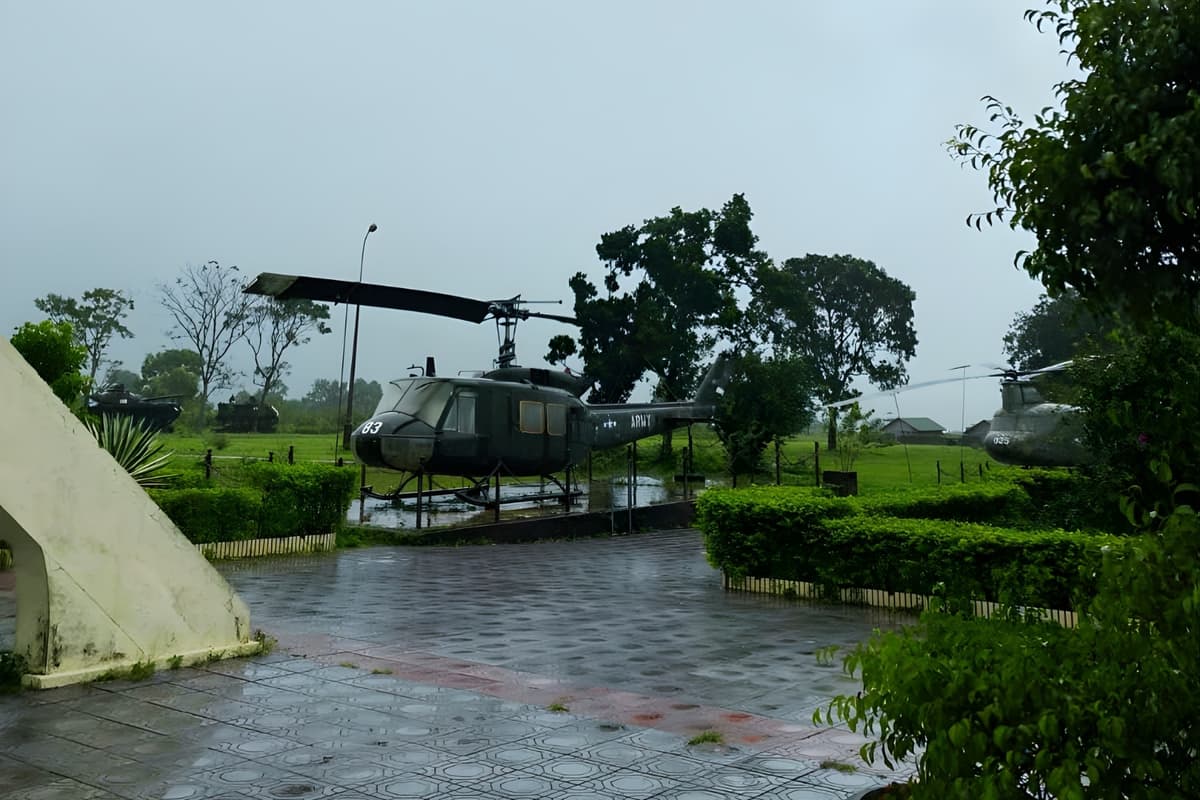
Ta Con Airfield now preserves and displays aircraft and tank relics in an open-air exhibition
Visit Ta Con Airfield museum - the Khe Sanh Victory Museum
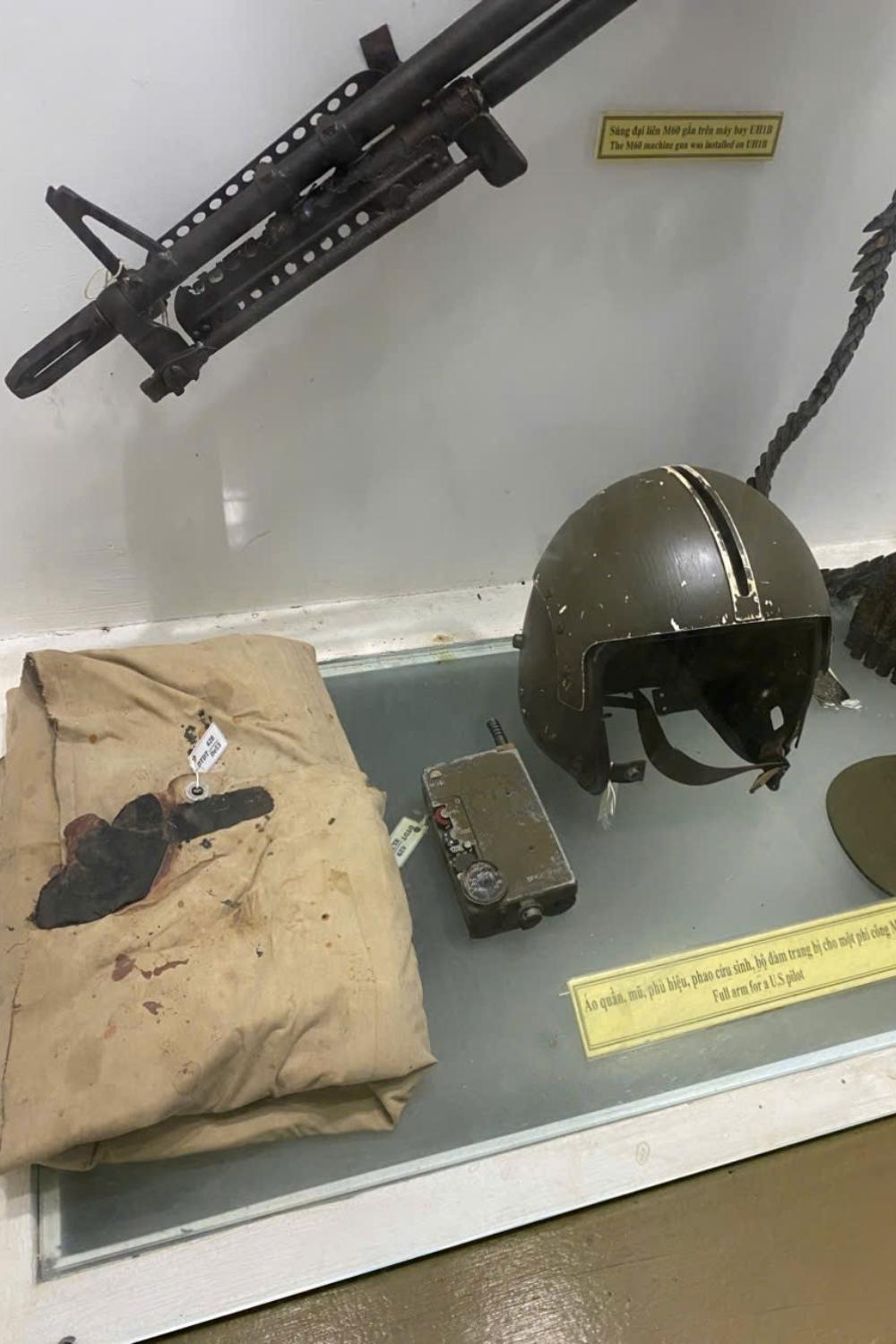
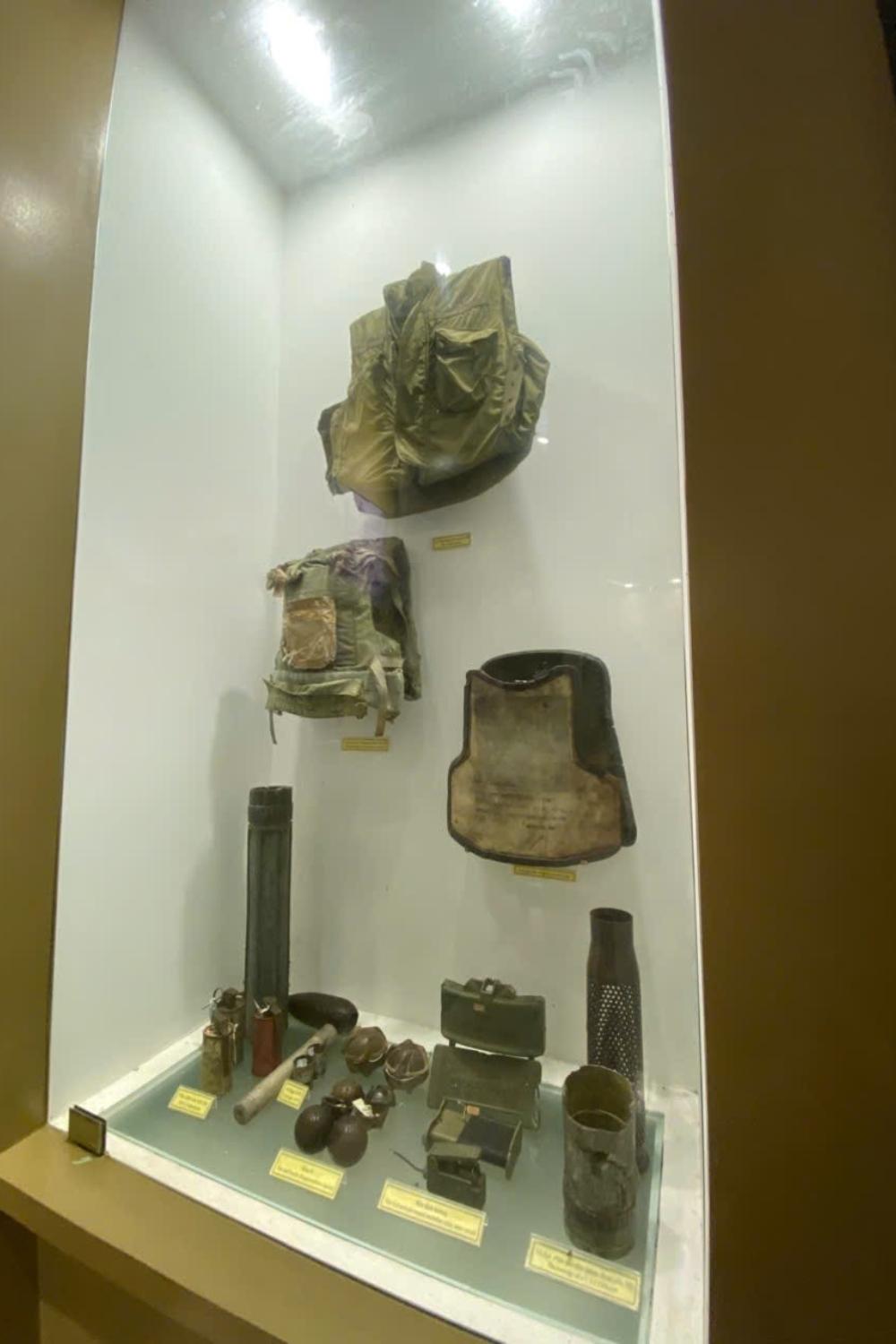
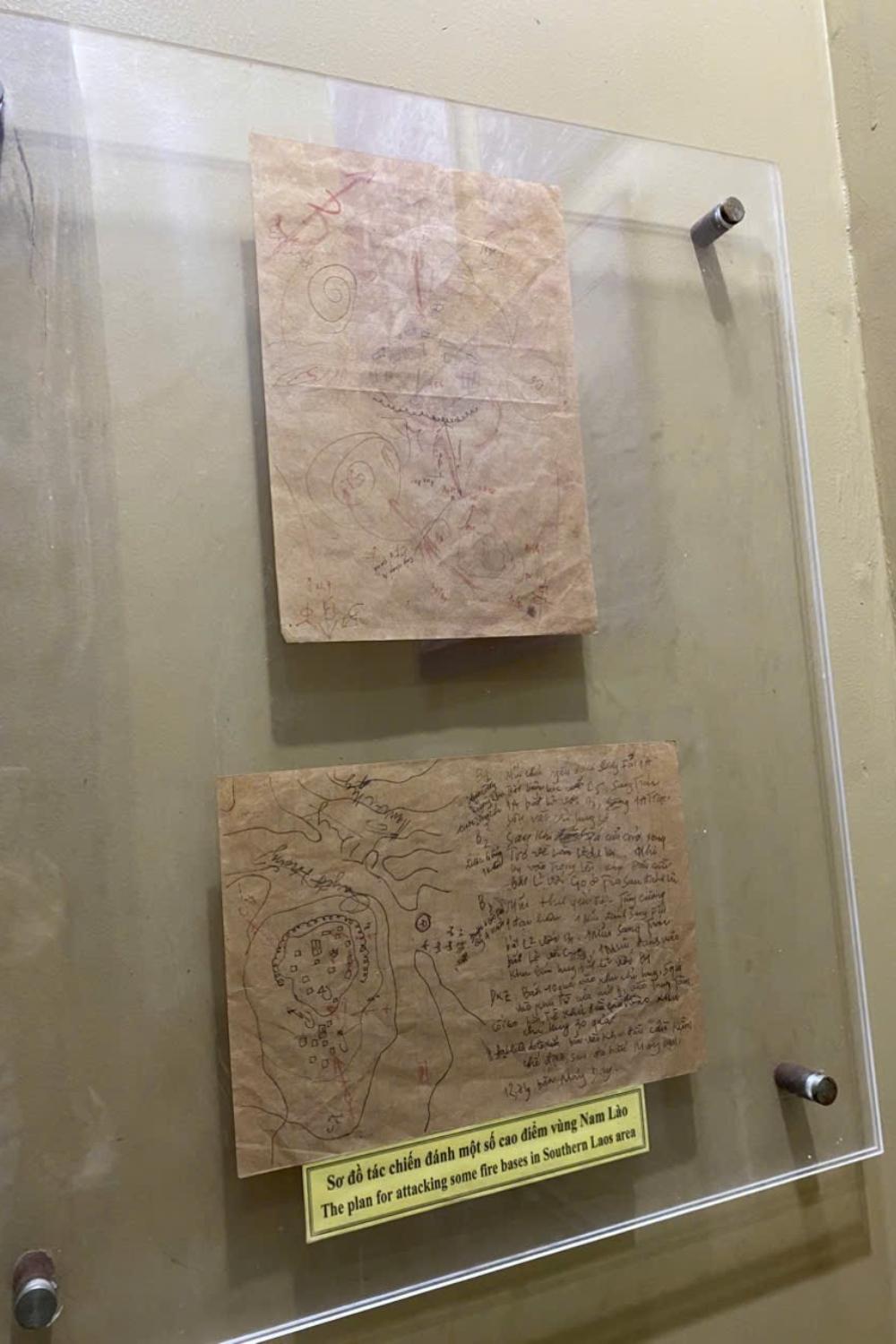
Located at the front of Ta Con Airfield, the Route 9 – Khe Sanh Victory Museum offers a comprehensive view of the legendary 1968 battle. The museum displays hundreds of artifacts, bomb and shell casings, archival photos, etc. It also has operational maps of the Route 9 – Khe Sanh campaign, as well as models of Ta Con Airfield and U.S. defensive stations.
Travelers can explore the exhibits and study historical documents. Visitors can arrange with the site management to have a museum guide provide detailed explanations of the context and unfolding of the 1968 Khe Sanh battle.
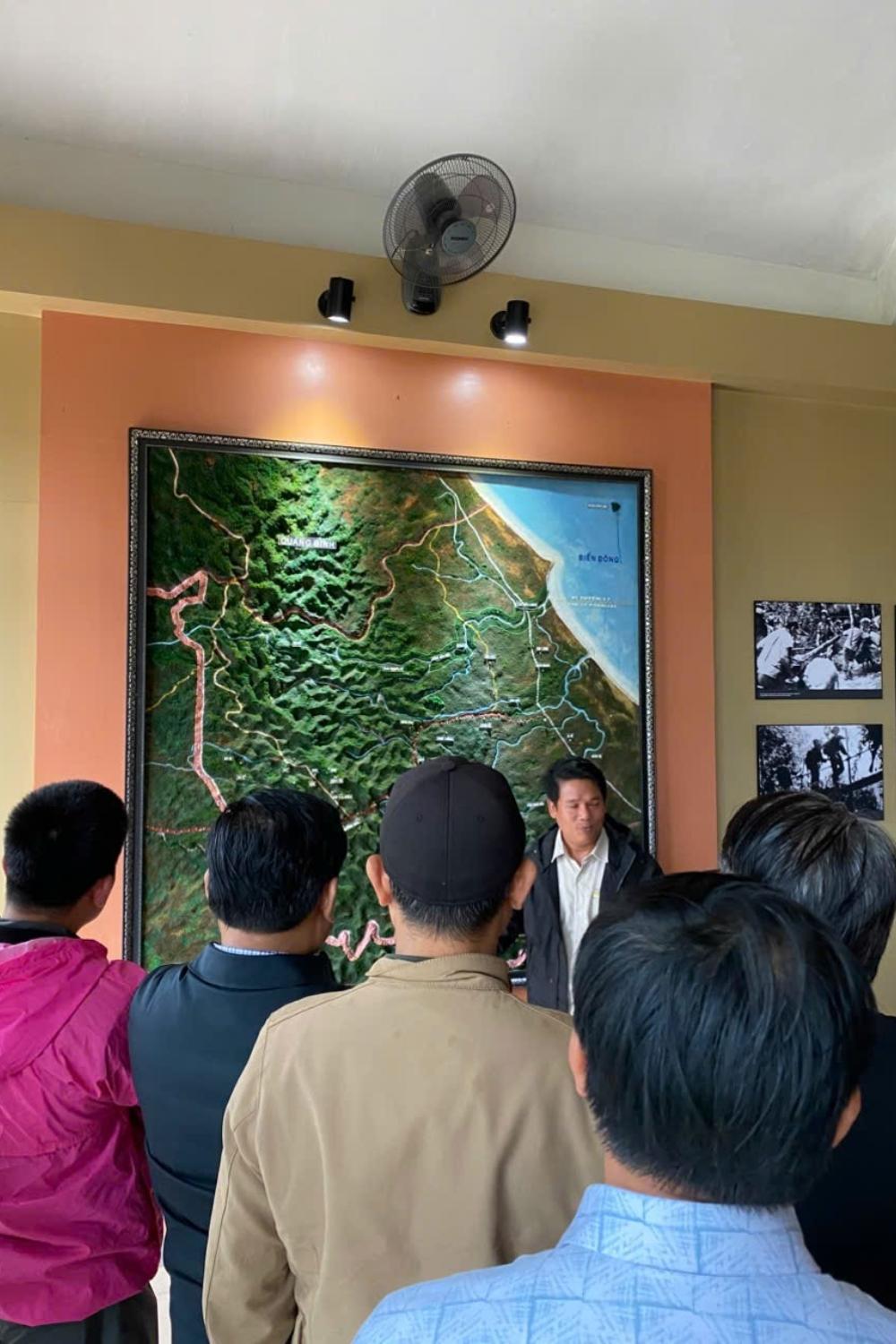
Experiencing DMZ Tours - historical tours Ta Con Quang Tri
For those seeking a full-package experience with knowledgeable local guides who can walk them through the battlefield’s history, DMZ tours are an excellent option. Many historical tours Ta Con Quang Tri itineraries include many Quang Tri sites such as Vinh Moc Tunnels, Quang Tri Citadel, Hien Luong Bridge, etc.
Travelers can explore various operators, such as Tour Phong Nha, Daily Tour, or Sovaba. They offer diverse routes and price ranges to fit different travel preferences.
Location and directions to Ta Con Airfield
Ta Con Airfield is located in Khe Sanh commune, Quang Tri Province. It is about 65 km from Dong Ha, 150 km from Dong Hoi, and roughly 180 km from Phong Nha – Ke Bang. Recommended transportation to Ta Con Combat Base are car, private transfer, taxi, motorbike, or other convenient means of transport.
If travelers prefer an adventure-style trip by motorbike, they can check the route on Map to Ta Con Airport.
For travelers coming from major cities such as Hanoi or Ho Chi Minh City, the most convenient way is to fly to Dong Hoi Airport or Phu Bai Airport in Hue (about 150 km away). From there, they can hire a private car or join a DMZ tour to continue their journey to get to Ta Con Airport Quang Tri.
From provinces such as Hanoi, Ninh Binh, Hue, or Da Nang, travelers can take long–distance buses directly to Khe Sanh. Besides, they can travel by train to Dong Ha and then hire a car, taxi, or other transport to continue their visit.
Best time to visit Ta Con Airfield
Ta Con Airfield is open to visitors year-round, but the ideal time to travel to Ta Con Airfield is from March to August, when the weather in Quang Tri is dry and favorable. Summer conditions make Quang Tri tourism easier to explore the bunkers, trenches, and the remnants of the old runway.
From September to November, Quang Tri enters its rainy season, and heavy showers on certain days may affect outdoor sightseeing. When traveling during this period, it is advisable to check the weather forecast and plan your visit for sunny or clearer days.
From December to February, Khe Sanh Quang Tri experiences cooler temperatures with occasional light rain. However, the weather remains comfortable, especially for travelers who enjoy misty landscapes, fresh mountain air, and a gentle chill.
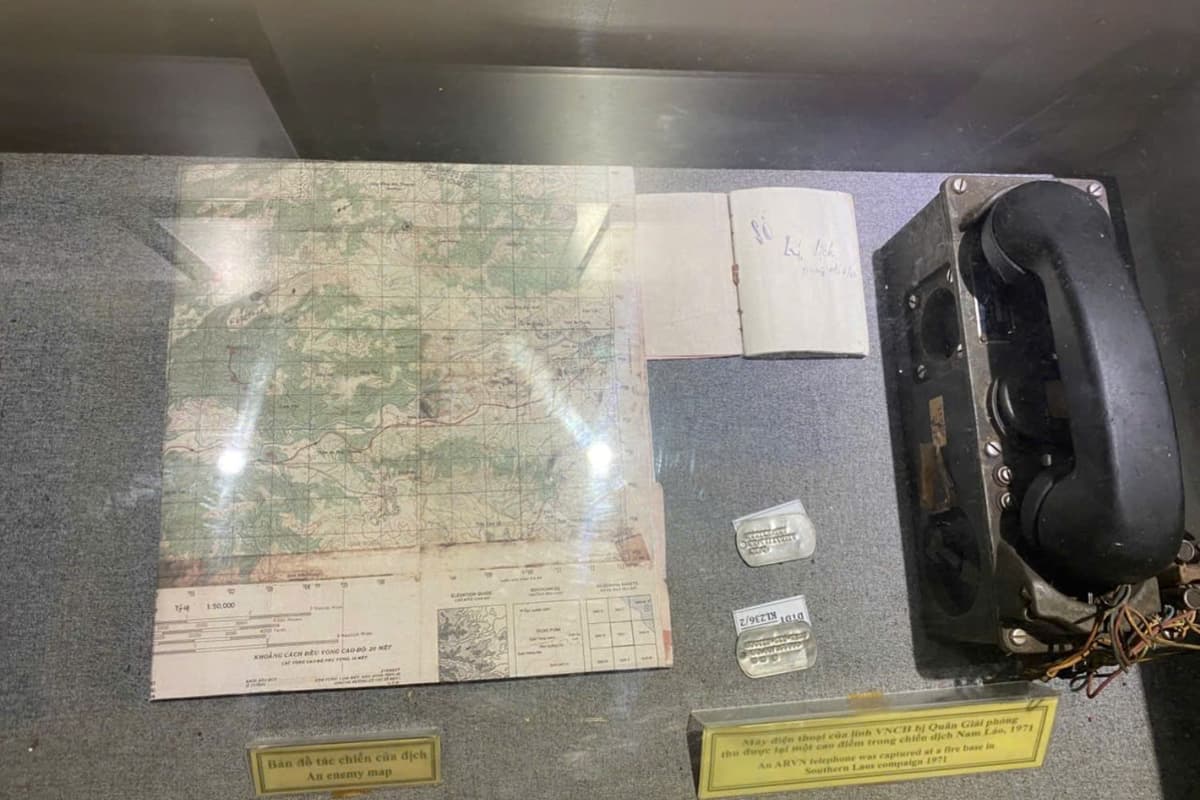
The Khe Sanh Victory Museum displays a wide range of artifacts and maps of Khe Sanh battlefield
Entrance fees and opening hours at Ta Con Airfield
Travelers visiting Ta Con Airfield – the Khe Sanh Victory Museum can purchase tickets at approximately 40,000 VND for adults and 20,000 VND for children.
The site is open daily from 08:00 to 17:00. It is recommended that travelers arrive early to enjoy a more relaxed visit, take outdoor photos, and fully appreciate the historic atmosphere of the area.
Please note that when visiting Ta Con Airfield – the Khe Sanh Victory Museum, travelers are advised to follow all regulations to help preserve the site and maintain its historical value. Visitors should avoid climbing on bunkers, trenches, aircraft, or tanks, and should not touch or cause damage to any artifacts.
Travelers are also encouraged to maintain respectful behavior and appropriate attire. This shows consideration for the exhibition spaces and follows the guidance of staff or tour docents. Keeping the area clean, avoiding littering, and maintaining a proper distance when taking photos all contribute to preserving this important historical site for future generations.
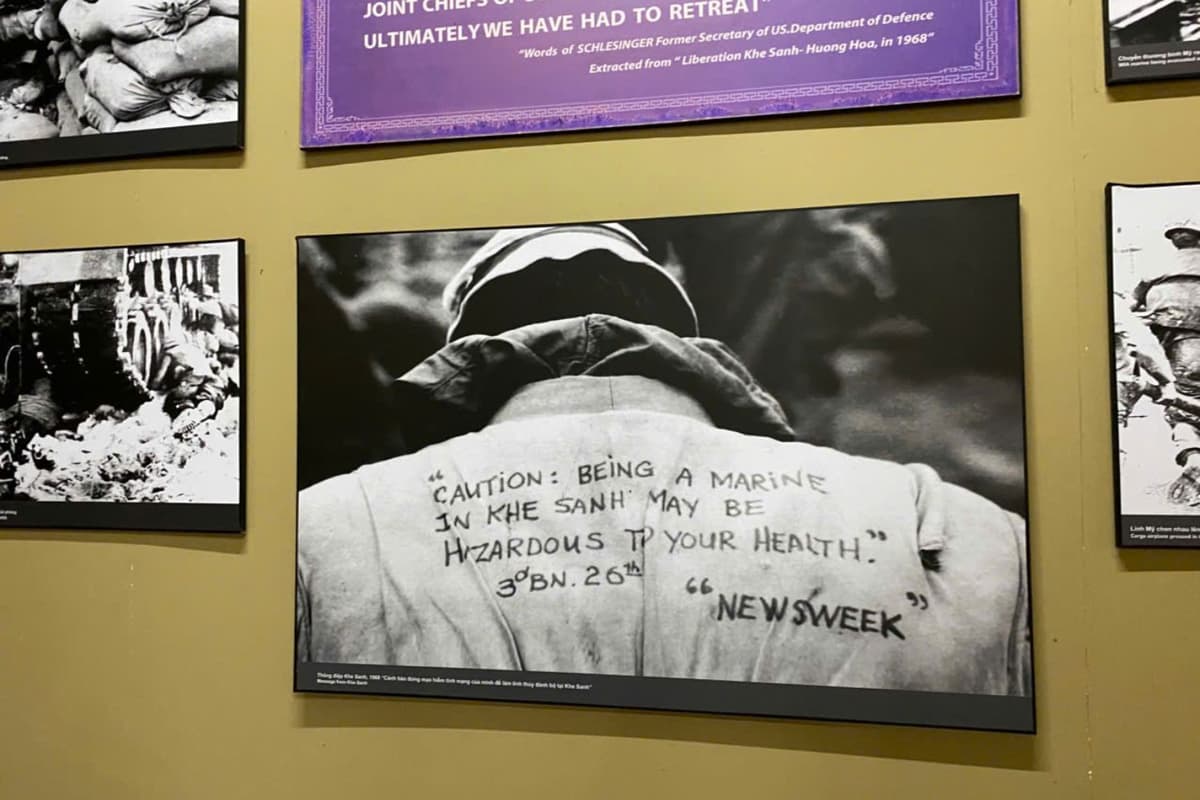
The 1968 Battle of Khe Sanh became a nightmare for the American troops
What to visit near Ta Con Quang Tri
Travelers can combine their trip with tourist attractions near Ta Con Airfield. Tours and day trips from Ta Con Airbase allows them to gain a fuller understanding of Quang Tri’s wartime context as well as its natural beauty.
Lao Bao Prison is located about 22 km from Ta Con Airfield Khe Sanh. The site was one of the five largest prisons in Indochina during the French colonial period. It preserves stories of prisoners and wartime struggles, with detention blocks, walls, and remaining artifacts. Travelers can explore the prison cells and learn about the resilient fight of the imprisoned soldiers.
The Huong Tan Wind Farm cloud-watching spot is just about 6 km from Ta Con Airfield Quang Tri. It stands out with rows of wind turbines stretching across hills and mountains, creating a dramatic and impressive landscape. Travelers can stroll around, take photos, watch the sunrise or sunset, and experience a deep connection with the vast natural beauty of Quang Tri.
Phong Huong forest is located about 10 km from Ta Con Airfield. This primary forest features diverse vegetation, seasonally changing canopies, clear blue lakes, and fresh air. Travelers can enjoy light trekking, explore forest trails, take photos, and immerse themselves in the pristine natural environment.
Quang Tri Citadel is a famous historical site located about 75 km from Ta Con Airbase. This tourist attraction near Ta Con Airfield was the fierce battleground of the 1972 defense of Quang Tri Citadel, leaving behind many traces of war. Today, Quang Trị Citadel has been restored to its original architectural style and includes commemorative structures and exhibition halls. It allows travelers to visit, pay respects, and honor the fallen heroes.
Vinh Moc Tunnels are located about 95 km from Ta Con Combat Base, in Vinh Linh District, Quang Tri Province. This is the largest tunnel system in Vietnam, where the soldiers and residents of Vinh Moc lived and operated during the war. Travelers can explore the tunnels, family quarters, and command posts. This is an ideal history site to learn about combat strategies, take photos, and experience an authentic and immersive historical underground world.
Commander Cave Museum Phong Nha is located about 195 km from Ta Con Airbase. This site once served as the central headquarters of Group 559 – the legendary Truong Son Army. Commander Cave Museum is renowned for its solid seven-level structure and its role as a major strategic logistics hub during the resistance war against America. Travelers can explore the exhibition area, the Commander Cave Museum itself, and experience a 9D VR.
Hamburger Hill (Hill 937) in A Luoi, Thua Thien – Hue, is located about 114 km from Ta Con Airport Quang Tri history. This historic site is associated with the fierce 1969 battle of Operation Apache Snow. Travelers can walk along the remaining wartime trails, observe bomb craters, defensive positions, and capture panoramic views of the Truong Son mountains.
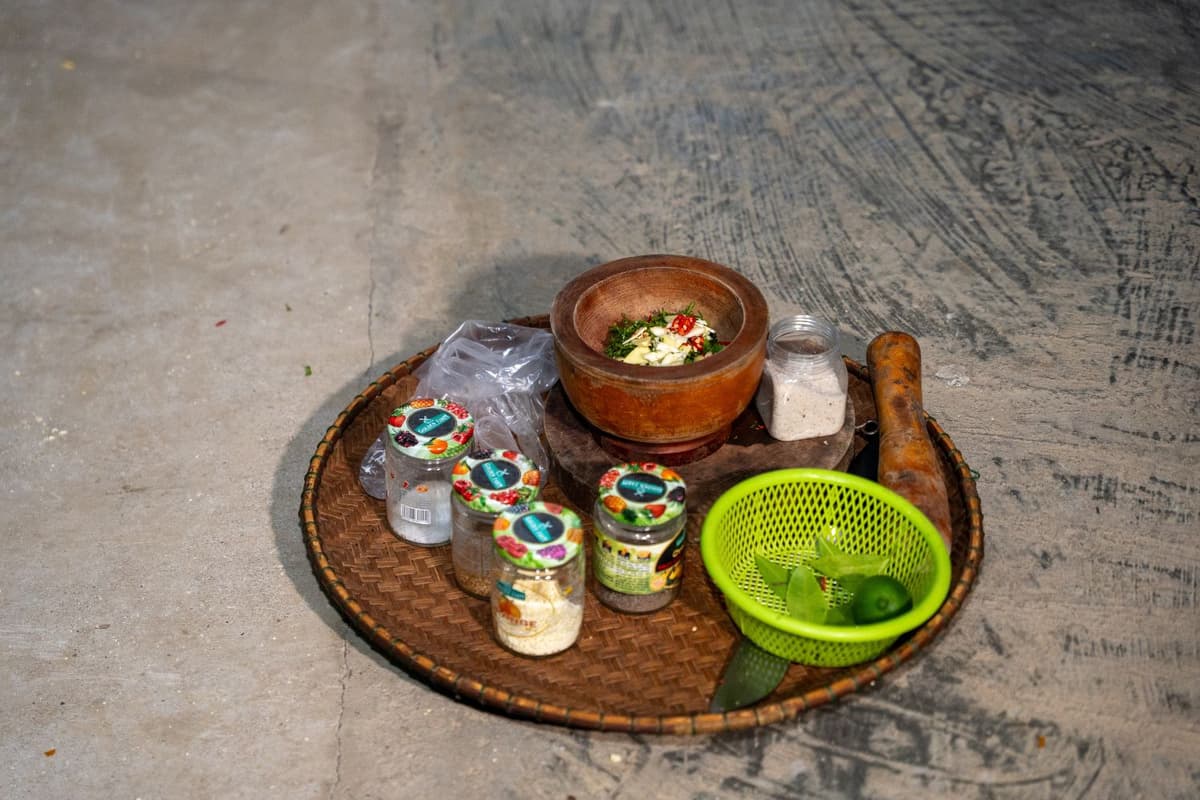
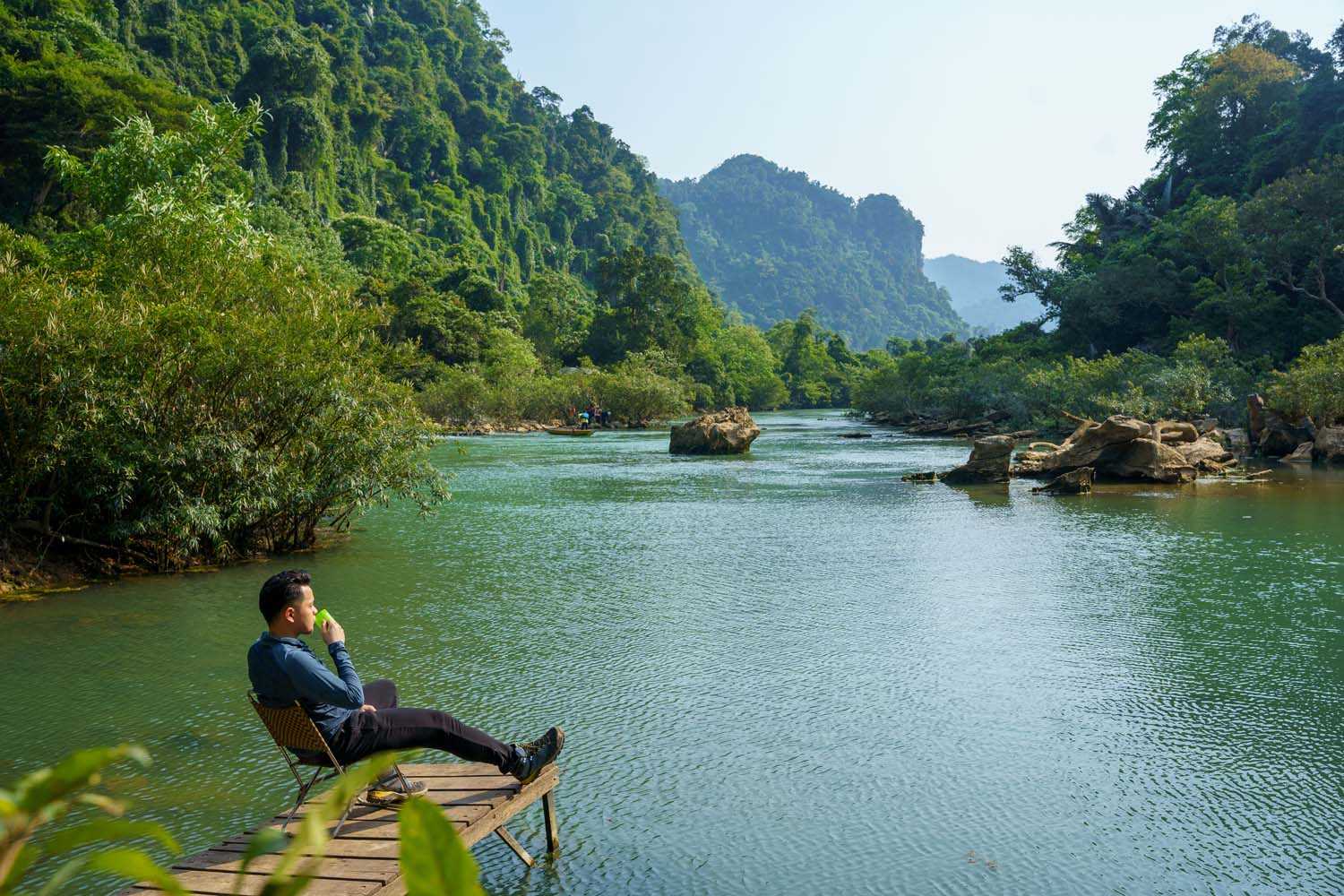
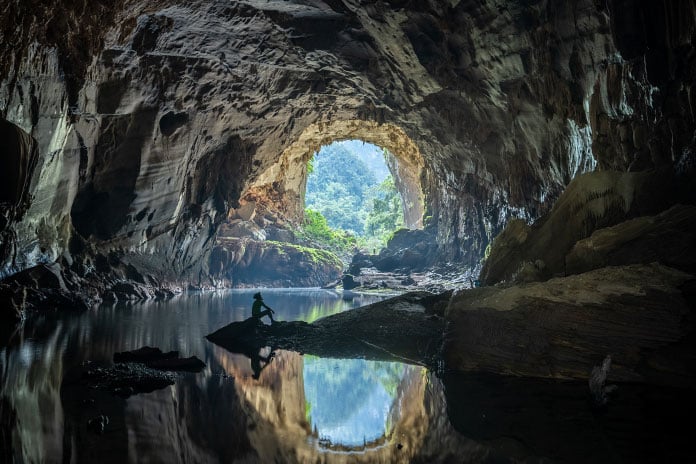
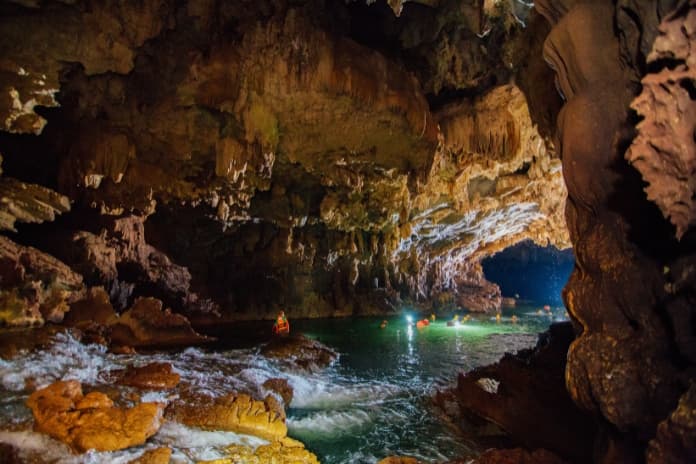
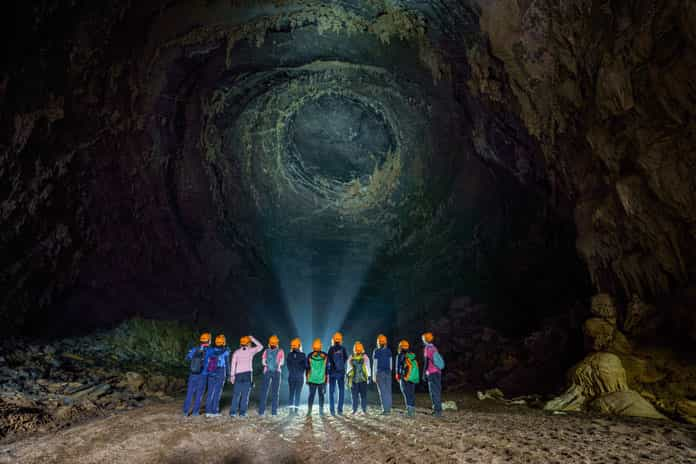
Whether you prefer long treks, camping in a cave, sleeping under the stars in the jungle, swimming underground in river caves, explore the huge dry caves or just taking an exploratory day trip, Oxalis Adventure Tours can provide the right amount of adventure just for you.
__637051782550081035.jpg)
__637051780703588520.jpg)
__637051765075307793.jpg)
__637051774329206026.jpg)
__637740499994967442.jpg)