Commander Cave Museum, Phong Nha: Explore the 7-level “logistical heart” in the legendary Truong Son Mountains
Located along Victory Road 20, the historic “Route of the twenty-year-olds,” Commander Cave Museum honors the young soldiers who once marched through this area. They left their youth on the Truong Son battlefield.
The cave was originally a natural limestone chamber. Later, combat engineers transformed it into a strong military base with seven functional levels. Each level played a vital role in supporting the Truong Son logistical network and its critical wartime decisions.
Today, visitors can explore each level of the cave, witness authentic wartime traces, and relive the battlefield atmosphere through an immersive 9D virtual reality experience. Together, these elements create an emotional and insightful destination that adds a fresh highlight to the tourism map of Quang Tri.
Where is Commander Cave Museum and how to get there?
Commander Cave Museum is located at Km12 of Victory Road 20, Phong Nha Commune, Quang Tri Province, within the core zone of Phong Nha – Ke Bang National Park. Depending on your starting point, you can choose a suitable travel route:
- From Dong Hoi City: About 70 km away, taking 1.5 to 2 hours by car, motorbike, or taxi. The route follows either National Highway 1A or the Eastern branch of the Ho Chi Minh Road, then turns onto Victory Road 20 and continues for about 12 km to reach the site.
- From Phong Nha: Starting from the Phong Nha area, the trip is about 18 km and takes roughly 30 minutes. The road follows Victory Road 20 through the national park, passing the Phong Nha Botanical Garden, and ends opposite Ozo Treetop Park. This is a convenient route for day tours or itineraries combining multiple attractions within Phong Nha – Ke Bang.
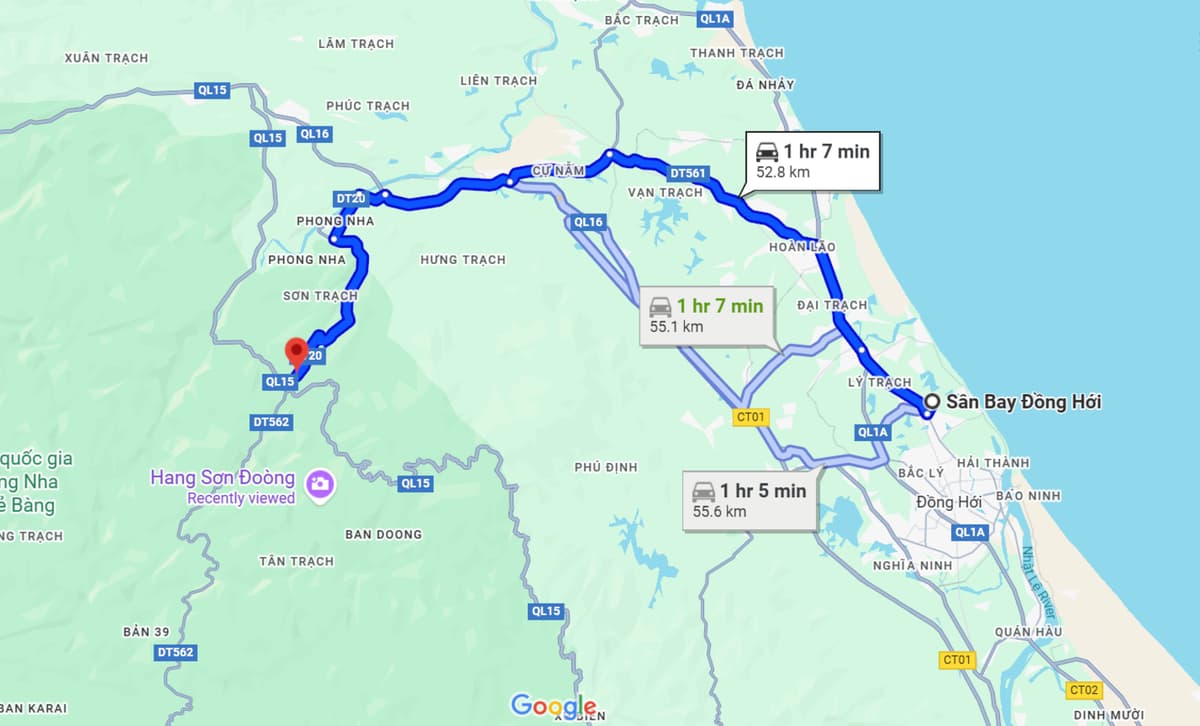
Distance map from Dong Hoi to Commander Cave Museum.
History of Commander Cave
During the resistance war against the United States, Quang Binh became a strategic transit point on the Truong Son supply route. It was not only a strong rear base but also a hub for gathering weapons, food, and medicine to support the battlefields in the South. The area was home to three major depots, of which the NH General Depot – also called by soldiers and locals as NH Depot Cave or 7-Storey Cave in Phong Nha – was considered the most important.
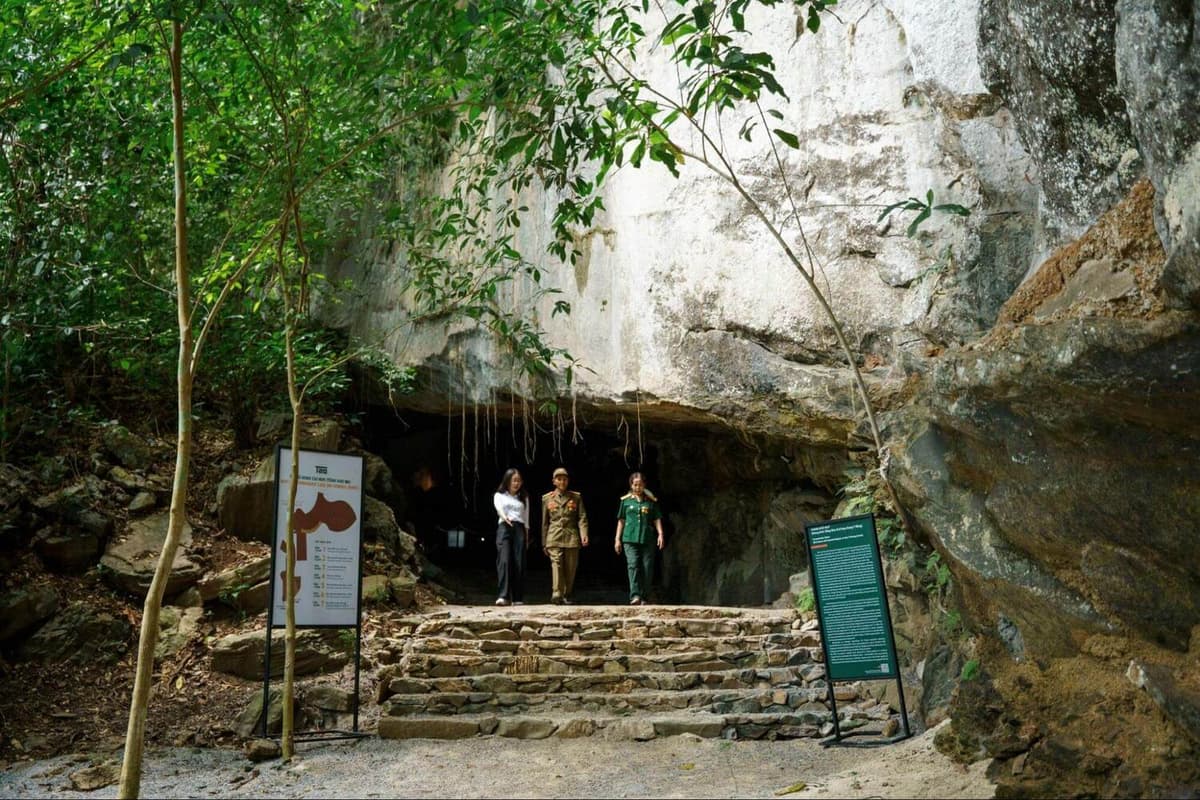
Commander Cave played a vital role in military command, logistics, communications, and daily operations.
When Victory Road 20 was opened to connect the North with the southern front through Laos, the Km12 location quickly became a hot target for heavy bombings. At Km12, amid clouds of smoke and the roar of explosions, soldiers discovered a deep cave hidden inside the mountain. This was the beginning of the journey to build one of the most unique and vital strategic depots of that era.
In 1965, the task of transforming the cave was assigned to Station 14. With no technical blueprints and no modern machinery, under relentless air raids, every sack of cement, every basket of sand, and stone was carried manually through dense forests and rugged mountains. Veteran Nguyen Chien Thang recalled that at times, the soldiers had to crawl through thick bushes and traverse dangerous paths to bring construction materials into the cave. Sand was brought from Phong Nha, cement supplied from the North, and stones quarried from other locations to avoid detection by reconnaissance aircraft.
The project was built under harsh and deprived conditions: dim lighting, damp air, and the constant thunder of aircraft overhead. Yet in just 3 months, all 7 levels of the cave were completed. The levels were connected by sturdy stone staircases, with every detail meticulously crafted to ensure safety and secrecy. Remarkably, the natural stalactites inside the cave were preserved intact. The commanders at the time gave clear instructions that one day, when peace returned, these natural wonders would serve a higher purpose.
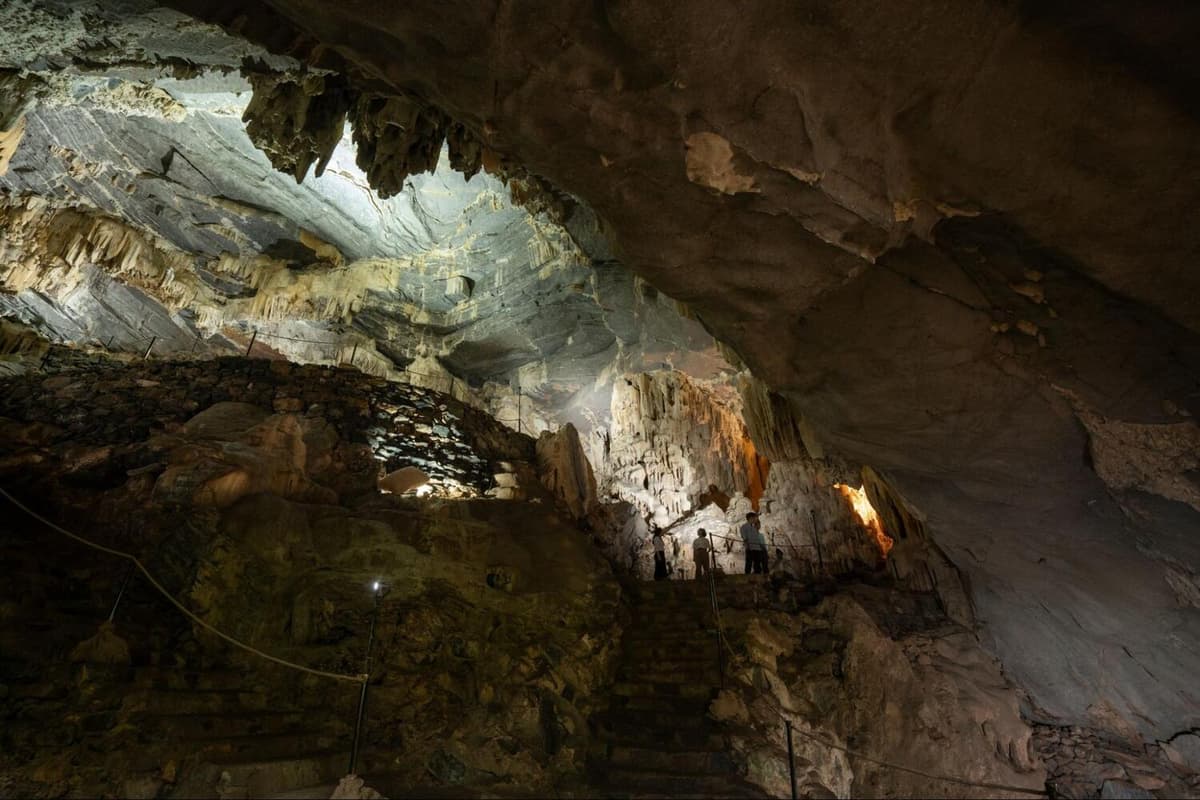
The cave’s seven-level structure has remained intact to this day.
By 1969, in response to changes in the war situation, Station 14 gradually relocated the depot to Km39 and Km54. However, the historical role of Commander Cave remained preserved until the end of the war.
Today, Commander Cave Museum has been transformed into a historical and cultural tourist site, officially recognized as a Special National Site. It was inaugurated on July 5, 2025, as part of the project Legendary Truong Son Road – Commander Cave Museum. The site now serves as a “history classroom in the middle of the forest,” allowing visitors to connect with the past through artifacts, immersive virtual reality experiences, and the stories still etched into the cave walls. Commander Cave Museum continues to revive the memory of the heroic years “splitting through Truong Son to save the nation,” enriching Vietnam’s heritage and memory tourism map.
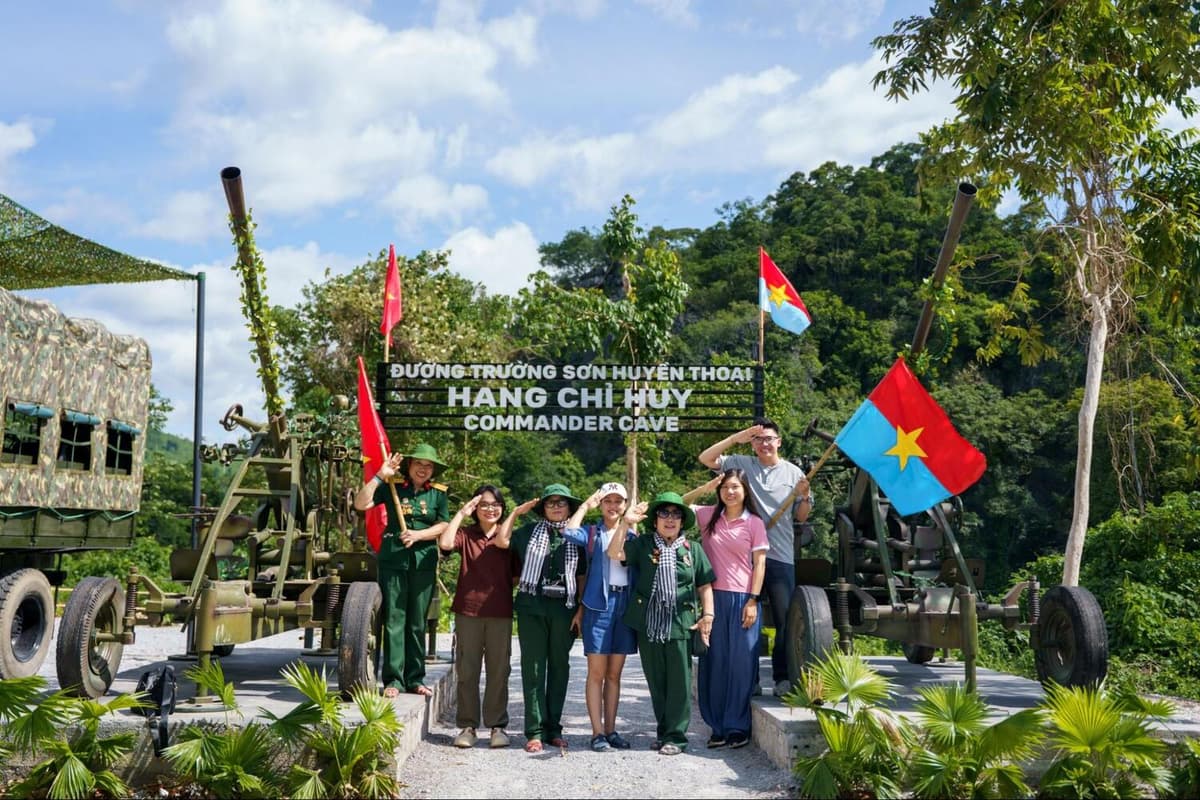
Entrance area of “Legendary Truong Son Trail – Commander Cave Museum.”
The Unique Architecture and Construction of the Commander Cave Museum
Originally a natural cavern about 150 meters wide and over 100 meters high, this site was completely transformed into a strategic base with a seven-level structure, each serving a distinct and vital purpose for military command, logistics, communications, and daily life.
Level 1 served as the initial first-aid station. Wounded soldiers from the Ho Chi Minh Trail were brought here to stop bleeding, bandage wounds, or rest briefly before being transferred to rear medical units. Cement platforms for stretchers, traces of medical equipment, and stone benches remain to this day.
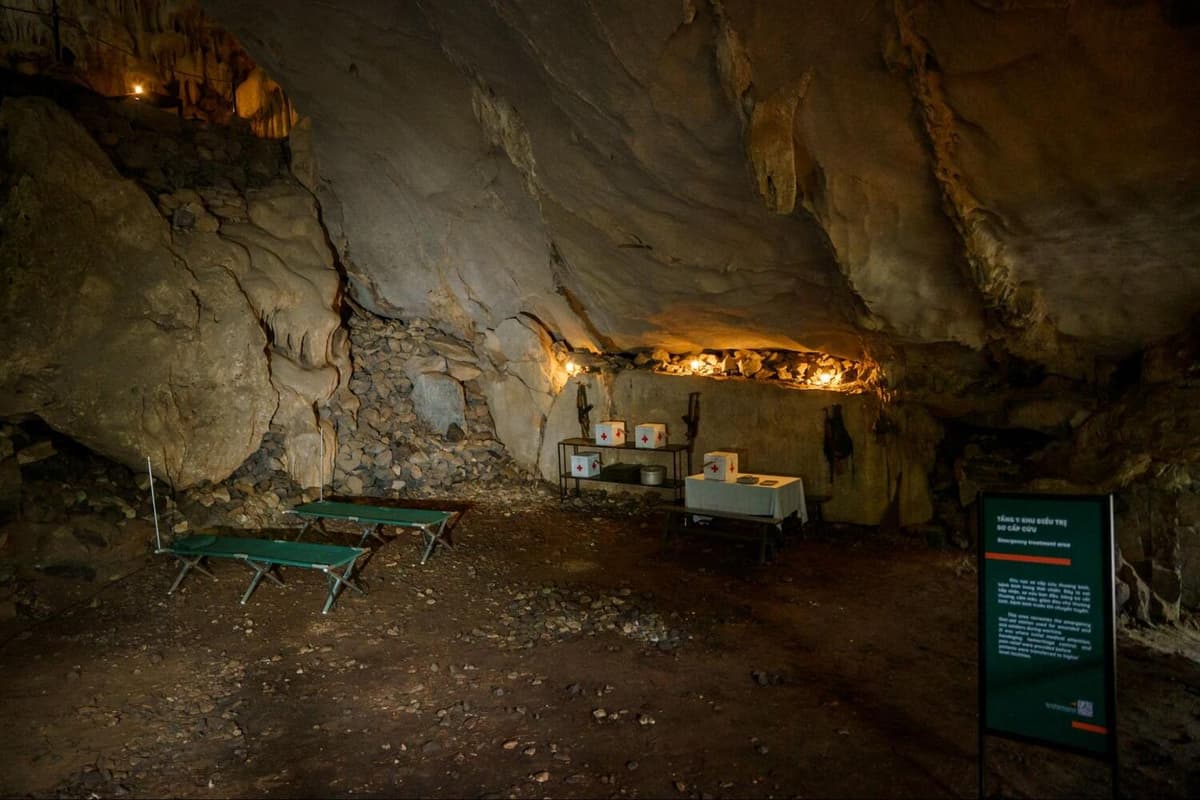
On Level 1, you will see medical tools and first-aid equipment used to treat wounded soldiers.
Level 2 handled strategic logistics, stockpiling food, ammunition, and weapons for the frontlines. It once stored rifles, grenades, medicines, and essential supplies for the troops.
Level 3 was the communications hub, the heart of the operation, ensuring seamless contact between the command post, supply stations, and transport convoys. In wartime, it acted as the “lifeline” that kept the battlefield connected and sustained strategic directives.
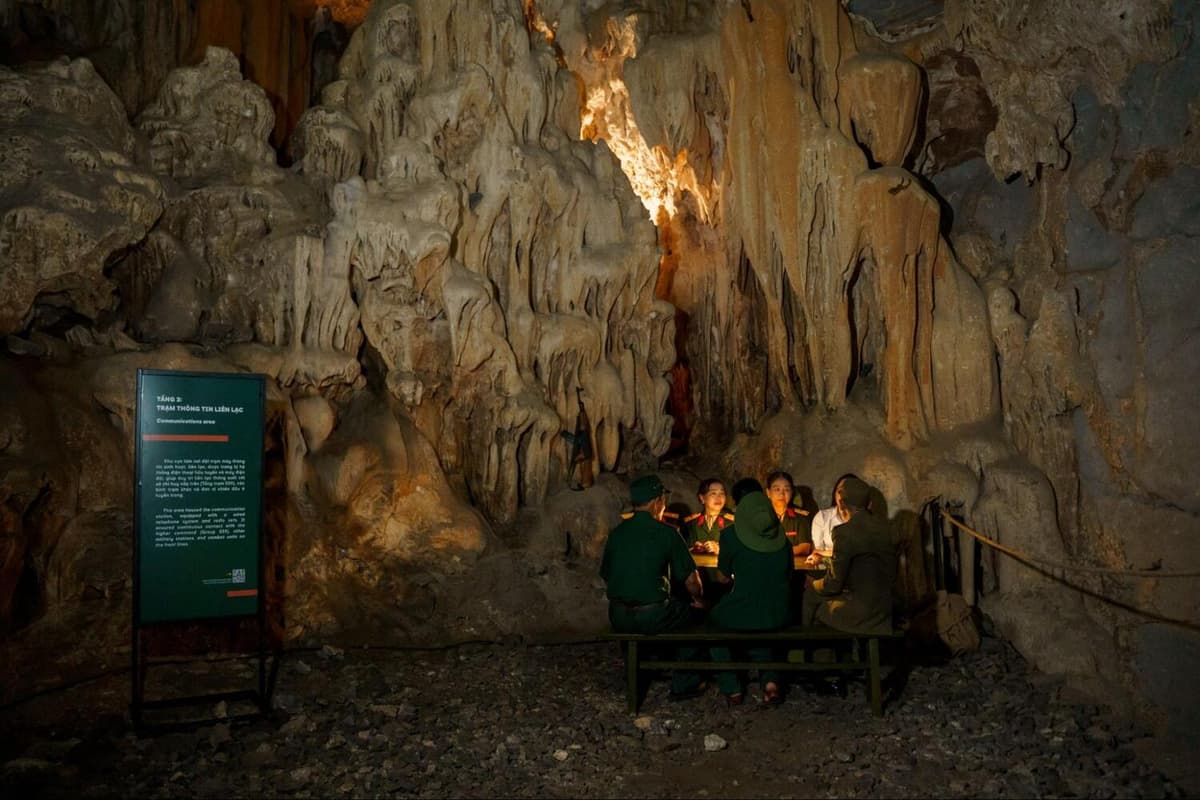
Level 3 is where information was received, processed, and transmitted promptly and smoothly between units.
Level 4 was the command operations center, staffed around the clock by key officers to process intelligence, make tactical decisions, and direct the movement of forces and supplies. This was also where General Đồng Sỹ Nguyên lived and worked during various campaigns, making crucial decisions that shaped the entire route.
Level 5 continued the role of storage, but specialized in heavy weaponry and long-term provisions. Large artillery pieces, explosives, sacks of rice, and crates of rations were neatly arranged here, ready to be distributed to other stations in the network.
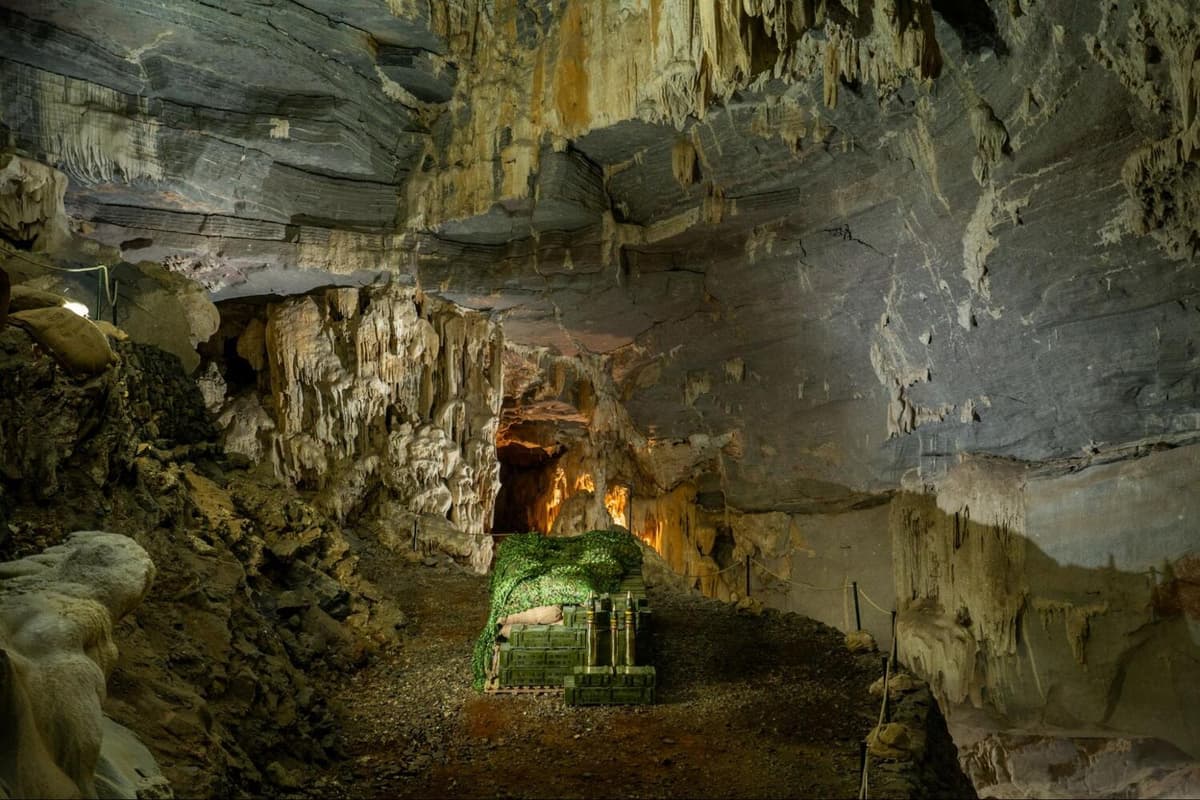
Food supplies and weapons were carefully stored on Level 5 of Commander Cave Museum.
Level 6 holds special historical value. While it also functioned as a storage space during the war, it has now been arranged as a small museum. Items found during restoration—such as bullet casings, rubber sandals, fountain pens, penicillin bottles, and even old military batteries—are displayed, silently telling the story of life inside the mountain.
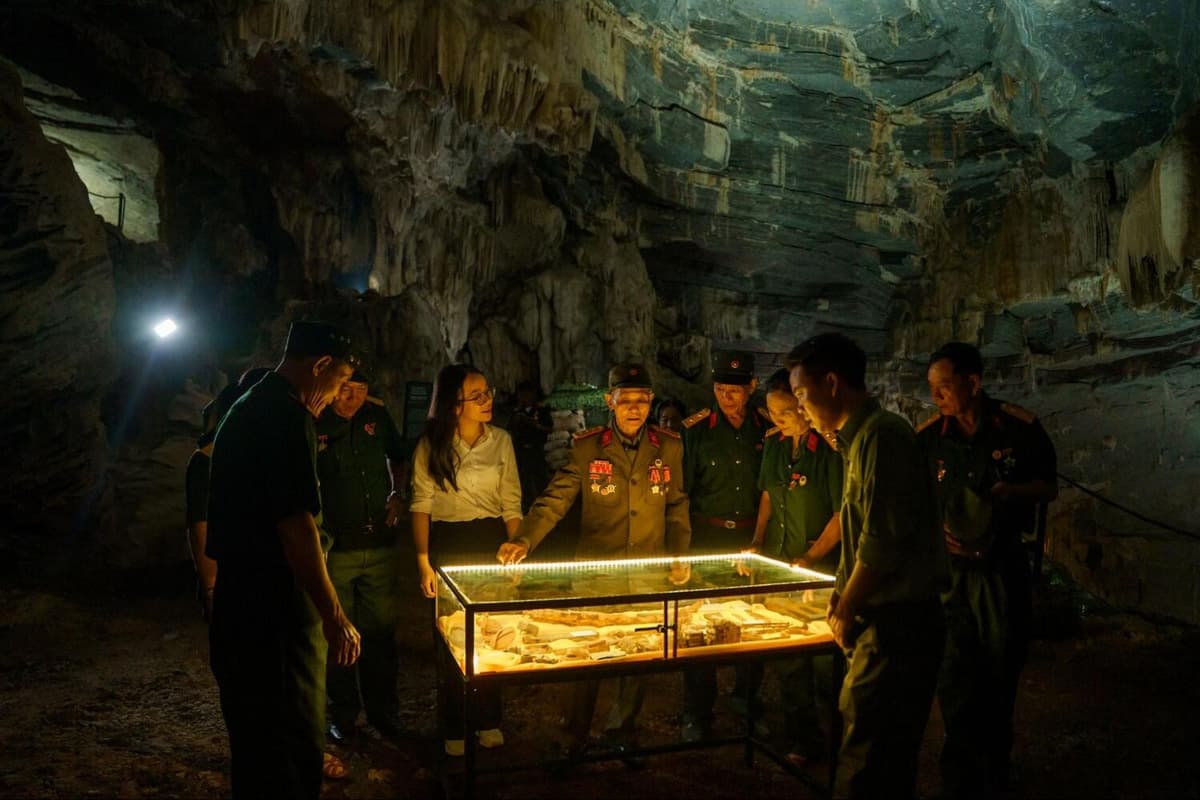
The display area showcases artifacts discovered during the cave’s restoration.
Level 7 was the living, meeting, and resting area for officers and soldiers during extended stays. It was also a place for training, sharing stories from the homeland, and keeping morale high through the hardships of war.
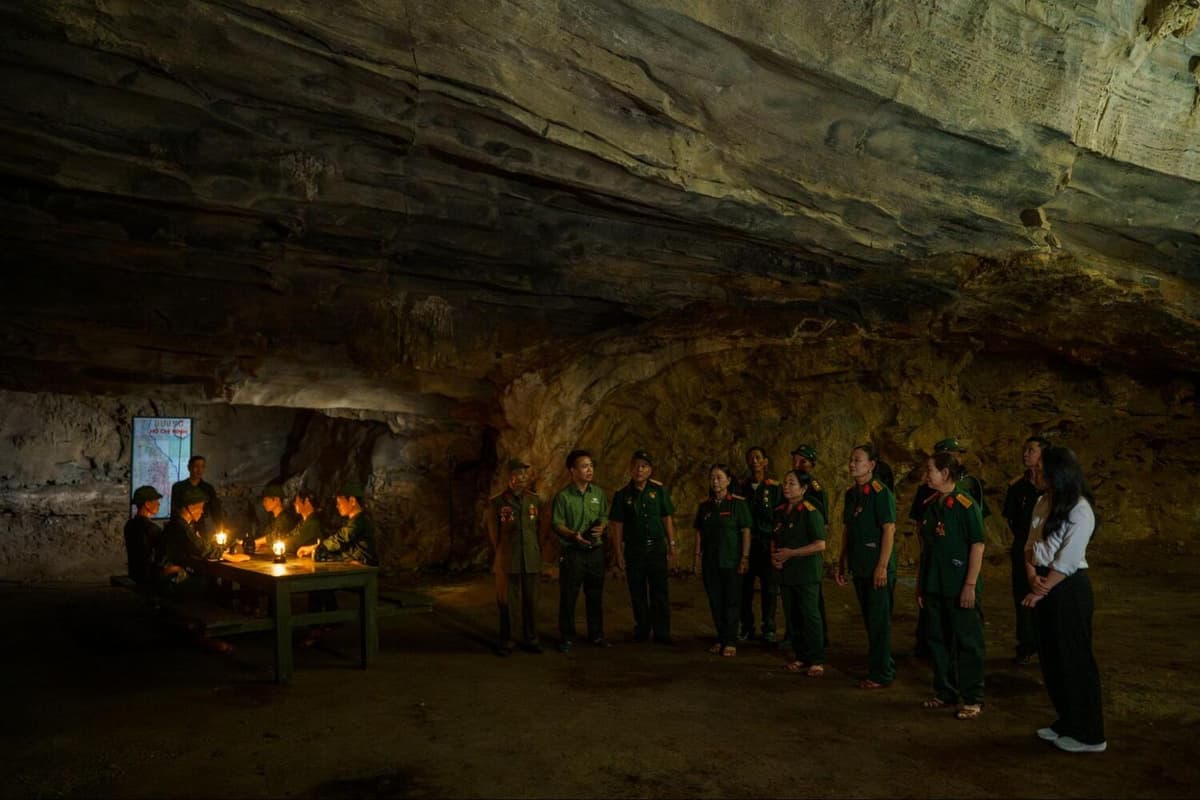
Level 7 served as a meeting and resting area for officers and soldiers.
The entire seven-level structure was built by making use of the natural rock walls, reinforced with cement platforms, stone stairways, and an efficient layout that allowed multiple functions to operate simultaneously.
The path to the cave was a concealed “hidden road” over two kilometers long, hidden under dense jungle canopy. To reach the entrance, soldiers built 62 stone steps entirely by hand under extremely difficult conditions. Inside, smoke stains on the ceiling, charcoal-written notes, and other wartime traces have endured for decades.
Thanks to its solid structure, secrecy, and careful camouflage, the Commander Cave Museum survived numerous intense bombing raids. At one point, the Km12 area was hit with over 16,000 bombs in just three months—yet the cave stood firm, remaining undetected and undestroyed. It stands today as a symbol of the strength, resilience, and ingenuity of the Vietnamese People’s Army during the war years.
Stepping into the eco-tourism site “Legendary Ho Chi Minh Trail – Commander Cave Museum”, visitors are given the chance to “travel back in time” and relive the heroic spirit of the Trường Sơn years.
9D Virtual Reality (VR360) Experience
One of the most remarkable highlights at the Commander Cave Museum is the “time-travel” journey powered by 9D virtual reality technology. Seated in the legendary three-axle ZIL-130 military truck, a vehicle that once accompanied countless supply convoys along the Ho Chi Minh Trail, visitors put on VR goggles and enter a vivid recreation of the fierce wartime years. The truck jolts and sways with each treacherous turn, while the air fills with the rumble of the engine, the thunder of bombs, the blare of urgent radio broadcasts, and the rallying shouts of comrades-in-arms.
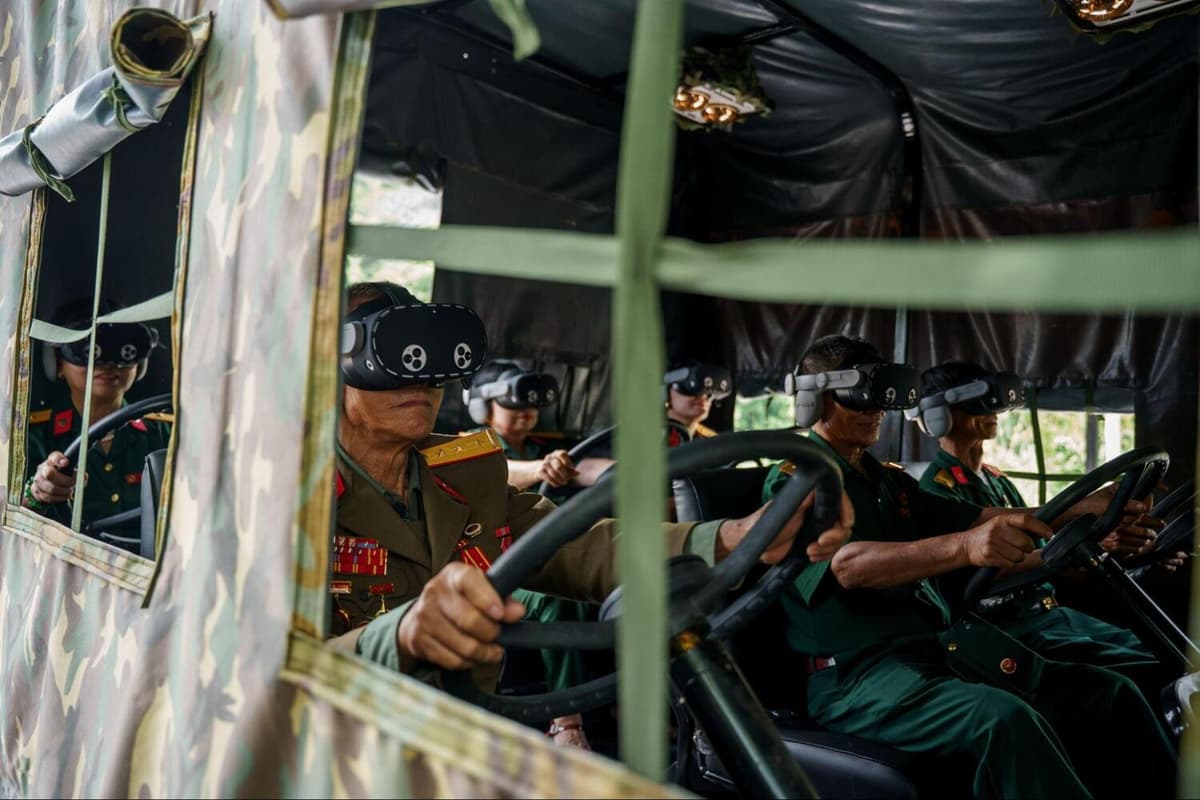
The legendary ZIL-130 truck and the 9D virtual reality experience will take you back to the fierce days of wartime.
Here, you can hear, see, and feel the wartime atmosphere, your heart racing as you dodge bomb fragments that seem dangerously close. Many veterans who have taken part in this journey have been moved to tears, feeling as though they were reunited with their comrades and reliving unforgettable memories from the fiery Truong Son front. The 9D VR technology, applied for the first time at a war relic site in Vietnam, transforms the Commander Cave Museum into a “time machine” that takes visitors back to the past in a way that is both authentic and deeply touching.
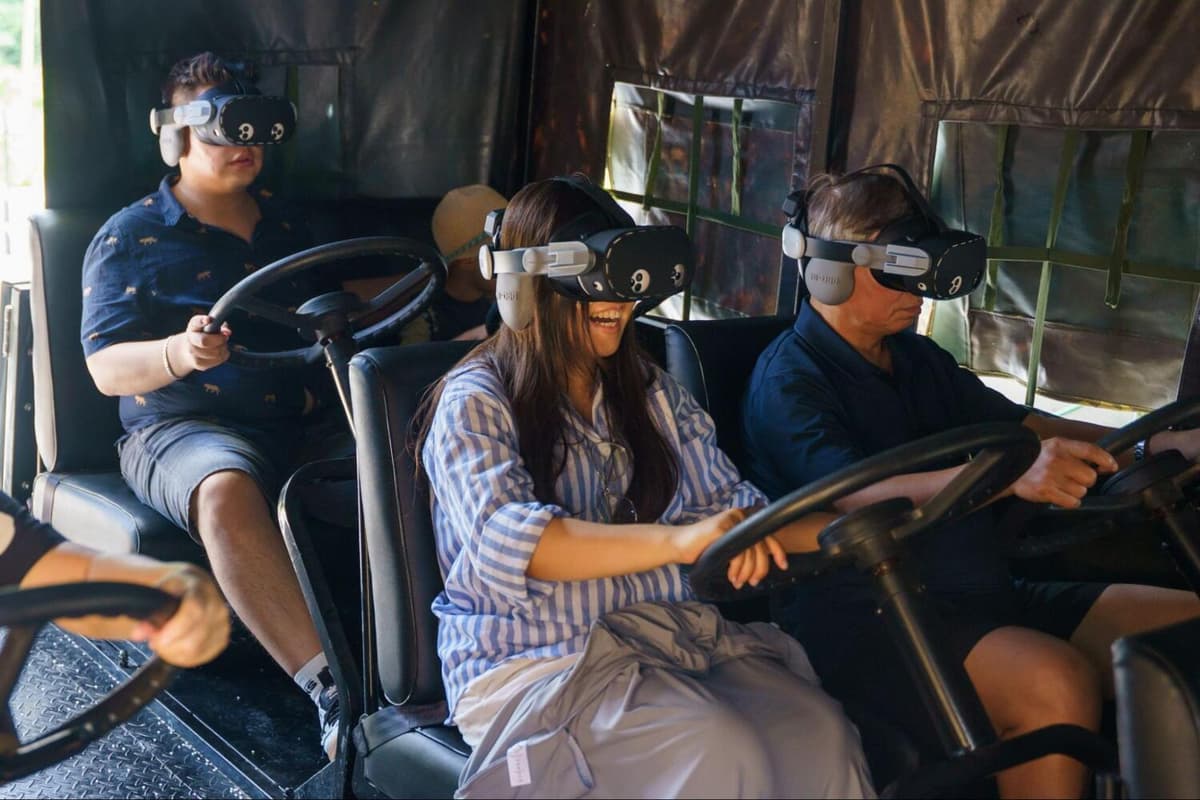
Visitors experiencing the VR360 virtual reality tour.
A Vivid War Relic Exhibition
After completing the 9D virtual reality experience, an electric cart takes visitors to explore a vivid exhibition area displaying artifacts from the construction of Victory Road 20 and the remnants of its fierce wartime history.
- Construction tools for Victory Road 20: Here, you will see simple, rudimentary tools such as hoes, shovels, axes, and saws, the very implements used by combat engineers and young volunteers to “break through the single route” and overcome massive obstacles to complete this vital lifeline. The words “If the enemy destroys it, we repair it and move on. If they destroy it again, we repair it again and move on!” seem to echo through the space, evoking the resilience of the soldiers who built and maintained the road under constant danger.
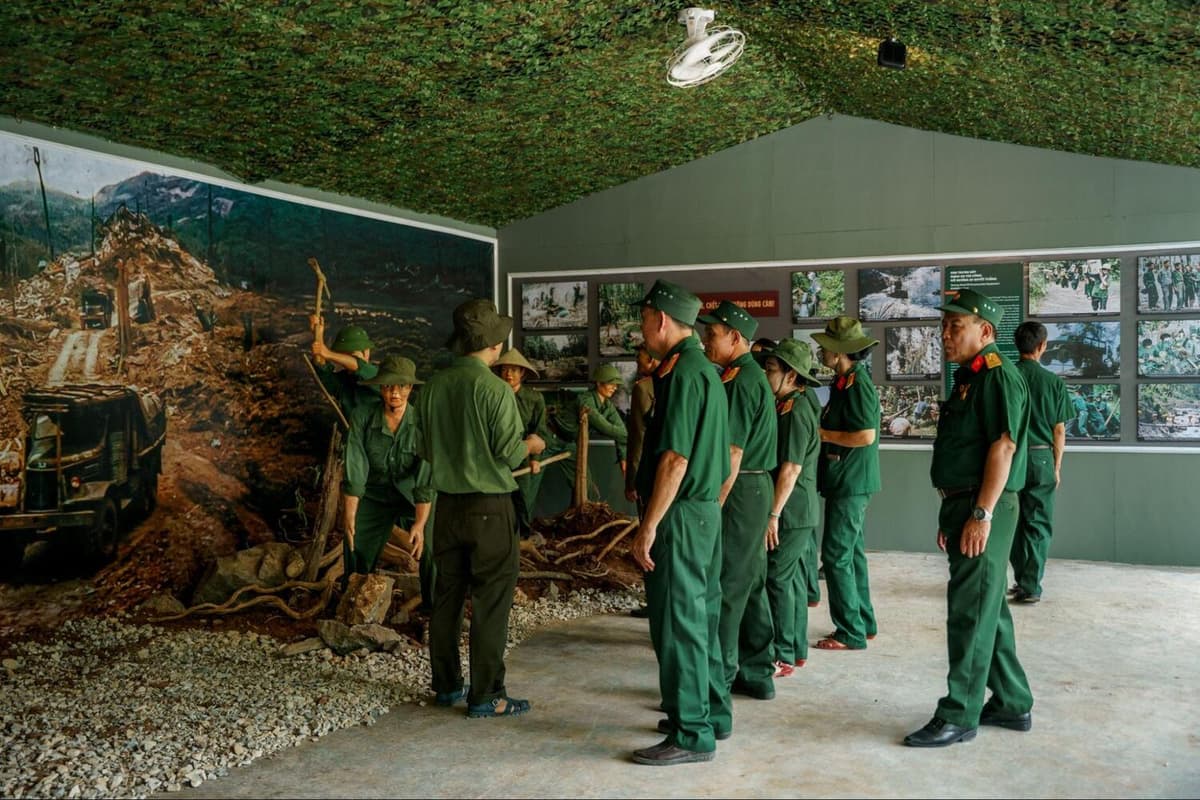
The reenactment area depicts soldiers and local people joining forces to build Victory Road 20.
- Strategic logistics supplies: Displays of rice sacks, ammunition boxes, fuel cans, and military cooking pots reveal the essential supplies that sustained the army along the Ho Chi Minh Trail. This vivid re-creation of logistics work highlights one of the most crucial elements that kept the supply line running continuously without interruption.
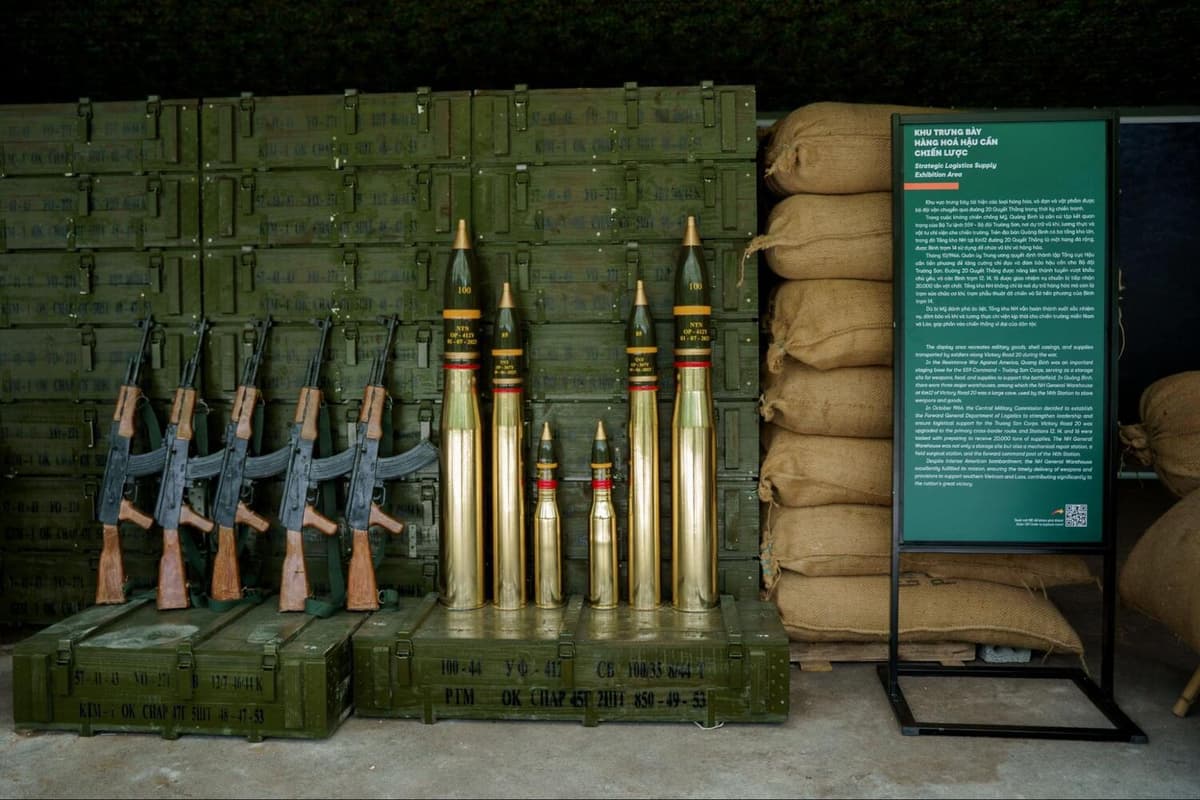
The exhibition area displays military gear, equipment, food supplies, weapons, and more.
- Bomb and shell casings: Visitors can see the remains of B-52 bombs, cluster munitions, and magnetic mines that the U.S. Air Force dropped on Victory Road 20. These relics not only illustrate the brutal intensity of the war but also honor the spirit of the Truong Son troops who “lived clinging to the roads, and if they died, they did so with courage,” enduring years of relentless bombardment.
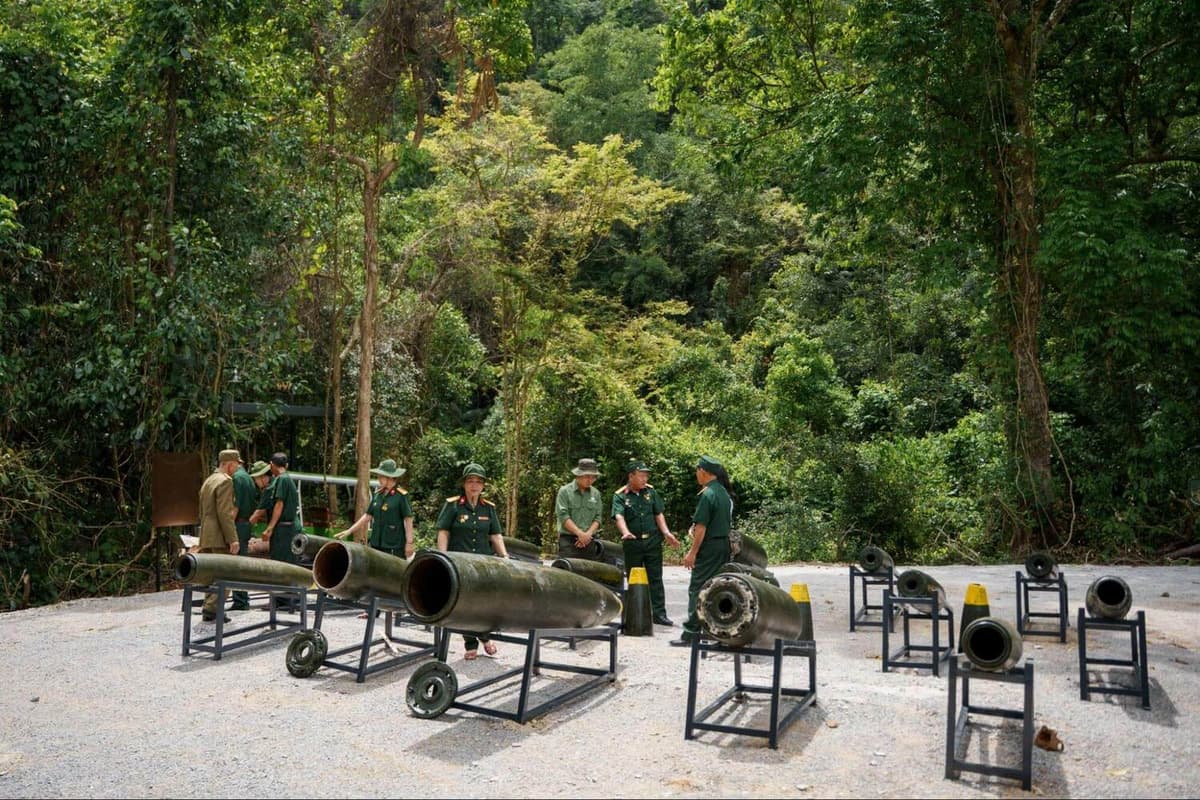
The display area showcases various types of bomb casings.
Explore the 7-Level Structure of Commander Cave Museum
Before stepping inside the mountain, visitors climb 62 stone steps that remain intact from wartime. At the top stands an anti-aircraft gun once used by Vietnamese forces during the resistance wars against the French and Americans, reminding us of the fierce battles that once raged along Victory Road 20 on the Truong Son fire line.
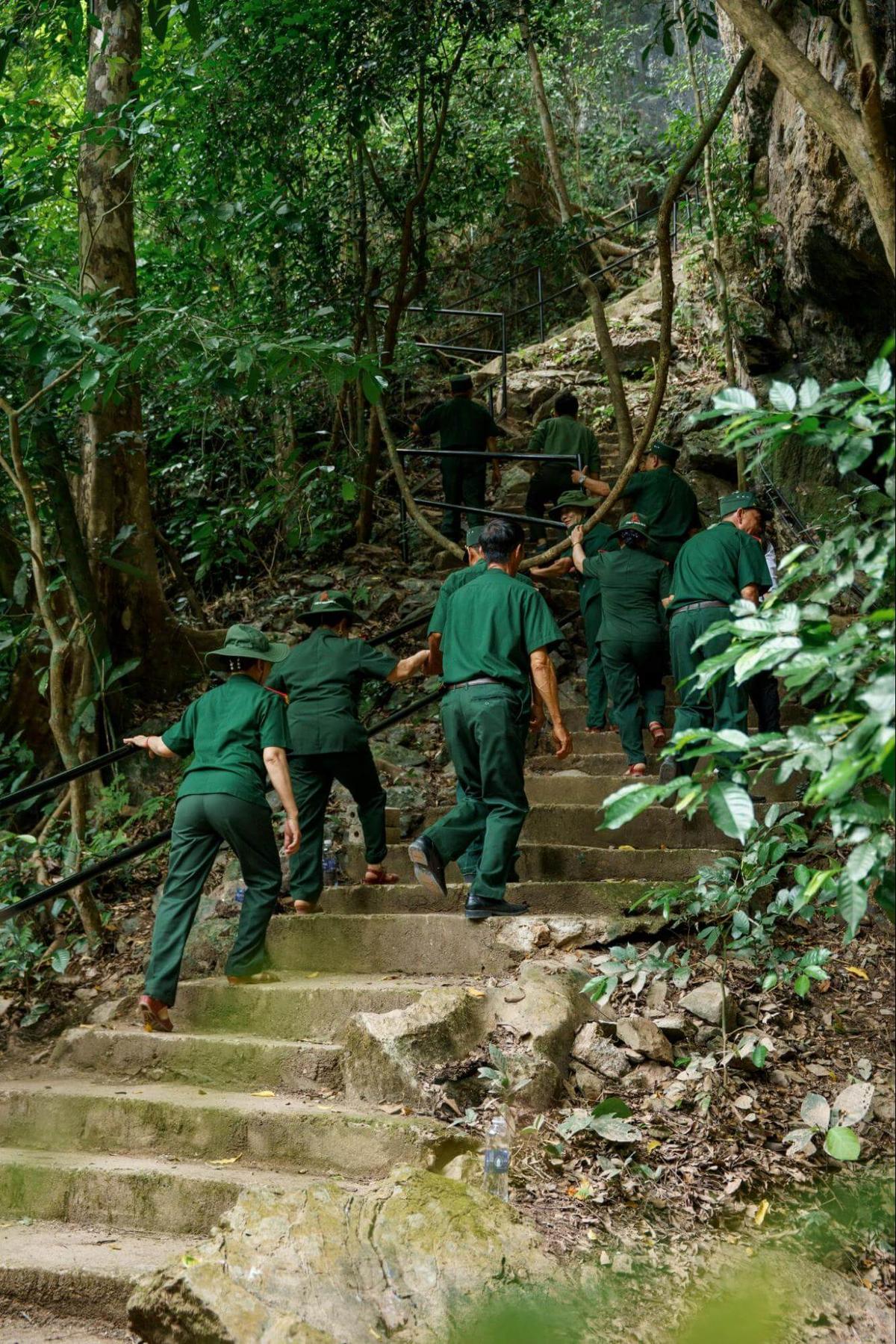
The pathway leading to Commander Cave Museum features 62 stone steps.
Entering Commander Cave Museum, visitors will explore 7 functional levels, which once served as an infirmary, logistics warehouse, communications zone, command center, supply depot, and living quarters for officers and soldiers.
Each level offers a vivid snapshot of wartime life, recreated with lighting, artifacts, and arranged spaces. Many original traces remain intact, such as bomb-shrapnel scars on the rock walls, charcoal writings, and even a hand-drawn dove symbolizing the longing for peace.
Ticket Prices & Opening Hours
If you are planning to visit Commander Cave Museum, a significant historical site in Phong Nha, here is the essential information you need:
- Ticket price: Tickets follow the official rates listed at the counter and on the website: https://commandercavemuseum.com/explore-commander-cave/
- Discounts: Students, veterans, local residents, and organized groups receive special discounts. Please bring identification for verification.
- Opening hours: Open daily, including weekends and public holidays, from 7:30 AM to 5:00 PM.
- Average visit duration: About 3 hours to fully explore all 7 cave levels and exhibition zones.
Useful Visitor Information for Commander Cave Museum
To ensure a smooth and enriching experience, consider the following tips:
- Best time to visit: Commander Cave Museum is open every day, making it easy to fit into your travel or group schedule. It is especially suitable for educational trips, excursions, and group tours.
- Clothing: Wear lightweight, comfortable clothing and sports shoes. Bring drinking water as you will move through several cave levels.
- Safety: Follow staff instructions, especially when entering sloped or humid areas inside the cave.
- Booking: Advance booking is not required. However, for groups of 10 or more, it is recommended to reserve tickets early through the website or authorized agents, especially if you wish to experience VR360 or hire a guide.
- Tour guide service: Vietnamese and English-speaking guides are available at the ticket counter (surcharge) to help visitors better understand the history and artifacts.
- Suitable for: Ideal for students, history enthusiasts, and families with children aged 6 and above. Children must be accompanied by adults.
- Facilities: The site includes a restaurant, beverage service, and souvenir shop, offering convenience during your visit.
- Nearby attractions: Combine your Commander Cave Museum tour with nearby highlights such as the Eight Ladies Cave, Phong Nha Cave, Mooc Spring, Botanical Garden, Ozo Park, or Paradise Cave for a full day of nature and history.
If you plan to stay overnight during your visit to Commander Cave Museum, you can choose Commander Lodge, a hotel located in the center of Phong Nha, about a 20–25-minute drive from Commander Cave Museum. With well-equipped rooms, a swimming pool, restaurant, café, airport transfer service, free bicycle rental, and assistance with booking cave tours, it offers great convenience for arranging your visit to Commander Cave Museum.
Chày Lập Farmstay is also an excellent option. Set within a lush 1.8-hectare property in Chày Village, Phong Nha, inside Phong Nha – Kẻ Bàng National Park and about 25 minutes from Commander Cave Museum, the farmstay features 41 rooms in various styles (Farm, Garden, Mountain). It provides full amenities and services such as a swimming pool, herbal spa, cycling, kayaking, restaurant, and breakfast buffet — bringing you a peaceful and relaxing nature-immersed stay after a day of exploration.
- Website: https://commandercavemuseum.com/
- Email: [email protected]
- Hotline: +84 889 690 777
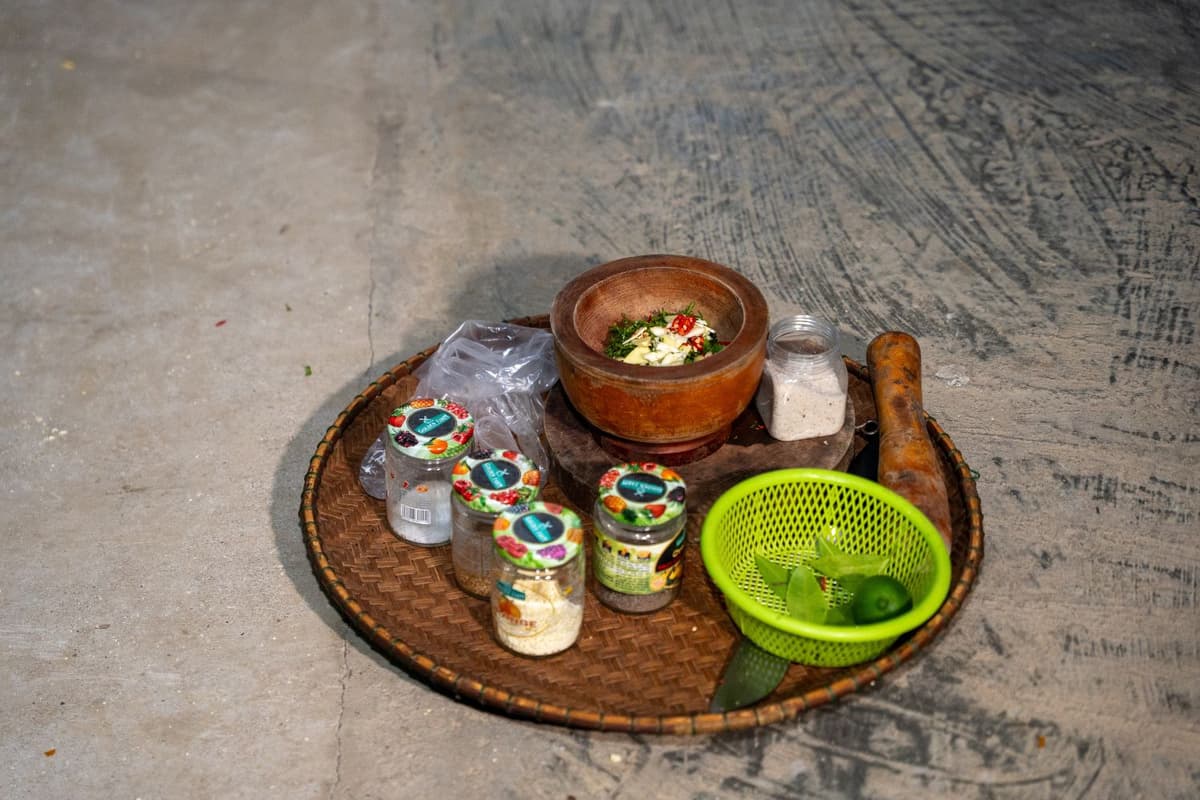
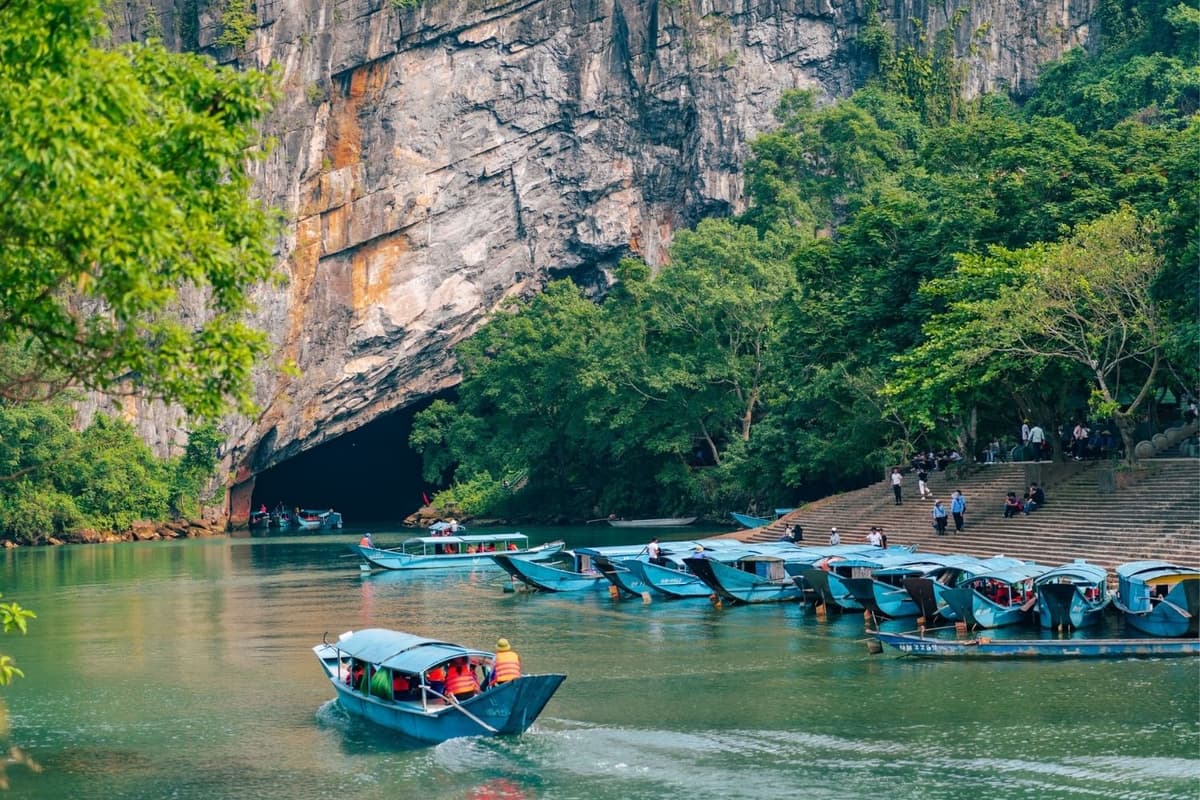
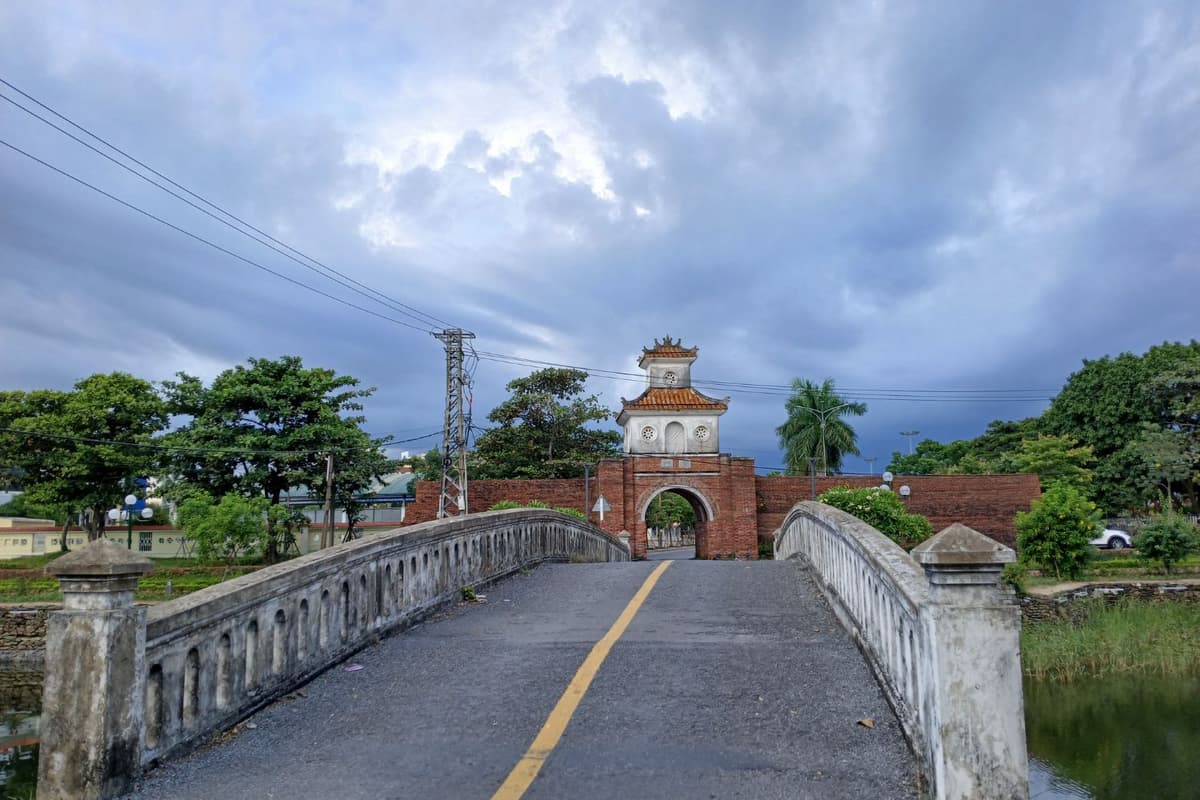

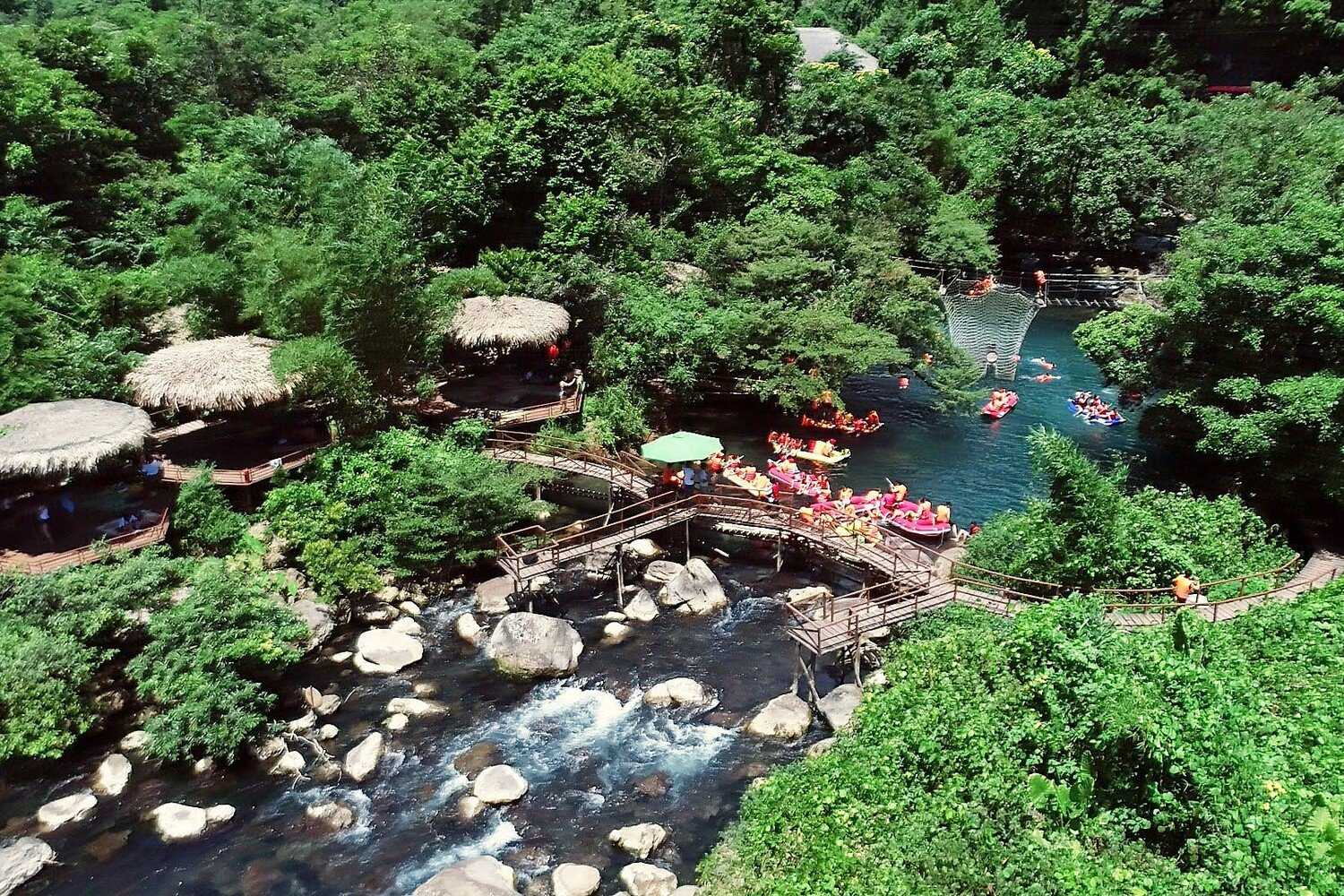

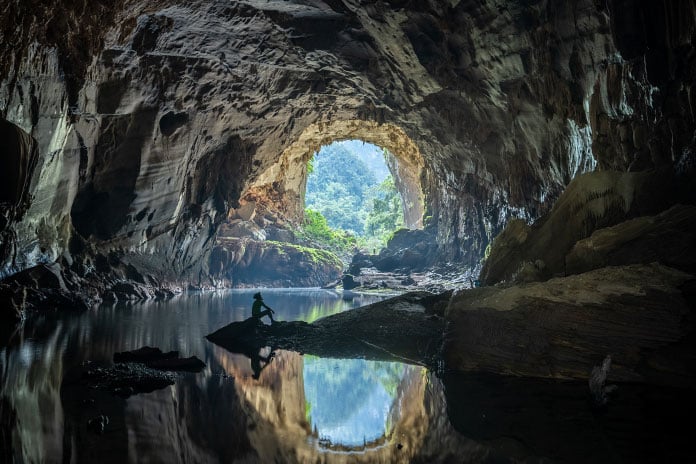
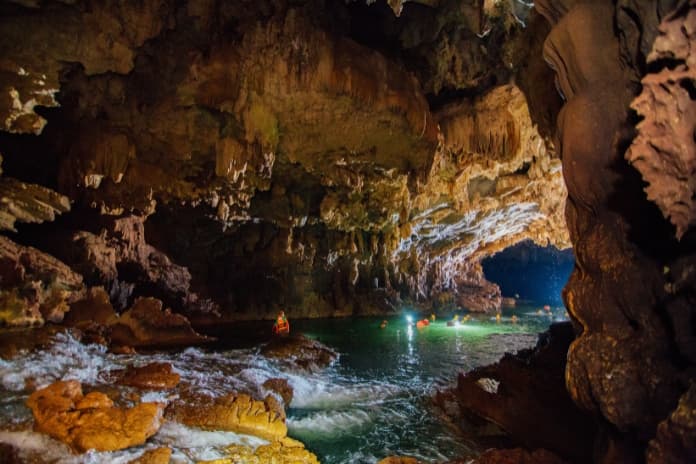
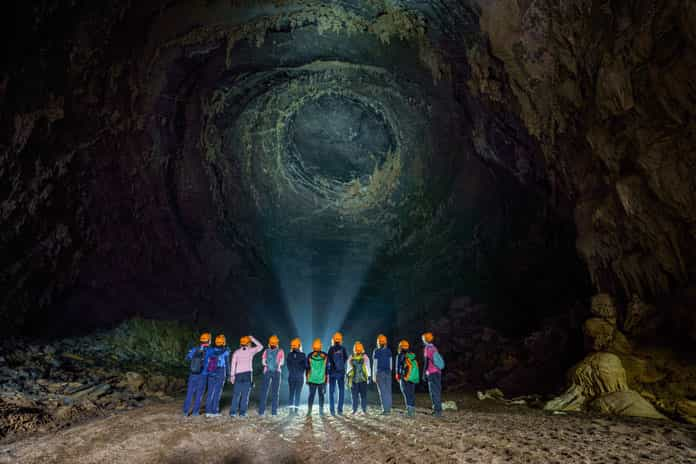
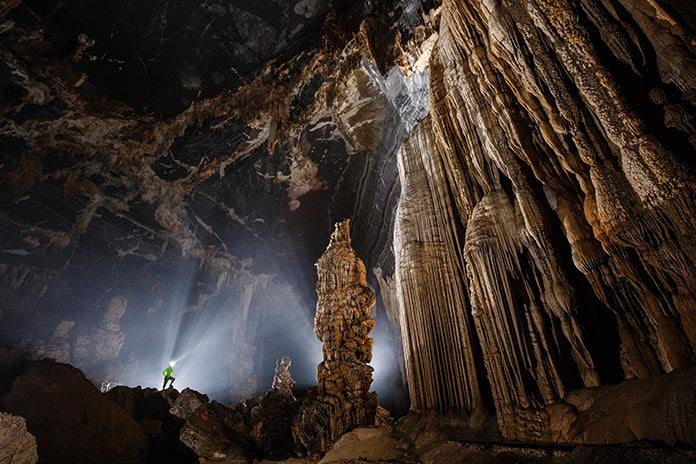
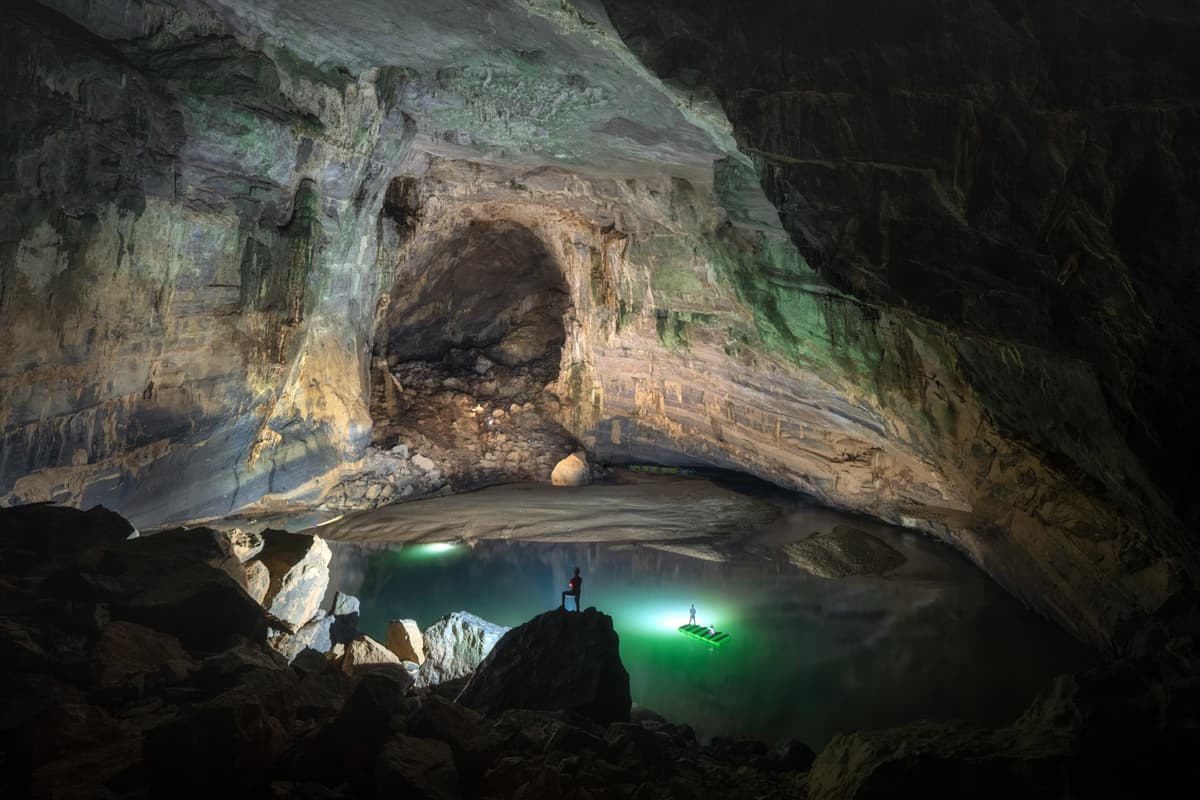
Whether you prefer long treks, camping in a cave, sleeping under the stars in the jungle, swimming underground in river caves, explore the huge dry caves or just taking an exploratory day trip, Oxalis Adventure Tours can provide the right amount of adventure just for you.
__637051782550081035.jpg)
__637051780703588520.jpg)
__637051765075307793.jpg)
__637051774329206026.jpg)
__637740499994967442.jpg)