Tuyen Quang Travel Guide: Discover the New Home of the Ha Giang Loop
If you're planning a trip to Vietnam, you've probably heard of the famous Ha Giang Loop. Don't be surprised if you now see it listed as part of Tuyen Quang Province. Following Vietnam's 2025 provincial merger, the former Ha Giang and Tuyen Quang provinces were combined into a new, larger Tuyen Quang, creating one of the country's most diverse travel destinations. From the spectacular Dong Van Karst Plateau and Ma Pi Leng Pass to the peaceful Na Hang Lake, ancient villages, and rich ethnic cultures, the province offers far more than a single road trip.
This guide covers the best places to visit in Tuyen Quang, the best time to go, how to get around, where to stay, what to eat, and practical tips for planning your journey.
How to travel to Tuyen Quang, Vietnam
After Vietnam's provincial merger, Tuyen Quang became one of the country's largest provinces, stretching from the peaceful lakes of Na Hang - Lam Binh to the dramatic landscapes of the Dong Van Karst Plateau and Meo Vac. Because of its size, the first step when planning your trip is deciding which area you want to visit. Traveling between Na Hang and Dong Van can take several hours, so treating the province as a single destination can lead to unrealistic itineraries.
Traveling from Hanoi to Tuyen Quang
Buses are the most convenient way to travel from Hanoi to Tuyen Quang. Sleeper bus and VIP cabin buses depart daily from the Old Quarter, My Dinh, Giap Bat, and the Kim Anh junction near Noi Bai Airport. Thanks to the expressway, the former Ha Giang area is now about 300 km from Hanoi and takes 4 - 5 hours. Tuyen Quang City is around 165 km away with a travel time of 3 - 3.5 hours. Sleeper bus tickets usually cost 180,000 - 300,000 VND.
Driving is also straightforward via Pham Van Dong - Thang Long Bridge - Vinh Phuc - Phu Tho - Tuyen Quang, before continuing to your final destination.
Choosing Between Na Hang and Dong Van
Choose Na Hang - Lam Binh if you want boat trips, waterfalls, rainforest trekking, and Tay, Dao, and Hmong cultural experiences. Direct buses are available from Hanoi, while traveling from Tuyen Quang City requires another 110 km (around 2 hours) by road.
For the Dong Van Karst Plateau, travel to the former Ha Giang City first, then follow National Highway 4C (Happiness Road) through Quan Ba, Yen Minh, Dong Van, and Meo Vac. This route includes famous attractions such as Ma Pi Leng Pass, Nho Que River, Lung Cu Flag Tower, and the Vuong Family Palace.
Getting Around Tuyen Quang
Motorbikes are the best way to explore mountain villages and scenic roads. One-way rentals are widely available between the former Ha Giang City, Dong Van, and Meo Vac, with transfer fees of 300,000 - 500,000 VND for rentals of three days or longer. Avoid automatic scooters on steep mountain passes and choose a semi-automatic or manual bike instead.
If you are not confident riding mountain roads, an Easy Rider is the safest option. Expect to pay 550,000 - 800,000 VND per day, including a local driver who knows the best viewpoints, local restaurants, and cultural stops along the route.
Best time to travel Tuyen Quang
The best time to visit Tuyen Quang is September to June, when the weather is generally dry and ideal for sightseeing, trekking, and road trips.
September to December is the most popular season for mountain scenery. Hoang Su Phi turns golden during the rice harvest, while buckwheat flowers bloom across Dong Van, Meo Vac, and Lung Cu from October to December.
January to March is perfect for spring blossoms and local culture. Peach, plum, and pear flowers brighten the mountains, while traditional festivals such as the Long Tong Festival and the Pa Then Fire Dancing Festival take place.
May and June are ideal for ecotourism. Na Hang - Lam Binh offers excellent conditions for boat trips, kayaking, waterfalls, and camping, while rice terraces enter the beautiful water season.
July and August are the least recommended months due to heavy rain, which can cause landslides, flash floods, and hazardous driving on mountain roads, including Ma Pi Leng, Tham Ma, and Bac Sum Pass.
Top places to visit in Tuyen Quang
Tuyen Quang is now one of northern Vietnam's most diverse travel destinations. From the Dong Van Karst Plateau and Na Hang Lake to historic landmarks and ethnic villages, these are the best places to visit in Tuyen Quang.
Dong Van Karst Plateau Geopark
The Dong Van Karst Plateau is one of the most iconic places to visit in Tuyen Quang and the highlight of the Ha Giang Loop. Covering more than 2,265 km² at elevations between 1,200 and 1,600 meters, this UNESCO Global Geopark is home to limestone formations and marine fossils dating back 700 to 900 million years. Beyond its dramatic landscape, the plateau is also home to around 360,000 people from 19 ethnic groups, including the Hmong, Dao, Tay, Lo Lo, and Pu Peo.
There are plenty of things to do across the plateau. Visit Lung Cu Flag Tower, Vietnam's northernmost landmark, explore the historic Vuong Family Palace (Hmong King's Palace), or wander through traditional villages such as Lo Lo Chai, Sung La, and Pho Cao, where centuries-old earthen houses still stand. Between October and December, pink buckwheat flowers blanket the rocky hillsides, making this the best time to visit.
Opening hours and entrance fees
- Lung Cu Flag Tower: 8:00 AM - 5:00 PM, 25,000 VND
- Vuong Family Palace: 7:30 AM - 5:00 PM, 20,000 VND
- Pao's House (Lung Cam Cultural Village): 8:00 AM - 5:00 PM, 10,000 VND
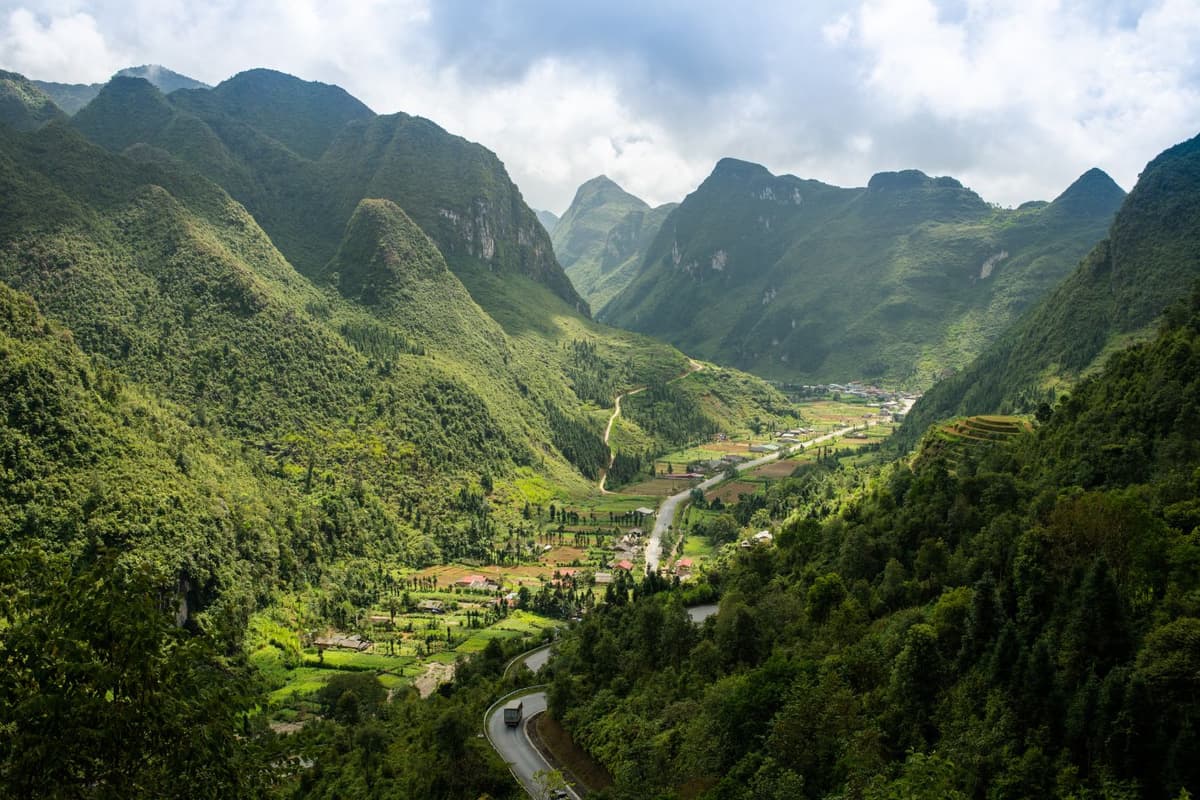
Winding mountain road through the lush valley in Tuyen Quang.
Ma Pi Leng Pass
No list of the best places to visit in Tuyen Quang is complete without Ma Pi Leng Pass, one of Vietnam's legendary Four Great Mountain Passes. Stretching for around 20 km between Dong Van and Meo Vac along Happiness Road, the pass reaches elevations of nearly 1,600 meters and offers spectacular views across the Dong Van Karst Plateau.
The biggest attraction is the panoramic viewpoint overlooking the emerald Nho Que River and the towering Tu San Canyon. The pass is open all day and there is no entrance fee, making it one of the most rewarding free attractions in northern Vietnam.
From 1 July 2026, the famous cliff viewpoint known as the "Death Cliff" has been temporarily closed for safety upgrades. Visitors should use the designated viewpoints along the pass instead and avoid entering restricted areas.
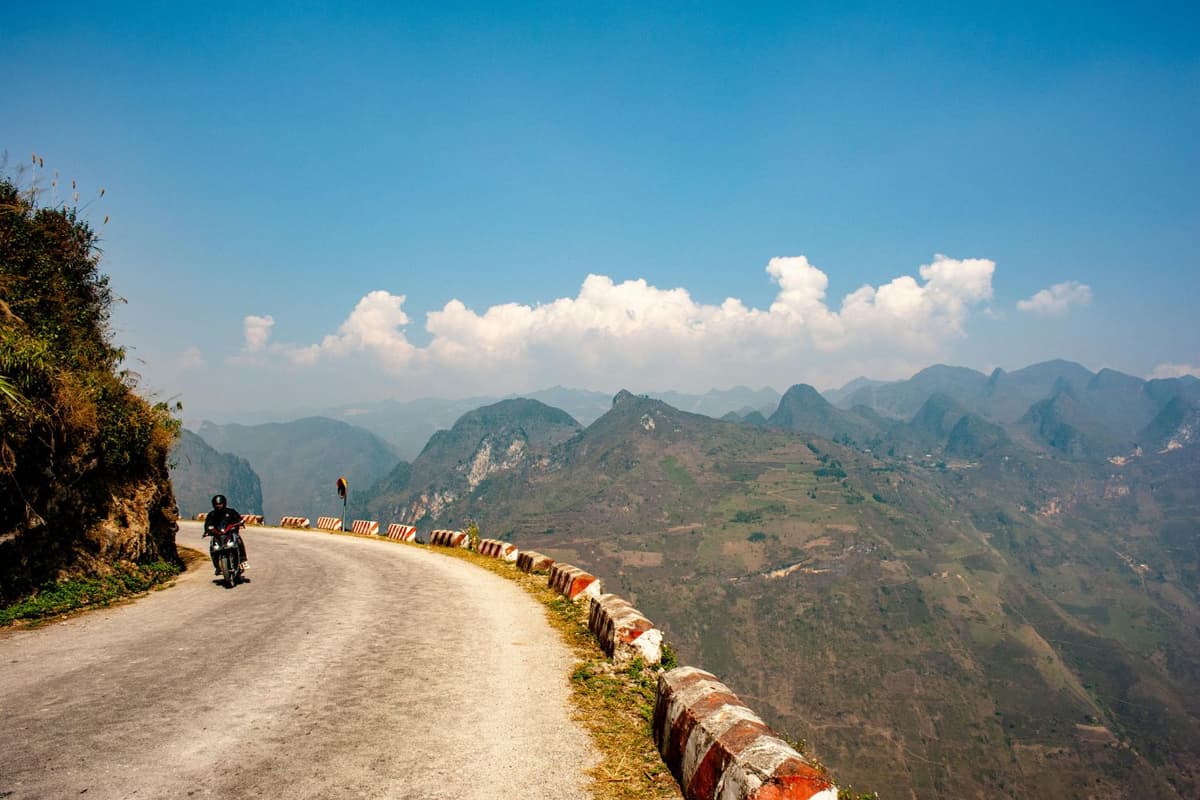
Riding along the dramatic Ma Pi Leng Pass mountain road.
Nho Que River and Tu San Canyon
The Nho Que River is one of the most photographed places to visit in Tuyen Quang thanks to its emerald-green water winding through Tu San Canyon, the deepest canyon in Southeast Asia. Flowing beneath Ma Pi Leng Pass, the river offers one of the most memorable boat trips on the Ha Giang Loop.
The classic experience is a 45 to 60-minute motorboat ride beneath limestone cliffs rising 700 to 800 meters above the water. During the second and third lunar months, bright red cotton trees bloom along the riverbanks, adding even more color to the scenery.
Boat tour information
- Shared motorboat tours depart from Xin Cai Wharf and Ta Lang Wharf.
- Boat tickets are typically around 250,000 VND per person, including the shuttle transfer between the parking area and the dock.
- Kayak rentals start from 50,000 VND, while traditional rowing boats are available from 100,000 to 150,000 VND per person for travelers who prefer a slower experience.
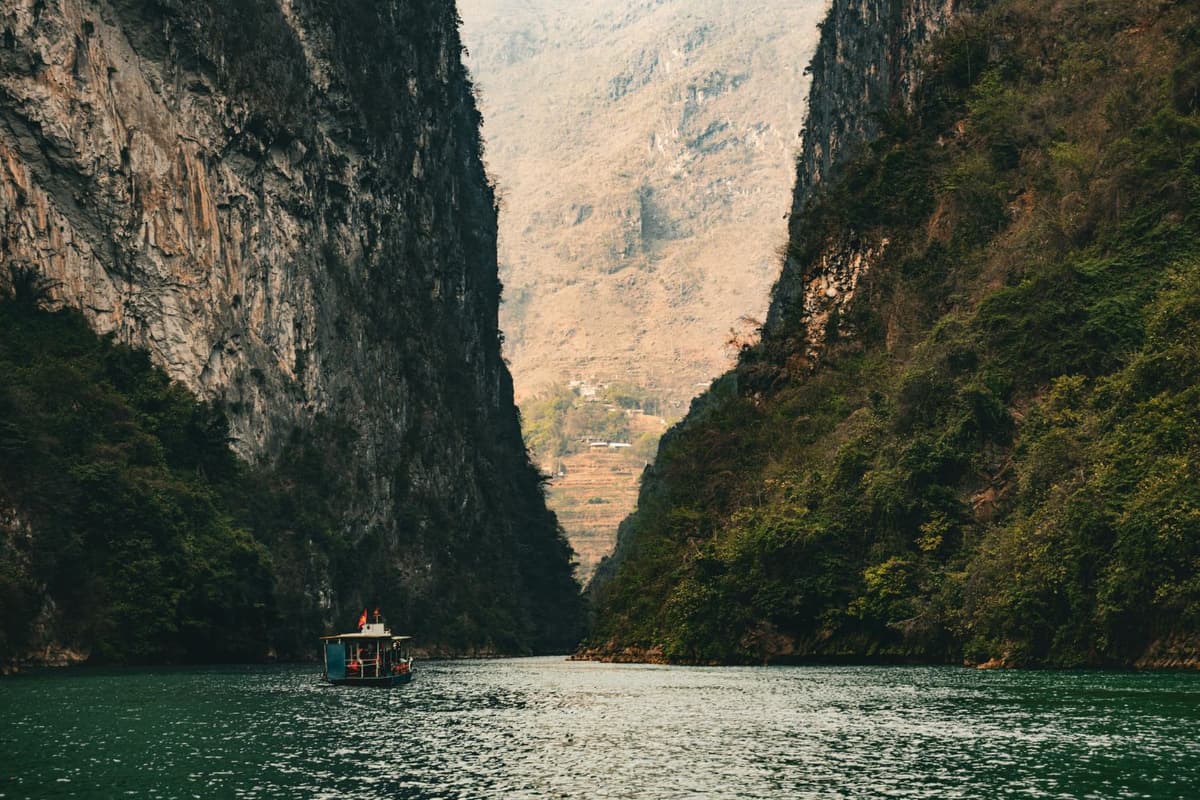
Boat cruising through the towering Tu San Canyon on Nho Que River.
Lung Cu Flag Tower
Standing on the summit of Dragon Mountain, Lung Cu Flag Tower marks Vietnam's northernmost point and is one of the most meaningful places to visit in Tuyen Quang. The 54 m² national flag flying above the tower symbolizes the country's northern frontier, while the hilltop location offers sweeping views across limestone valleys, terraced fields, and the Vietnam-China border.
Reaching the summit requires climbing several hundred stone steps, so comfortable walking shoes are recommended. The climb is rewarded with panoramic viewpoints and one of the best photo opportunities on the Dong Van Karst Plateau.
- Open daily from 8:00 AM to 5:00 PM.
- Entrance fee: 25,000 VND per person.
- Electric shuttle service is available for visitors who prefer to reduce the uphill walk.
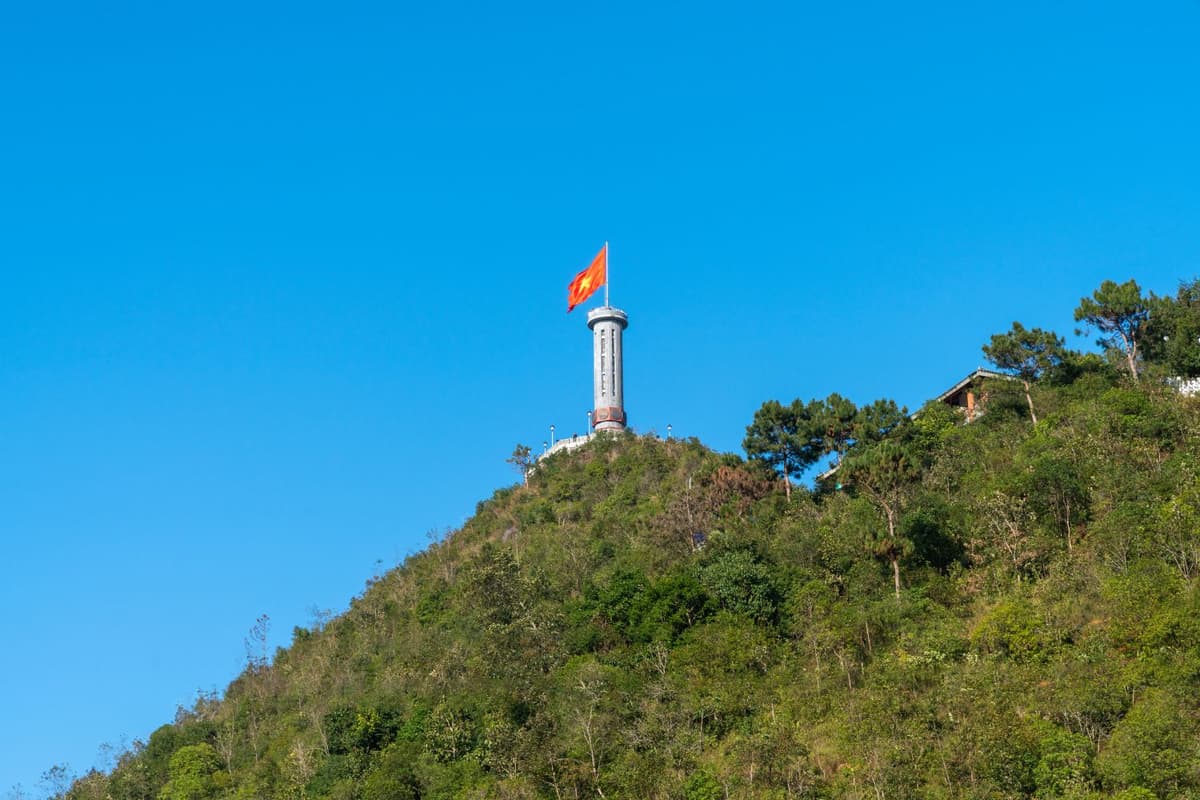
Lung Cu Flag Tower standing atop Dragon Mountain.
Lo Lo Chai Cultural Village
Just below Lung Cu Flag Tower, Lo Lo Chai Cultural Village offers one of the most authentic cultural experiences in northern Vietnam. Home to the Lo Lo ethnic community for generations, the village was recognized by UN Tourism as one of the World's Best Tourism Villages in 2025, highlighting its success in preserving traditional architecture and community-based tourism.
Walking through the village reveals centuries-old rammed-earth houses with yin-yang tiled roofs, stone fences, and quiet lanes surrounded by mountains. Many local families welcome visitors into their homestays, making it easy to learn about Lo Lo traditions, handicrafts, and daily life. You can also rent traditional clothing for photos, enjoy locally grown Shan Tuyet tea at Cuc Bac Café, or sample regional specialties such as grilled hill chicken, stream fish, and Lo Lo-style thang co.
Visitor information
- Open all day with free admission.
- Homestays typically cost 500,000 to 1,400,000 VND per night, depending on the season and room type.
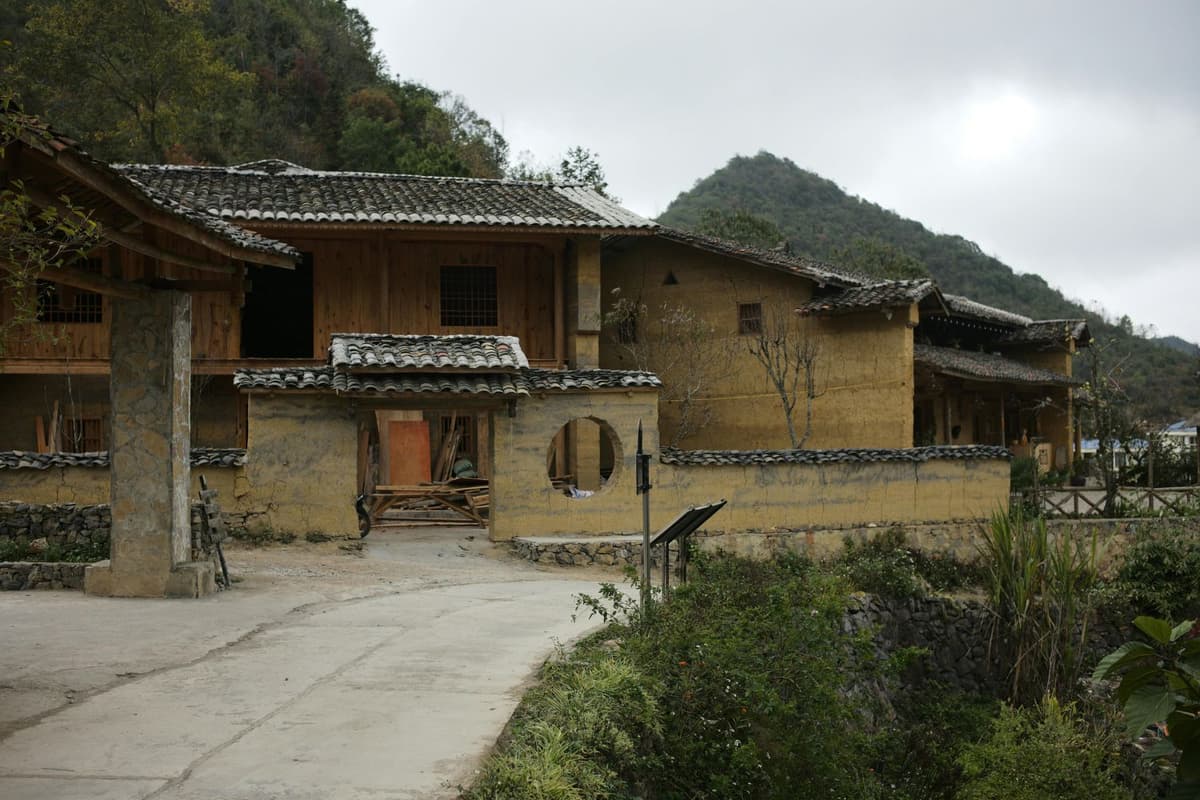
Traditional rammed-earth houses in Lo Lo Chai Village.
Dong Van Old Quarter
More than a century old, Dong Van Old Quarter blends Hmong, Chinese, and French architectural influences into one of the most atmospheric destinations on the Dong Van Karst Plateau. Stone houses, clay walls, and traditional tiled roofs line the narrow streets, while colorful lanterns transform the neighborhood after sunset. Dong Van Old Quarter is open 24 hours with no entrance fee. The Sunday Market is busiest from early morning until around noon.
One of the biggest highlights is the Dong Van Sunday Market, where Hmong, Tay, Dao, and other ethnic communities gather to trade livestock, textiles, fresh produce, and local handicrafts.
The old quarter is also a favorite stop for regional cuisine. Popular dishes include au tau porridge, egg rice rolls served with pork broth, black chicken hotpot, and traditional thang co. Most restaurants display prices clearly, so you can enjoy authentic local food without worrying about unexpected charges.
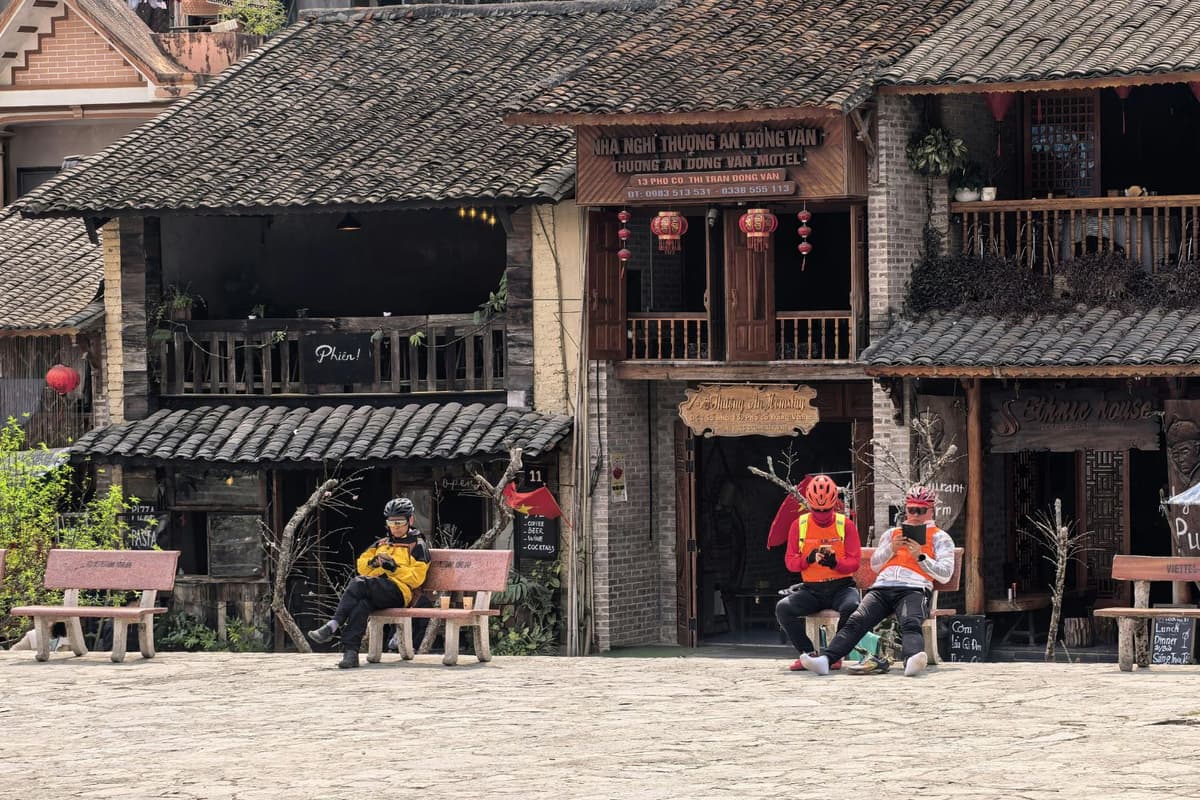
Historic stone and wooden architecture in Dong Van Old Quarter.
Vuong Family Palace (Hmong King's Palace)
Hidden in the Sa Phin Valley, the Vuong Family Palace is one of the most fascinating historical attractions in northern Vietnam. Built between 1898 and 1907, the residence of Hmong leader Vuong Chinh Duc blends Hmong, Chinese, and French architecture into a fortified estate that once controlled important trade routes across the Dong Van Plateau. Construction reportedly cost 150,000 French Indochinese silver coins, equivalent to roughly 150 billion VND today.
The estate covers more than 1,200 m² with 64 rooms, divided into three courtyards connected by stone pathways. Look closely and you'll find carved poppy motifs, French-style fireplaces, thick stone walls, yin-yang roof tiles, and even a traditional stone bathtub. Set against a turtle-shaped hill, the entire complex was designed for both defense and prestige.
- Open daily from 7:30 AM to 5:00 PM
- Entrance fee: 20,000 VND per person

Courtyard inside the historic Vuong Family Palace estate.
Hoang Su Phi Rice Terraces
Among the most spectacular natural attractions in Tuyen Quang, the Hoang Su Phi Rice Terraces stretch across 24 communes, with terraces in 11 communes recognized as a National Heritage Site. Shaped by generations of Hmong, Dao, Nung, and La Chi communities, these mountainsides change dramatically with each season.
The best time to visit depends on the scenery you're looking for. May and June bring the water season, when flooded terraces reflect the sky like giant mirrors. September and October mark the golden harvest season, attracting photographers from across Vietnam. During this period, visitors can also experience local cultural events celebrating the rice harvest. In late autumn and winter, Hoang Su Phi becomes a popular destination for cloud hunting.
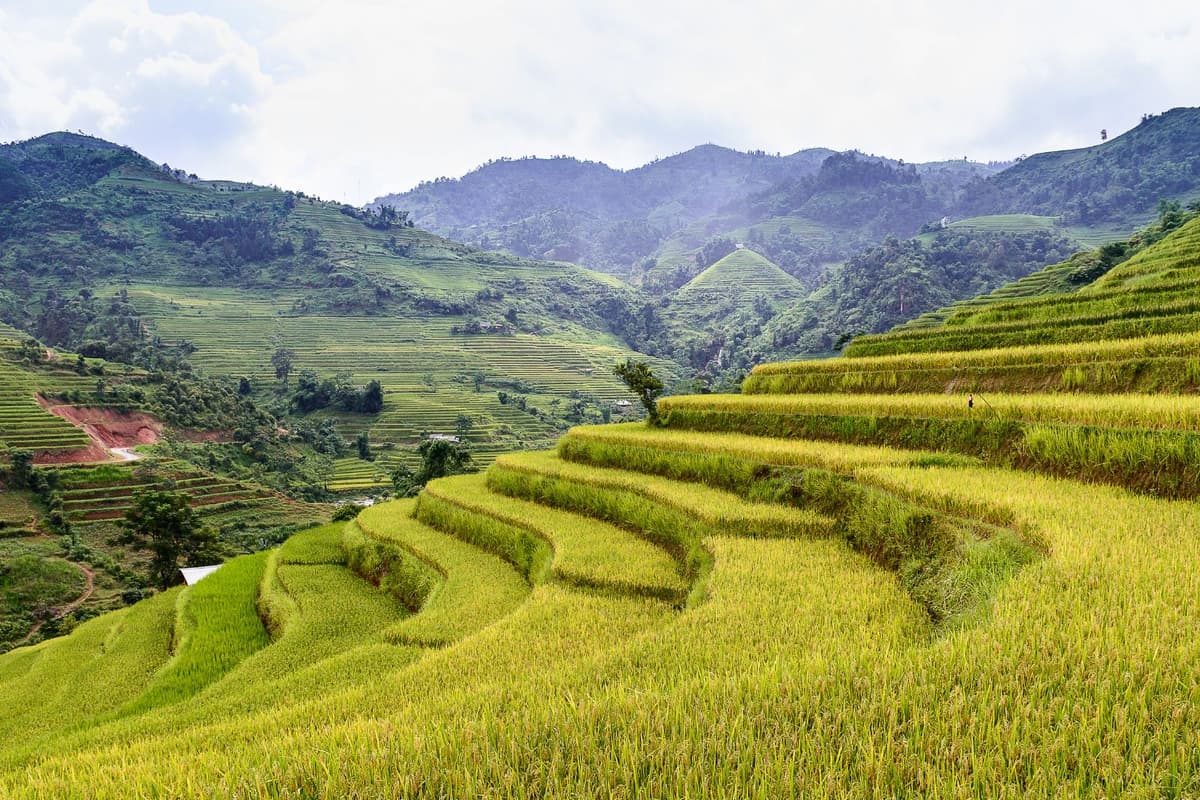
Golden terraced rice fields cascading down Hoang Su Phi mountains.
Na Hang - Lam Binh Nature Reserve
For travelers looking beyond the famous Ha Giang Loop, Na Hang - Lam Binh Nature Reserve is one of the best ecotourism destinations in Tuyen Quang. The protected landscape combines more than 8,000 hectares of freshwater with limestone mountains, dense forests, and the meeting point of the Gam and Nang rivers, creating scenery often compared to "Ha Long Bay on land."
A boat trip across the lake is the highlight of any visit. Along the way, you can stop at Coc Vai Pha, a sacred limestone pillar surrounded by local legends, visit Pac Ta Temple and Pac Vang Temple, or continue to Khuoi Nhi Waterfall, where visitors can swim, enjoy the famous natural fish foot massage, or rent a kayak or SUP to explore the calm water at their own pace.
Visitor information
- Nature reserve entrance: 40,000 VND per person.
- Private boat rental: 1,500,000 to 2,000,000 VND per boat.
- Local meals can be arranged on board with traditional dishes such as grilled river fish, bamboo shoots, and free-range pork.
- Local guides are available for around 500,000 VND and often introduce local legends, Then singing, and Tay cultural traditions during the cruise.
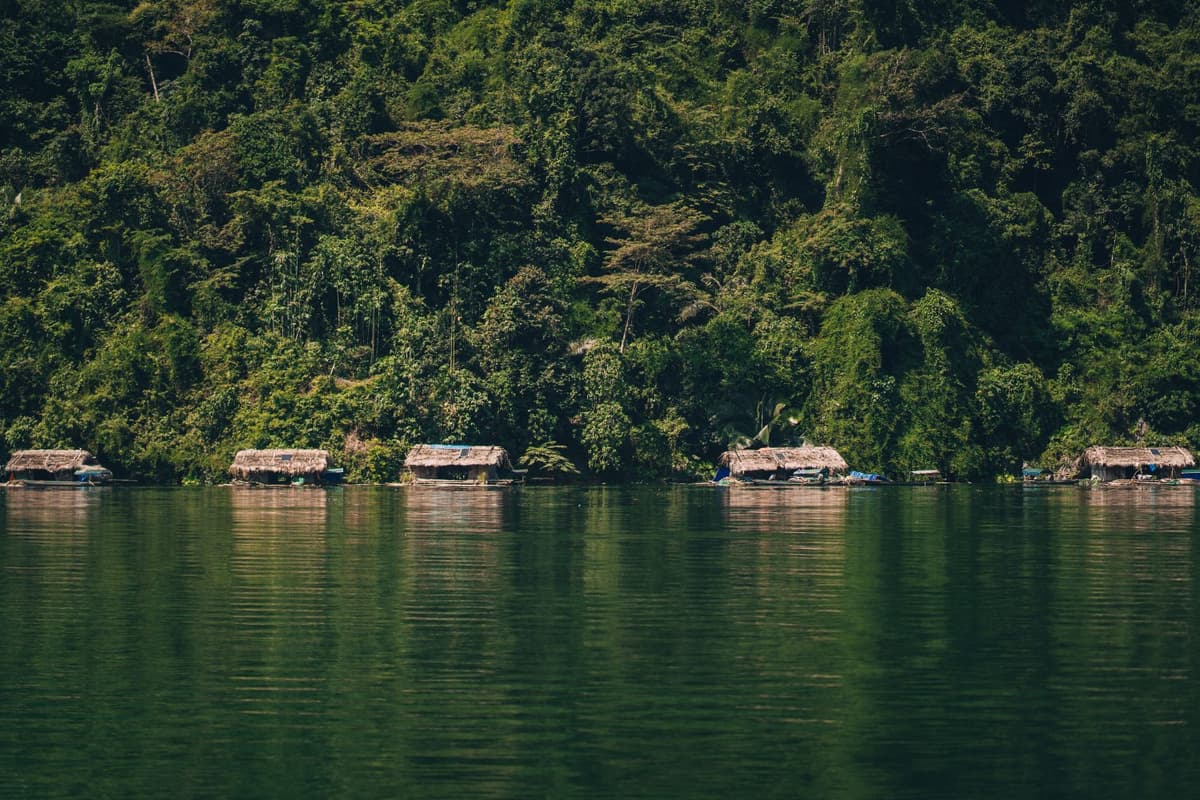
Tranquil stilt houses along the edge of Na Hang Lake.
Khuoi Nhi Waterfall
Hidden deep inside Na Hang - Lam Binh Nature Reserve, Khuoi Nhi Waterfall is one of the most unique nature attractions in Tuyen Quang. The waterfall flows through five tiers over more than 3 km, surrounded by pristine forest and limestone mountains. Reaching the upper cascades requires a short 5 to 15-minute hike across wooden bridges, rocky streams, and shaded forest trails.
The highlight is the natural fish foot massage found in the crystal-clear pools below the falls. Simply sit at the water's edge and small stream fish will gently nibble your feet, creating a surprisingly relaxing experience at no extra cost. During warmer months, many visitors also cool off by swimming in the lower pools.
Visitor information
- Accessible only by boat across Na Hang Lake, with the journey taking around 1 hour from Na Hang or Thuong Lam Wharf.
- The trail can be slippery after rain, so shoes with good grip are highly recommended.
- The natural fish massage is free.
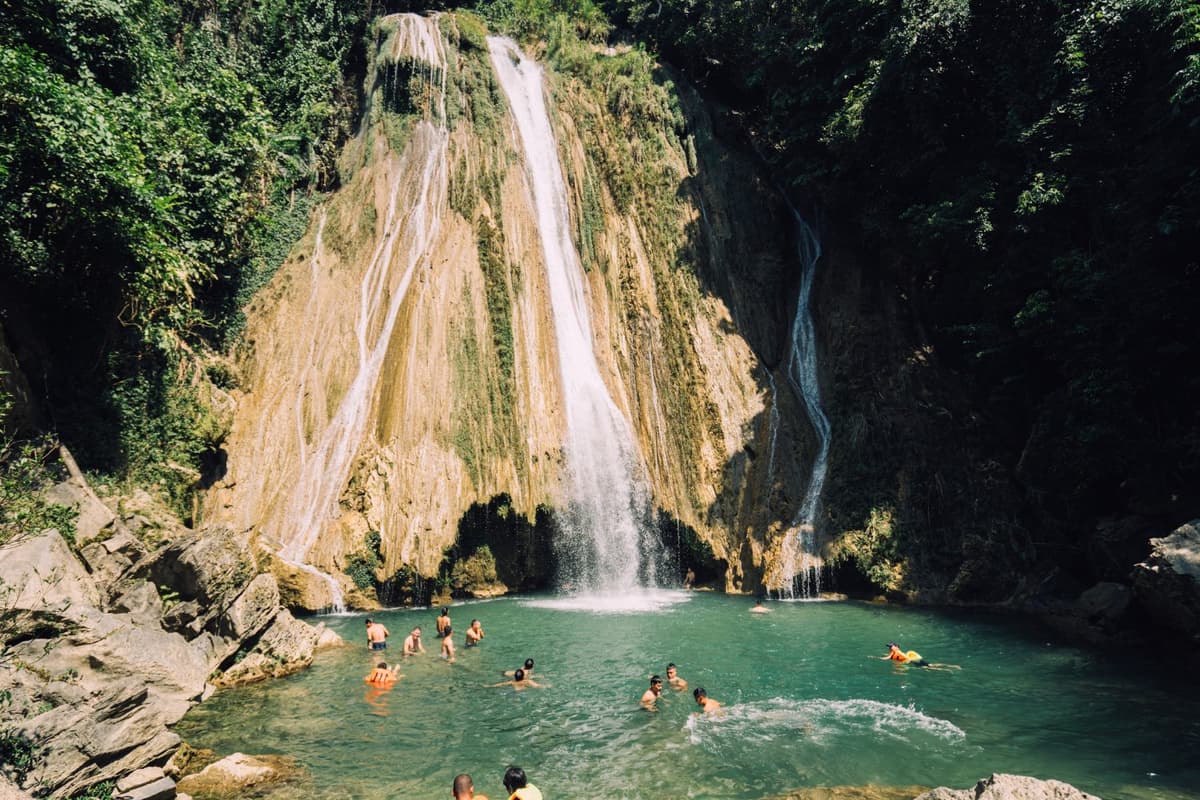
Visitors swimming and enjoying the waters at Khuoi Nhi Waterfall.
Hong Thai Terraced Fields
Perched at more than 1,200 meters above sea level, Hong Thai is one of the most scenic mountain villages in Tuyen Quang. Home to the Dao Tien ethnic community, the area combines cool temperatures, traditional yin-yang tiled houses, centuries-old tea trees, and beautiful terraced fields throughout the year.
Each season offers a different landscape. From late February to mid-March, ancient pear trees bloom across the hillsides during the annual Pear Blossom Festival. Late March to June brings the water season, when around 82 hectares of rice terraces in Khau Trang shimmer with reflections. In September and October, the terraces turn golden during harvest, while November and December are known for spectacular cloud hunting.
Tan Trao Special National Historic Site
Known as the "Capital of the Liberation Zone," Tan Trao Special National Historic Site covers more than 6,633 hectares and preserves many of Vietnam's most significant revolutionary landmarks. It was here that key decisions leading to the August Revolution of 1945 were made.
The site includes Na Nua Shack, where President Ho Chi Minh lived and worked before the revolution, Tan Trao Communal House, where the National People's Congress approved the general uprising on 16 August 1945, and the historic Tan Trao Banyan Tree, where General Vo Nguyen Giap read Military Order No. 1 before the liberation campaign.
Beyond its historical importance, Tan Trao also offers cultural experiences such as bamboo rafting on Na Nua Lake, traditional Then singing by the Tay people, and hands-on village activities including rice-field fishing and making bamboo-tube rice. Many visitors combine the historic sites with an overnight stay in nearby Tan Lap Community Tourism Village.
Khau Vai Love Market
Unlike a traditional market, the Khau Vai Love Market is a cultural festival centered on reunion rather than trade. Held in Khau Vai Commune, Meo Vac, this unique event has existed for more than a century and was officially recognized as a National Intangible Cultural Heritage in 2021.
According to local legend, the market began with the tragic love story of a Nung man and a Giay woman who were forbidden to marry. They promised to reunite once a year, and that tradition evolved into today's festival. Every year on the 27th day of the third lunar month, thousands of people gather to meet old friends and former lovers, enjoy folk songs, traditional dances, local cuisine, and ethnic cultural performances.
My Lam Hot Springs
Located around 13 km southwest of Tuyen Quang City, My Lam Hot Springs is one of the oldest wellness destinations in northern Vietnam. The mineral spring was discovered by French geologists in 1923 and remains famous for its naturally heated water drawn from depths of more than 150 meters, maintaining a temperature of approximately 67 - 68°C before cooling for bathing.
Resorts and wellness centers offer a variety of experiences, including mineral baths, herbal soaking pools, mud baths, and private spa facilities. The mineral-rich water is traditionally believed to help relieve muscle fatigue, improve circulation, and support recovery after long days of travel.
Visitor information
- Open throughout the year, with most resorts operating daily.
- Entrance fees vary depending on the chosen service, from standard mineral pools to private VIP baths and spa treatments.
Where to Stay in Tuyen Quang
Because the new Tuyen Quang Province covers a vast area stretching from Na Hang - Lam Binh to the Dong Van Karst Plateau, staying in multiple locations is much more practical than using a single base. Choosing accommodation close to your main attractions will reduce driving time and allow you to experience each region at a slower pace.
Stay around Na Hang - Lam Binh for ecotourism
Na Hang and Lam Binh are the best places to stay if your itinerary focuses on lake cruises, waterfalls, and community-based tourism. Most accommodations are traditional Tay stilt-house homestays surrounded by rice fields and forest, while the town center offers a few comfortable hotels.
Recommended homestays
- Tài Ngào Homestay
- Homestay Hoàng Tuấn
- Homestay Hải Linh
- Homestay Triệu Cường
- Mao Linh Homestay
- Homestay Hùng Hoản
Hotels in Na Hang Town
- Royal Palace Hotel
- Nam Phong Hotel
- Lavender Hotel
Dormitory beds usually start from 80,000 to 100,000 VND per night, making this one of the most affordable areas for independent travelers.
Stay on the Dong Van Karst Plateau
If you're exploring the Ha Giang Loop, spend each night in a different town instead of returning to one hotel.
Dong Van
- Nhà Cổ Homestay 1925
- Đồng Văn Cliffside House
- HaGiang Holic
Lo Lo Chai Village
- MOTOGO Home Lo Lo Chai
- Lo Lo Village Homestay
- Lo Lo Ancient House
- Homie Homestay
- Lo Lo Eco House
Meo Vac
- Auberge de Meo Vac
- Meo Vac Valley
Quan Ba and Yen Minh
- Dao Lodge
- Toong Homestay
- Du Gia Homestay
These properties provide easy access to Ma Pi Leng Pass, Lung Cu Flag Tower, and local ethnic villages.
Stay near Tan Trao Historical Site
Visitors interested in Vietnam's revolutionary history can stay in Tan Lap Community Tourism Village, where local homestays offer a peaceful rural setting, traditional meals, and convenient access to Tan Trao's historic landmarks.
Luxury mountain resorts
For a more upscale experience, two resorts stand out.
- H'Mong Village Resort
- P'apiu Resort
Both offer premium mountain retreats with valley views, private villas, and wellness experiences inspired by local culture.
Booking tips
- Take your shower before 6:00 PM, as mountain temperatures drop quickly and hot water at many homestays relies on solar heating.
- Choose accommodations that offer family-style dinners to enjoy authentic regional cuisine and learn about local traditions from your hosts.
- Reserve your room at least 2 weeks in advance if visiting during the buckwheat flower season (October to December) or on weekends, when many popular villages are fully booked.
Must Try Local Cuisine and Specialties
The cuisine of the new Tuyen Quang Province reflects the traditions of the Hmong, Dao, Tay, and Lo Lo communities, combining mountain ingredients with recipes passed down for generations. From hearty hotpots and smoked meats to freshwater fish and handmade rice cakes, these local specialties are worth planning your itinerary around.
Traditional mountain specialties
Thang Co is the region's most famous Hmong dish. Made with horse meat, offal, and aromatic mountain herbs, it has a rich flavor that is best experienced at local markets.
- Tiến Nhị Restaurant (Dong Van Old Quarter)
- Sunday markets in Dong Van and Meo Vac
Au Tau Porridge is a comforting evening meal prepared with glutinous rice, pork trotters, and processed au tau root, creating a distinctive bittersweet flavor.
- Cháo Ấu Tẩu Hương
- Cháo Ấu Tẩu Mộc Miên
Black Chicken Hotpot features indigenous black chicken simmered with mushrooms and mountain vegetables, making it especially popular on cool evenings.
- Oanh Hiệu Restaurant
- Thung Lũng Restaurant (Quan Ba)
Smoked Buffalo Meat and Smoked Sausage are classic mountain delicacies seasoned with mắc khén pepper before being slowly smoked over wood fires.
- Dong Van Market
- Meo Vac Market
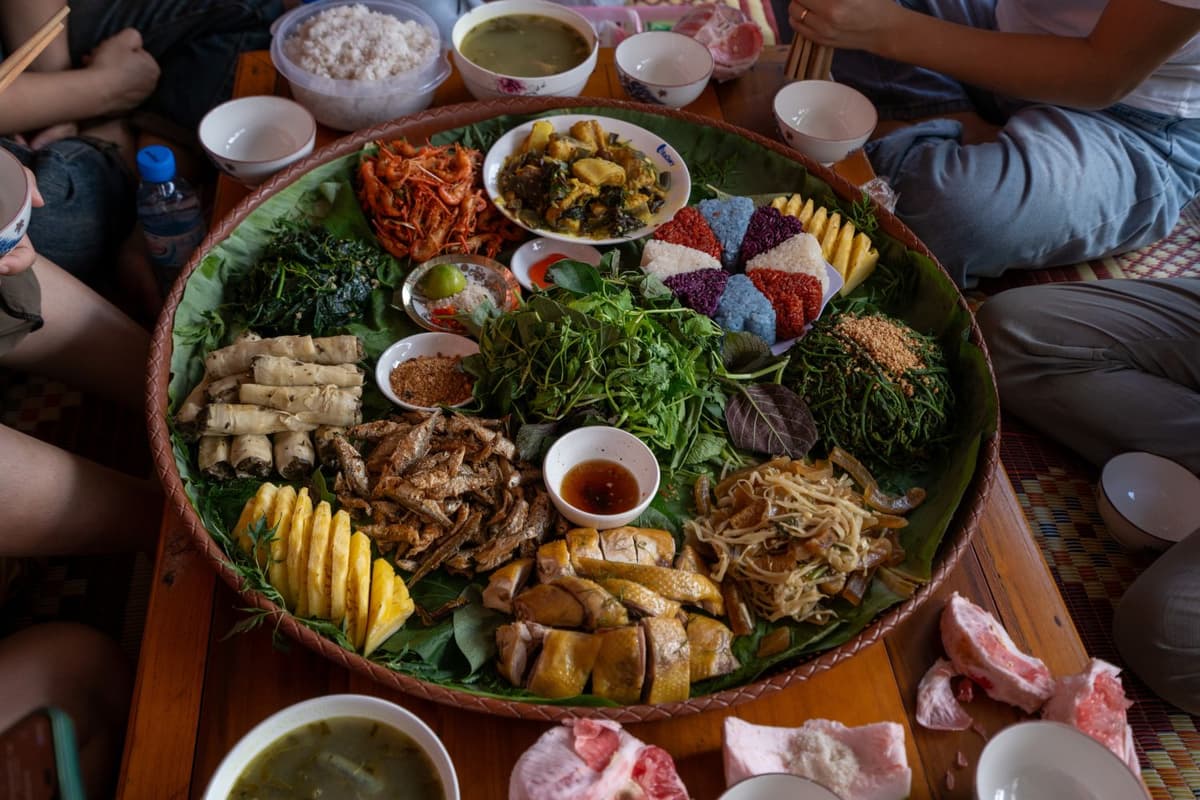
Traditional ethnic tray meal featuring a variety of local delicacies.
Freshwater fish and local favorites
Around Na Hang - Lam Binh, freshwater fish dominate local menus. Song Gam catfish, Song Lo bong fish salad, grilled stream fish cooked inside bamboo tubes, and crispy fried mountain fish showcase the region's clean rivers and lakes.
Another specialty worth trying is buffalo skin salad, a Tay dish made with thinly sliced buffalo skin, roasted peanuts, banana blossom, herbs, and mắc khén.
These dishes are best enjoyed at lakeside restaurants, community homestays, or on boat cruises around Na Hang Lake.
Local snacks and traditional cakes
Street food is another highlight of Tuyen Quang. You can try these dishes:
- Buckwheat cakes are made from buckwheat grown on the Dong Van Plateau and have a mild nutty flavor.
- Egg rice rolls are served with hot pork broth instead of fish sauce, making them a popular breakfast throughout the province.
- Ant egg sticky rice cakes, a seasonal Tay specialty, combine glutinous rice with wild ant eggs for a rich, buttery filling.
Recommended places include:
- Bà Hà Rice Roll Shop (Dong Van)
- Bà Làn Rice Roll Shop (Ha Giang)
- Dong Van Sunday Market
- Markets around the Vuong Family Palace and Pao's House
Local drinks
No food journey is complete without sampling the region's traditional drinks.
Na Hang corn wine is fermented with a herbal starter made from more than 20 forest plants, producing a smooth spirit with a naturally sweet finish.
Ancient Shan Tuyet tea, harvested from centuries-old tea trees growing at 800 - 1,000 meters above sea level, is prized for its floral aroma and lingering sweetness. Both are available at local tea producers, village households, and specialty shops throughout Na Hang and Hoang Su Phi.
Essential Travel Tips for Tuyen Quang
Although Tuyen Quang is becoming more accessible, many of its best attractions are still located in remote mountains and ethnic minority villages. A little preparation will help you travel more comfortably while respecting local communities and nature.
Entry Requirements
- Some border communes require foreign visitors to obtain a Border Permit (around 250,000 VND) and complete temporary residence registration.
- Carry your original passport when traveling in border areas.
- Organized tours may charge an additional 550,000 VND to cover the permit and an English-speaking guide.
What to Pack
- Warm layers, even in summer (mountain nights can drop to 15 - 17°C).
- Waterproof jacket and trekking shoes with good grip.
- Sunscreen, hat, and sunglasses.
- Personal medication, motion sickness tablets, digestive medicine, and a basic first-aid kit.
Respect Local Culture
- Always ask before photographing local people, especially children and the elderly.
- Avoid giving money or sweets directly to children. Support local schools or community projects instead.
- Tipping is optional but appreciated for excellent service.
Stay Safe Outdoors
- Wear a life jacket on boat trips at Na Hang Lake and the Nho Que River.
- Follow warning signs and never enter restricted areas.
- Delay driving if mountain fog significantly reduces visibility.
Food, Payments, and Booking
- Carry enough cash, as card payments are uncommon in rural areas.
- Inform your homestay in advance about food allergies or dietary requirements.
- Family-style dinners at homestays typically cost 150,000 - 200,000 VND per person.
- Book accommodation 2 - 3 weeks ahead during the buckwheat flower season and major holidays.
Travel Responsibly
- Take your rubbish with you and stay on marked trails.
- Avoid stepping into flower fields or cultivated farmland.
- Support locally owned homestays, restaurants, and guides whenever possible.

Whether you prefer long treks, camping in a cave, sleeping under the stars in the jungle, swimming underground in river caves, explore the huge dry caves or just taking an exploratory day trip, Oxalis Adventure Tours can provide the right amount of adventure just for you.