Rao Nan River: The flow that created Tu Lan cave wonders
Hidden among the limestone mountains of the North Truong Son range flows a very special river. Over millions of years, this river has slowly carved its way through the mountains and even runs underground inside large cave systems. In the dry season, the clear water moves gently through the forest and valleys. But when the rainy season arrives, the river can rise quickly and turn the entire Tan Hoa valley into a vast sea of water. This unique river is the Rao Nan River, an important upstream branch of the Gianh River system in Quang Binh, Vietnam.
Geographic Location of the Rao Nan River
The Rao Nan River is closely connected to Tan Hoa, a valley area in Quang Binh Province, which is now part of Kim Phu Commune in Quang Tri Province. The river begins in the forested limestone mountains of the Truong Son range, an area known for its typical karst landscape. From its upper source, the water flows underground for nearly 3 kilometers through Ruc Mon Cave in Trung Hoa Commune, Minh Hoa District. This underground section creates a unique hidden river system inside the limestone mountains.
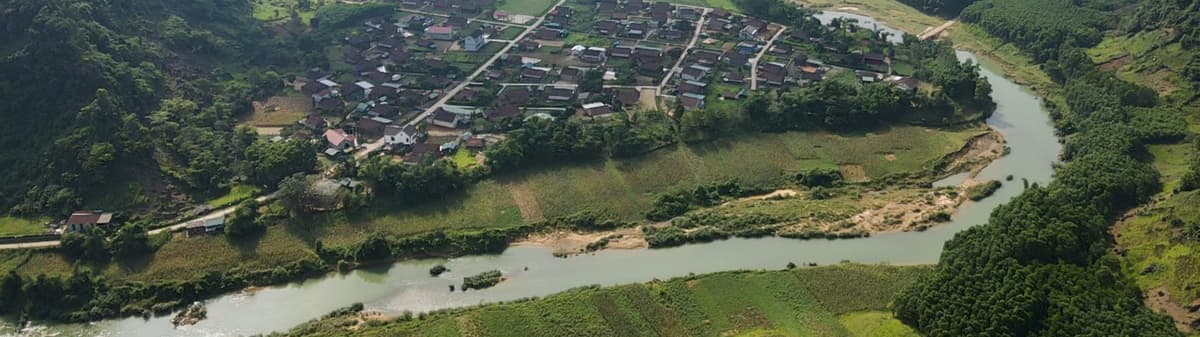
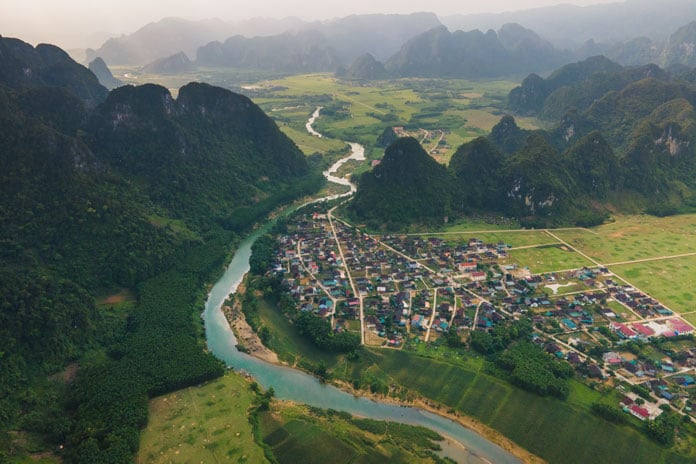
After leaving the cave, the Rao Nan River continues its journey toward Tan Hoa village, a valley once known as the “flood center” of Quang Binh. Here, the river winds through impressive limestone mountains and wide valleys such as Hung Ton, To Mo, Tu Lan, La Ken, Hung Nhai, Hung Dung, Hung Run, and Hang Tien. These landscapes form one of the most remarkable natural areas in the region. From Tan Hoa, the river flows through Cao Quang and Quang Son, then meets the Son River in Quang Minh before joining the Gianh River and eventually reaching the sea.
The Rao Nan River and the Formation of the Tu Lan Cave System
The Rao Nan River is not only an important river for local communities in Tan Hoa, a valley once known as the flood center of the region. It also plays a key role in forming the spectacular Tu Lan cave system.
The Tu Lan cave system is located in Tan Hoa Commune, Minh Hoa District, in the former Quang Binh Province, which is now part of Kim Phu Commune in Quang Tri Province. It lies about 70 kilometers northwest of Phong Nha - Ke Bang National Park. Although both areas are part of the limestone mountains of the North Truong Son range, Tu Lan is a separate cave system and does not directly connect with the caves of Phong Nha - Ke Bang. The caves were first discovered and recorded in 1992 by the British - Vietnamese Cave Exploration Team, and later carefully surveyed in 2010.
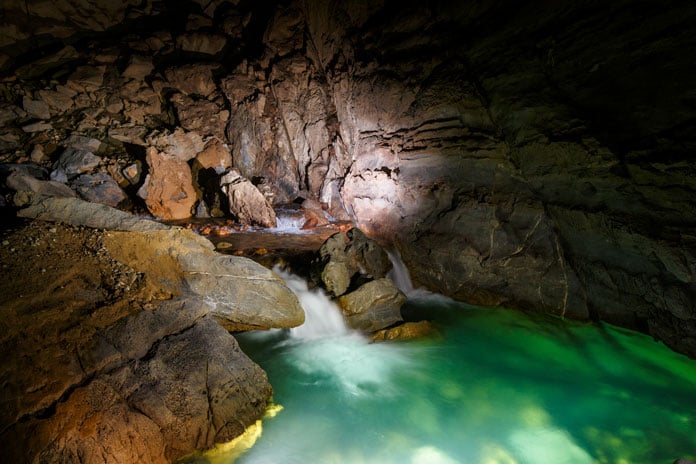
The magnificent beauty of the Tu Lan cave system today is the result of a long natural process created by the waters of the Rao Nan River. Over millions of years, the river slowly moved through cracks in the limestone mountains. The water gradually dissolved and eroded the rock through a natural process called karst formation. As time passed, small cracks became larger passages, forming a complex network of caves, underground rivers, and green valleys hidden among the limestone mountains of the North Truong Son region.
From this long geological process, a chain of impressive caves with a total length of about 25 kilometers gradually formed. Some of the most well-known caves include Hung Ton, Ken, Kim, Tu Lan, Chuot, Tien, Uoi, Ruc, Bi Mat, Doi, and To Mo. Today, the Tu Lan area contains around 20 caves of different sizes, connected by underground rivers and wide limestone valleys.
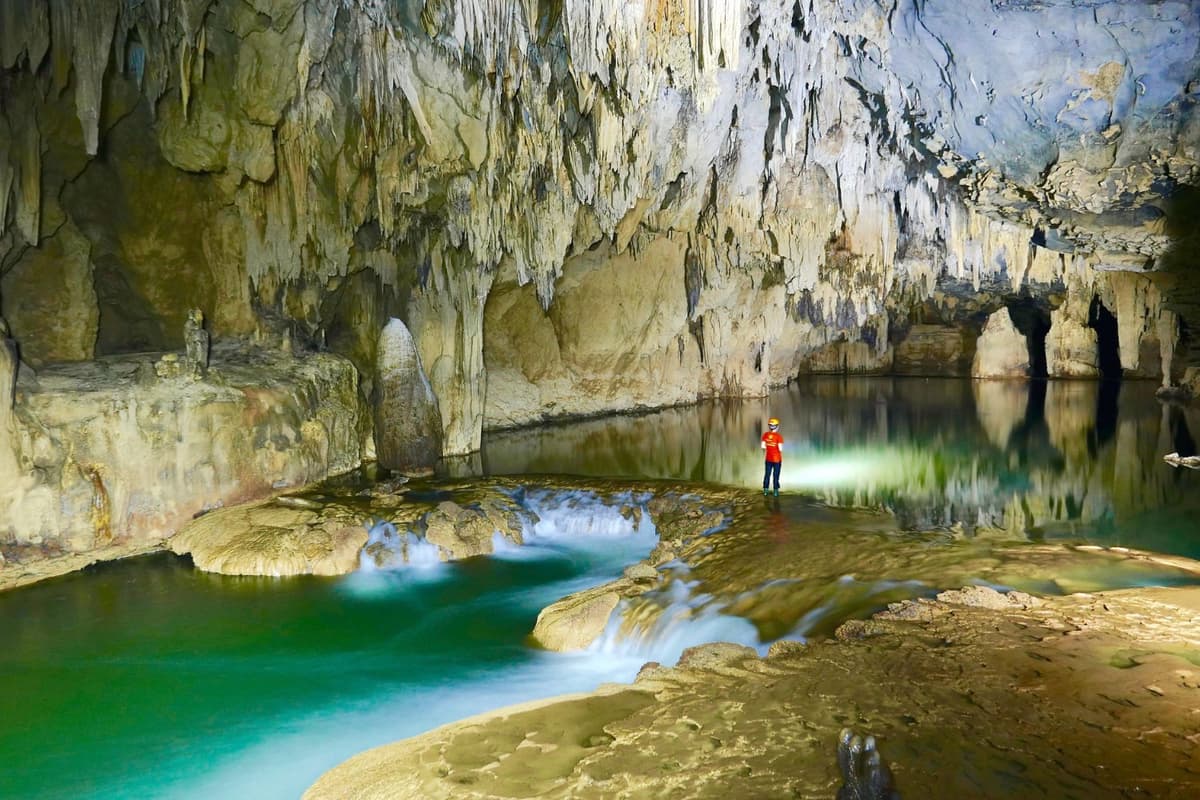
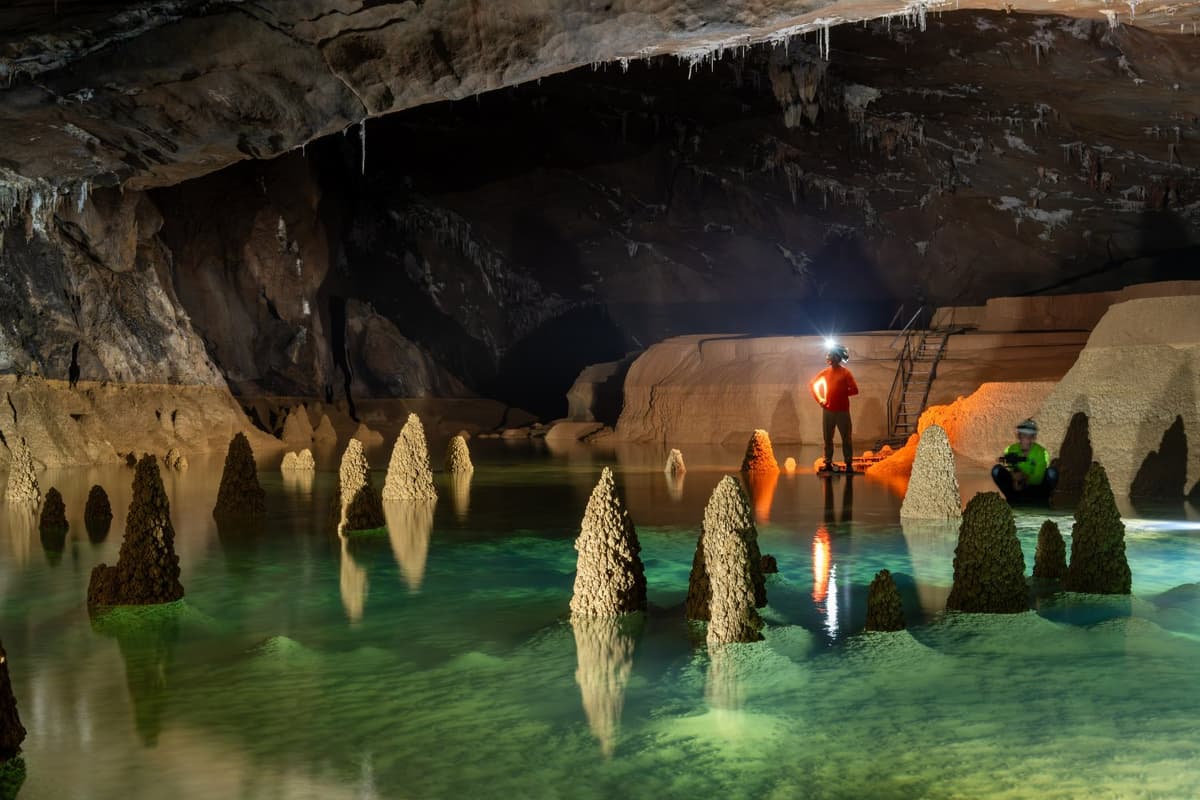
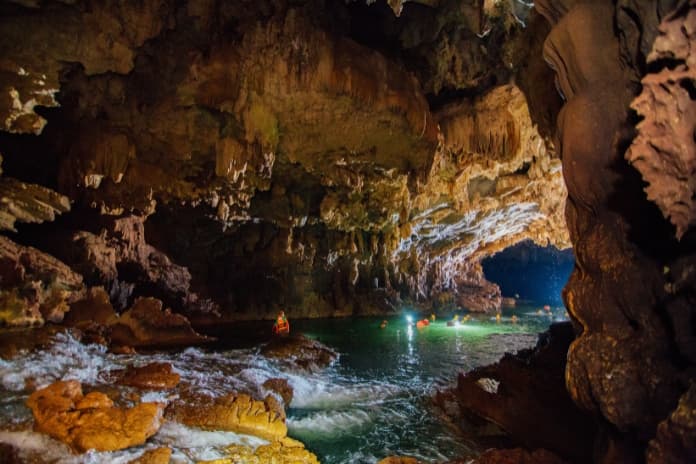
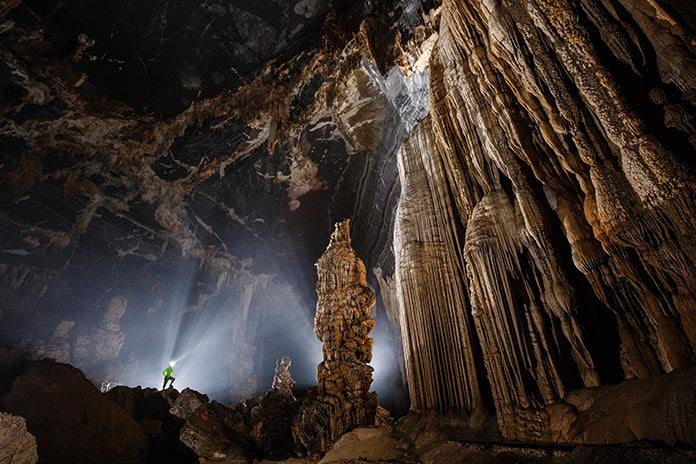
The beauty of stalactites and underground rivers in Kim Cave
Because the caves formed during different geological periods, each cave has a different age and structure. Some caves were created earlier and were later lifted above the river due to geological movement, turning them into dry caves. Other caves remain on the underground river and continue to be shaped by flowing water, creating wet caves. As a result, visitors to Tu Lan can explore both types of caves, including wet caves such as Hung Ton, Kim, Ken Nuoc, Tu Lan, and Doi, as well as dry caves like Bi Mat, Chuot, Ken Kho, and Hang Tien.
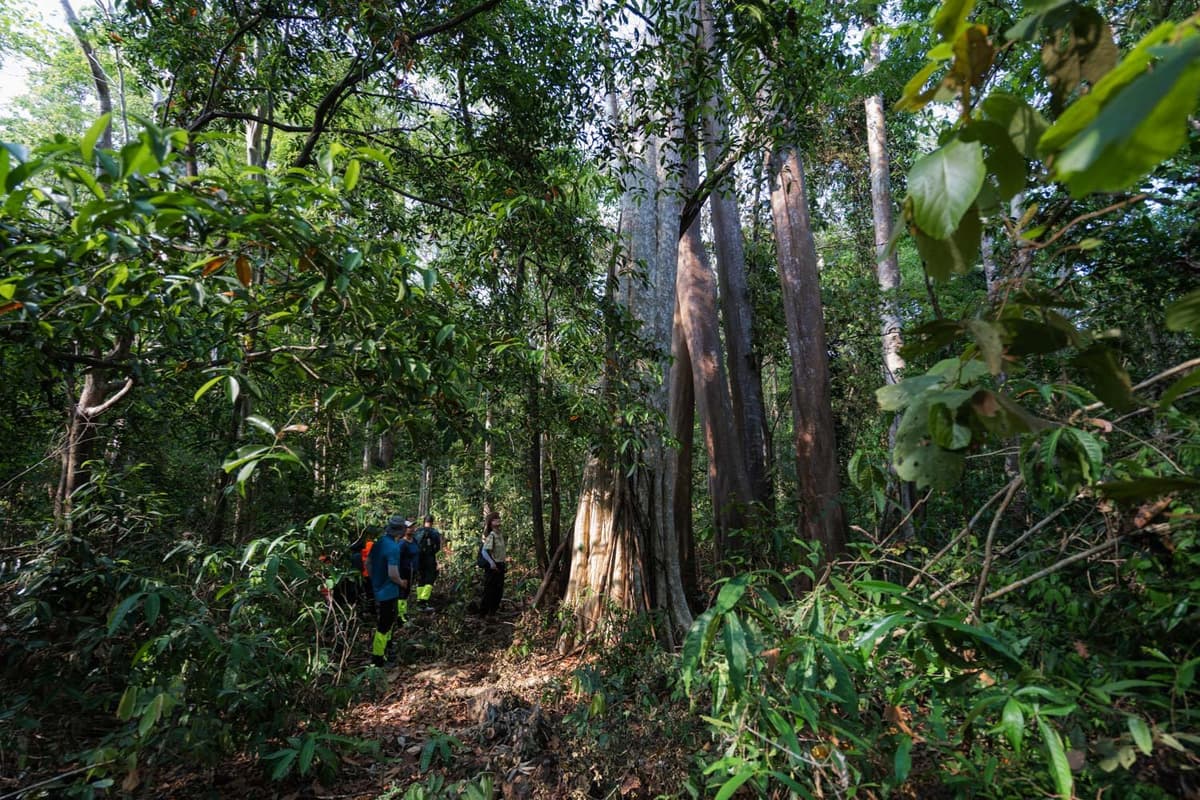
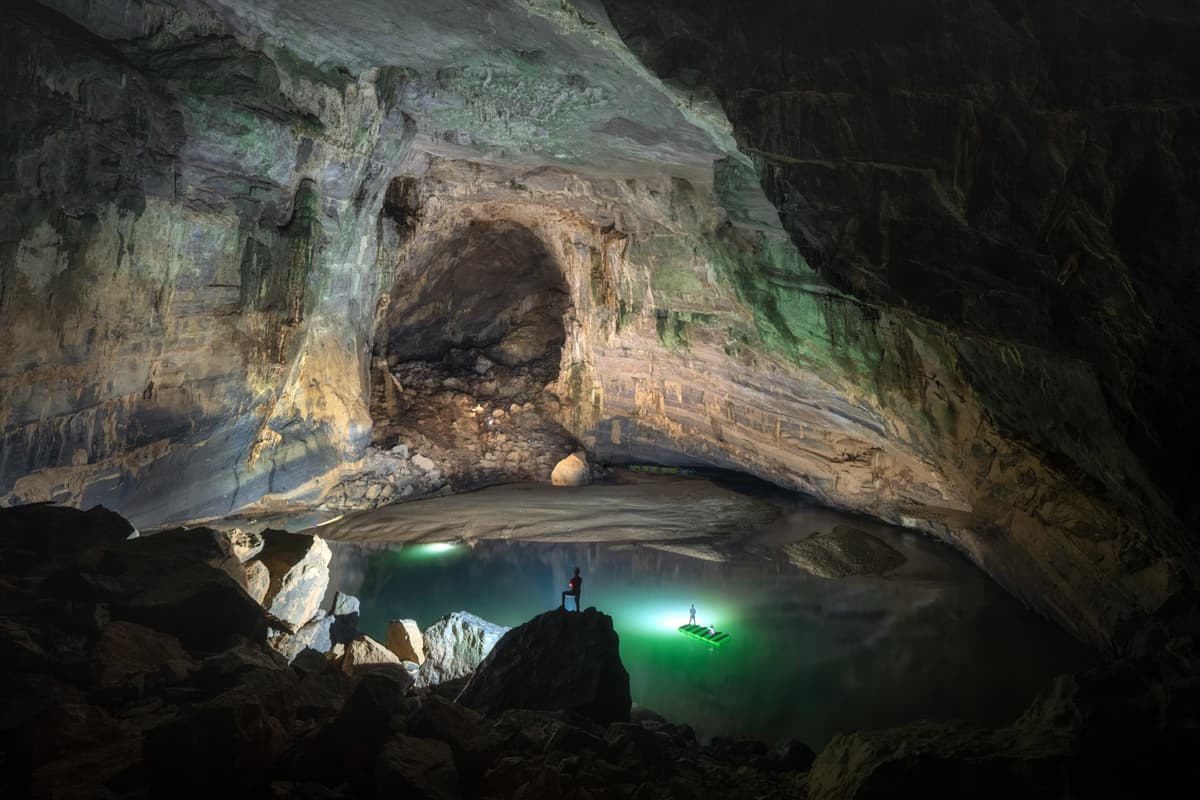
Surrounding the cave system are dramatic limestone valleys covered with lush primary forest. Many small valleys lie between the mountains and form natural basins that can hold water. Over time, these basins have become clear natural lakes. Today, these lakes are popular resting spots for travelers during trekking and cave exploration tours in the Tu Lan area, offering a peaceful moment in the middle of wild and untouched nature.
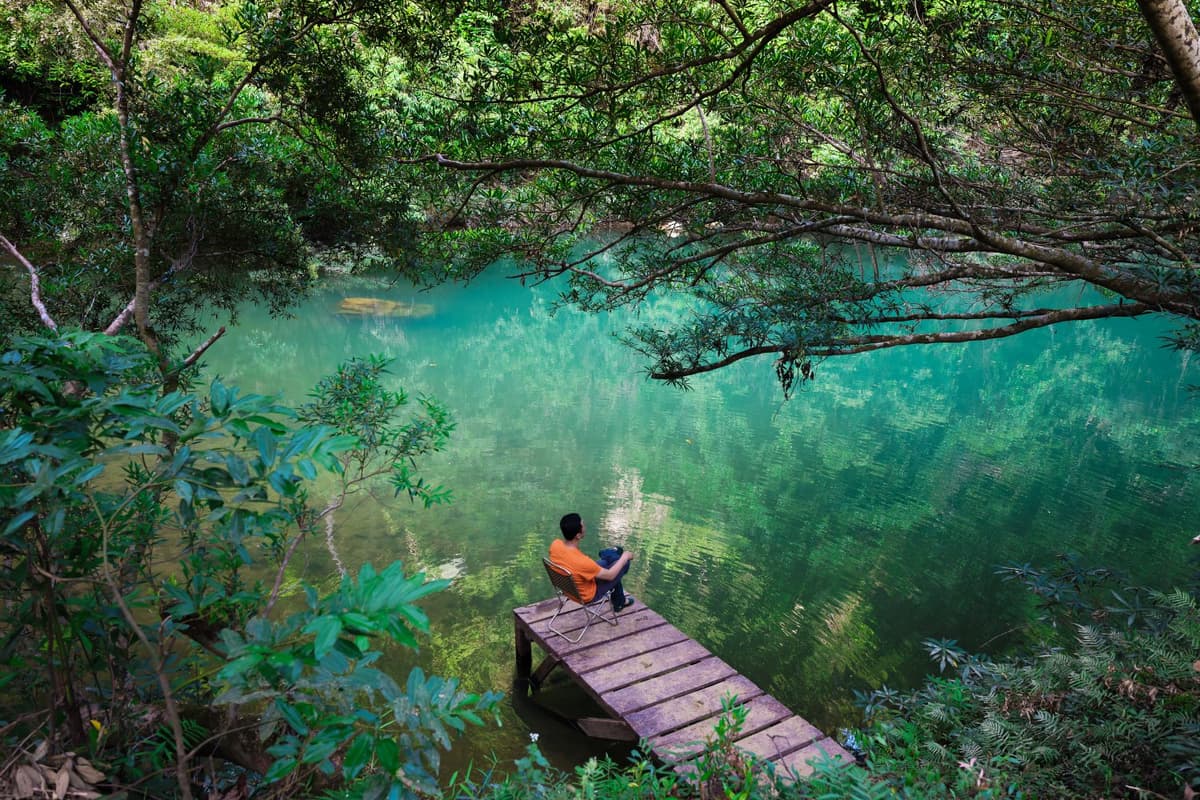
One of the lakes near the campsite during the Tu Lan cave exploration journey
The Role of the Rao Nan River in the Ecosystem and Local Life
For a long time, the Rao Nan River has been closely connected to daily life and local livelihoods in Tan Hoa.
The River and the Livelihood of the Nguon People
For the people of Tan Hoa, the Rao Nan River is more than a river flowing through the valley. It is a vital source of life that has supported the community for many generations. The river is closely connected to the daily life of the Nguon people, a local ethnic group with historical links to the Viet - Muong communities from Thanh Hoa.
The Rao Nan River provides fish, freshwater snails, and many natural resources. It also supplies water for daily use and for farming activities along the riverbanks. Thanks to the river, many families can maintain their traditional livelihoods such as catching stream fish, growing rice, cassava, and corn, and raising buffalo and cattle. The river is also connected to many simple local dishes, including grilled stream fish, freshwater snails, and traditional fermented fish sauces that carry the rich flavor of the countryside.
Because the river plays an important role in local life and agriculture, the Rao Nan irrigation project was built in late 2019. This project helps provide clean water and irrigation for 22 communes in the lower area of the Gianh River basin, bringing a more stable water supply to many communities downstream.
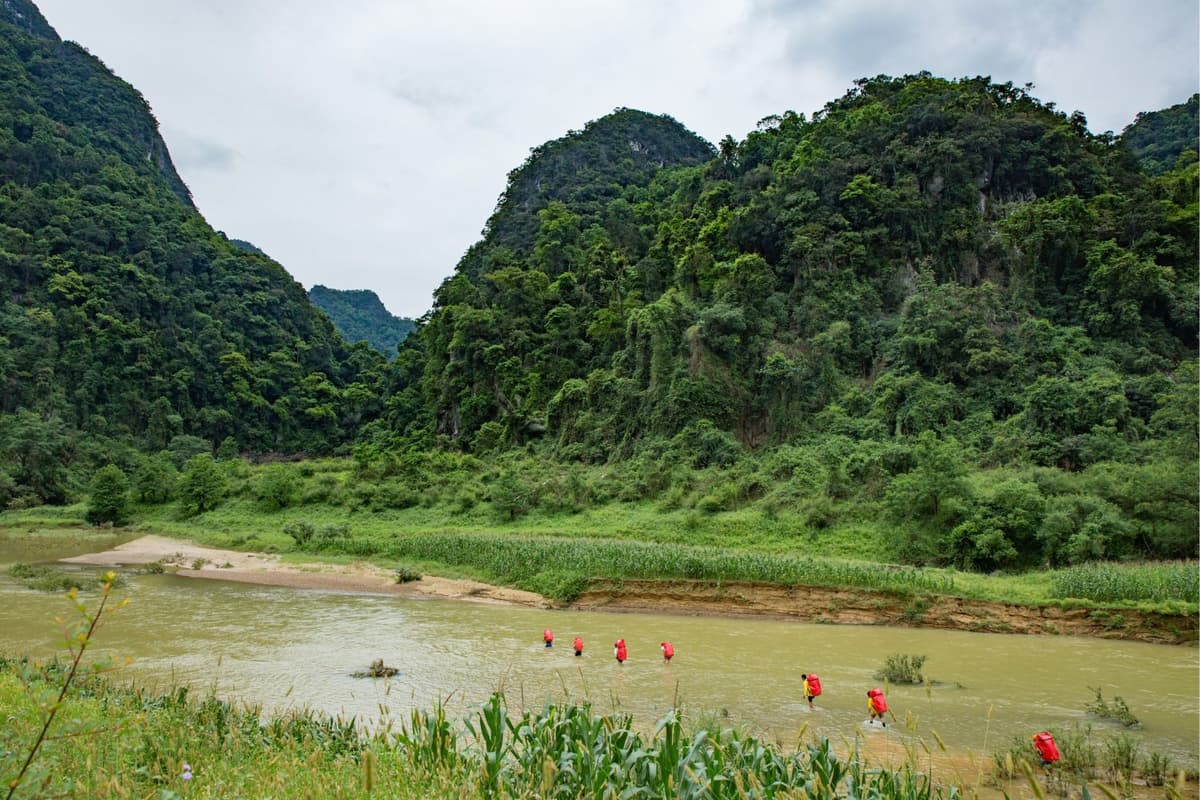
Song Rao Nan flows around the mountains in Tan Hoa.
However, when the rainy season arrives, the river can also rise and flood the entire Tan Hoa valley. This happens because the village lies in a low valley surrounded by limestone mountains. Water from the surrounding slopes flows down very quickly, but it drains away slowly because there are very few natural outlets. During heavy rains, the whole valley can be covered by water. For this reason, Tan Hoa has long been known as the “flood center” of Quang Binh Province, now part of Quang Tri Province, especially after the historic flood in 2010.
Yet these floods have also shown the strong spirit and creativity of the local people. After many generations of living with seasonal floods, the people of Tan Hoa created floating houses. These houses can rise with the water level when floods come. Through the Tu Lan Race fundraising program, organized by Oxalis Foundation since 2015 with support from many donors, hundreds of floating houses have been built in Tan Hoa.
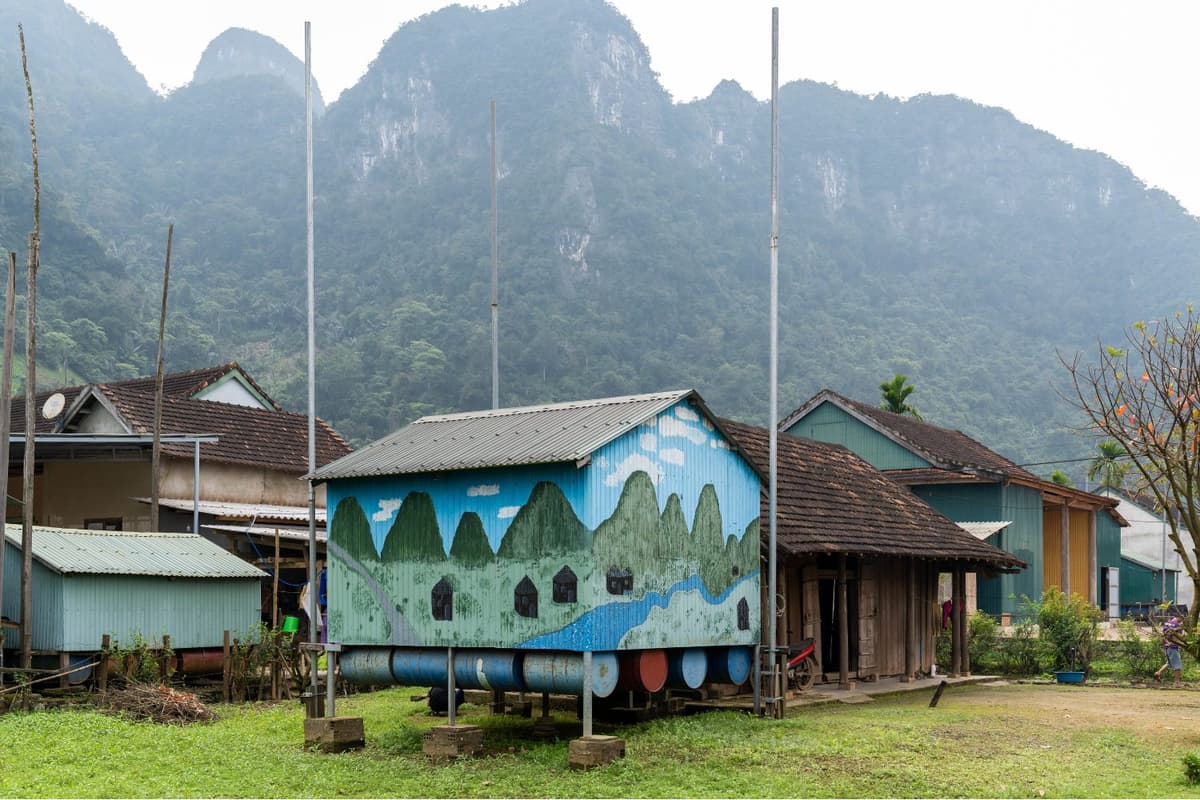
Floating houses of the people in Tan Hoa
The Rao Nan River and Biodiversity in the Region
In the unique karst landscape of the North Truong Son mountains, the Rao Nan River flows through valleys and limestone mountains, creating many different habitats. This movement of water helps form a rich and diverse ecosystem in the region.
Along the river, nature creates many small environments such as streams, clear valley lakes, wet rock walls, deep mountain valleys, and caves with underground rivers. Each of these habitats supports different groups of living organisms. Fish and other aquatic animals live in the water, while amphibians, reptiles, birds, and small mammals live in the surrounding forests and limestone valleys.
In karst areas, part of the river flows underground through cave systems inside the mountains. These dark and humid caves create a special environment for cave-dwelling species. These animals must adapt to conditions with almost no light, high humidity, and limited food.
Some typical cave species include camel crickets, hunting spiders, African cave spiders, millipedes, woodlice, and several species of fruit bats and insect-eating bats. Because they live in such harsh environments, many of these animals are very small, often only a few millimeters to a few centimeters in size. Over millions of years of evolution, some species have lost their color and eyesight, but developed stronger sensory organs such as long antennae or fine hairs to help them move in the dark.
Together, these small creatures, along with the rivers, forests, and caves shaped by the Rao Nan River, help maintain the ecological balance of the entire region. They play an important role in natural food chains, help break down organic matter, and support the fertility of the forest soil.
Economic Benefits and Support for the Local Community
Besides shaping a unique natural landscape, the Rao Nan River has also created economic opportunities for people in Tan Hoa. The river helped form the Tu Lan cave system, which has become a famous adventure tourism destination. Today, many visitors from Vietnam and other countries come here to explore the wild beauty of the limestone mountains.
Tourism development has created many jobs for the local community. People in Tan Hoa can take part in tourism activities in different ways. Some work as local guides or porters who support exploration teams. Others provide food, work as cooks for trekking tours, or offer accommodation through rural homestays. Thanks to these opportunities, many families now have a more stable income and the poverty rate in the area has gradually decreased.
Local people have also received support from Oxalis Adventure through several community projects. These include building floating houses, developing community-based tourism, and supporting homestay models. In addition, many social programs have been organized, such as free swimming classes for children living along the Rao Nan River to improve safety during flood season, scholarships for disadvantaged students, the “Warm Clothes for Children” program, and the construction of hygienic toilets for families in need.
Thanks to the combination of nature conservation, sustainable tourism, and community support, this small village in a limestone valley received an important recognition. In 2023, Tan Hoa was honored by the United Nations World Tourism Organization (UN Tourism) as one of the Best Tourism Villages in the World.
Travel Experiences in Tan Hoa Village and the Tu Lan Cave System
Với vẻ đẹp thiên nhiên hoang sơ từ hệ thống hang động Tú Làn, nơi đây ngày nay trở thành điểm đến hấp dẫn cho những ai yêu thích thiên nhiên và hành trình khám phá mạo hiểm. Hiện nay, các tour thám hiểm hang động tại hệ thống Tú Làn được khai thác bởi Oxalis Adventure. Khi đến đây, du khách không chỉ được tham gia những hành trình khám phá hang động mạo hiểm và hòa mình vào thiên nhiên núi rừng, mà còn có cơ hội tìm hiểu về văn hóa của cộng đồng người Nguồn và cuộc sống bình dị tại làng Tân Hóa.
Exploring Tu Lan Cave system
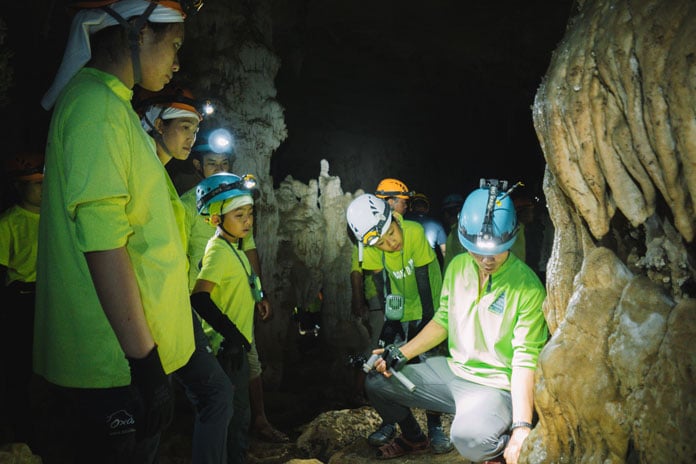
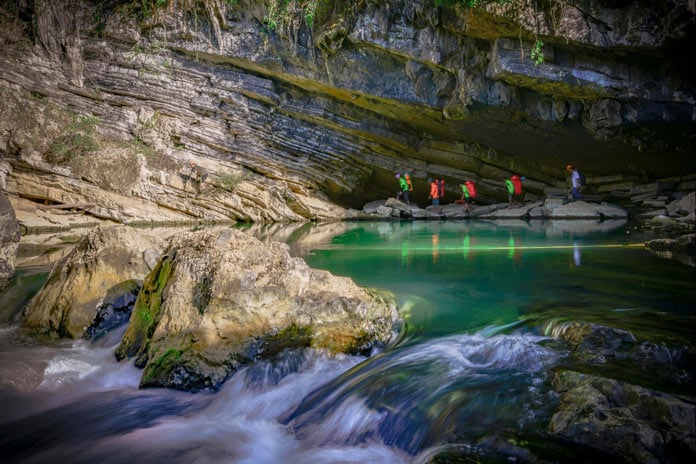
The journey to explore Tu Lan often begins by crossing the Rao Nan River, walking through forests and limestone valleys, and entering large caves hidden in the mountains. Inside the caves, visitors can see impressive stalactites and rock formations that were created by nature over millions of years. Some caves, such as Ken Cave and Tu Lan Cave, also contain underground rivers where travelers can swim through the cave and see beautiful waterfalls deep inside the mountain.
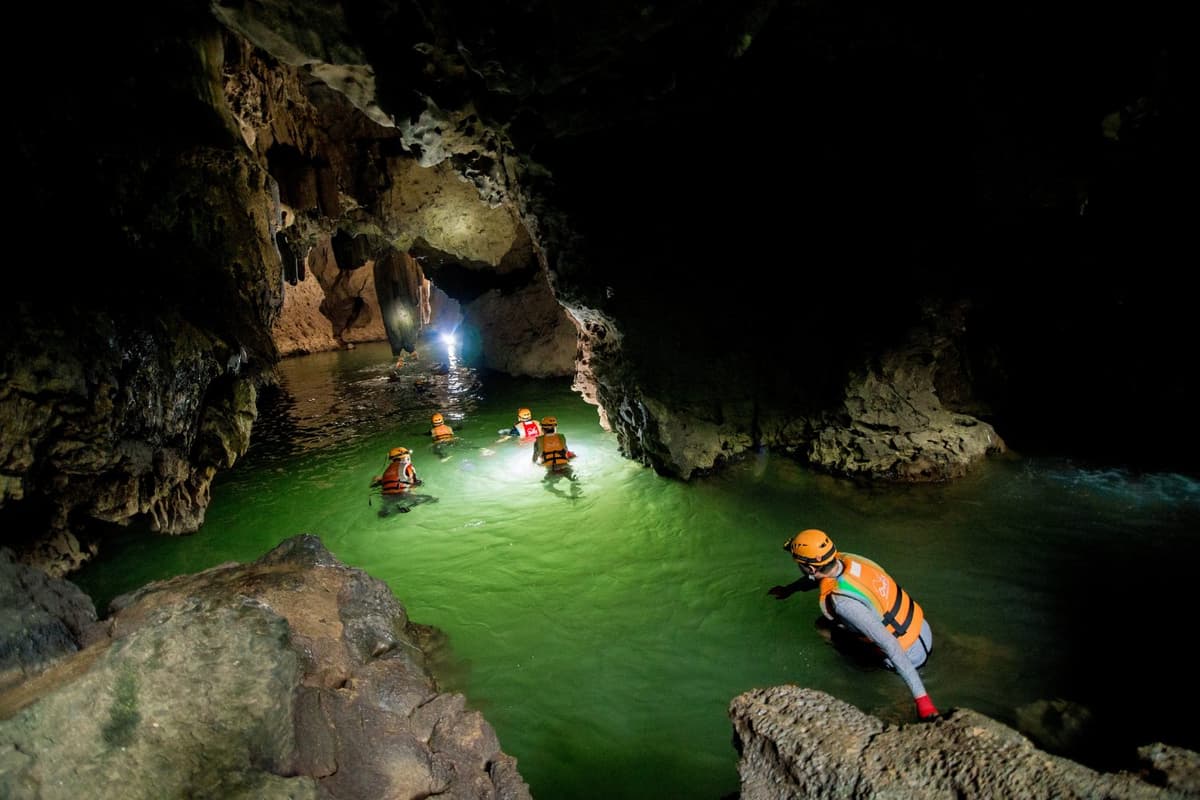
Swimming experience inside Kim Cave.
Depending on your interest, time, and physical condition, you can choose different adventure tour options organized by Oxalis. These include programs such as Tu Lan Cave Encounter, Wild Tu Lan Cave Explore, and Tu Lan Cave Expedition. For families with children, gentler tours like Tu Lan Cave Family Adventure or Tu Lan Cave Family Experience are also suitable choices.
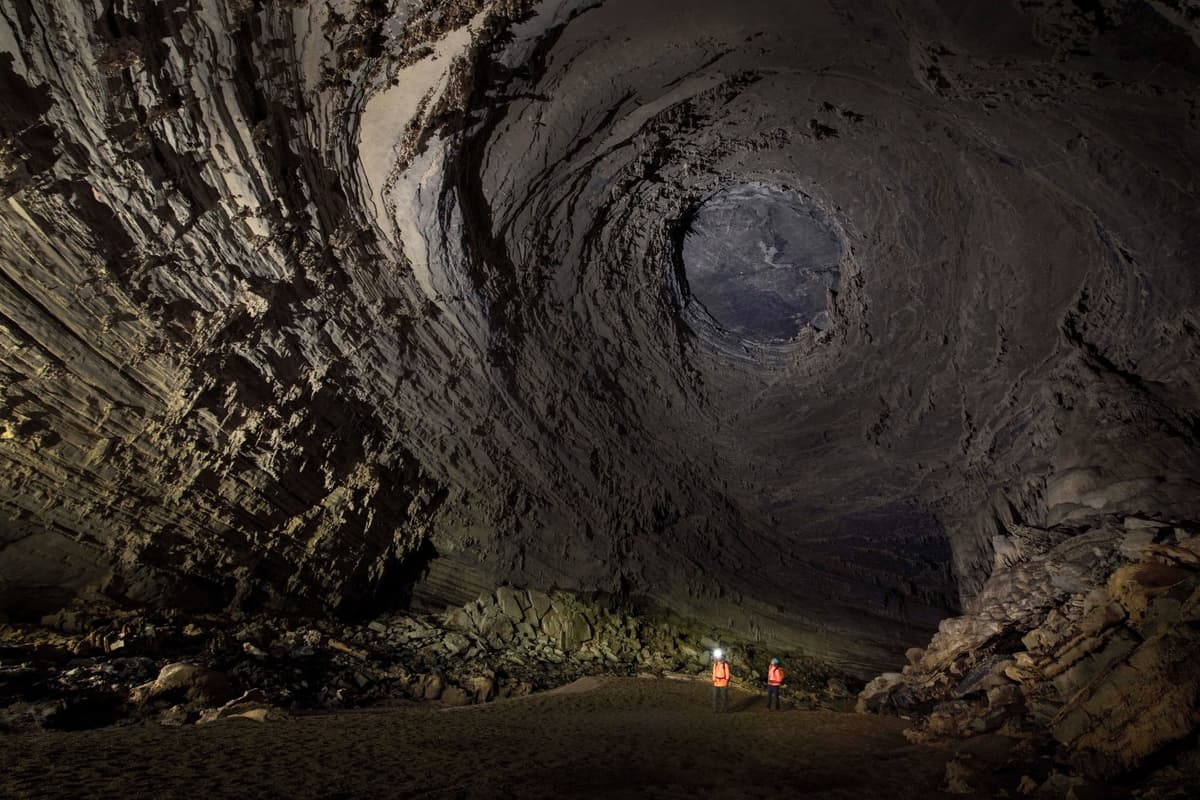
Exploring the magnificent beauty of Tien Cave.
Discovering Local Culture in Tan Hoa Village
Tan Hoa is not only famous for its caves and beautiful natural landscapes. The village is also home to the rich culture of the Nguon people and many traditional dishes that visitors often remember long after their trip.
Travelers can enjoy dinner at a local house and taste traditional Nguon dishes such as Cơm Poi along with other foods inspired by the flavors of the mountains and forests. In the warm and friendly space of a family home, the meal becomes a special moment to talk, share stories, and experience the kindness and hospitality of local people. After dinner, visitors can walk around the village, see the floating houses, and listen to stories about the many flood seasons that have shaped life in Tan Hoa for generations.

Delicious dishes prepared by local people.
Another unique experience in Tan Hoa is staying at a Rural Homestay. These homestays are developed from the floating houses of local families. They are located within the host’s home area and provide basic modern comforts while still keeping the simple and peaceful atmosphere of the countryside. Visitors can also ride a bicycle around the village, pass through quiet small roads, visit local farms, and cross small bridges over the Rao Nan River. A slow ride through the valley allows travelers to fully enjoy the calm and simple beauty of Tan Hoa.

Visitors cycling to explore Tan Hoa village.
Today, the Rao Nan River still flows quietly through Tan Hoa Valley, continuing its long natural journey between ancient limestone mountains. Over time, the river keeps shaping the landscape, slowly eroding the rock and helping form new caves deep inside the mountains. During the dry season, the water becomes clear and cool as it winds through the peaceful valley, reflecting the sky and the surrounding mountains. The scene creates a landscape that is both dramatic and poetic. For travelers who love nature and adventure, Tan Hoa is a destination that should not be missed. Beyond its spectacular caves, the village also offers traditional food, local culture, and the warm hospitality of its people.


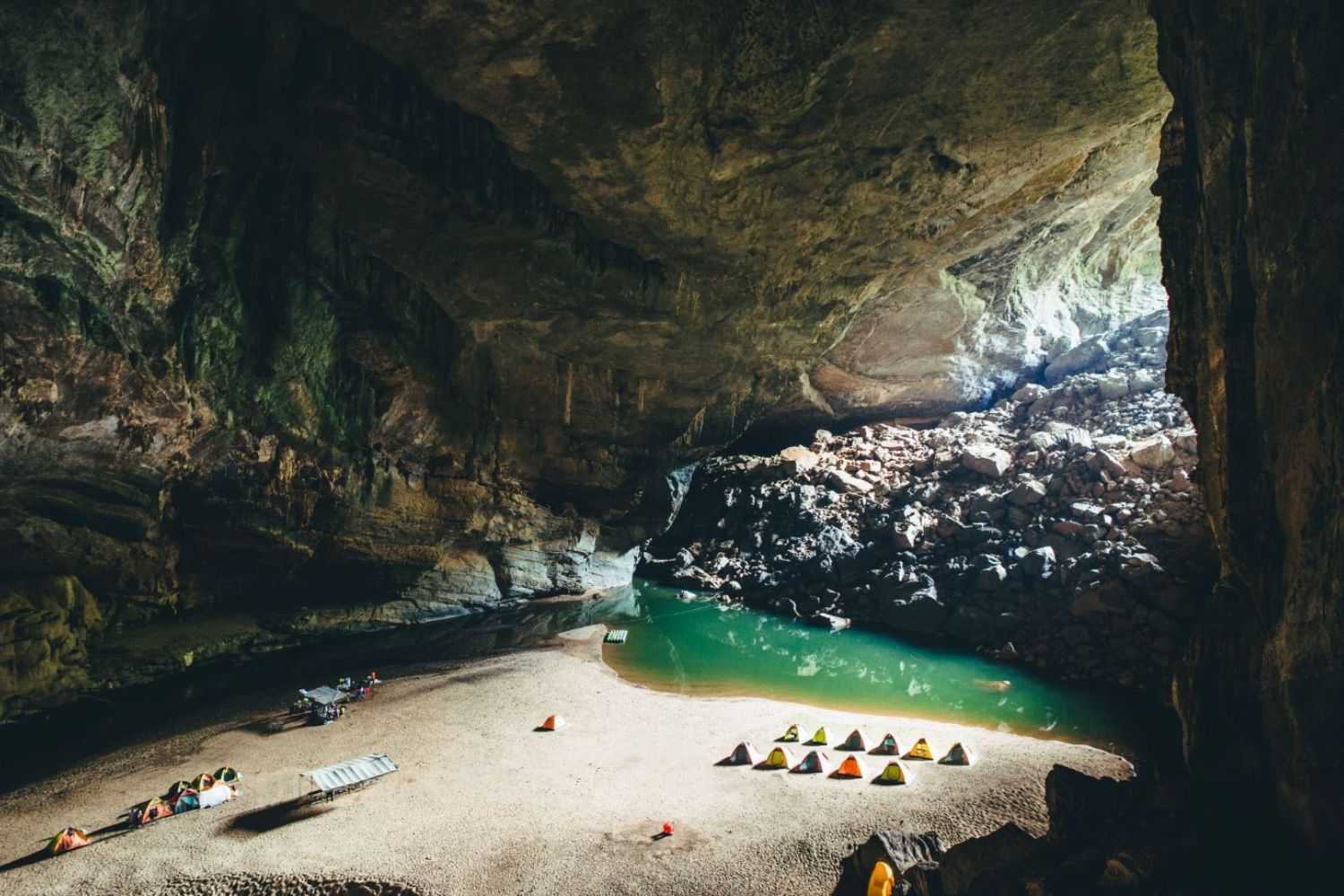
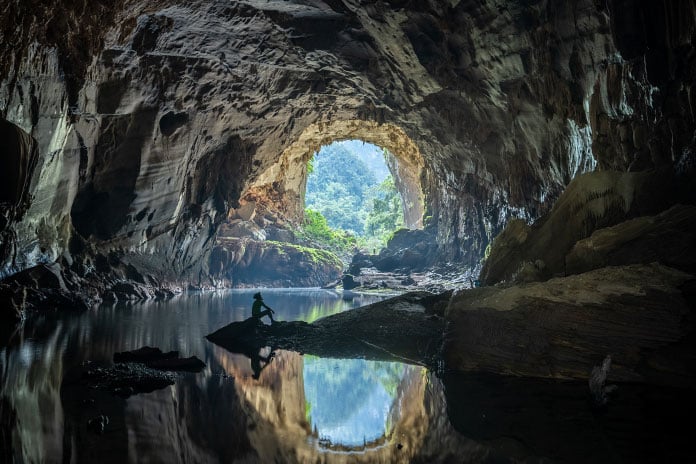
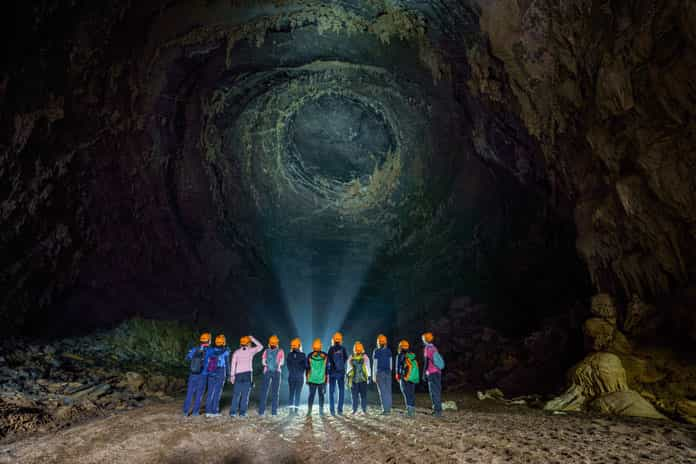
Whether you prefer long treks, camping in a cave, sleeping under the stars in the jungle, swimming underground in river caves, explore the huge dry caves or just taking an exploratory day trip, Oxalis Adventure Tours can provide the right amount of adventure just for you.
__637051782550081035.jpg)
__637051780703588520.jpg)
__637051765075307793.jpg)
__637051774329206026.jpg)
__637740499994967442.jpg)