
TÂN HOÁ TOURISM VILLAGE
Transforming from a "Flood Prone Area" to a UN-recognized Weather-Adaptive Tourism Village: Tân Hoá's Remarkable Journey
Tân Hoá - Where Nature and Weather-Adaptive Community Intertwine
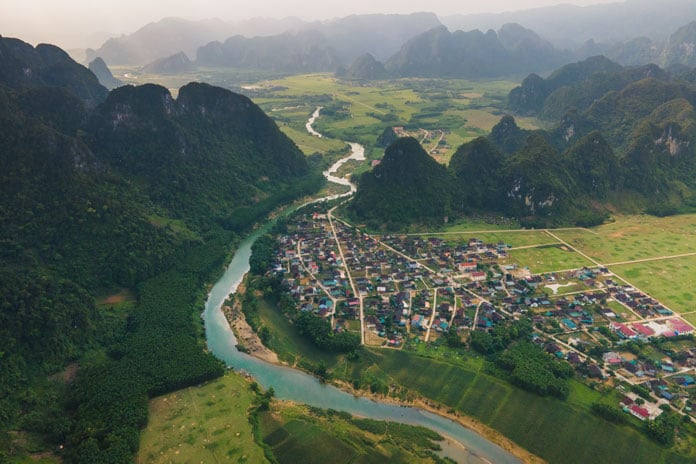
We first visited this village 30 years ago. Tân Hoá village was familiar and remote in our memories. This is a valley surrounded by towering mountains and lush greenery.
During our visit to Tân Hoá, the filming location for Hollywood's "Kong: Skull Island," the idea of a tourism village emerged, one that would capture the essence of nature's raw beauty and the warm hospitality of its people.
The people of Tân Hoá have long been closely connected with nature, relying on alluvial plains and forest resources. During the flood season, they cling to the mountainsides, waiting for the waters to recede. This situation worries us every rainy season. As a result, Tân Hoá became a symbol of sympathy and support, prompting us to repeatedly ask how we could help improve the villagers' lives.
Proposals to utilize explosives to break open the Rat Cave to drain the floodwaters were once considered, but thankfully, the authorities rejected such plans. And so, with an unwavering love for nature and a spirit of perseverance, the pristine beauty of this village nestled deep within the mountains has been preserved, attracting visitors from both within Vietnam and abroad.
Today, Tân Hoá stands transformed. Embracing tourism, the village has pioneered the concept of floating houses as a unique form of accommodation, ensuring its residents' safety and an unparalleled experience for visitors. The people of Tân Hoá have turned adversity into a sustainable livelihood, embracing nature and their rustic, peaceful village life.
Tân Hoá takes pride in its lush forests and captivating caves. The village also showcases the rich indigenous culture of the Nguồn people, with their captivating folk songs like "Trông chi cho đến mùa bồi, có con ốc đực nó ngồi trên mâm" (Waiting for the flood season, when the male snails gather on the trays) and "Trời mưa nước chảy hồi quanh hồi. Anh không lấy vớ (vợ) ai đâm bồi ăn anh ăn.." (The rain falls, the water flows around, and I don't get married; who makes com poi for me).
Tân Hoá's unwavering efforts have yielded remarkable results, pioneering a new form of weather-adaptive tourism. So, if your travels ever lead you to Central Vietnam's harsh sun-scorched and windswept landscapes, consider visiting Tân Hoá, where nature and community blend harmoniously, offering a rare and different experience of warmth and sharing.
HỒ AN PHONG - Deputy Minister of Culture, Sports and Tourism.
In December 2024, Tân Hóa witnessed a strong transformation from a small flood-prone village into an attractive tourist destination. Tourism has changed Tân Hóa, offering visitors the opportunity to explore the majestic nature, immerse in the local culture, and witness the development of the local community. Learn more about this journey in the article: Tân Hóa: A village transformed by Tourism.
History of Tân Hoá Village of the Nguồn People
Tân Hoá is a remote mountainous commune in Minh Hoá District, about 8 km southeast of Quy Đạt town center. It is located at coordinates 106°0'32" to 106°6'55" north latitude and 17°43'17" to 17°49'15" east longitude. To the north, it borders Yên Hoá Commune; to the south, it borders Trung Hoá Commune; to the east, it borders Cao Quảng Commune in Tuyên Hoá District; and to the west, it borders Minh Hoá Commune.

Tân Hoá covers a natural area of 7,427.20 hectares, with 6,621.12 hectares of agricultural land, 248.57 hectares of non-agricultural land, and 557.51 hectares of unused land. The population of Tân Hoá is 3,075 people.
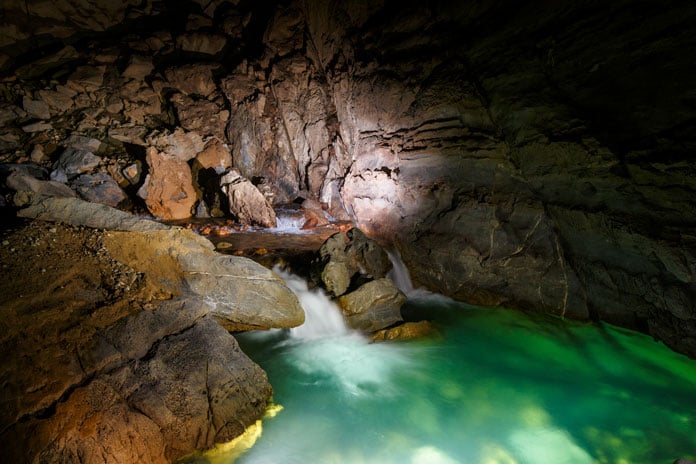
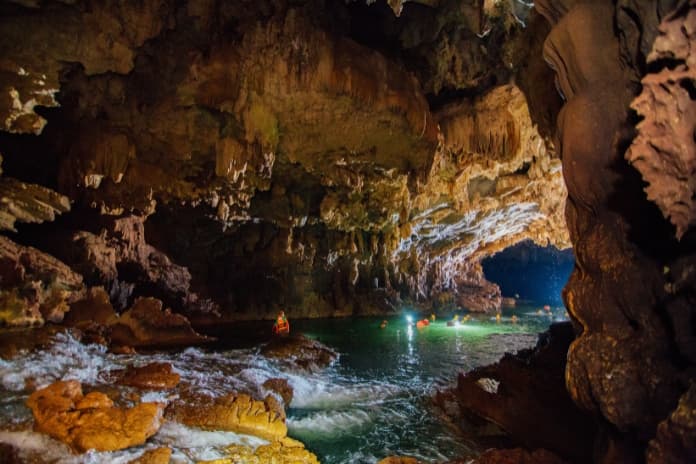
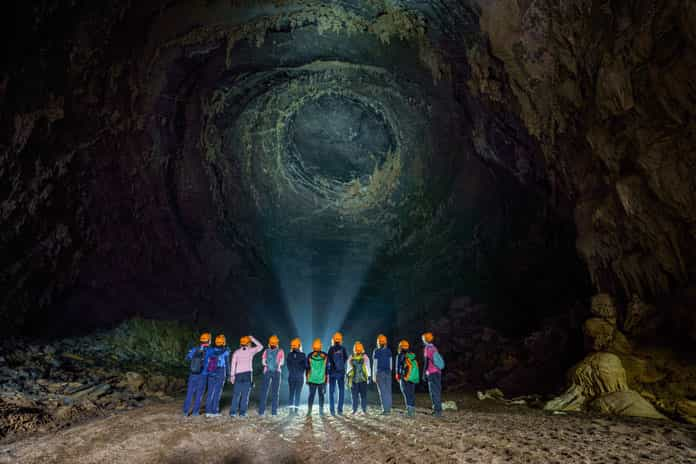
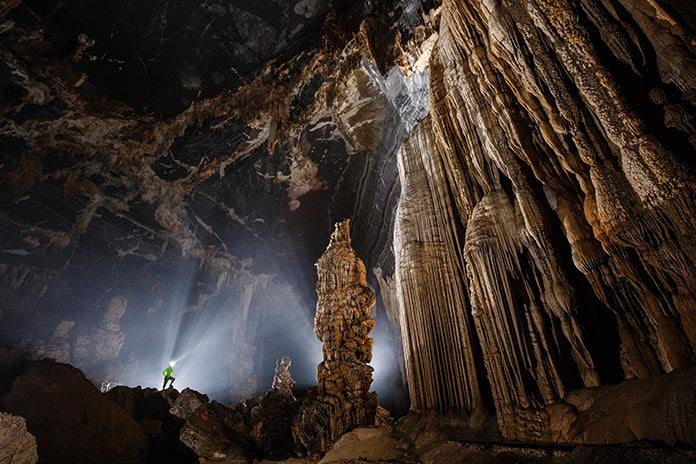
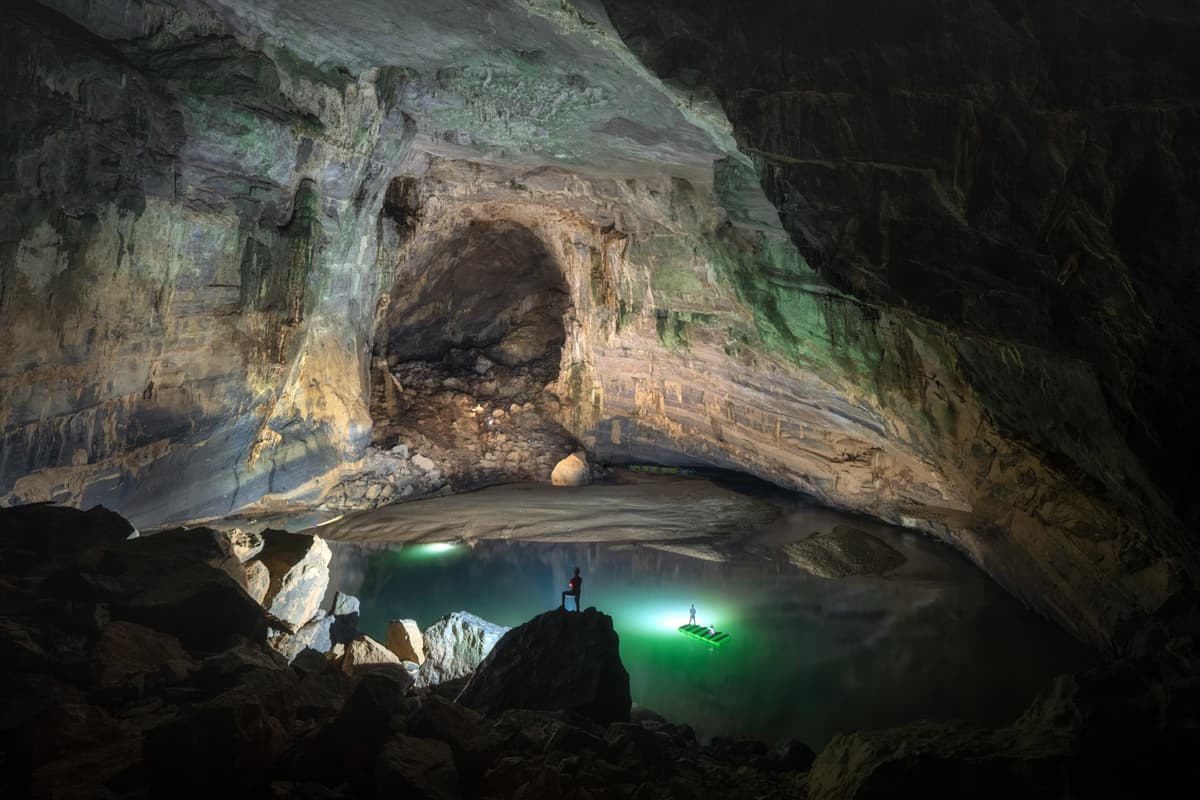
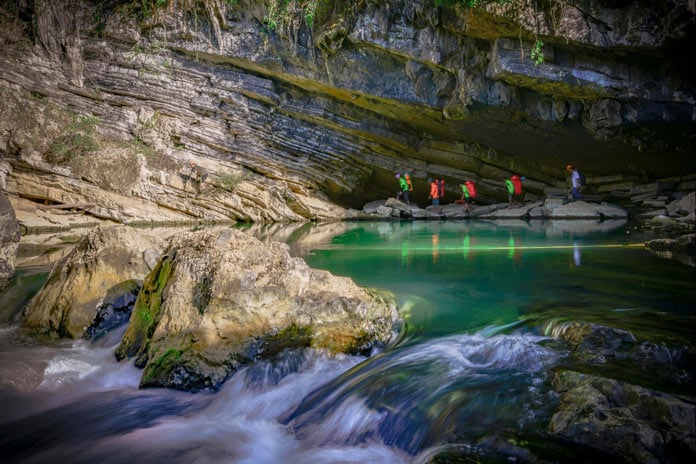
Surrounded by limestone mountains, Tân Hoá has many cave systems that have been formed over millions of years. In the past, its forests were dense with valuable trees such as agarwood, tulipwood, ironwood, mahogany, ebony, and various types of bamboo, rattan, and medicinal plants like amomum, fleece flower root, aralia, wild ginseng, and other traditional herbs. The forests were once home to many rare wildlife species, including elephants, gaurs, tigers, leopards, bears, gorals, deer, wild boars, civets, foxes, and monkeys. Many bird species, such as peacocks, laughing thrushes, and jungle fowl, also inhabited the area. The limestone mountains in Tân Hoá contain numerous caves, such as Rat Cave, Dơi Cave, Tụng Cave, and Tú Làn Cave, which offer great potential for ecotourism and cave exploration.

Tân Hoá is traversed by the Rào Nan River, originating from Thương Hoá Commune and flowing along the limestone mountains from the start to the end of the commune, eventually joining the Rào Nan River in Quảng Trạch District and emptying into the Gianh River.
Due to its geographical location and unique terrain, Tân Hoá is situated west of the Hoành Sơn Range and is characterized by a subtropical climate, distinctly experiencing the four seasons: spring, summer, autumn, and winter. The climate is generally hot, humid, and rainy throughout the year, with occasional severe cold spells. The rainy season typically begins early, from August to December. Although winter is not as pronounced as in northern regions, Tân Hoá sometimes endures prolonged cold spells, causing significant damage to livestock.

The dry season occurs from February to May. During this period, the weather is extremely hot, with an average of 6.5 hours of sunshine per day, reaching up to 9.9 hours on the hottest days. During this period, the southwest wind from Laos, also known as the foehn effect or the "Lao wind," prevails.
This diverse weather pattern greatly benefits agricultural activities, allowing the cultivation of various crops. However, Tân Hoá also frequently experiences flooding mid-September to mid-November. In some years, the area suffers from 3-4 floods. The numerous caves in the region cause slow water drainage during floods, posing significant challenges to the residents' economic development and daily life.
Throughout its history, Tân Hoá has been closely intertwined with the formation and development of Minh Hoá District, Quảng Bình Province. In the 27th year of Emperor Tự Đức's reign (1874), Tân Hoá belonged to Minh Hoá - Quảng Bình Province. According to historical documents collected in December 1874, Minh Hoá District was established, comprising two sources, Kim Linh and Cơ Sa, along with seven villages.
The Kim Linh area consisted of 5 villages and 3 districts:
5 villages included:
- Cái Village: Ancient village of Cổ Liêm with 12 territories, inhabited by 2,850 people
- Yên Thọ Village: Including Cái Village, Hung Ken, and Roọng Hamlet, with 1,334 inhabitants
- Kim Bảng Village: Including Linh Lính Village, Su Sa, etc. (now part of Minh Hoá)
- Tân Lý Village: Including Phủ Nhiêu and Cái Village, etc. (now part of Minh Hoá Commune)
- Lạc Thiên Village: Including Lạc Thiên and Yên Hợp (now part of Minh Hoá and Thương Hoá communes)
3 districts included:
- Lương Năng District (now part of Hoá Sơn Commune)
- Cát Đặng District (now part of Hoá Sơn Commune)
- Yên Hợp District (now part of Thương Hoá Commune)
In 1876, Tuyên Hoá District was established, merging Minh Hoá and Tuyên Hoá. From 1945 to 1964, Tân Hoá belonged to Tuyên Hoá District. In 1965, Tuyên Hoá District was divided into Minh Hoá and Tuyên Hoá districts, with Tân Hoá under Minh Hoá District. Between 1945 and 1946, Cơ Liêm and Yên Thọ communes did not belong to Minh Hoá.
In June 1947, Minh Hoá commune, including Hoá Sơn, Thương Hoá, Trung Hoá, and Minh Hoá communes, was officially established. This government existed until March 1956. From April 1956, Minh Hoá commune was divided into separate communes, but Minh Hoá and Tân Hoá remained together. In 1957, after land reform, Minh Hoá commune was split into Minh Hoá and Tân Hoá communes, a division that continues today.
Over hundreds of years, the communities of Tân Hoá have faced natural disasters and external threats, relying on each other to overcome hardships and build their lives. Despite many historical changes, they have maintained and promoted their traditional ethnic cultures, viewing their land amidst the hot sun, Laos winds, and floods among the limestone mountains as their enduring home.
Situated between Đông Sơn and Sa Huỳnh cultures, Tân Hoá's remote mountainous environment has shaped a unique artistic and spiritual heritage. The people have cultivated a cultural identity rooted in their homeland's rugged mountains—simple, genuine, and rustic. Their vibrant folk songs, traditional theater, boat racing during festivals, and call-and-response singing resonate deeply within the community. Life revolves around village clusters like Cơ Liêm and Yên Thọ, each with two communal houses serving as cultural centers for gatherings and essential village affairs. Residents from surrounding areas often organize cultural events during festive occasions and holidays.

Ethnic and Cultural Diversity: Tân Hoá predominantly houses the Nguồn ethnic group, part of the Việt-Mường ethnic group, which totals 35,000 people residing in Minh Hoá District, Quảng Bình Province, Vietnam. According to oral history passed down by elders and family genealogies of the Cao and Trương lineages, among others, the ancestors of the Nguồn people settled in Tân Hoá approximately 300 to 320 years ago.
The Nguồn people have distinct language, cultural practices, and rich folklore traditions. They traditionally built stilt houses (nhà cột chôn) or earthen-wall houses (nhà ruộng cánh, xà luột), with wealthier families constructing palm-leaf thatched houses (nhà chữ đinh lợp lá cọ). Today, modern housing includes brick-tiled roofs and cement-finished floors, reflecting improved infrastructure developments in electricity, roads, schools, and village lanes.
Tân Hoá's cultural landscape, shaped by centuries of resilience and community spirit, continues to celebrate its unique heritage amidst its limestone mountain environment's natural beauty and challenges.

Before the August Revolution of 1945, the people of Tân Hoá cultivated cotton, spun yarn, wove fabric, and sewed their clothing. Men typically wore traditional attire like the "ba ba," while women, especially those middle-aged and older, wore plain collarless blouses and skirts. After sewing, they used crushed bốm leaves to dye before wearing the garments. Today, residents of Tân Hoá wear various modern clothing reflecting contemporary times.
Spiritual and Cultural Practices: The community of Tân Hoá does not adhere to any particular religion but maintains ancestral worship traditions, honoring ancestors and those who contributed to the nation. Since the August Revolution of 1945, the community has celebrated significant national holidays such as Independence Day on September 2nd, locally known as "Tết Độc Lập" (Independence Day). Besides customary visits and remembrances of national and local traditions, residents organize cultural and artistic activities such as traditional boat racing and participate annually in the district's March Full Moon Festival.
Cuisine: The Nguồn people's cuisine features staples like "com Poi," thau lang (a type of sweet potato greens), oc tuc (snails), and ca lao (Laotian eggplant). Com Poi, a traditional daily dish, is made from soaked maize or millet (historically, it was made from corn or sorghum; today, it may include beans). To know more about how to make Com Poi, you can read at: Com Poi: a traditional dish of the Nguon people in Minh Hoa, Quang Binh.
The Nguồn people have preserved and developed their native language - Nguồn language. From there, they have created a rich and distinctive folk literature treasure trove, including stories and poems that deeply reflect the historical realities of Nguồn life from ancient times to the present. They have also innovated unique folk melodies, which reflect their lifestyle, aesthetic sense, and cultural sophistication. Mainly, the rhythm of hò thuốc cá, with the rhythmic chant "hôi lên là hôi lên," originates from the communal fishing tradition using roots of the tèng tree among the Nguồn people, from ancient times to now.

The historic flood in 2010 and the "flood-prone area"
The Rào Nan River begins in the mountains near the Vietnam-Laos border, flowing underground for almost 3km into Hang Rục in Trung Hoá commune before emerging in Tân Hoá village.
In the rainy season, water from the river's upper reaches floods Tân Hoá commune. The caves at the valley's end can't drain the floodwater quickly enough, causing severe floods from mid-September to mid-November. In 2010, a historic flood submerged most houses in Tân Hoá, with water levels rising up to 12 meters, forcing residents to evacuate to caves and cliffs. This led to Tân Hoá being called the "flood-prone area."
After each flood, there have been suggestions to relocate the village or create a new water outlet through the Tú Làn caves. However, relocating the village is impractical because residents have lived there for hundreds of years and don't want to move. Blasting through the mountains is too costly and could harm the natural ecosystem.

The houses floating with the flood and the Tú Làn Race Program
The houses in Tân Hoá are in a basin surrounded by limestone mountains, often called the "water-holding valley" and "flood-prone area" of Minh Hoá. Tân Hoá is among the first places to flood every year. Before the 2010 historic flood, residents had to retreat to the mountains, setting up tents to escape rising waters.
After the 2010 flood, in 2011, Tân Hoá residents created floating platforms to "live with the flood." Made from 20 to 30 empty barrels tied together, these platforms varied in size. When water levels rose, essentials were kept safe on top, covered with a tarp. Residents sought refuge on higher ground until the waters receded.
By 2012, locals improved these platforms into floating houses with roofs and walls, secured with anchor posts at each corner. Families could live in them year-round. Outside flood season, these houses stored essential supplies. However, challenging conditions meant more floating houses were needed, and residents still had to evacuate to higher ground during floods.

__638332421672013895.jpg)
The Tú Làn Race Program
From early 2015, the Oxalis Adventure has organized the "Tú Làn Adventure Race" to raise funds for building floating houses for disadvantaged families. Over 6 years, they have sponsored nearly 200 new floating houses with steel frames and corrugated iron roofs, each covering 30 square meters, enough for a family of 6. These houses help families survive and maintain their livelihoods during floods.
By 2023, close to 620 floating houses have been built in Tân Hoá commune, fully sponsored by organizations and charitable groups. This ensures all households can remain safe during floods. During the rainy season, residents stockpile food and water on their floating houses for 7 to 10 days and lead their cattle to higher ground. Daily routines include paddling boats to cut grass for livestock, creating a cheerful community atmosphere.
Now, the people of Tân Hoá are well-prepared with ample food, supplies, and clean water, no longer relying on sporadic relief efforts during flood seasons. They have adapted to living with floods, maintaining a peaceful coexistence with the weather.

The tourism activities in Tú Làn Cave
The formation of tourism activities
In 2011, Oxalis started surveying and experimenting with adventure tourism in the Tú Làn Cave System. By 2014, we officially offered 9 tours suitable for both domestic and international customers, ranging from easy family-friendly tours to challenging expeditions for adventurous travelers.

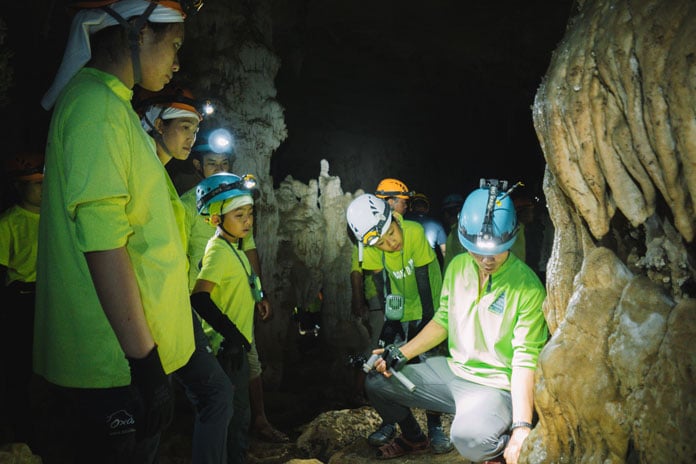
Oxalis prioritizes community involvement, providing stable jobs for 120 local workers, including 20 full-time and 100 seasonal staff. Locals receive training to become chefs, safety supervisors, and guest service porters. Those with potential are trained further as guides, chefs, operations staff, and receptionists at the Tú Làn Lodge. Average incomes range from 6 to 8 million VND for 14 to 16 working days per month, allowing locals to balance work with farming and other duties.

Tân Hoá people, once dependent on hunting and logging, now protect the environment, understanding that these resources attract tourists and improve their quality of life. In Tân Hoá village, you’ll see modern brick houses and improved schools, showing the positive impact of tourism. The local children aspire to become professionals like engineers, doctors, and tour guides, contributing to their homeland's future.

Tourism Activities in Tân Hoá in Recent Years
Results of Operations from 2013 to 2023
- Total number of visitors during the period from 2013 to 2023: The total number of visitors received and served during 2013-2023 was 63,115, including: Tú Làn Route: 45,039 visitors; Hang Tiên Route: 18,076 visitors.
- Total revenue from tour sales and fulfillment of financial obligations to the state during the period from 2013 to 2023:
| No. | Item | Cost (VND) |
| 1 | Total Revenue (including VAT) | 183.477.000.000 |
| 2 | Value Added Tax (VAT) payable | 15.756.489.562 |
| 3 | Deducted fees (Entrance tickets, Forest environmental services) | 10.691.886.900 |
| 4 | Porter costs | 31.551.515.000 |
Among them, the figures for the last 3 years are as follows:
| STT | Item | 2021 | 2022 | 2023 (9 months) |
| 1 | Number of visitors | 3.508 | 9.304 | 9.437 |
| 2 | Total revenue (including VAT) | 9.908.000.000 | 28.823.500.000 | 26.655.000.000 |
| 3 | Value Added Tax (VAT) payable | 630.509.091 | 2.135.074.074 | 2.255.406.397 |
| 4 | Deducted fees (Entrance tickets, Forest environmental services)* | 484.571.900 | 1.252.650.000 | 1.791.380.000 |
| 5 | Porter costs | 2.520.885.000 | 5.002.350.000 | 5.566.750.000 |
*Entrance fees were reduced by 50% in 2021-2022 due to the COVID-19 pandemic, while forest environmental service fees remained unchanged.
Effectiveness of Socio-Economic Impact
The implementation of the Tú Làn – Hang Tiên cave system, and Tú Làn Lodge resort in recent years has significantly boosted the local socio-economic landscape, including:
- Generating numerous jobs and providing stable incomes for local residents in the area
- Effective forest protection efforts have reduced pressure on natural resources by local communities over the years, ensuring the conservation of forested areas within the tourism operation zones
- Development of various support services such as restaurants, eateries, transportation services, and local agricultural products, enhancing living conditions and livelihoods for local residents
- Significant investment in infrastructure development to support tourism activities

Recruitment and Employment of Local Labor
Recently, we have collaborated with local authorities to recruit and train local labor, aiming to create jobs and income for residents. Specifically, we have successfully recruited 120 local workers to serve guests, including:
- Porters, room attendants, and laundry staff: Tú Làn Tour - 60 people; Hang Tiên Tour - 27 people; Laundry and room attendants - 13 people
- Full-time staff: 20 people.
All recruited workers have been trained according to company guidelines for adventure tourism and forest protection. The company also provides accident insurance to ensure their safety. Local labor recruitment for tour services has created stable jobs and income. In 2023, each worker earned an average of 8 million VND per month.

Training and Training Activities
Identifying training tasks and training is a regular duty aimed at enhancing service quality and ensuring safety for both tourists and service staff. Annually, Oxalis organizes training sessions for its employees on first aid, rescue operations, and emergencies, conducted by cave experts. Additionally, the company invites the Red Cross of Quảng Bình province to provide certification training for employees in these critical areas.
The journey from jungle man to forest protector
Before tourism activities began in Tân Hoá, most residents earned their livelihood through farming and exploiting forest resources. They collected forest honey, logged valuable woods like ironwood and rosewood, and hunted wildlife to sell to urban restaurants. The Tú Làn forest once had precious wood species and a rich ecosystem. Before 2010, the area had wild elephants, bears, deer, saola, monkeys, and gibbons, but they were gradually hunted to extinction. Timber was often harvested from the forest and stockpiled for transport.
With the introduction of tourism in Tân Hoá, former jungle man found new roles as porters for Tú Làn tours, trained by Oxalis. They carried luggage, assisted with safety, cooked, and served tourists. They were surprised to see tourists excited about gibbons and ancient trees. Over time, porters realized that protecting the forest and wildlife increased tourist interest. More tourists brought more jobs for local residents.
Those once involved in illegal logging have now become forest protectors. They value their forests, which provide jobs, stable incomes, and better educational opportunities for their children. Today, visitors to Tú Làn no longer see locals engaging in illegal logging.

Filmmaking Teams Visiting Tân Hoá
With the aim of developing Tân Hoá into a key tourism destination in Northwest Quảng Bình, provincial government leaders, the Quang Binh Department of Tourism, Minh Hoá District People's Committee, Tân Hoá Commune, and Oxalis have collaborated on strategies. Highlighting Tân Hoá alongside Phong Nha-Kẻ Bàng, effective destination promotion is vital. Film promotion has proven effective globally, such as "The Lord of the Rings" boosting tourism in New Zealand and "Lost in Thailand" attracting Chinese tourists to Chiang Mai.
Tân Hoá's natural landscapes attract film crews, with several choosing the Tú Làn area for movies like "Kong: Skull Island," "The Immortal," and "The Legend of Quán Tiên." These films have significantly enhanced Tân Hoá and Tú Làn's global visibility, promoting them as tourist destinations.
The journey of "Kong: Skull Island" in Quảng Bình
Located at the heart of the S-shaped land strip, Quảng Bình province is home to countless majestic natural wonders and pristine ecosystems found nowhere else. It is for this reason that an increasing number of screenwriters and filmmaking teams from around the world are drawn to Quảng Bình to capture spectacular scenes. Among them, the most renowned is undoubtedly the 2017 blockbuster film "Kong: Skull Island," directed by Hollywood's Jordan Vogt-Roberts.
One of the world's most famous cinematic icons, King Kong, ventured far from Hollywood to Quảng Bình to embark on an entirely new journey under the name "Kong: Skull Island."
Upon its release in 2017, the film received numerous accolades from audiences and even garnered an Oscar nomination for "Best Visual Effects" that same year. The filmmaking team believes that one of the main reasons behind the film's success was its setting, which provided incredibly authentic scenes that vividly depicted memorable moments in the journey of King Kong.

The main filming locations in Quảng Bình province are the Tú Làn cave system and Yên Phú lake. Tú Làn is a complex of over 10 caves situated amidst lush forests, amid the densely clustered hills of Tân Hoá commune, Quảng Bình province, about 70km northwest of Phong Nha-Kẻ Bàng National Park. Here, you'll encounter the meandering Rào Nan river flowing through green meadows and rice fields, nestled before Rat Cave - a part of the Tú Làn cave system, if you've had the chance to enjoy the film.
Another chosen location in Quảng Bình is Yên Phú lake, surrounded by towering limestone mountains in Yên Phú village, Minh Hoá district, Quảng Bình province. With its pristine beauty, enveloped in misty clouds and vast surroundings, Yên Phú lake was selected as the backdrop for a scene depicting a severely injured pilot after his helicopter crashed on an island.

Movie "The Immortal" by Victor Vũ
Quảng Bình is always known for its majestic mountain landscapes, its extraordinary cave systems with magnificent structures formed over millions of years deep inside the caves. And Tú Làn is one such place. Located in the highlands of Quảng Bình, the Tú Làn area boasts a system of over 10 caves of various sizes, surrounded by limestone mountains and dense tropical forests, creating an incredibly pristine, majestic, and peaceful scenery.
After the success of "Kong: Skull Island" in 2017, Tú Làn and Quảng Bình attracted attention from film crews again. Director Victor Vũ, known for "Yellow Flowers on the Green Grass" and "Dreamy Eyes," was drawn to the region's stunning natural landscapes and extensive cave systems, ideal for his new film. "Immortal" featured 70% of its main scenes shot in Tú Làn - Quảng Bình. Oxalis, renowned for supporting international film crews with their local expertise, partnered with Vũ's team throughout the month-long shoot, ensuring safety both inside and outside the caves.
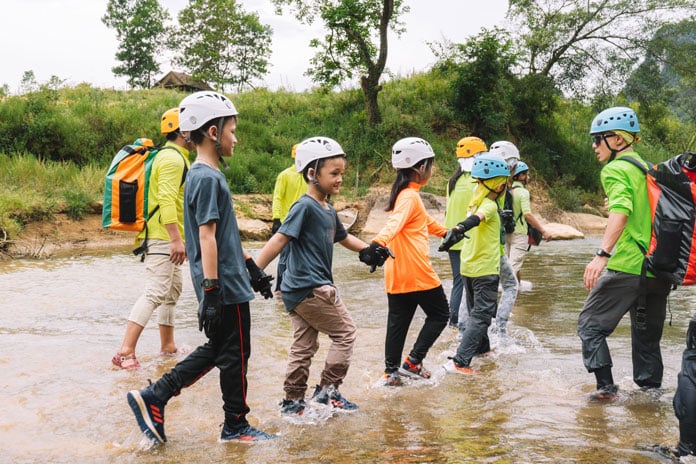
After finishing filming in 2018, the crew of "The Immortal" had the opportunity to return to Tú Làn for Oxalis Adventure's Tú Làn Challenge race. Here, the entire production team tested their skills with challenging stages including running, kayaking, trekking, stream crossing, cave swimming,… and above all, everyone experienced Tú Làn once again, fully enjoying the picturesque landscapes, stunning caves in this area.


The film "Legend of Quán Tiên" (directed by Đinh Tuấn Vũ)
The film "Legend of Quán Tiên" (directed by Đinh Tuấn Vũ) started filming in April 2019, featuring locations across Quảng Bình like Trạ Ang stream, Victory Road (Bố Trạch District), Tú Làn cave (Minh Hoá District), and Ba Rền farm, as well as various hills along the Hồ Chí Minh Road West branch...
The story centers on a rest stop for three young female volunteers within the lush tropical forest and mysterious streams devoid of human traces. Located in a cave named Quán Tiên (Rat Cave), these volunteers run a restaurant to supply troops during their marches. This cave, known for its tranquility during frontline breaks, earned the name Quán Tiên.
Adapted from the short story by author Xuân Thiều of the same name, the film won the Silver Lotus Award at the 21st Vietnam Film Festival.

Tú Làn in Tân Hoá has become an appealing destination for domestic and international tourists
- The Tú Làn cave system was first featured in National Geographic magazine in 2011 alongside other stunning caves in Quảng Bình province, including Sơn Đoòng, Hang Lòng Coong Cave, and Hang Ken Cave (Tú Làn). (https://www.nationalgeographic.com/magazine/article/vietnam-cave)
- Subsequently, the Tú Làn cave system was highlighted by Lonely Planet as a must-visit attraction in Quảng Bình. (https://www.lonelyplanet.com/vietnam/north-central-vietnam/phong-nha-cave/attractions/tu-lan-cave/a/poi-sig/1449434/357910)
- CN Travel also introduced Tú Làn caves as one of Vietnam's 7 unique cave experiences in 2019. (https://edition.cnn.com/travel/article/vietnam-best-caves/index.html)
- Additionally, Tú Làn in Tân Hoá has been regularly featured in domestic media, attracting increasing numbers of domestic tourists during Vietnam's border closures due to Covid. (https://cafef.vn/nhin-nhung-hinh-anh-dep-me-ly-nay-moi-hieu-vi-sao-dan-tinh-keo-nhau-di-tu-lan-ngay-cang-nhieu-20200702201059466.chn)
Engaging Local Residents in Tourism Activities
More than a decade ago, the community of Tân Hoá relied primarily on farming, rice cultivation, livestock raising, and men harvested wood from forests for building and selling, and hunted wild animals for livelihoods. With the rise of tourism over the past ten years, local attitudes have shifted. Residents now see tourism as a stable source of income, offering educational opportunities for their children and a clear path for community development.
Around 120 locals are actively involved in tourism, guiding tours through the Tú Làn cave system, working at Tú Làn Lodge. Known for their hospitality and eagerness to learn, locals are now collaborating with Oxalis to enhance tourism services, supported by Oxalis's initiatives for community engagement.

Experience dinner service at local households
Tân Hoá Village, located in Minh Hoá district, Quảng Bình province, is home to over 3,300 Người people, belonging to the Viet-Muong group. They have a distinct language and rich folklore, though not officially recognized as an ethnic group in Vietnam due to the lack of a written script. Traditionally farmers, fishers, and hunters, they also engage in beekeeping and gathering wild foods like snails, Laotian eggplant, and wild vegetables. Their culinary culture features unique dishes such as Pồi rice and potato greens, which are particularly exotic to tourists.
Since Oxalis began exploring Tú Làn cave in 2014, the community of Tân Hóa residents actively supports tourism by assisting in Oxalis Adventure tours. Over 80 locals now participate, earning 6-8 million Vietnamese VND monthly. Starting November 2022, Oxalis introduced dinner experience in local homes, showcasing Tân Hóa's culinary culture.
Visitors on tours like "Tú Làn Cave Encounter Tour", “Hang Tiên Endeavor Tour”, "Hang Tiên-Tú Làn Discovery", “Wild Tú Làn Cave Explorer Tour”, “Hang Tiên Exploration Tour” and “Tú Làn Cave Expedition Tour”, stay at Tú Làn Lodge, enjoying locally prepared dinners.
Oxalis trains families rigorously on food safety and presentation. This experience enriches tourists culturally, showcasing Nguồn traditions and hospitality. Tú Làn Lodge guests can book this service at 250,000 VND per person, benefiting local households with 200,000 VND each. Currently, Oxalis supports 10 households, ensuring stable monthly incomes of 8-10 million VND per household.


Tân Hoá Homestay
Rural Homestay is a weather-adapted lodging model sponsored entirely by Oxalis. It is based on the elevated flood-resistant houses of 10 households in Tân Hoá. Each Rural Homestay house is invested in with 150 million VND under a non-refundable sponsorship agreement between Oxalis and the household owners.

Mỗi căn homestay được thiết kế khép kín với không gian rộng rãi và tiện nghi, diện tích từ 26m2 đến 40m2, phù hợp cho 1-3 người ở. Homestay được hỗ trợ vận hành bởi Tú Làn Lodge, cam kết đem lại sự chuyên nghiệp và tiện lợi cho khách hàng. Ngoài ra, chủ nhà sẽ luôn sẵn sàng phục vụ và hướng dẫn quý du khách trong suốt thời gian lưu trú tại homestay.

Each homestay unit is designed to be self-contained with spacious and well-equipped interiors, ranging from 26m² to 40m², suitable for 1-3 guests. The homestays are operated and supported by Tú Làn Lodge, ensuring professionalism and convenience for guests. Additionally, hosts are always ready to serve and guide visitors throughout their stay at the homestay.
The homestay in Tân Hoá village is nestled within the villagers' compound, surrounded by majestic limestone mountains and expansive grassy valleys. Guests can enjoy stunning natural landscapes, including the gentle Rào Nan River with its emerald green waters nourishing the fields on both sides after each rainy season. Ideal for visitors seeking an authentic local experience, these stilt house homestays rise with floodwaters, allowing uninterrupted activities during rainy seasons. This setup offers a unique glimpse into local life and allows exploration of the breathtaking natural scenery visible only during flood days.
When staying at Tân Hoá Homestay, tourists can bike through cornfields, visit rural villages, and enjoy local home-cooked dinners to experience the culture of the "flood-prone area."

The homestay operates under a partnership model between Oxalis and homeowners. Homeowners manage guest services, from welcoming guests to providing support throughout their stay, and cover costs for amenities like electricity, water, wifi, and laundry. Oxalis handles promotion, marketing, sales, and distribution among hosts, ensuring fairness. Room rates are 1 million VND per night, inclusive of VAT, with homeowners receiving 600,000 VND and Oxalis receiving 400,000 VND per room per night. The homestay service launched officially in November 2023. Each household plans to host guests for 15-20 nights monthly, expecting to earn between 9 to 12 million VND per month.
Future Model Ideas
Clean Food Supply Farms
Each year, Oxalis spends 3.5 - 5 billion VND on food for Tú Làn tours and activities at Tú Làn Lodge. They need clean foods like chicken, eggs, duck, vegetables, and fruits. Currently, Oxalis buys from local suppliers and supermarkets. Starting 2024, Oxalis will support households in farming clean chickens, egg-layers, leafy vegetables, tubers, and fruits for their tours. Around 4 - 5 households will join the supply chain and benefit from tourism in the area.
Souvenir Sales, OCOP Products
Tân Hoá Village is famous for its natural beauty, cave systems, and rich cultural heritage. It's also known for locally grown, chemical-free agricultural products such as honey, green beans, black beans, peanuts, and bamboo shoots. Tourists can not only enjoy home-cooked meals but also visit local farms to purchase these specialties, supporting the community and bringing home unique gifts.
Traditional Medicinal Herbs of the Local People
Tân Hoá is rich in traditional medicinal herbs like Amomum villosum Lour, Fallopia Multiflora, Umbrella Plant, and ginseng, along with various other medicinal plants. Local residents also use folk remedies for foot soaking, boosting energy, and detoxification, often complemented by traditional medicine massages. Homestay hosts are trained in these therapies, providing an extra source of income for the community.

The weather-adaptive tourism village journeyed to become one of UN Tourism's finest global tourism villages
Since 2014, Oxalis, in collaboration with the local government of Tân Hoá commune, Minh Hoá district, the Department of Tourism, and the Provincial People's Committee, has been transforming Tân Hoá from a flood-prone area of Quảng Bình into a major tourism hub in Northwest Quảng Bình. This strategy includes actively engaging local residents in tourism and empowering them to own and operate tourist services.
Steps have been taken to develop tourism products such as exploring the Tú Làn cave system, and other products aimed at diversifying tourist services.
Tân Hoá is being developed as a weather-adaptive tourism village, offering diverse experiences including homestays, agricultural experiences, dining at local homes, souvenir shops, and a variety of other services for tourists.
Tân Hoá has also been extensively promoted through hundreds of articles domestically and internationally highlighting Tú Làn, Tân Hoá, and major films shot in Tân Hoá such as "Kong: Skull Island," "The Immortal," "The Legend of Quán Tiên," etc.
The best tourism village award from the UN World Tourism Organization
This is a global initiative aimed at highlighting villages where tourism conserves and promotes community-based rural values, products, and lifestyles, while promoting innovation and sustainability. The initiative also recognizes villages contributing to the Sustainable Development Goals (SDGs) through tourism.
Launched in 2021 as part of the Rural Development Tourism Program, the initiative seeks to transform tourism into a driver of rural development and welfare. As of 2022, over 70 villages from nearly 40 countries have been recognized as the Best Tourism Villages by UN Tourism. These villages serve as examples of rural tourism destinations offering authentic and diverse experiences to travelers, while creating opportunities and benefits for local residents and the environment.
The initiative is based on three pillars: recognition, enhancement, and networking. The recognition pillar awards villages that excel in cultural and natural heritage, rural values, community-based initiatives, innovation, and sustainability criteria. The enhancement pillar provides support and guidance to villages seeking to improve aspects of their tourism development. The networking pillar connects all participating villages, facilitating the exchange of experiences, knowledge, and resources.
Involvement in the Best Tourism Villages Award by the World Tourism Organization
At the end of 2022, following practical assessments in Tân Hoá, a representative from the General Department of Tourism (now the National Tourism Department) proposed that Tân Hoá participate in the UN Tourism's 'Best Tourism Villages' award. Recognizing this as a valuable opportunity to promote Tân Hoá and the region, Oxalis representatives collaborated with the Tân Hoá Commune People's Committee, Minh Hoá District People's Committee, and the Department of Tourism to plan and establish a tourism village model according to UN Tourism standards for the award.
Preparing the award application and meeting UN Tourism's complex criteria—covering environmental, labor, community, and other standards—required in-depth knowledge. Oxalis decided to sponsor 1 billion VND to hire OneStepVietnam (based in Hồ Chí Minh City) to advise on operational processes, product development, labor, environmental, safety standards, and other criteria, and to assist in building capacity profiles and submitting award applications to the World Tourism Organization. After nearly six months of reviewing hundreds of submissions worldwide, on September 8, 2023, the UN Tourism Awards Committee announced the evaluation results for the Best Tourism Village award.
On October 19, 2023, during the 25th session of the World Tourism Organization's High-Level Council in Samarkand, Uzbekistan, UN Tourism held a Gala to announce the winners, including Tân Hoá. This prestigious award marks Tân Hoá's emergence as a key tourism destination in Northwest Quảng Bình Province.
Future Direction of Tân Hoá and Surrounding Areas
Tân Hoá tourism village
Tân Hoá tourism village is set to become a model weather-adaptive tourism destination in Vietnam and a benchmark for Southeast Asia. It aims to develop tourism products adaptable to weather conditions, fostering collaboration between businesses and the community. Businesses will aid in marketing and operations, while the community contributes sustainable value for joint development. Services and experiences in Tân Hoá will gradually enhance and diversify to cater to both domestic and international tourists' varied preferences.

Become the key tourism center in northwest Quảng Bình
Tân Hoá is envisioned as the focal tourism center in the northwest region of Quảng Bình province. Tân Hoá will serve as a lever and a driving force for developing tourism activities for neighboring areas.

1. Bản Rục - Hung Trâu
Located about 30km from Tân Hoá along the Hồ Chí Minh Highway, this is one of the tourist spots recently developed with a pilot program to explore the lives of the Rục people - "one of the 10 most mysterious and unique ethnic groups in the world" as voted by the international press. The Rục people have lived in limestone caves for hundreds of years, their lives revolving around hunting, gathering, and using starch from the Doac tree, a type of coconut leaf abundant in this area. With the development of Tân Hoá, Bản Rục - Hung Trâu is gradually developing as a tourist destination.
Historical Site at Đá Đẽo Pass Summit: Đá Đẽo Pass summit, standing at approximately 450m above sea level, once served as a crucial supply route during the war, heavily targeted by American bombings. Today, it has been transformed into a memorial honoring soldiers who sacrificed during the conflict. Plans are underway to develop a combined memorial site and observation deck for visitors to enjoy panoramic views of the surrounding forests.
2. Hang Lèn Cây Quýt - Kim Bảng Communal House, Minh Hoá Commune
Hang Lèn Cây Quýt
Hang Lèn Cây Quýt is located about 500m from Kim Bảng Communal House; it has an average height of about 3m, width of 15.5m, and a depth of 22m; the entrance to the cave is 10m wide.
Hang Lèn Cây Quýt was used as the venue for the 2nd Provincial Party Congress of Quảng Bình on May 19, 1949. In September 1964, the military conference of the 325A Division was held here to stabilize and organize preparations for combat in the South. In 1968, the district celebrated shooting down the 3,000th U.S. aircraft over the North; Hang Lèn Cây Quýt also served as a hiding place for 400 tons of food during the anti-American war.
In particular, Hang Lèn Cây Quýt is an archaeological site excavated and studied by M. Colani, a French archaeologist from the École Française d'Extrême-Orient in Hanoi. Excavations revealed artifacts such as pointed tools made from bone and deer antlers, shells, primitive stone tools without signs of blade sharpening, two stone tools with signs of double-edged sharpening, carved stones, and iron hematite ore. Iron fragments were found among the shells, as well as iron tools.
The cave also yielded the fossilized bones of ancient gibbons dating back thousands of years, currently displayed in a private museum in Germany.
Kim Bảng Village Communal House
The historical revolutionary site of Kim Bảng Village Communal House and Cây Quýt Cave are provincially recognized according to Decision No. 1088/QĐ-UBTTDL dated July 9, 1999, by the Quảng Bình Provincial People's Committee. Kim Bảng Communal House and Cây Quýt Cave are associated with "Quảng Bình uprising," July 15th, marking a significant historical tradition in Quảng Bình, symbolizing the spirit of overcoming challenges during our nation's resistance wars.
Constructed in 1924-1925, Kim Bảng Communal House, originally a wooden structure with thatched roofs, comprises two main halls: the Front Hall (Tiền) and the Rear Hall (Hậu). Bombed during the anti-French resistance and later repurposed as a school and military warehouse, it was completely destroyed by American bombs in 1966. Recently restored with provincial funds on its original site, it was renovated in 2004 to serve as a cultural and educational destination for tourists and locals alike.
These sites can also be developed into tourist attractions for domestic and international visitors, especially as Tân Hoá sees an increase in tourism with opportunities for both adventurous exploration and cultural-historical sightseeing activities.
3. Yên Phú Lake
Yên Phú Lake, previously little-known, gained attention after being featured in "Kong: Skull Island". This shallow lake boasts a scenic landscape amidst majestic mountains, with the tranquil village of Yên Phú nearby. Wild cherry blossoms and oaks line the path, enhancing the village's beauty during spring. Although tourism activities here are limited, there are hopes that with Tân Hoá's development, tourism will thrive in this picturesque area.
4. Ruc Mon Cave
Ruc Mon Cave spans Trung Hoa and Hoa Son communes in Minh Hoá district, Quảng Bình province, marking a new addition to the region's tourism attractions. It remains largely undeveloped, preserving its natural beauty with both water and dry cave systems. Accessing Ruc Mon involves navigating rugged paths along village outskirts and ascending rocky outcrops to reach its entrance, ensuring an adventurous journey for visitors.
The scenery at the mouth of Ruc Mon Cave is sure to leave visitors awestruck, with its massive jumbled boulders and cool, clear water at their feet. As you venture deeper into the cave, you'll feel like you're wandering into an enchanting labyrinth. Surrounding the cave are towering limestone mountains that have stood for hundreds of millions of years. Currently, Ruc Mon Cave is minimally developed for adventurous tourism by the GreenLand Company.
5. The Can Vuong Movement and King Ham Nghi's Historical Site in Hoa Son
According to historical records, Hoa Son was once known as Ma Rai Valley. In the past, the only way to reach Ma Rai Valley was through the perilous Lập Cập Pass.
Tháng 10 - 1885, khi biết tin vua Hàm Nghi đang ở Hương Khê (Hà Tĩnh), quân Pháp tổ chức lực lượng tiến đánh để bắt vua. Đại thần Tôn Thất Thuyết vội đưa vua Hàm Nghi cùng tùy tùng lùi vào Bãi Đức (nay là thôn Tân Đức, xã Hương Hóa, huyện Tuyên Hóa).
In October 1885, upon learning of King Ham Nghi's presence in Huong Khe (Ha Tinh), French forces moved to capture him. Grand Minister Ton That Thuyet hurriedly led King Ham Nghi to retreat to Bai Duc (now Tan Duc Hamlet, Huong Hoa Commune, Tuyên Hoá District).
By November 1885, they relocated to Sat Village (now Ward 3, Quy Dat Town, Minh Hoá District), making Minh Hoá the strategic center of the Can Vuong Movement.
Later, they moved from Sat Village to Dong Nguyen Hamlet (Co Liem, Tân Hoá), and then to Ba Nuong (Xuan Hoa). Fearing an imminent French attack, they crossed Lập Cập Pass to Ma Rai Valley, now Hoa Son.
Hoa Son today boasts beautiful landscapes, ideal for tourism development, especially to reenact the Can Vuong Movement in Hoa Son for educational and historical purposes for locals and tourists alike. Currently, there are no tourism activities implemented here.
6. Cha Lo Sky Gate
The Cha Lo Sky Gate is a historical site from the Vietnam War era, an important point along the strategic Route 12A of the legendary Hồ Chí Minh Trail in Dan Hoa commune, Minh Hoá district, Quảng Bình province.
From Đồng Hới city, follow the Hồ Chí Minh Trail to Khe Ve junction, then take Route 12A for about 150 km to reach the Cha Lo Sky Gate at Km 34.5. Route 12A offers challenging terrain with winding sections, steep slopes, and deep valleys, requiring careful travel. Despite its ruggedness, the route rewards travelers with views of ethnic minority villages and the majestic Truong Son mountain range. Presently, historical exploration and tourism activities are limited in this area.
7. Ban Ta Vong
Ta Vong Village is one of two villages in the Lom area of Trong Hoa commune, Minh Hoá district, near the Vietnam-Laos border. After a challenging journey, visitors to Ta Vong are rewarded with the sight of fluffy white clouds embracing the village, surrounded by mountains, forests, and streams, resembling a fairyland scene.
Looking down from above, the quaint stilt houses resemble musical notes written on the "music sheet" of the forested mountains. Amidst the deep green of ancient forests and vibrant green of rice paddies lies a layer of tightly woven mist, along with fresh air, making Ta Vong a picturesque and beautiful painting.
The residents of Ta Vong are from the Mày ethnic group, a branch of the Chut people. "Mày" in their language means the source of water. According to Mày legend, they consider themselves elder siblings to other ethnic groups, including the Kinh people downstream.
8. Lâm Hoá - Tuyên Hoá Cave System
In March 2023, the British Cave Research Association (BCRA) explored limestone mountains in Lâm Hoá commune, Quảng Bình province, uncovering a pristine cave system spanning 3.3 km. The BCRA team identified five untouched caves: Hung Tru Caves 1 (1,919m long, 11m deep), Hung Tru Caves 2 (502m long, 25.8m deep), Hung Tru Caves 3 (153m long, 11.4m deep), Hung Ka Vong Cave 1 (238m long, 2.8m deep), and Hung Ka Vong Cave 2 (537m long, 5m deep).
These wet caves, some with dry branches, total 3,349m in length. Additionally, experts discovered a cave with a significant underground river, though full exploration was hindered by equipment limitations. These newly discovered caves show promise for future tourism development efforts.
9. But Waterfall - Yên Hoá
But Waterfall, situated in Yên Hoá commune, Minh Hoá district, Quảng Bình province, is a 30-meter-tall cascade spanning 15 meters wide. It forms from Roòn stream flowing through Carbon-Permian limestone rocks, named for rock formations resembling Buddhist statues. This site holds cultural and spiritual significance for the Nguồn people and other ethnic groups in Quảng Bình, hosting an annual festival on the fifteenth day of the third lunar month for peace, prosperity, and luck. But Waterfall also serves as an eco-tourism and adventure destination, drawing numerous domestic and international visitors.
10. Dream Waterfall - Hoa Hop
Dream Waterfall in Minh Hoá is a beautiful and pristine waterfall in Quảng Bình. Located in Hoá Hợp commune, Minh Hoá district, it is about 100km west of Đồng Hới city, adjacent to the legendary Hồ Chí Minh Road. Dream Waterfall is approximately 20 meters high and 10 meters wide. It is formed by the Ve stream flowing through Carbon-Permian limestone rocks. The waterfall is named for the rock formations resembling dreamlike images. Dream Waterfall is an eco-tourism and adventure tourism destination, drawing many tourists from both within and outside the country.
The Oxalis Experience.
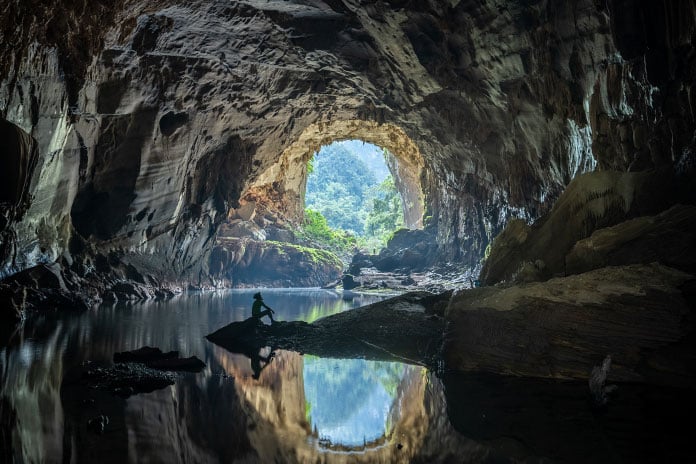
Whether you prefer long treks, camping in a cave, sleeping under the stars in the jungle, swimming underground in river caves, explore the huge dry caves or just taking an exploratory day trip, Oxalis Adventure Tours can provide the right amount of adventure just for you.
__637051782550081035.jpg)
__637051780703588520.jpg)
__637051765075307793.jpg)
__637051774329206026.jpg)
__637740499994967442.jpg)