Oxalis Supports Cat Tien National Park in Deploying a Biodiversity Monitoring Camera System
Cat Tien National Park is one of the most biodiverse protected areas in Vietnam. In 2001, UNESCO recognized Cat Tien as the world’s 411th Biosphere Reserve. The park is home to an exceptionally rich flora and fauna, with approximately 1,700 plant species, 113 mammal species, and 351 bird species recorded. It also provides habitat for many rare and threatened animals such as Gaur, Asian elephants (Elephas maximus), Asian black bears, black-shanked douc langurs, great hornbills, green peafowls, various deer species, and several characteristic ungulate groups of tropical forests.
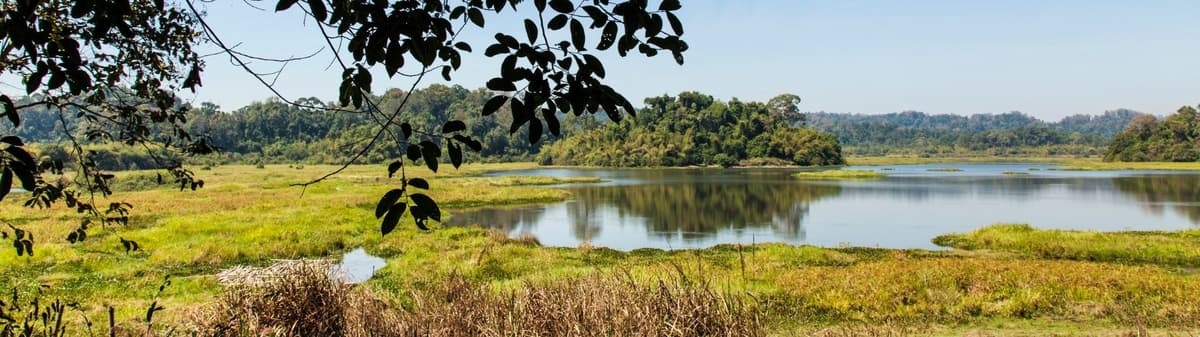
With an area of more than 71,000 hectares and habitats ranging from evergreen forests and mixed forests to open grasslands and wetlands, observing wildlife in natural conditions is always a major challenge. Many species are primarily active at night or move deep into hard-to-access areas, making direct observation and data collection highly limited.
From these practical needs, Cat Tien National Park required a modern, continuous, and non-invasive monitoring system to effectively support ecological research, wildlife conservation, and forest resource management. The use of 24/7 live cameras enables natural wildlife activities to be recorded without disturbing their habitats, while providing valuable visual and audio data for conservation, research, and communication.
With approval from the Park Management Board, Oxalis collaborated to implement the first phase of a large-scale biodiversity monitoring system, consisting of 8 live cameras tracking wildlife activity in real time at Cat Tien National Park. During implementation, the Park Management Board provided guidance on installation locations, facilitated operation and maintenance, and coordinated closely to ensure the system functioned stably and focused on priority monitoring areas.
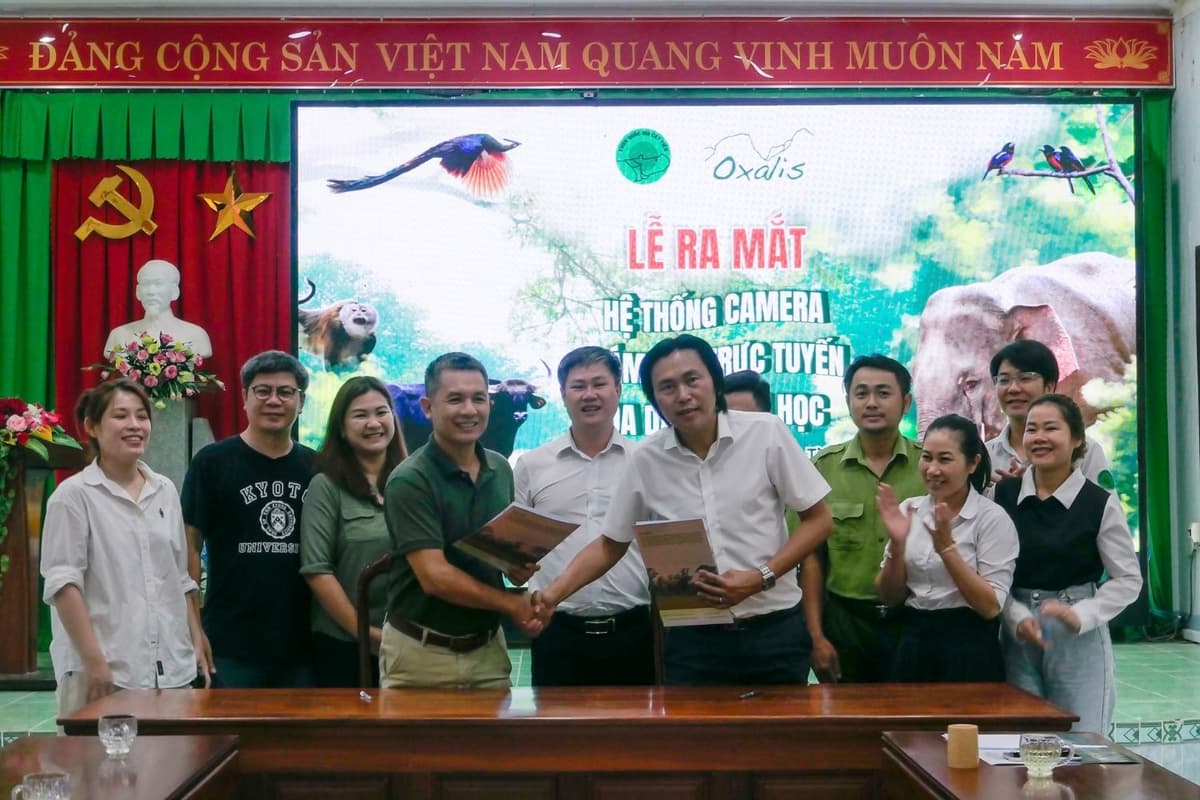
Mr. Nguyễn Châu Á – Chairman of Oxalis (left) and Mr. Phạm Xuân Thịnh (right) – Director of Cat Tien National Park, exchange cooperation documents at the launch ceremony of the biodiversity monitoring camera system.
Key Objectives of the Biodiversity Monitoring Camera System
The live cameras are placed in areas frequently visited by wildlife or in locations with specific monitoring purposes. With the advantage of delivering real-time images and fast processing, the cameras can capture the most natural moments to support conservation, research, education, and tourism.
1. Watching Wildlife 24/7 in Their Natural Habitat
In the deep forest, humans cannot always be present at the right time to observe wildlife. The camera system fills this gap by continuously monitoring day and night, recording the activities of deer, wild boar, gaur, green peafowl, gibbons, and many other species. These natural images clearly show movement patterns and interactions of animals in their habitats.
Some wildlife behaviors only occur seasonally or within a short timeframe, such as nesting periods of birds or the appearance of tokay geckos. Mobile cameras are used to flexibly follow areas like bird nests, gecko nesting sites, or temporary hotspots of activity. Thanks to their mobility, the live cameras offer unique perspectives that fixed systems cannot provide.
2. Reliable Data for Research and Long-Term Tracking
Many previous studies depended on the timing of surveys or the researcher’s ability to observe directly, which sometimes resulted in inconsistent data. Cameras provide a more stable source of information, from active hours and frequency of appearance to characteristic behaviors.
When compiled by season or location, this data helps clearly identify ecological changes. In addition to wildlife, the system also records human presence on forest trails, allowing assessment of anthropogenic impacts on the ecosystem.
3. Helping Conservation with Quiet, Non-Intrusive Monitoring
Many areas deep in the forest are difficult to access, and approaching too closely may unintentionally disturb wildlife. Cameras offer a safer monitoring solution, reducing the need for direct contact and minimizing risks for both people and animals. The continuous data helps Cat Tien’s specialists make faster, more accurate, and site-specific management decisions.
4. Bringing Wildlife Closer to Visitors and Communities
Not everyone has the chance to venture deep into the forest to witness a herd of deer moving across a clearing, a gaur stepping out into the grassland, or gibbons swinging between tree canopies at dawn. Through video clips and livestreams, these moments can be brought to viewers authentically and safely, allowing them to connect with wildlife more closely.
Camera content provides numerous benefits for schools, local communities, and international visitors. People who love nature but cannot enter the forest can still see animals in their natural habitats. These images become vivid materials for learning, communication, and environmental education.
Oxalis has also gifted Cat Tien National Park a television installed at the Visitor Center for livestream viewing from the camera system. This allows visitors to stop by and watch wildlife activities happening across different areas of the park. The videos and livestreams help Cat Tien showcase its natural richness more broadly, promoting the park as an attractive and experience-rich ecotourism destination.
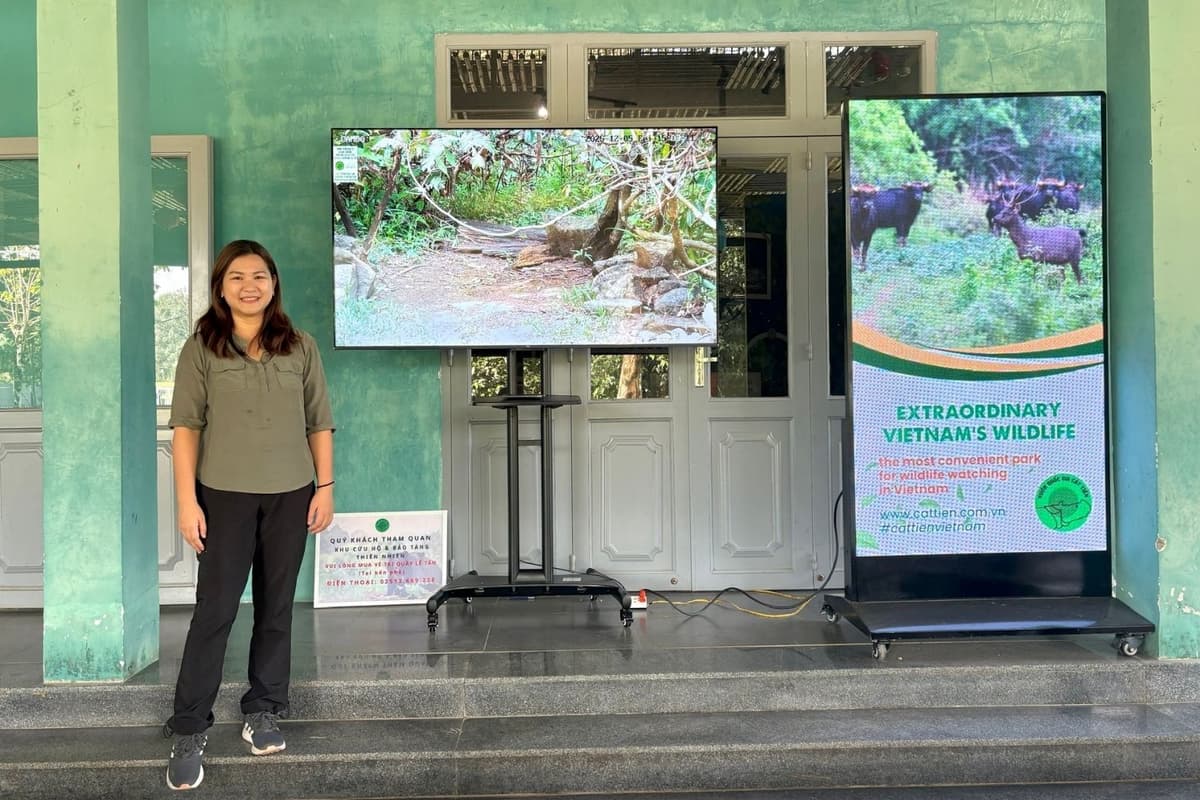
The TV screen is placed at the Visitor Center to stream live footage from the wildlife monitoring camera system.
The camera system has opened a new approach for Cat Tien National Park in monitoring wildlife. Continuous footage, captured without impacting habitats, is especially useful for studying nocturnal species. The collected data becomes a valuable resource for analyzing population changes and tracking the movements of species over time.
We sincerely thank the Cat Tien National Park Management Board for their support, guidance, and cooperation throughout the deployment process. The collaboration between the two sides ensured that the system was positioned in key areas, operated stably, and aligned with Cat Tien’s conservation objectives. In the future, as the current system continues to deliver positive results, Oxalis hopes to work with the Park to consider expanding additional monitoring points, thereby strengthening biodiversity surveillance and supporting conservation work more effectively.
The Oxalis Experience.



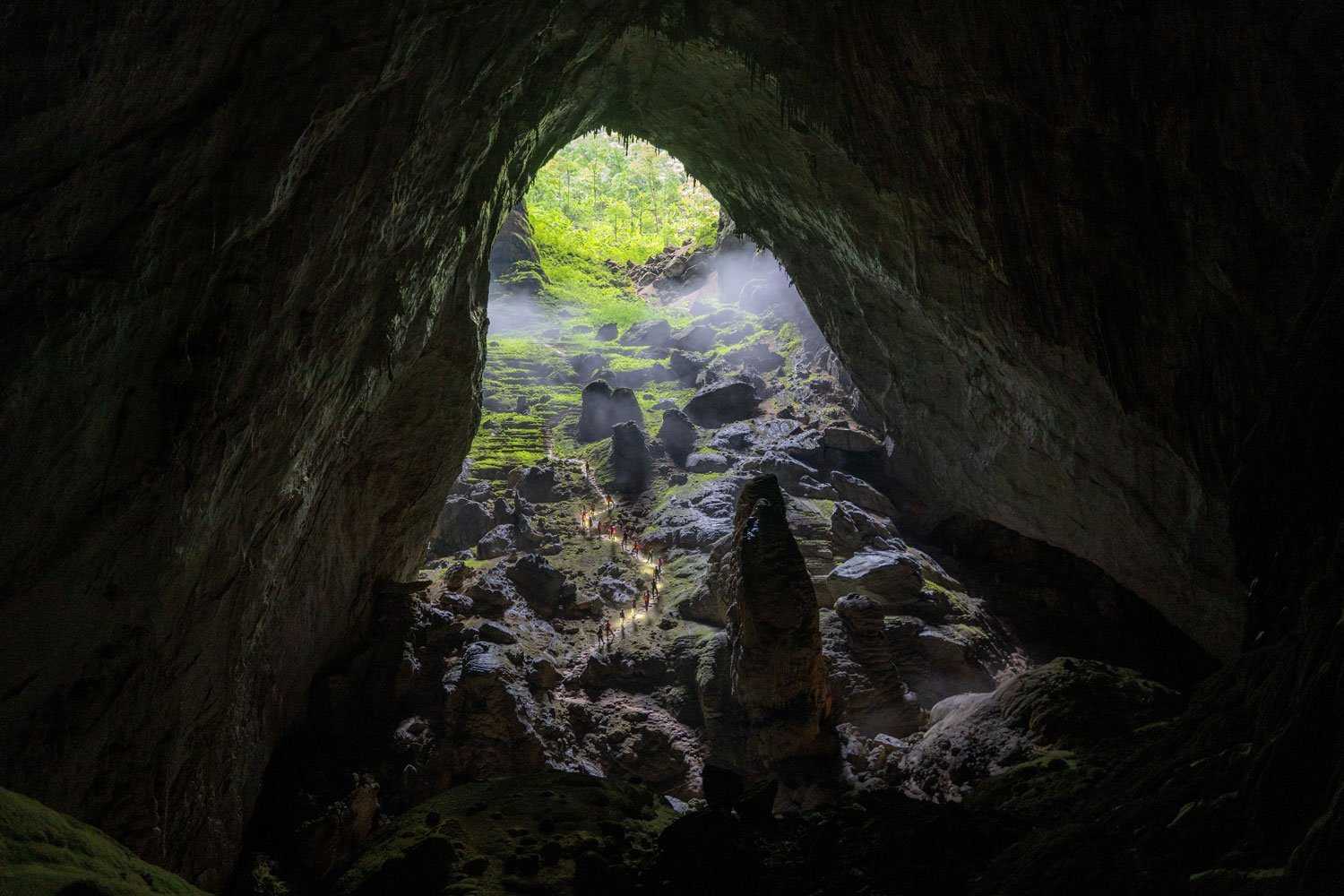
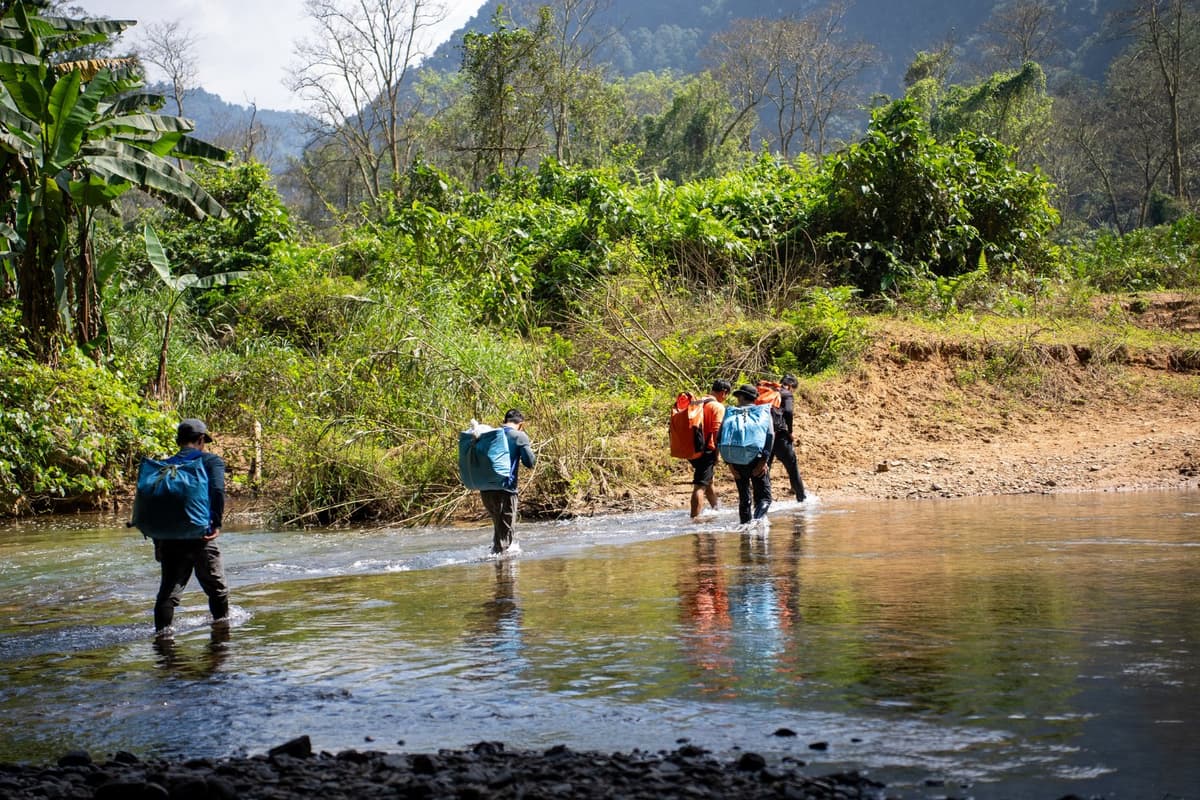
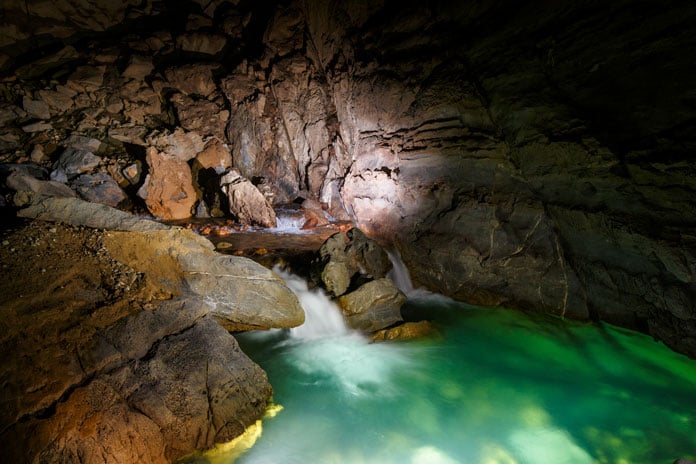
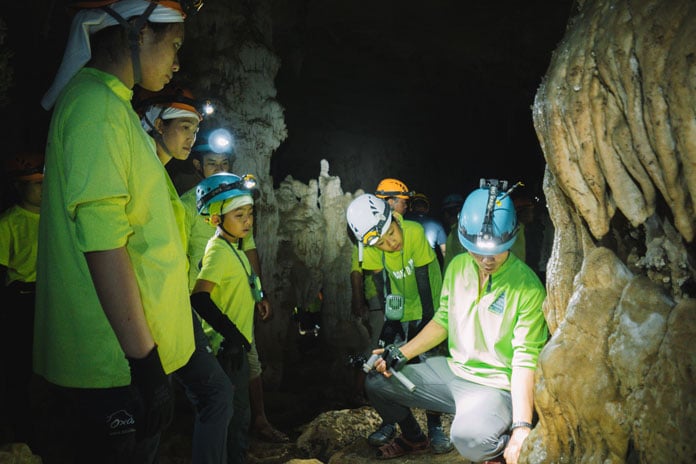
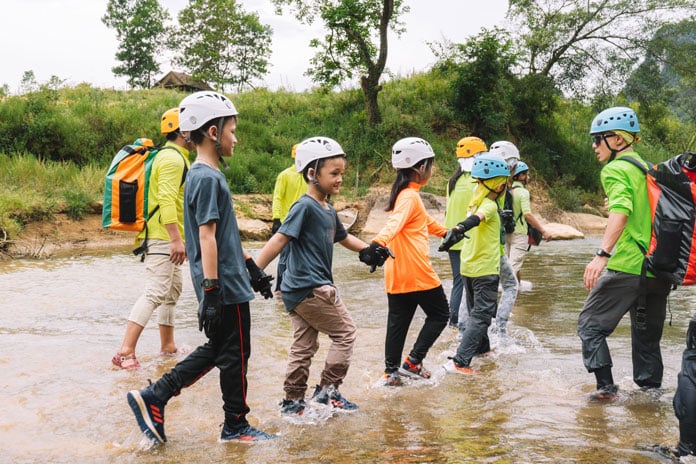
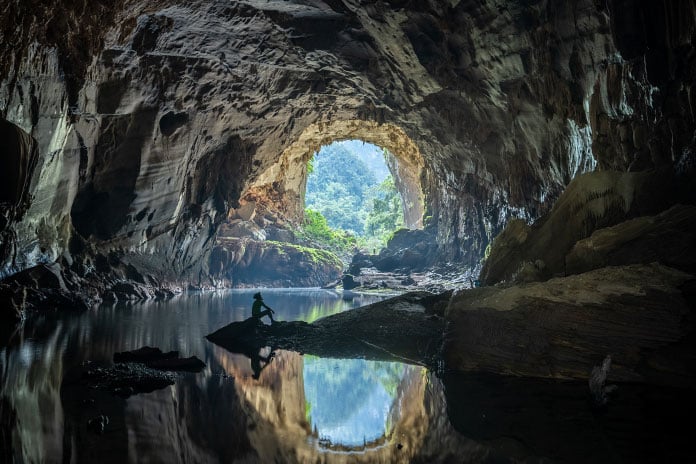
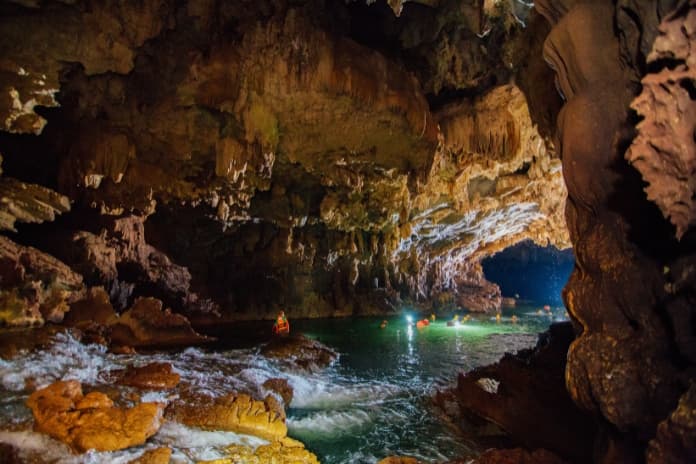
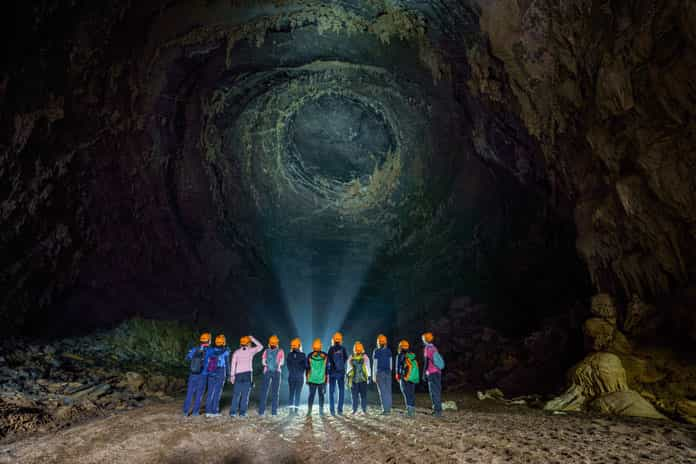
Whether you prefer long treks, camping in a cave, sleeping under the stars in the jungle, swimming underground in river caves, explore the huge dry caves or just taking an exploratory day trip, Oxalis Adventure Tours can provide the right amount of adventure just for you.
__637051782550081035.jpg)
__637051780703588520.jpg)
__637051765075307793.jpg)
__637051774329206026.jpg)
__637740499994967442.jpg)