Ban Gioc Waterfall, Vietnam: Magnificence on the borderline
Ban Gioc Falls (or Detian Falls as referred to in China) ranks as the fourth largest transnational waterfall in the world, following Iguazu Falls (Brazil – Argentina), Victoria Falls (Zambia - Zimbabwe), and Niagara Falls (Canada - United States).
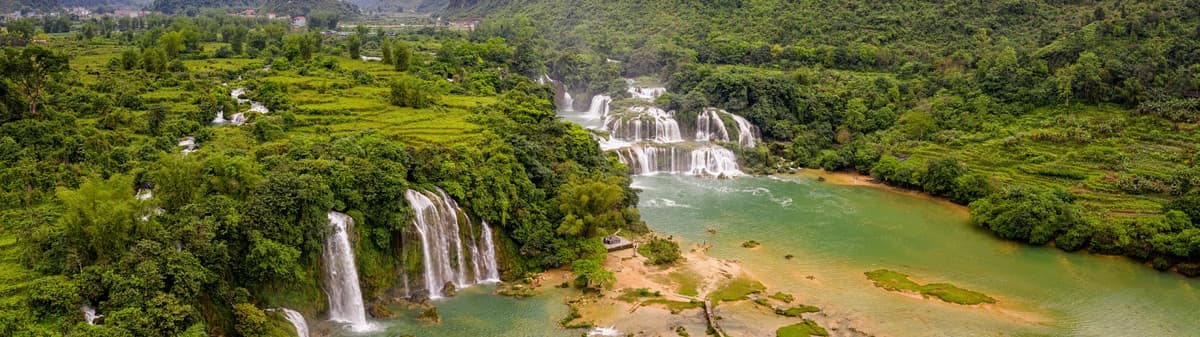
With a total width of 208 m, a depth of 60 m, and a height of 70 m, Ban Gioc Falls is considered the most beautiful waterfall in Vietnam. According to Travel + Leisure Magazine, Ban Gioc is one of the 21 most beautiful waterfalls in the world.
This explains why Vietnam receives approximately 30,000 visitors to Ban Gioc Waterfalls each year, whereas China attracts nearly 1 million tourists.
Read on to discover the best time to visit, what to do, where to stay, and what local delicacies to try for an unforgettable trip to Ban Gioc Waterfalls.
How to get to Ban Gioc Waterfall
In Vietnam, Ban Gioc Waterfall is located in Dam Thuy Commune, Trung Khanh District, Cao Bang Province. One interesting fact about Ban Gioc Waterfall is that, as a transnational waterfall, it’s located on the borderline between Vietnam and China, on the Quay Son River (which originates in China and flows downstream before re-entering China). In China, Detian Falls is located in Daxin County, Chongzuo City, Guangxi.
Each country has access to a portion of the waterfall, with China owning the eastern half of the Waterfall and Vietnam the other half on top of the side waterfall about 100 m away. From Hanoi, the distance to Trung Khanh District, Cao Bang, is about 330 km to the northeast, which takes 6 to 7 hours by car or bus. Once in Trung Khanh town, Ban Gioc Waterfalls is about 20 km away, which takes another 30 minutes by car or motorbike.
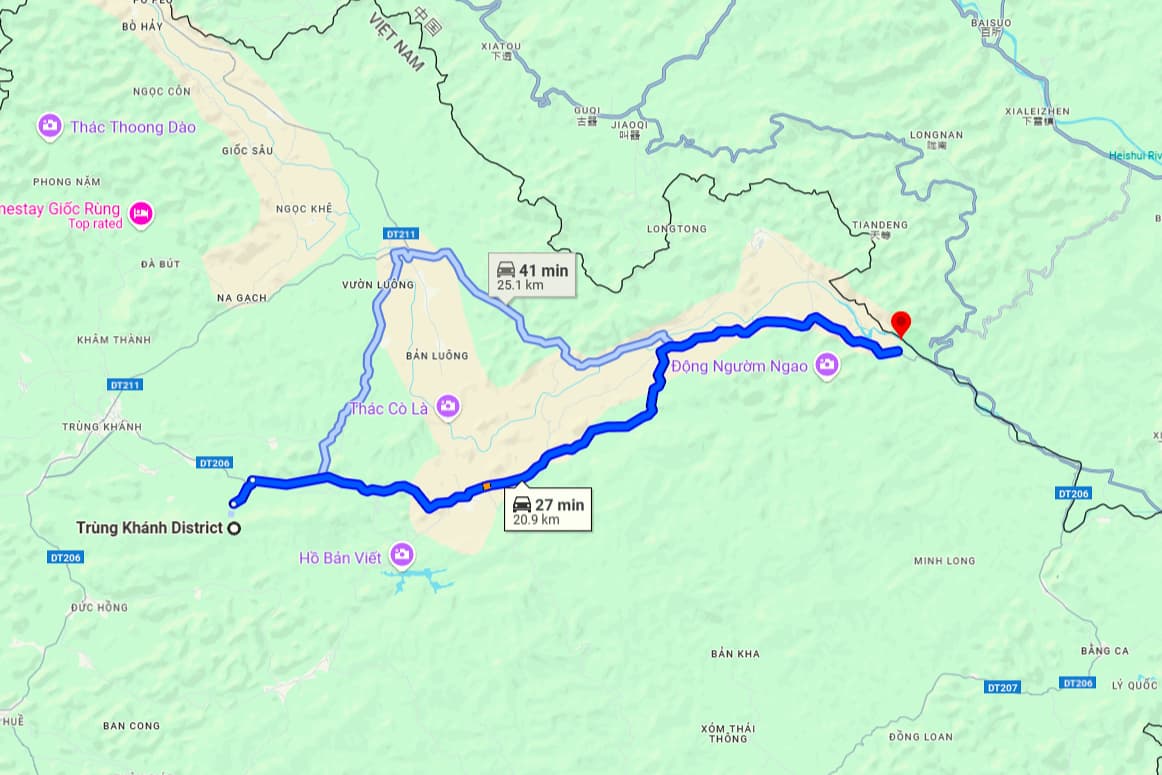
Ban Gioc Waterfall is about 20 km away from Trung Khanh, Cao Bang.
Best time to visit Ban Gioc Waterfall
Ban Gioc Waterfall is a year-round destination with diverse natural beauty. During the dry season (from October to May), Ban Gioc Waterfall is gentle, with a lower water volume that doesn’t extend across its entire width. This, however, doesn’t make Ban Gioc Waterfall underwhelming. This time of the year brings clearer skies and mild temperatures, making the area surrounding Ban Gioc Falls suitable for trekking and outdoor exploration.
The best time to visit Ban Gioc Waterfall is perhaps from June to September, during the rainy season when the waterfall is at its most majestic. Heavy rainfall from upstream in China increases the water volume, creating powerful cascades that crash down into the Quay Son River. This is an ideal time for photography and sightseeing. The lush greenery surrounding the falls also reaches its peak vibrancy during this time.
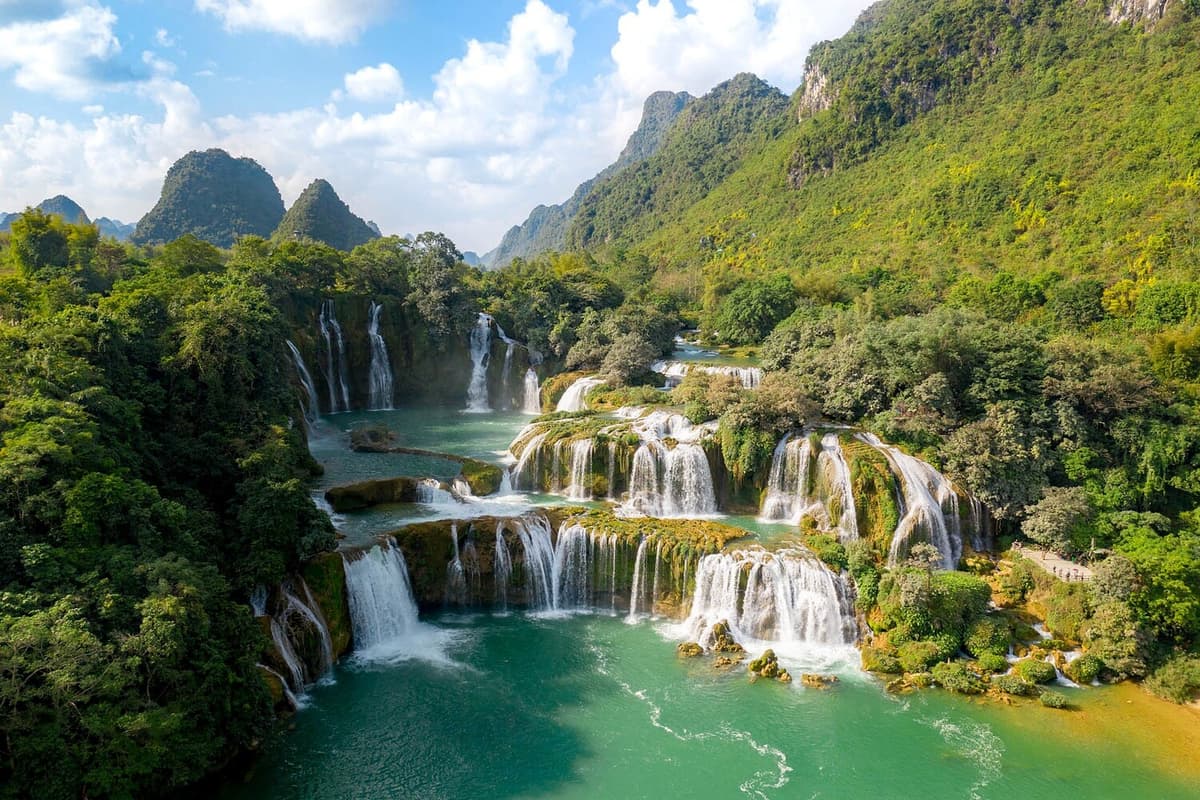
Ban Gioc Waterfall is a year-round destination. Source: Flickr
Where to stay near Ban Gioc Waterfall
Unlike the Chinese side of Ban Gioc Falls, which has a well-developed tourism infrastructure, the Vietnamese side remains relatively untouched, offering a more authentic and peaceful experience. However, when it comes to accommodation near Ban Gioc Falls, the options are still limited. Here, most places are locally owned homestays and budget hotels, ranging from 300,000 to 500,000 VND per night.
Here are some recommended places to stay near Ban Gioc Waterfall:
- Saigon - Ban Gioc Resort: The only high-end resort in the area, offering modern amenities and beautiful views of the waterfall.
- So Oanh Hotel: A comfortable mid-range hotel in Trung Khanh town with clean rooms and basic services.
- Lan Rung Hotel: A budget-friendly option with decent facilities, located near the town center.
- Yen Nhi Homestay: A cozy and friendly homestay offering home-cooked meals and cultural experiences with the local Tay ethnic people.
- Khuoi Ky Eco Homestay: A traditional stilt house homestay in Khuoi Ky Village, offering an immersive ethnic experience in a peaceful rural setting.
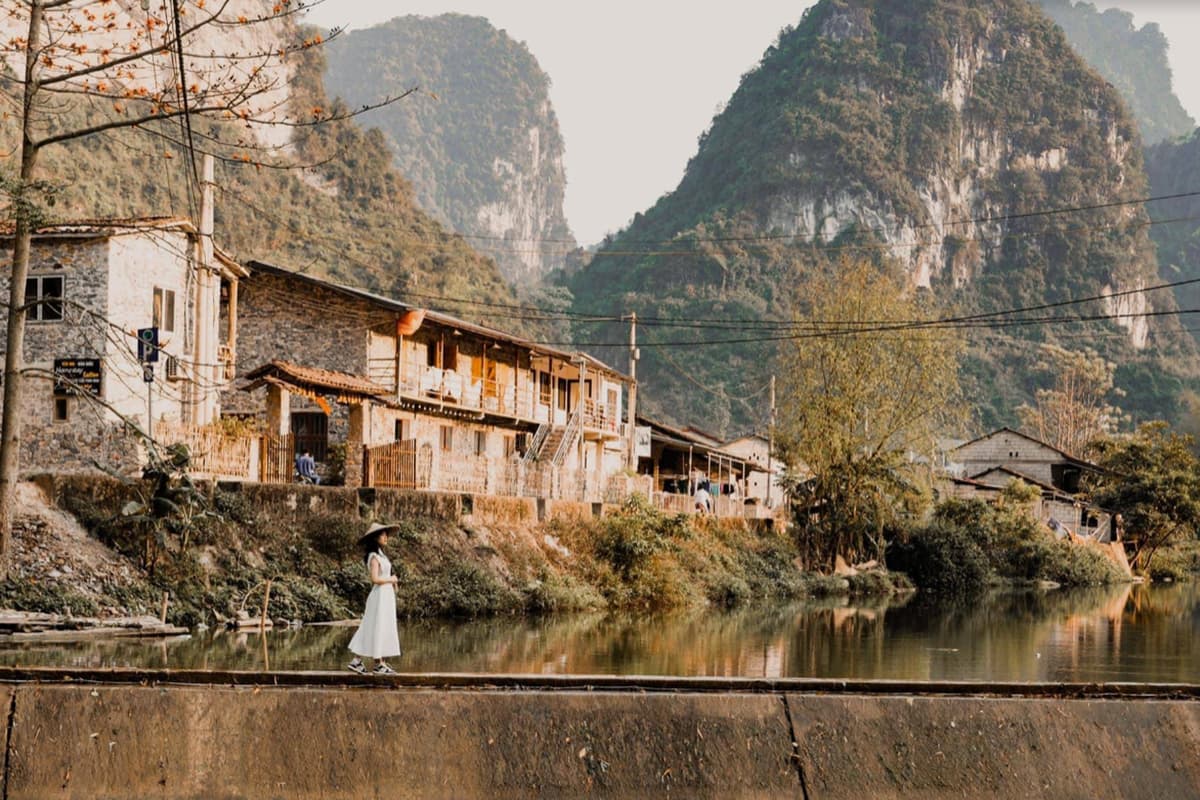
Most accommodation options near Ban Gioc Waterfall are locally owned homestays. Source: Yen Nhi Homestay
What to eat when visiting Ban Gioc Waterfall
The cuisine in Trung Khanh, Cao Bang, is deeply influenced by the mountainous landscape, with dishes that highlight fresh, local ingredients and simple yet delicate preparation methods. Many dishes use wild herbs, free-range meats, and traditional cooking techniques, bringing out rich and authentic flavors.
Here are some must-try dishes when visiting Ban Gioc Waterfalls:
- Grilled fish stuffed with herbs: Freshwater fish from the Quay Son River, marinated with local herbs, wrapped in banana leaves, and grilled to perfection.
- Roasted duck or whole pork: Free-range duck or pork seasoned with local spices and slow-roasted over an open flame, crispy skin and tender meat.
- Jerky: A specialty of the ethnic groups - beef or buffalo meat is marinated with herbs, sun-dried, and smoked for a chewy texture and smoky aroma.
Other local delicacies include chestnuts - a famous specialty of the region, and Banh Khao - a type of “energy bar” of the Tay and Nung people in Cao Bang, made from sticky rice, sugar, sesame, peanuts, and pork fat.
5 Exciting Things to do when visiting Ban Gioc Waterfall
Ban Gioc Waterfall offers a range of exciting activities for everyone. Here are some of the best things you can do when visiting the site:
1. Sightseeing & photography
Despite being a natural attraction, Ban Gioc Waterfalls requires an entrance fee of 40,000 VND per person. Upon arrival, visitors may need to park their vehicles about 1 km from the falls in the residential area. From there, you can either take an electric car for 25,000 VND or enjoy a leisurely walk. During your walk, go ahead and admire the surrounding limestone landscape while browsing souvenirs from local shops.
The best time for photography at Ban Gioc Waterfall is in the morning or late afternoon when the lighting is soft and enhances the misty atmosphere. To capture stunning shots, visitors can use a wide-angle lens for a full view of the Waterfall or a slow shutter speed to create a silky effect on the water. For a unique perspective, take photos from the viewing platforms or the riverbank, where the waterfall’s grandeur is fully displayed.
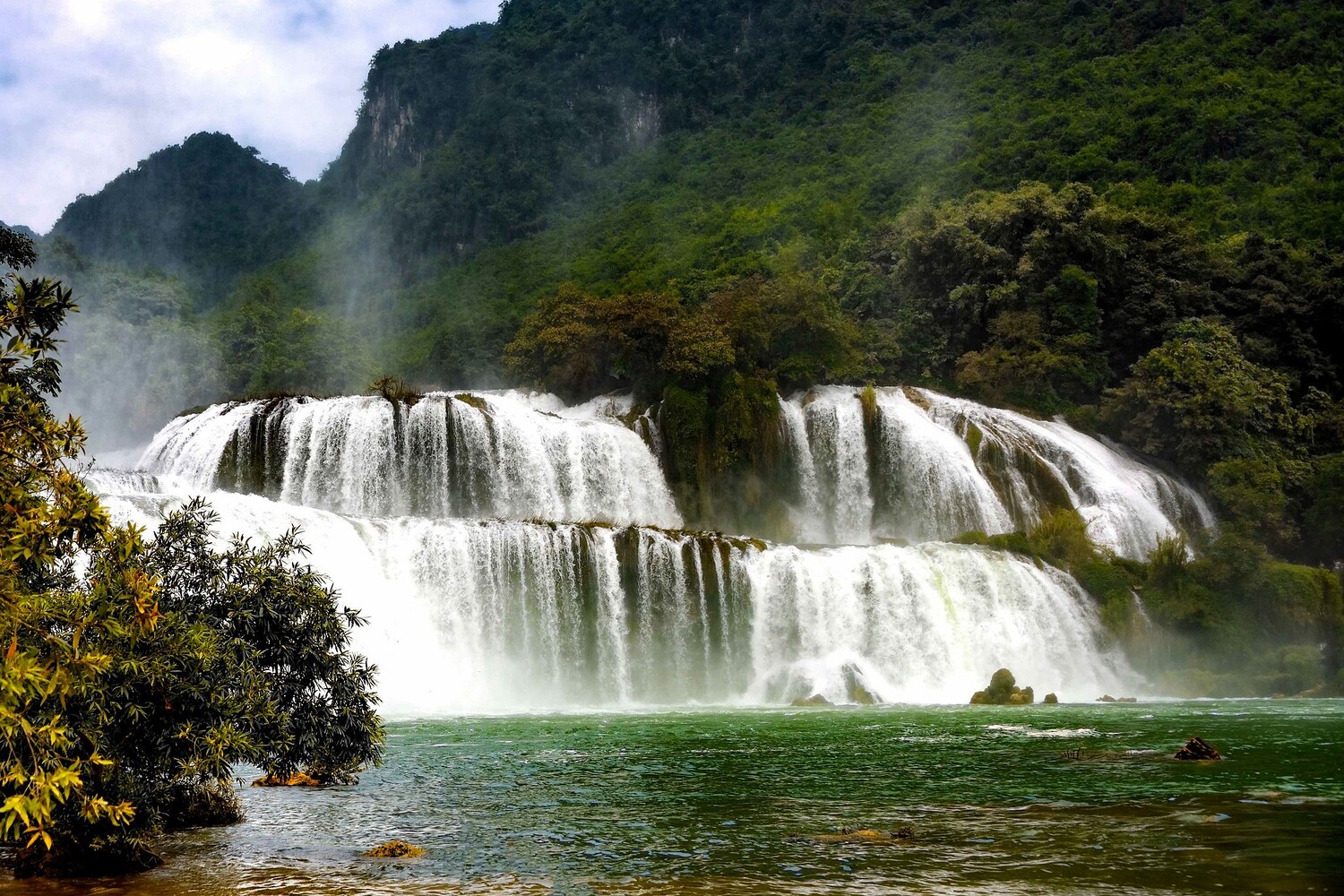
The best time for photography at Ban Gioc Waterfall is in the morning or late afternoon. Source: Flickr
2. Boat ride on the Quay Son River
A boat ride on the Quay Son River offers an up-close view of Ban Gioc Waterfall for 50,000 VND per person. The boats take visitors right to the base of the waterfall, allowing you to experience its roaring power and refreshing mist. Each ride lasts 10 to 15 minutes, providing just enough time to soak in the scenery and take incredible photos. Although wearing a life vest isn’t compulsory, boat visitors are advised to wear one for safety.
Although the river marks the border between Vietnam and China, tourists on both sides can freely sail anywhere on the river. However, stepping onto the opposite bank is strictly prohibited. From the boat, visitors can appreciate the waterfall’s stunning 3-tiered structure, as well as the limestone karsts and emerald waters. Remember to use a waterproof case for your camera or phone to guard against splashes.
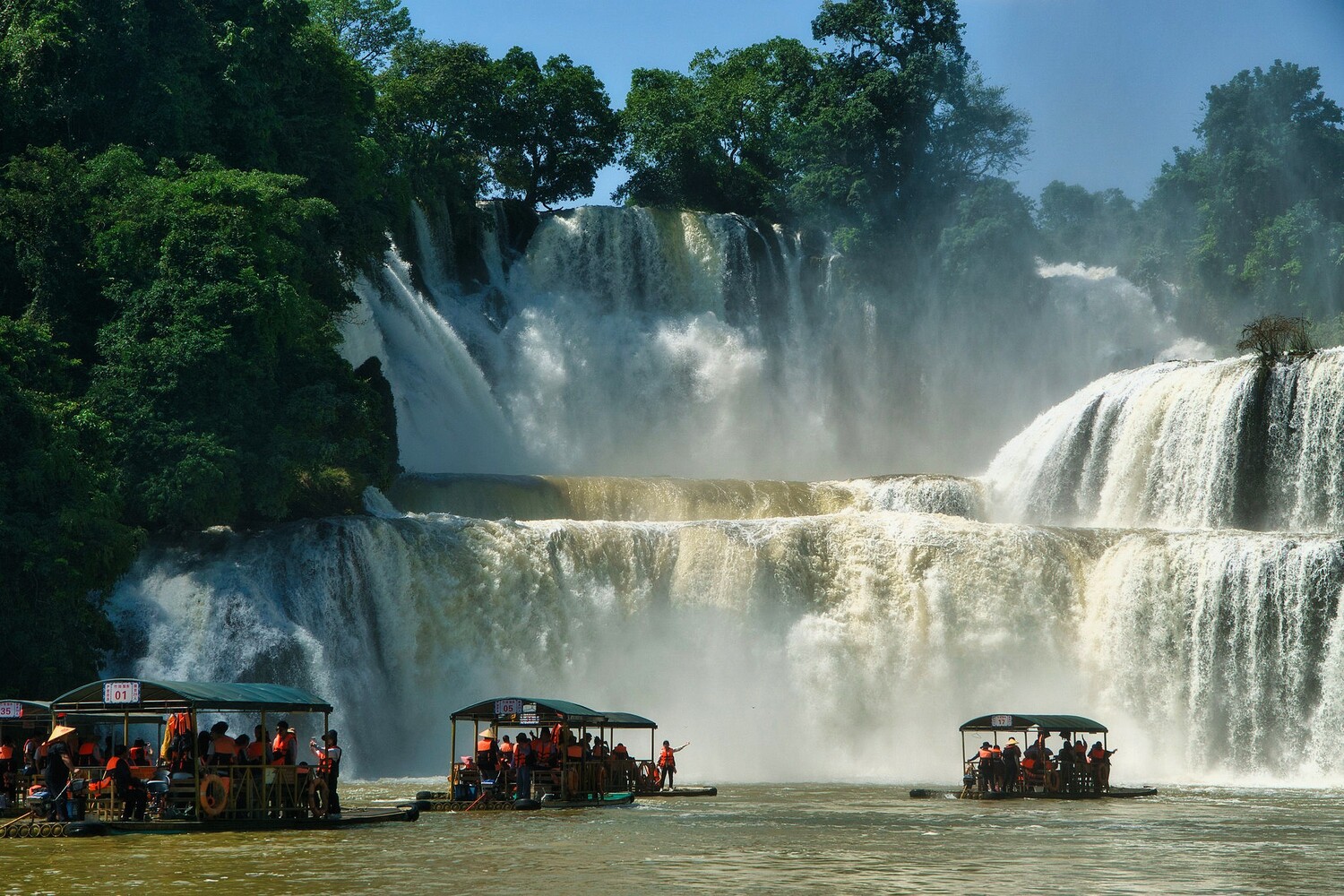
A boat ride offers an up-close view of Ban Gioc Waterfall. Source: Flickr
3. Explore Nguom Ngao Cave
Located 5 km southwest of Ban Gioc Waterfall, Nguom Ngao Cave was formed around 300 years ago. This is a young cave compared to many other caves in Vietnam. Discovered in 1921, Nguom Ngao Cave was officially opened for tourism in 1996 and has since become one of the key attractions in Cao Bang. Visitors can access the cave for an entrance fee of 45,000 VND per adult, with additional charges for guided tours.
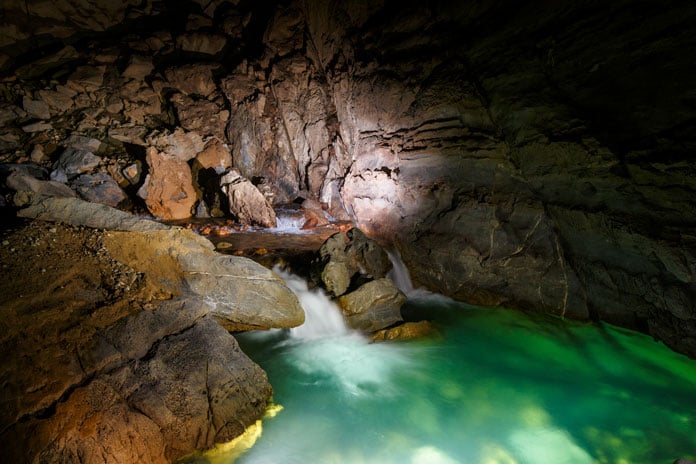
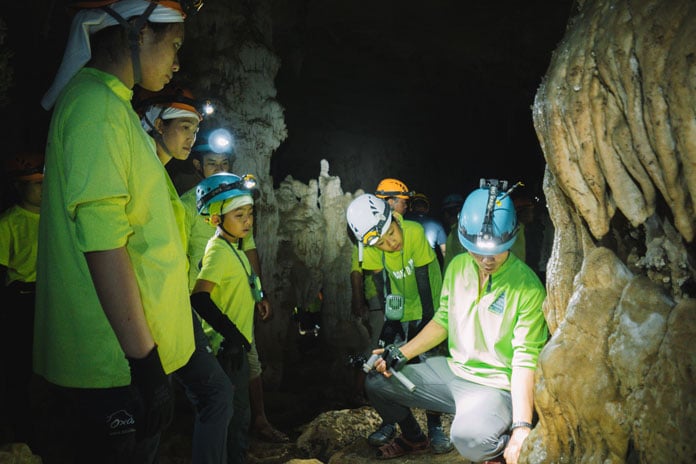
The cave has three main entrances with a total length of 2,144 m. The cave’s name, “Nguom Ngao,” comes from the Tay language, meaning “Tiger Cave,” as it was once home to tigers. Today, there are no more tigers. The only sounds inside now come from small underground streams. Visitors can admire formations resembling waterfalls, coral reefs, and towering pillars. The soft lighting enhances the surreal atmosphere.
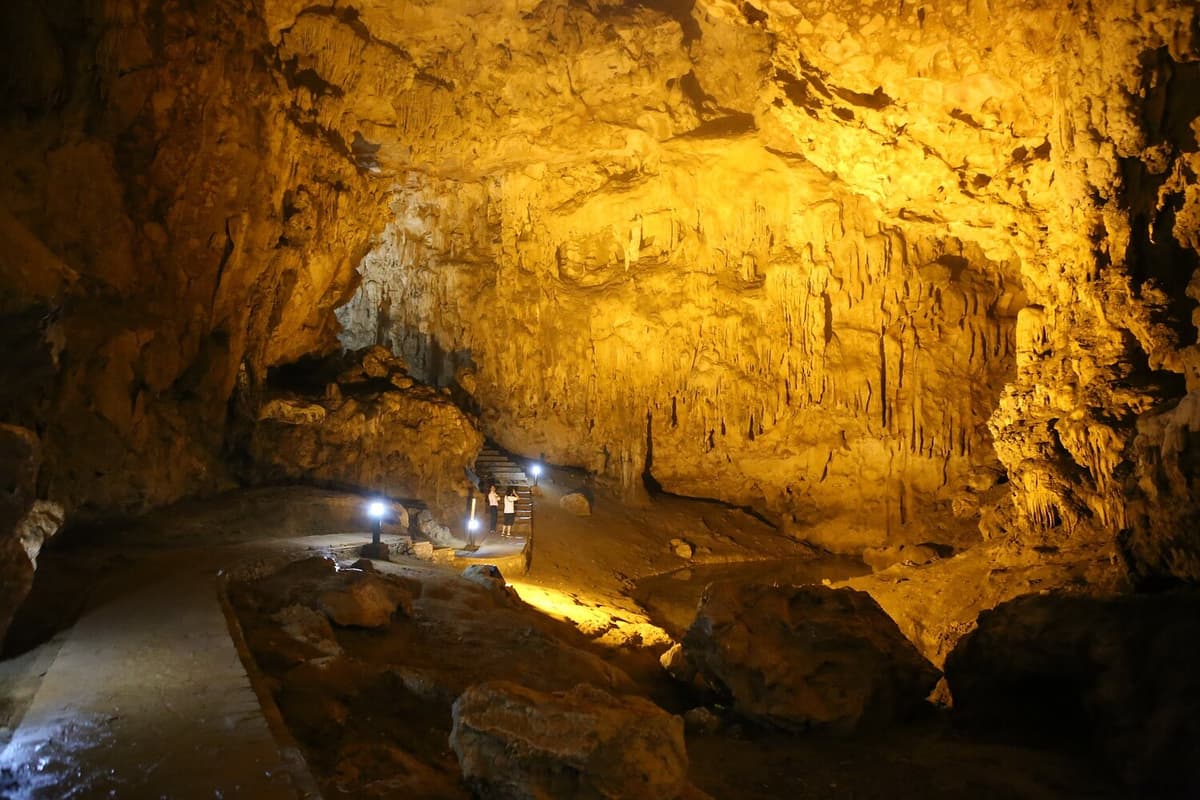
Nguom Ngao Cave is one of the key attractions in Cao Bang. Source: Flickr
4. Visit Truc Lam Phat Tich Pagoda
Inaugurated in 2014, Truc Lam Phat Tich is the first pagoda built on Vietnam’s northern border. Located about 500 m from Ban Gioc Waterfall, the pagoda covers an area of 3 hectares, nestled against a mountain with a breathtaking view overlooking the waterfall. From this vantage point, visitors can admire the rice fields and the white waters cascading down the falls, set against towering mountains and drifting clouds.
The pagoda is designed in a traditional Vietnamese architectural style, featuring an ironwood structure, brick and tile materials, a curved roof, and a system of parallel inscriptions in Vietnamese. A notable highlight is the Great Bell, cast in bronze and weighing 1.5 tons. Truc Lam Phat Tich Pagoda serves as a significant spiritual and religious site, attracting Buddhists and visitors for meditation and pilgrimage.
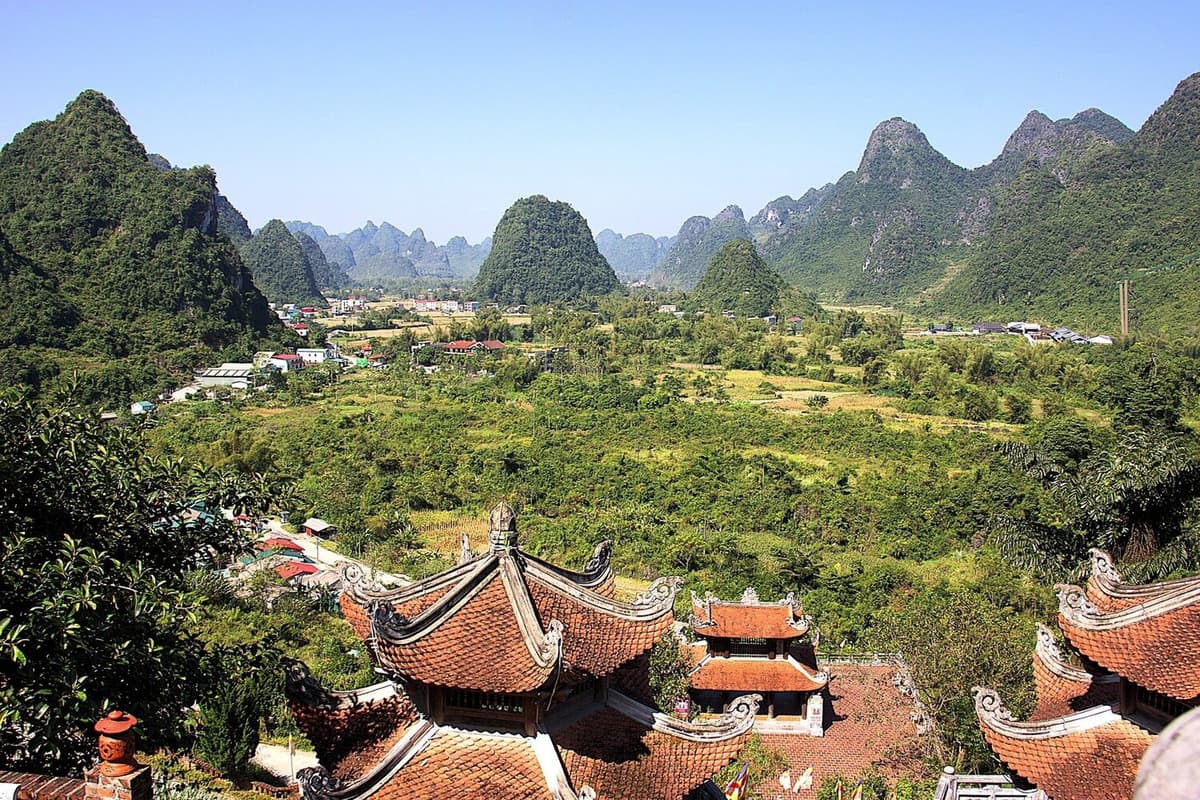
A panoramic view from Truc Lam Phat Tich Pagoda. Source: Flickr
5. Trekking & exploring the countryside
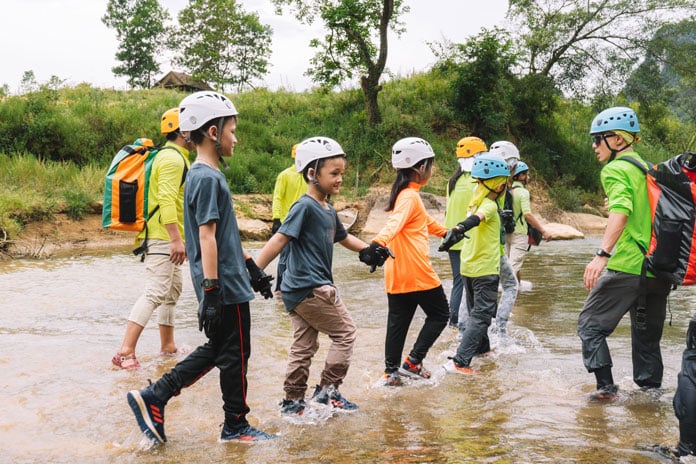
The stunning scenery surrounding Ban Gioc Waterfall makes it an excellent destination for trekking and countryside exploration. The region boasts picturesque landscapes, rolling hills, and rice fields. A great trekking route starts from nearby residential areas where most homestays and hotels are located. The trek to the waterfall covers approximately 3 km, making it an ideal distance for a casual, easy-level trek.
Equipped with trekking shoes and a backpack, visitors can embark on a journey through the lush countryside, passing by local villages and observing daily life along the way. Although the trek can be tiring for some, the reward at the end is worth it-witnessing the grandeur of Ban Gioc Waterfalls up close. Visitors can trek up the falls for a closer view, but it’s advisable to consult the site management beforehand to ensure safety.

A trek allows visitors to witness the grandeur of Ban Gioc Waterfall up close. Source: Flickr
Is Ban Gioc Waterfalls one of the most beautiful waterfalls in the world for you? There’s only one way to find out-come and experience it yourself! Plan your visit, explore, and create unforgettable memories in this stunning destination.
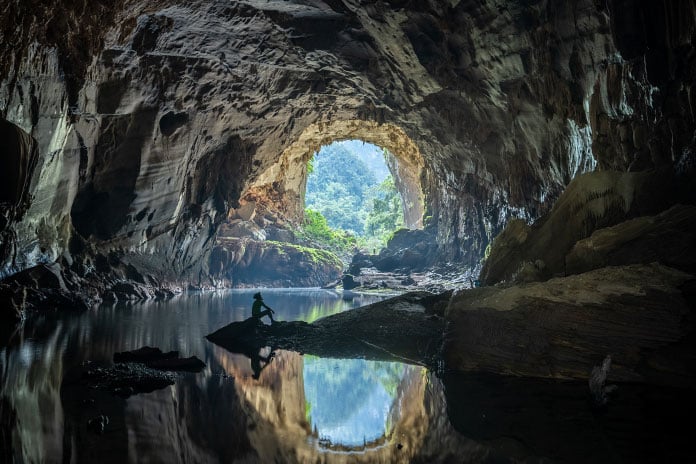
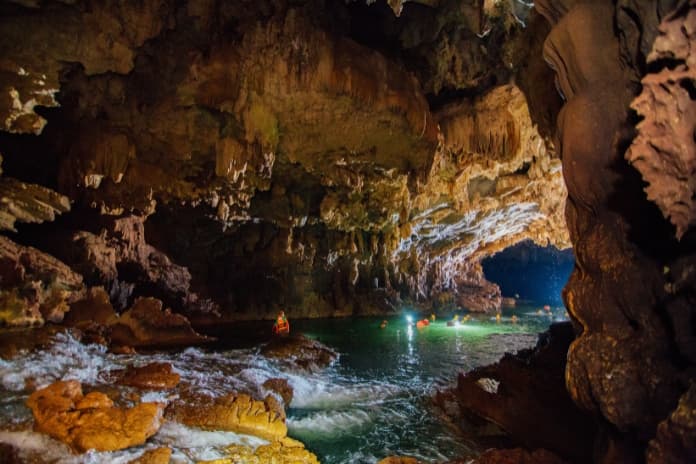
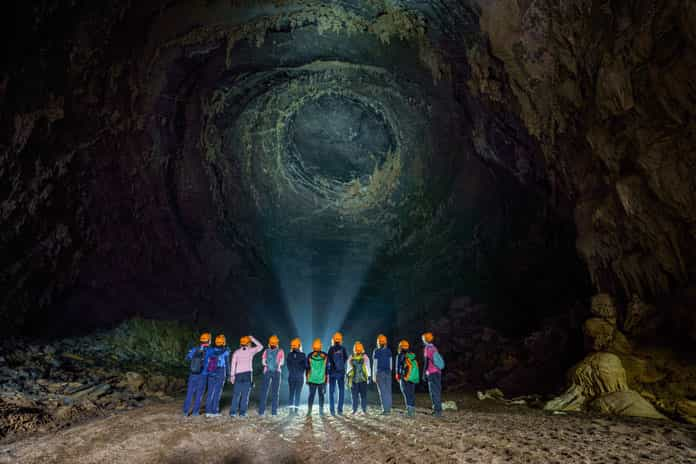
Whether you prefer long treks, camping in a cave, sleeping under the stars in the jungle, swimming underground in river caves, explore the huge dry caves or just taking an exploratory day trip, Oxalis Adventure Tours can provide the right amount of adventure just for you.
__637051782550081035.jpg)
__637051780703588520.jpg)
__637051765075307793.jpg)
__637051774329206026.jpg)
__637740499994967442.jpg)