Hoi An Japanese Covered Bridge: Travel guide, history, and tips
The Japanese Covered Bridge in Hoi An is a spiritual structure that harmoniously blends feng shui principles with Eastern architectural styles. It is located in the heart of Hoi An Ancient Town, once a major international trading port of Vietnam and Southeast Asia during the feudal era. The bridge stands as an iconic symbol of the city.
Today, the Japanese Covered Bridge is closely associated with Hoi An Ancient Town. It lies near several traditional craft villages such as Tra Que Vegetable Village and Hoi An Lantern Village. Travelers visiting the bridge can learn about its 400-year history and admire the charming atmosphere of the ancient town.
What to experience at the Japanese Covered Bridge in Hoi An?
The Japanese Covered Bridge is a symbol of Hoi An, representing both the spirit of trade and economic growth. It is also a cultural and spiritual icon that has endured for more than 372 years. This remarkable landmark connects two bustling streets in the heart of the ancient town. Travelers can admire the timeless beauty of the old town and take part in activities such as:
Visit the Japanese Covered Bridge – Discover its architecture and history
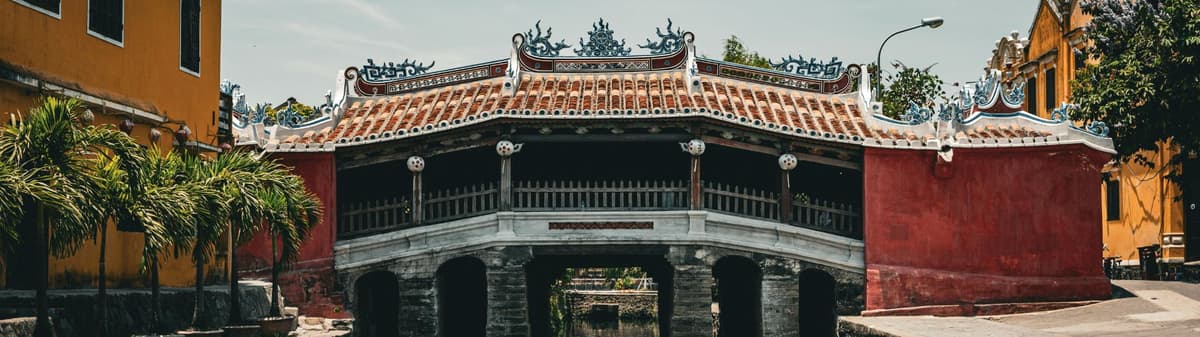
The Japanese Covered Bridge features traditional wooden architecture with yin-yang roof tiles designed according to Eastern feng shui principles. The gracefully curved roofline conveys both grandeur and elegance. Inside the bridge is a small temple dedicated to Bac De Tran Vu, the guardian deity holding a sword, symbolizing protection and solemnity for the local people.
At each end of the bridge stand statues of a monkey and a dog, representing the years when construction began and was completed. Travelers can take memorable photos in front of and inside the bridge, capturing its distinctive architecture amid the charming ancient town. Information panels placed on and around the bridge introduce its history and explain the spiritual and cultural significance of Bridge Pagoda.
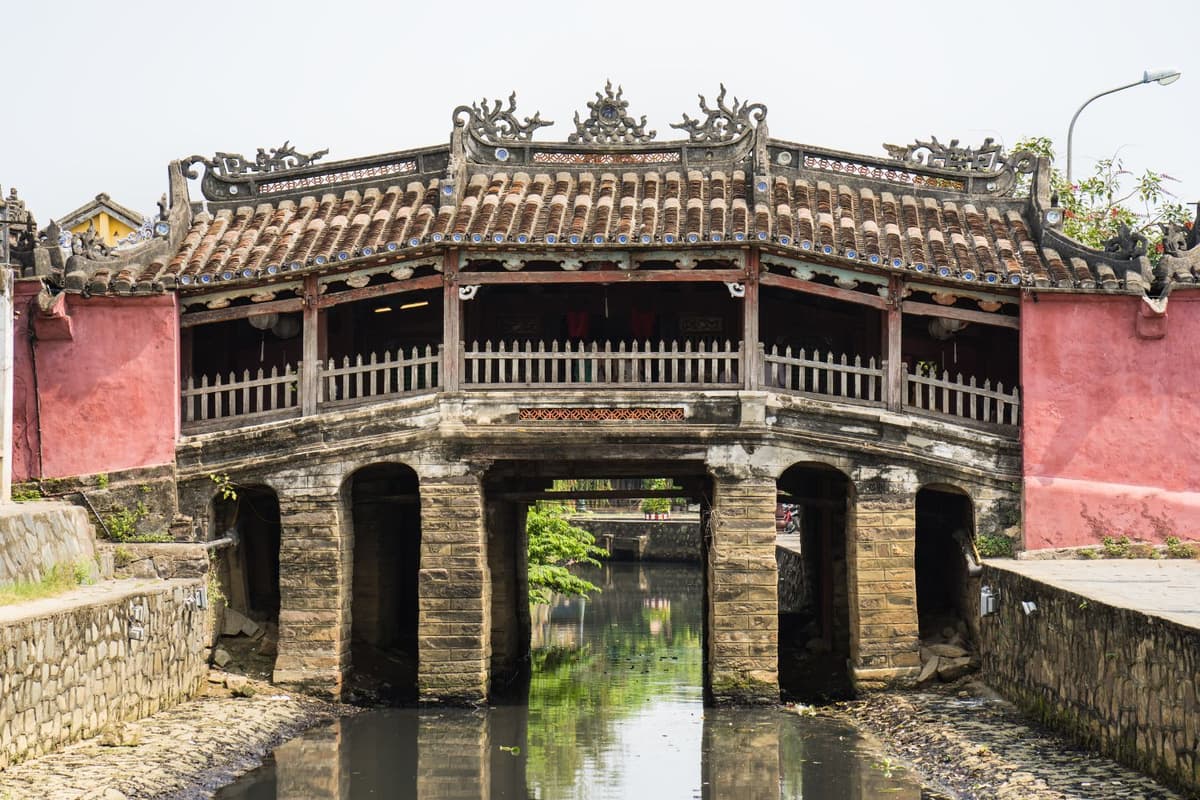
The Japanese Covered Bridge in Hoi An has a history of nearly 400 years and is considered a sacred cultural symbol of the town
Listen to stories and legends about the Japanese Covered Bridge
According to ancient tales, the Japanese Covered Bridge was built to subdue Namazu. It is a giant sea monster believed to cause earthquakes stretching from India to Vietnam and Japan. Travelers visiting the bridge can listen to fascinating legends about this spiritual structure. These folk stories bring the journey to life, offering deeper insight into the cultural beliefs and spiritual traditions of the East.
Check-in with the 20,000 VND Note at the Japanese Covered Bridge
The Japanese Covered Bridge in Hoi An was recognized as a National Historical and Cultural Heritage Site in 1990. Its image is beautifully featured on Vietnam’s blue 20,000 VND banknote. Therefore, many travelers enjoy taking creative “check-in” photos with the 20.000 VND note, aligning the printed image with the real bridge behind them. It’s a fun and meaningful way to capture the majesty of the bridge, a proud symbol of Vietnam’s cultural heritage.
Offer incense and pray at the Japanese Covered Bridge
The small shrine on the Japanese Covered Bridge is dedicated to Bac De Tran Vu. He is the guardian deity worshipped by locals for protection, blessings, and peace. Travelers visiting the bridge can experience its serene and sacred atmosphere, offer incense, and pray for good fortune and well-being.
Stroll around and enjoy the lively atmosphere of Hoi An Ancient Town
Located in the heart of Hoi An Ancient Town, the Japanese Covered Bridge is surrounded by charming mossy streets and centuries-old houses. During their visit, travelers can take a leisurely walk to admire the town’s timeless beauty. In the evening, the bridge and the old quarter glow brightly under the warm lights and colorful lanterns. Travelers can also take a small boat trip along the river to enjoy the vibrant scenery and bustling life on both sides of the banks.
Enjoy famous local cuisine in Hoi An Ancient Town
During the journey to the Japanese Covered Bridge, travelers can savor Hoi An’s signature dishes at local restaurants, food stalls, and street vendors. Hoi An cuisine offers a wide variety of delicious dishes that travelers shouldn’t miss, such as Cao Lau, Mi Quang, Hoi An chicken rice, com hen (rice with baby clams), and banh xeo (Vietnamese pancake), etc.
Hoi An is the birthplace of Cao Lau, and travelers can enjoy this signature dish at traditional Cao Lau restaurants overlooking the lively streets of the Ancient Town. However, prices at restaurants with upper-floor seating tend to be slightly higher than those at regular eateries.
The town is also home to many famous eateries, such as Banh Mi Phuong, which serves Vietnamese baguettes with a variety of flavorful toppings. Another popular spot is Mot Hoi An, known for its refreshing herbal drinks made from local ingredients. The vibrant night food scene in Hoi An is also a must-try experience, where travelers can enjoy authentic flavors beneath the warm glow of lanterns.

Try Cau Lau when you visit Hoi An
The Legend of the Japanese Covered Bridge in Hoi An
Centuries ago (around the 16th century), Hoi An was alive with the sails of merchant ships and the chatter of traders from distant lands. They formed the Japanese and Chinese communities living on opposite sides of a small canal in Hoi An. To connect their quarter with the nearby Chinese district, a Japanese businessman built a small wooden bridge. It is not only as a link between communities but also as a symbol of peace and friendship.
As the story goes, a great sea monster named Namazu stirred beneath the earth. Its massive body stretches from India to Japan, with its back resting right beneath Hoi An. Every time Namazu moved, the earth trembled and the waters rose. The Japanese built the Pagoda Bridge with special feng shui and spiritual elements, as a sword stuck into the monster's back to suppress it.
The villagers said that when the final plank of the bridge was laid, Namazu fell asleep, and peace returned to the land. Years later, the Chinese built a small shrine atop the bridge to honor Bac De Tran Vu, the guardian of water, praying that his divine strength would forever protect their home.
In 1719, Lord Nguyen Phuc Chu named the bridge Lai Vien Kieu, meaning “The Bridge for Travelers from Afar.” The name reflected the open-minded vision and international trade policies of the Nguyen Lords during the early period of Vietnam’s development.
Over the centuries, despite enduring numerous events and restorations, the Japanese Covered Bridge has retained its distinctive ancient architectural charm. In 2006, its image was featured on Vietnam’s 20,000 VND banknote, a recognition of its cultural and historical importance. Today, the bridge stands as a proud symbol of Hoi An Ancient Town and a testament to the rich cultural fusion among Japan, China, and Vietnam.
Location and how to get to the Japanese Covered Bridge
The Japanese Covered Bridge is located in the center of Hoi An Ancient Town, about 30 kilometers from downtown Da Nang. For international travelers, the easiest way to reach it is by flying into Da Nang International Airport and then continuing to Hoi An by car, taxi, or motorbike. Another convenient option is to join a guided tour package that includes transportation and a local guide.
Travelers staying at hotels or homestays near the ancient town can easily reach the bridge by bicycle (often provided by accommodations) or simply enjoy a pleasant walk through the charming streets leading to the Japanese Covered Bridge.
Travelers arriving at Tan Son Nhat Airport (Ho Chi Minh City) or Noi Bai Airport (Hanoi) can take a domestic flight to Da Nang City and then continue their journey to Hoi An. Those coming from nearby provinces such as Hue, Quang Tri, or Ninh Binh can reach Hoi An by train, sleeper bus, or private car for a more flexible travel experience.
Travelers can get from downtown Da Nang to Hoi An Ancient Town and explore the area using ride-hailing services such as Xanh SM, Grab, or by taxi.
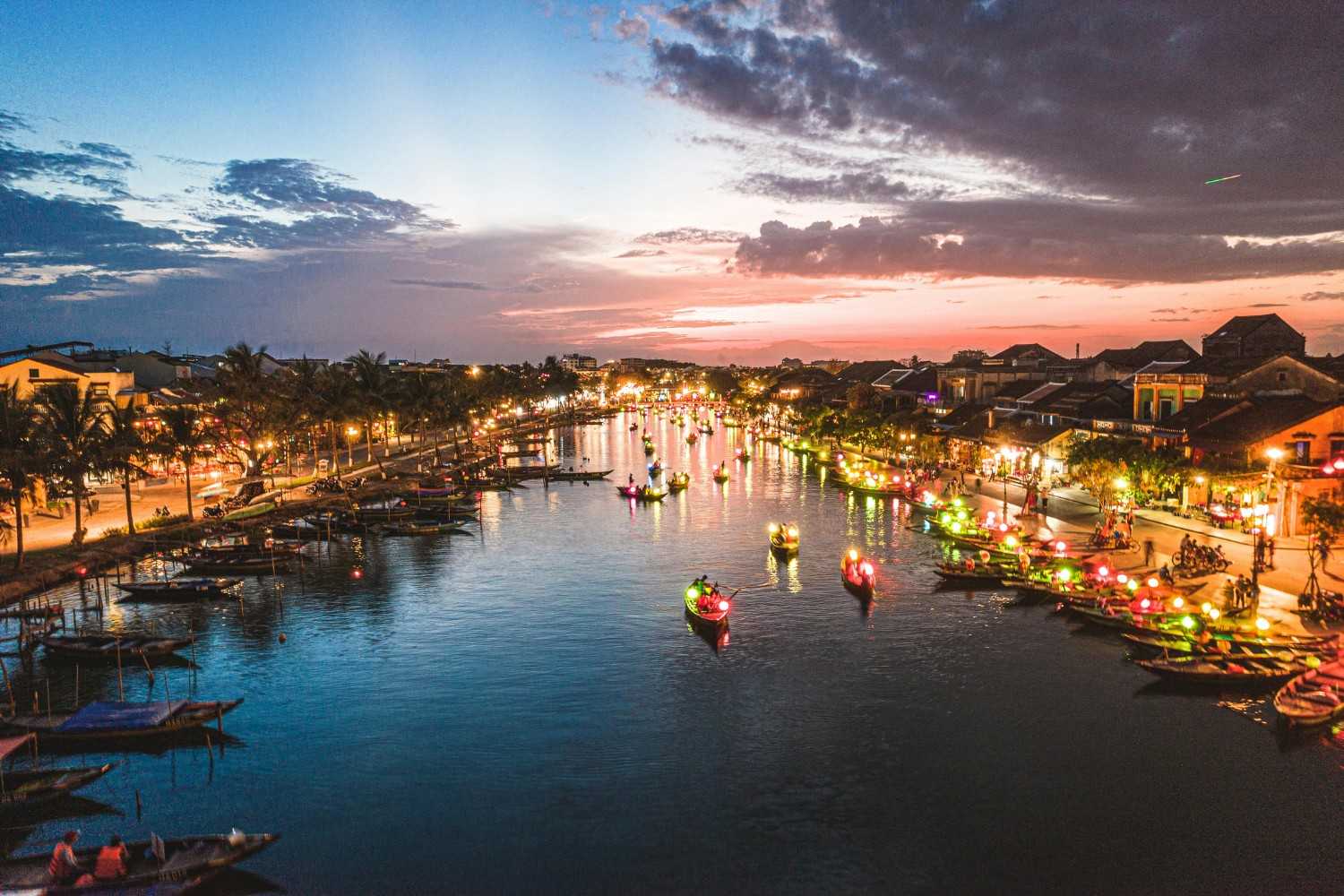
The Japanese Covered Bridge is located in the heart of Hoi An Ancient Town and close to many popular attractions
When is the best time to visit the Japanese Covered Bridge in Hoi An?
The best time to visit the Japanese Covered Bridge is from February to April, when the weather is dry, pleasantly warm, and there is little rain. The houses in Hoi An are painted in shades of yellow, and over the years, layers of moss on their walls have added to the town’s timeless and ancient charm.
During festive seasons such as the full moon each month, the Mid-Autumn Festival (15th day of the 8th lunar month), or the Vu Lan Festival (15th day of the 7th lunar month), Hoi An Ancient Town and the Japanese Covered Bridge are illuminated by thousands of lanterns. Travelers visiting the bridge at night during these times can enjoy a magical and poetic atmosphere unlike anywhere else.
From May to August, the weather is still favorable for sightseeing, though it can be quite sunny. Travelers are advised to bring hats, umbrellas, and sunscreen, and plan their visits in the early morning or late afternoon for a more comfortable experience. During the rainy season (September to December), occasional heavy rains may cause flooding, yet the bridge and the old town take on a nostalgic, tranquil beauty that reflects the charm of Hoi An in its most serene state.
Attractions near the Japanese Covered Bridge Hoi An
To reach the Japanese Covered Bridge, travelers can head to the center of Hoi An Ancient Town. They can admire old houses and browse souvenir shops selling a wide variety of traditional handicrafts such as lanterns, masks, and fine art items. Travelers can visit, take photos and buy souvenirs. In the evening, Hoi An transforms into a glowing wonderland illuminated by countless traditional lanterns — a perfect time for travelers to stroll around and enjoy the local cuisine.
They can easily combine their visit with various cultural and hands-on experiences such as:
Tra Que Vegetable Village
Located about 3.5 kilometers from the Japanese Covered Bridge, Tra Que Vegetable Village offers travelers a chance to experience the life of a local farmer. Visitors can try their hand at traditional farming activities such as planting, watering, and harvesting vegetables using age-old techniques. Beyond enjoying the fresh countryside atmosphere, travelers can also savor rustic dishes made from freshly picked greens. Those who love Central Vietnamese cuisine can join cooking classes to learn how to shop at local markets and prepare dishes like pho and banh xeo (Vietnamese pancakes).
Bay Mau Coconut Forest
Bay Mau Coconut Forest is located about 6 km from Hoi An Ancient Town. The area showcases the unique beauty of Central Vietnam’s riverine landscape, with vast nipa palm groves and a diverse mangrove ecosystem. Travelers can enjoy a basket boat tour, watch local fishermen perform traditional basket boat dances, take part in boat races, cast fishing nets, and learn about the local way of life. This is a fun and memorable experience that blends nature exploration with the charm of authentic local culture.
Marble Mountains
Located about 20 kilometers from the Japanese Covered Bridge and 10 kilometers from Da Nang City, the Marble Mountains (Ngu Hanh Son) make a perfect addition to any travel itinerary. Travelers can explore Thuy Son, the highest peak at 106 meters, either by taking a 42-meter glass elevator or climbing the stone steps. The site features sacred caves such as Huyen Khong Cave and Am Phu Cave, as well as Linh Ung Pagoda. From the mountaintop, visitors can enjoy breathtaking panoramic views of Da Nang and the surrounding coastline.
The Japanese Covered Bridge in Hoi An is conveniently located near many natural, cultural, and historical attractions in Da Nang and throughout Central Vietnam. From the bridge, travelers can easily continue their journey to explore more of this fascinating region.
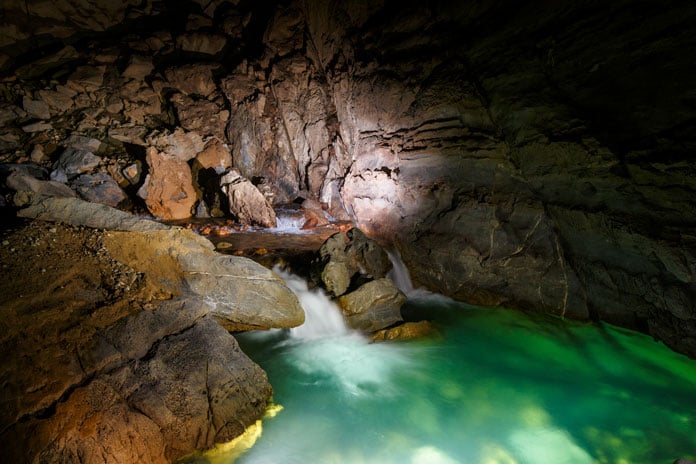
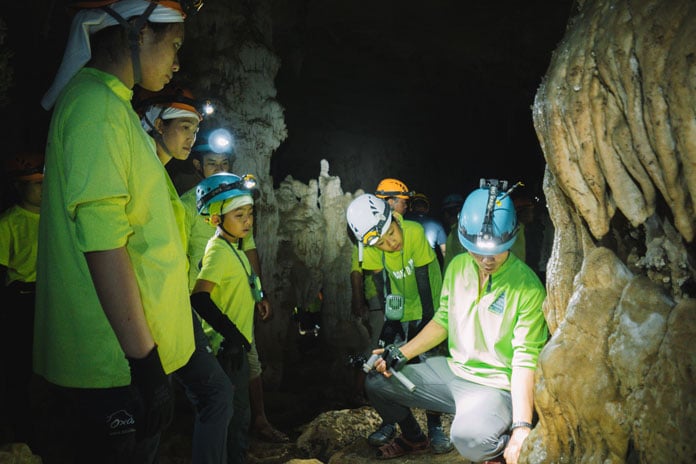
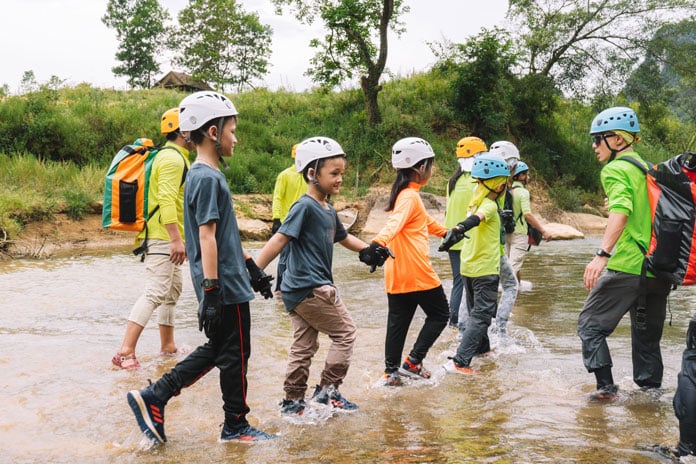
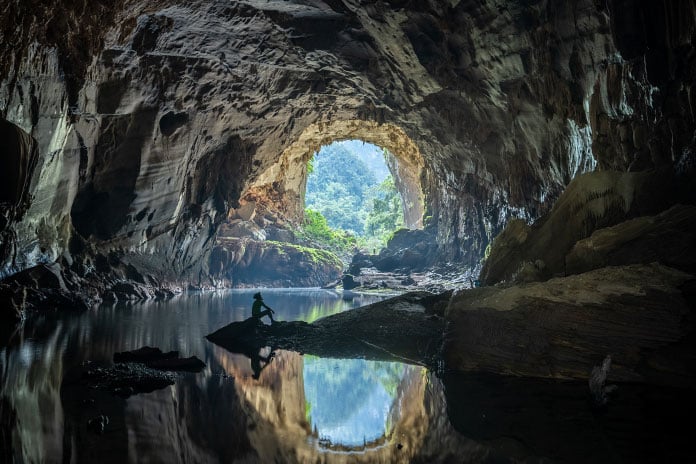
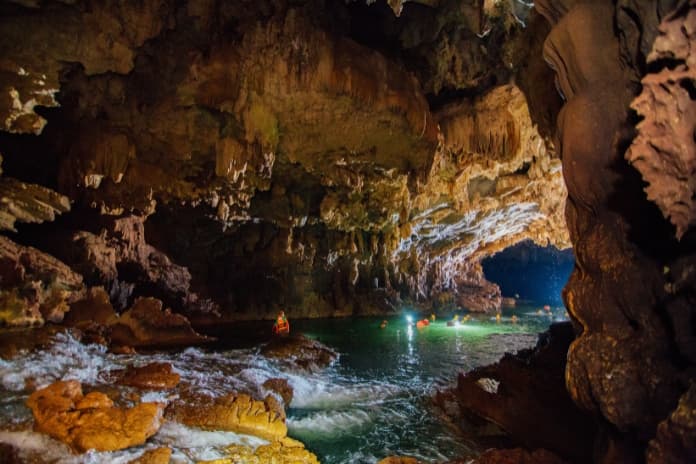
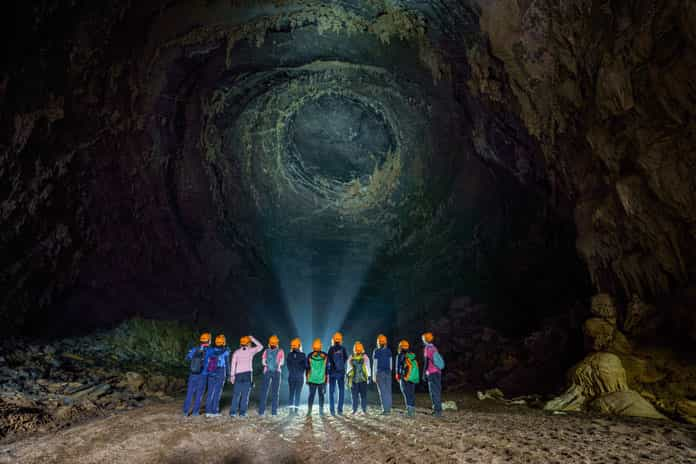
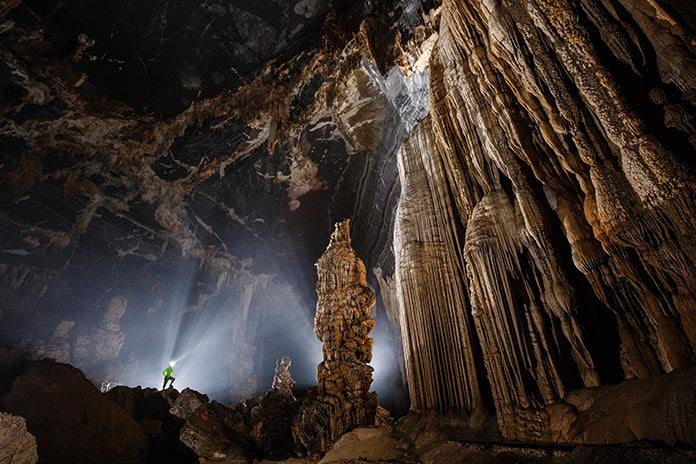
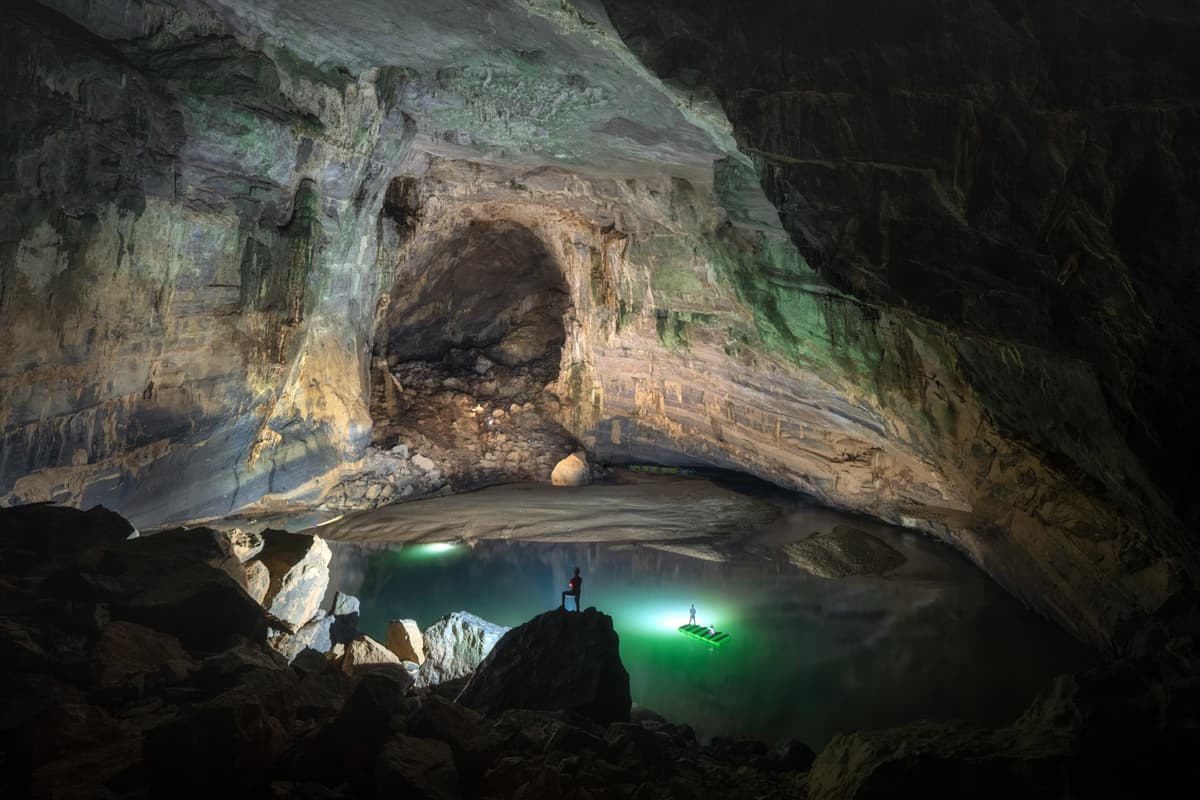
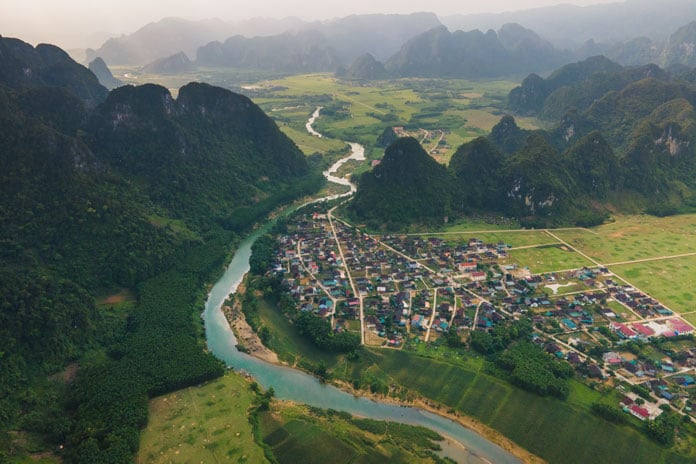
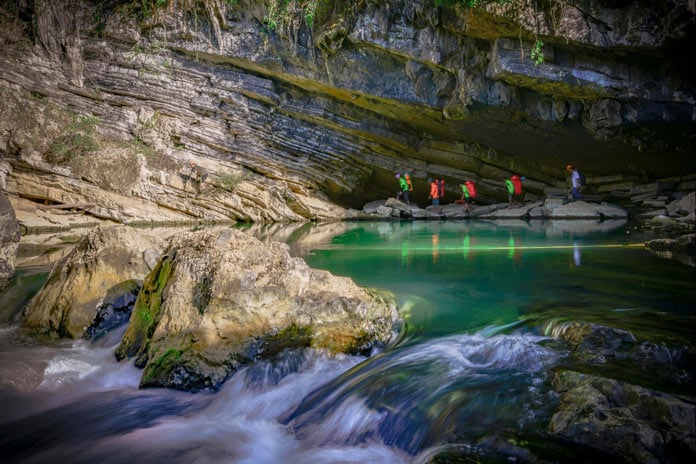
For adventure enthusiasts, the cave expeditions organized by Oxalis Adventure offer an unforgettable experience, with tour options ranging from 1 to 6 days. From Hoi An, travelers can reach Phong Nha by train, sleeper bus, taxi, or private transfer arranged by Oxalis, making it a seamless addition to their Central Vietnam exploration.
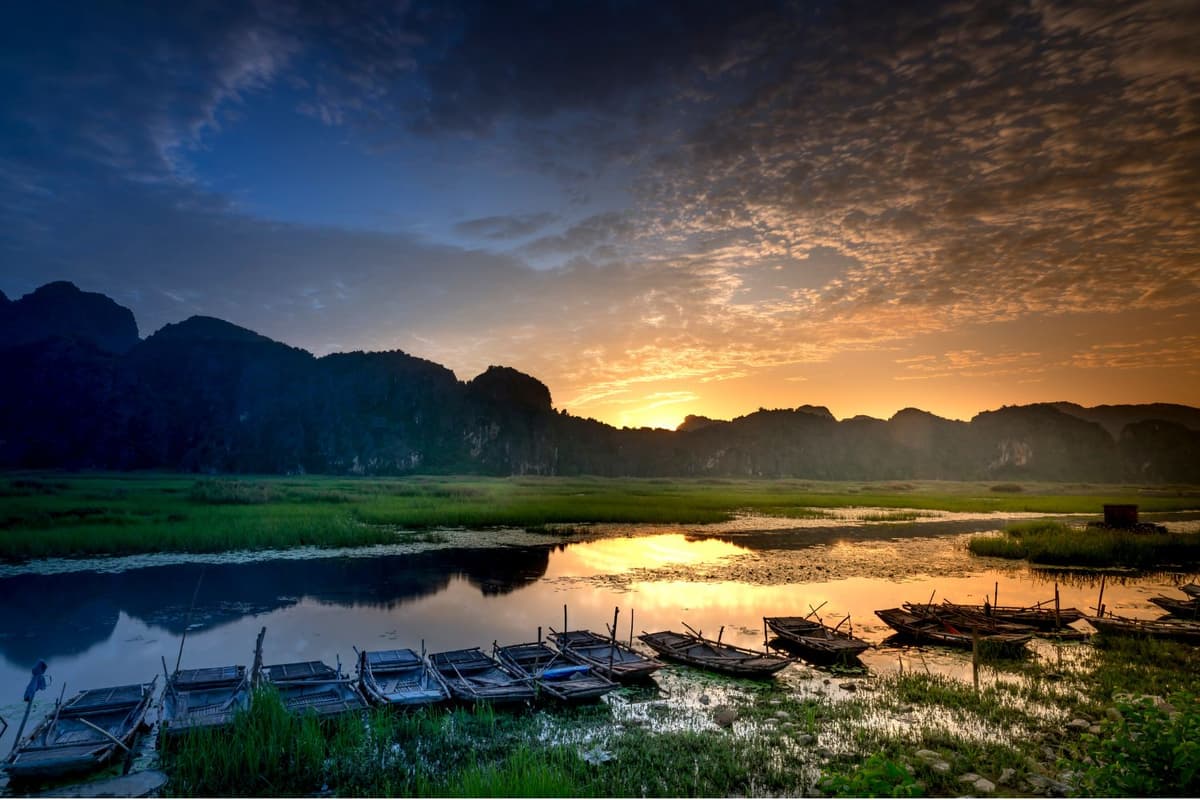
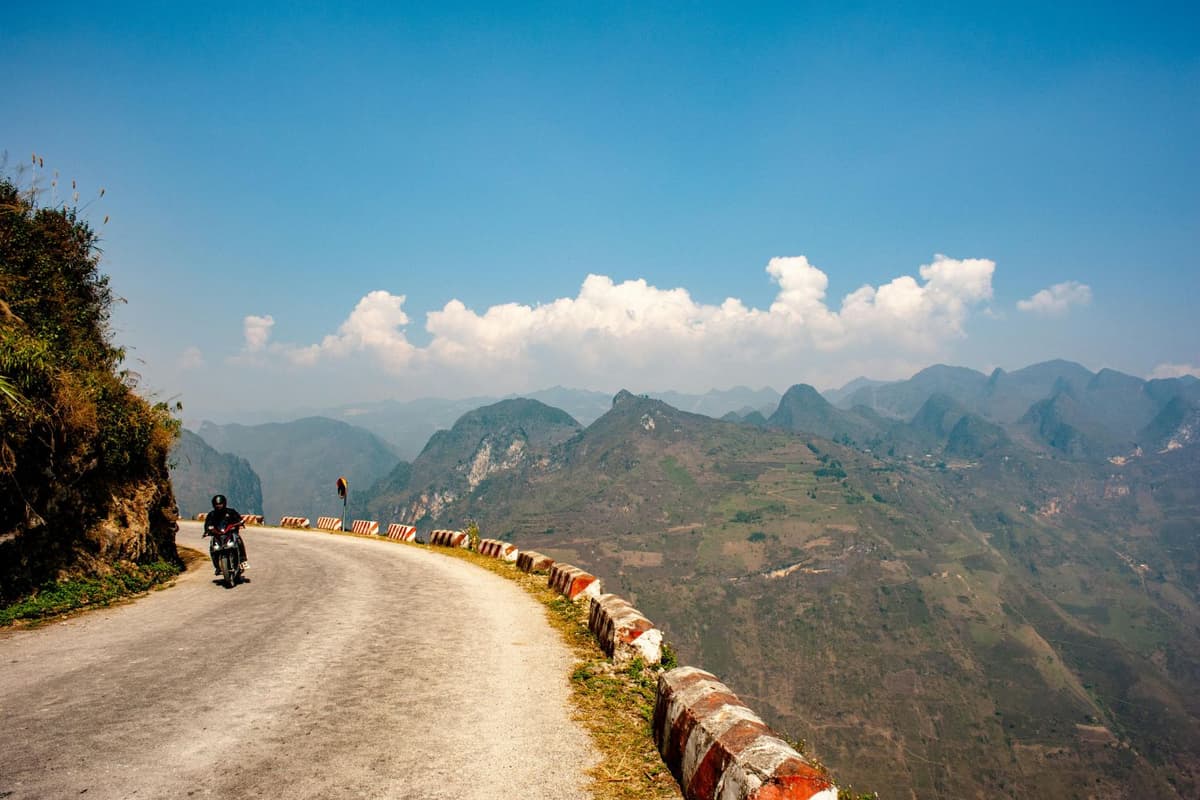
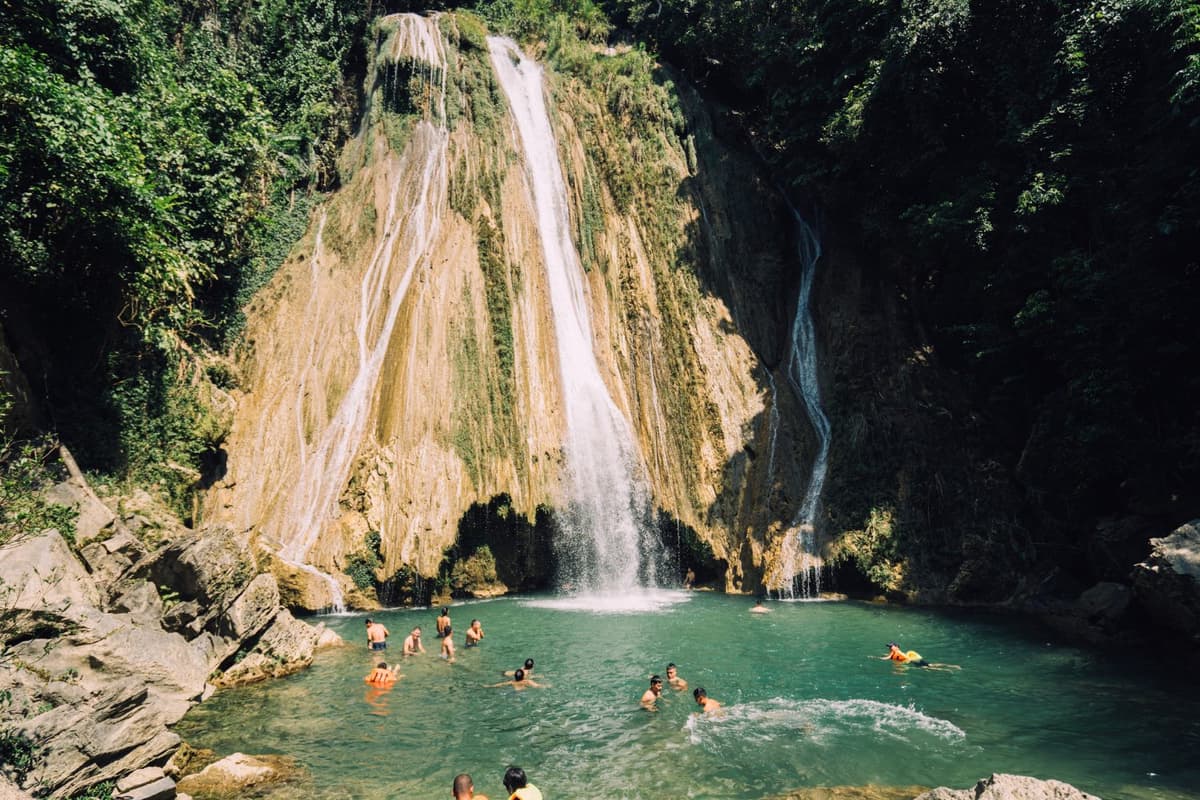

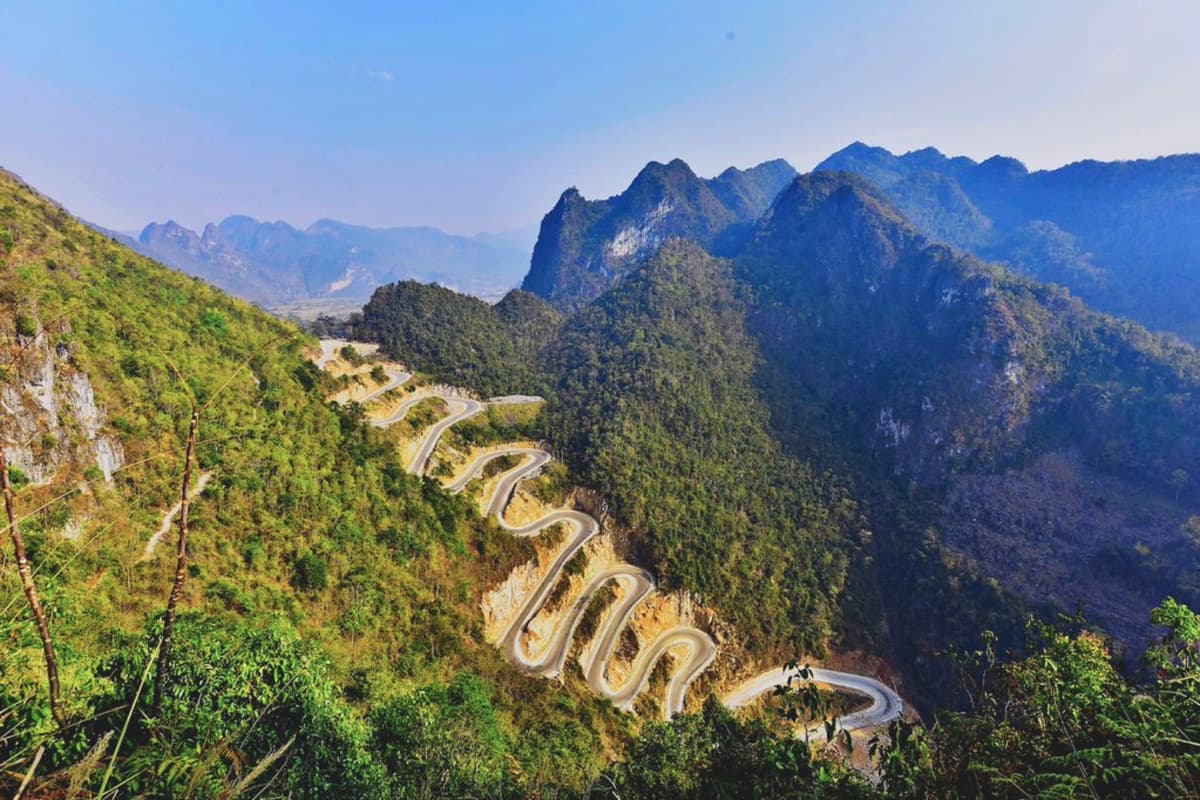
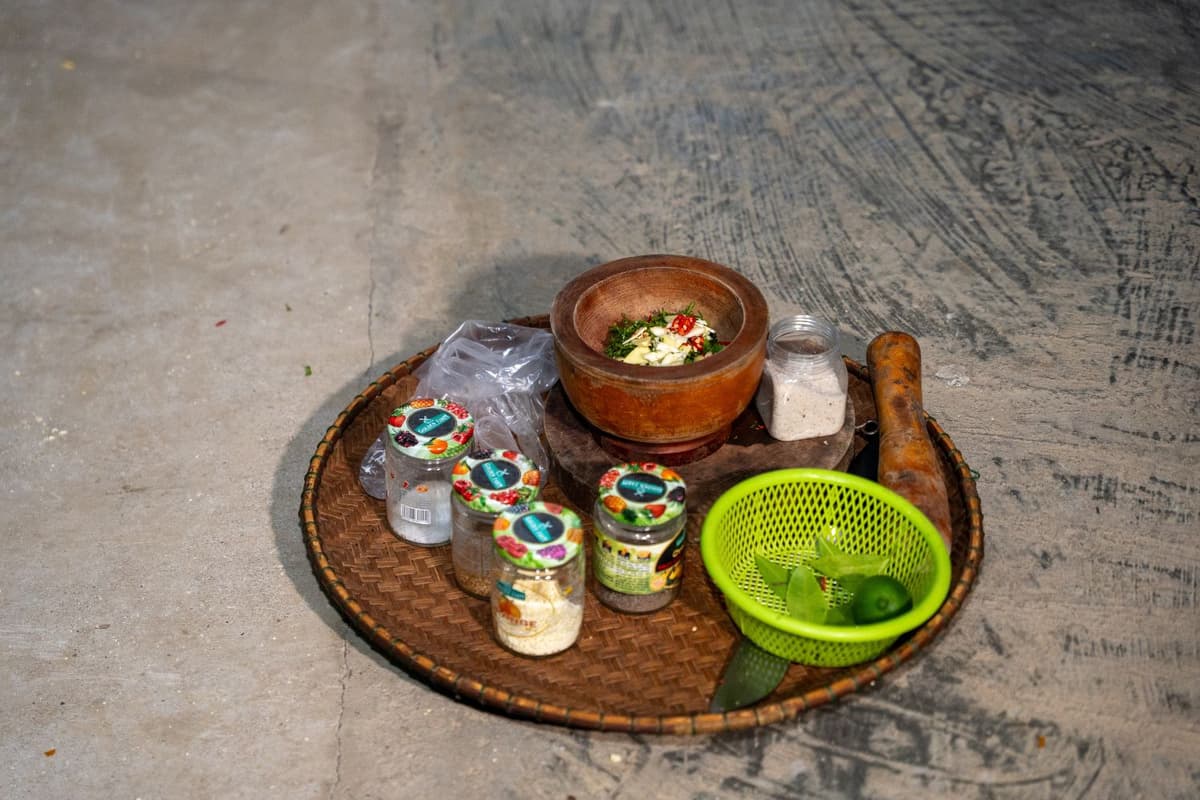
Whether you prefer long treks, camping in a cave, sleeping under the stars in the jungle, swimming underground in river caves, explore the huge dry caves or just taking an exploratory day trip, Oxalis Adventure Tours can provide the right amount of adventure just for you.
__637051782550081035.jpg)
__637051780703588520.jpg)
__637051765075307793.jpg)
__637051774329206026.jpg)
__637740499994967442.jpg)