22 Best Places to Visit in Asia: Must-see Cities and Spots
Asia is home to some of the most breathtaking landscapes on Earth, from snow-capped peaks and volcanic craters to turquoise lagoons and ancient rainforests. Whether you're chasing sunrise over a sea of clouds, trekking through untouched jungle, or swimming alongside giant manta rays, this vast continent offers no shortage of adventure for nature lovers. In this guide, we've rounded up 22 of the best places in Asia to visit, along with the best outdoor experiences each one has to offer, so you can start planning your next great escape.
1. Mount Everest, Nepal
Standing exactly 8,848.86 meters (29,031.7 feet) above sea level, Mount Everest is widely known as the highest mountain on Earth and one of the most famous places in Asia. Located on the border between Nepal and Tibet, it attracts thousands of travelers and nature lovers every year. Fortunately, you do not have to be an expert climber to appreciate its breathtaking scenery. If your schedule is tight, you can book a scenic mountain flight from Kathmandu. This short trip provides magnificent aerial views of the Himalayas and the famous peak.
For an even closer experience, a helicopter tour is a fantastic option. It will take you to popular viewing spots like Kala Patthar, allowing you to stand at an altitude of over 5,000 meters and admire the giant mountain safely. If you are an active traveler, trekking to the Everest base camp is an incredible adventure, and one of the best places to visit in Asia for anyone chasing a real physical challenge. This journey takes 12 to 14 days and offers a wonderful look into the local culture. As you walk along the trails, you will cross thrilling suspension bridges, visit traditional Sherpa villages, and explore peaceful Buddhist monasteries before reaching the famous base camp at 5,364 meters (17,598 feet). The route is physically demanding, but it is completely achievable for anyone with a good level of fitness.
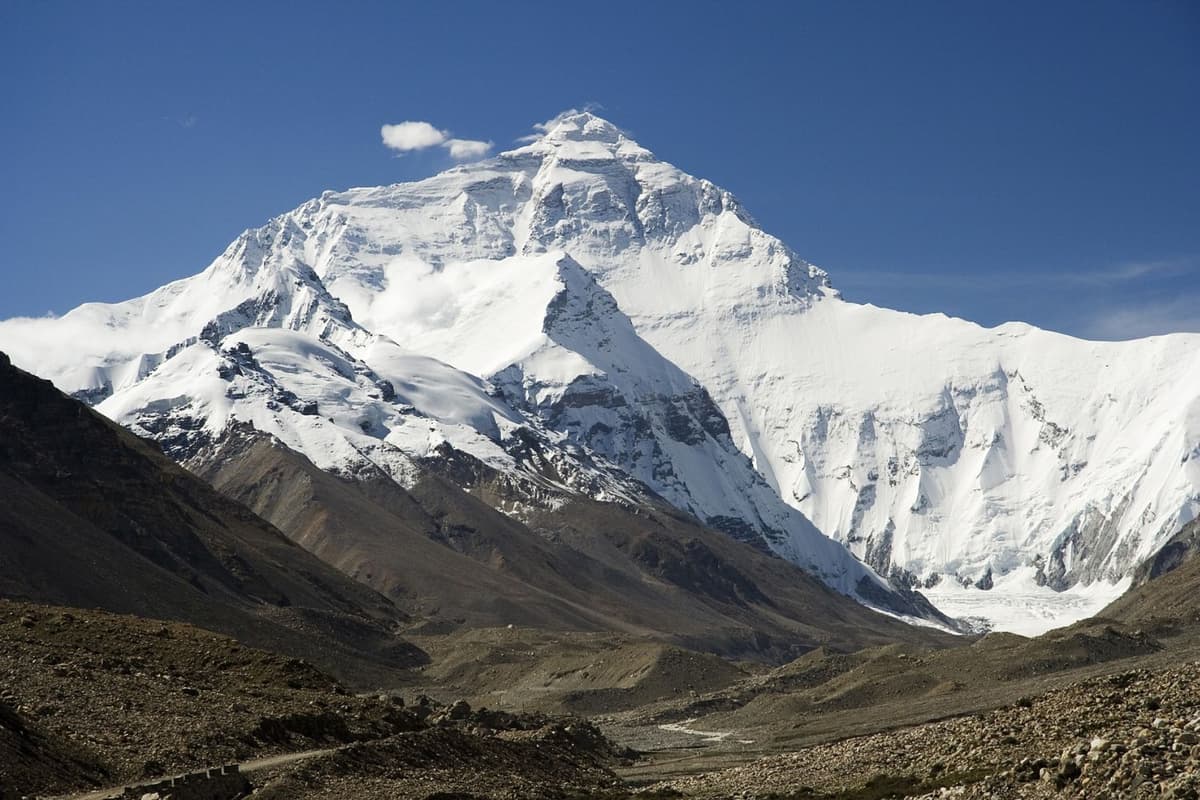
The snow-capped peak of Mount Everest
2. Mount Fuji, Japan
Mount Fuji is more than Japan's highest mountain, it's the country's most iconic landmark and one of the best places to travel in Asia for anyone who loves striking natural scenery. Rising 3,776 meters above sea level and located about 100 km southwest of Tokyo, its perfectly shaped cone and snow-covered summit have become symbols of Japan. Although it is an active volcano, Mount Fuji has remained dormant for more than 300 years. For centuries, it has inspired artists, poets, and pilgrims, earning UNESCO World Cultural Heritage status in 2013.
If climbing Mount Fuji is on your bucket list, plan your trip between early July and early September, when the official climbing season is open. Most hikers begin at the Fuji 5th Station, spend the night in a mountain hut, then continue before dawn to catch Goraiko, the sunrise from Japan's highest peak. Watching the first light spread across the clouds is a moment many travelers consider the highlight of their trip. Since the trails can become very crowded, daily visitor numbers are limited, and mountain huts should be booked in advance.
You don't have to climb the mountain to appreciate its beauty. Lake Kawaguchiko is one of the most beautiful places in Asia to see Mount Fuji reflected on calm water, especially on clear mornings. Chureito Pagoda offers the classic postcard view, where the five-story pagoda stands against the mountain, framed by cherry blossoms in spring or brilliant red leaves in autumn. For a slower pace, head to Hakone, one of the best cities to visit in Asia for combining relaxation with mountain views, to soak in a hot spring while enjoying distant views of Mount Fuji, or wander around Oshino Hakkai, a peaceful village known for its crystal-clear ponds fed by the mountain's melting snow.
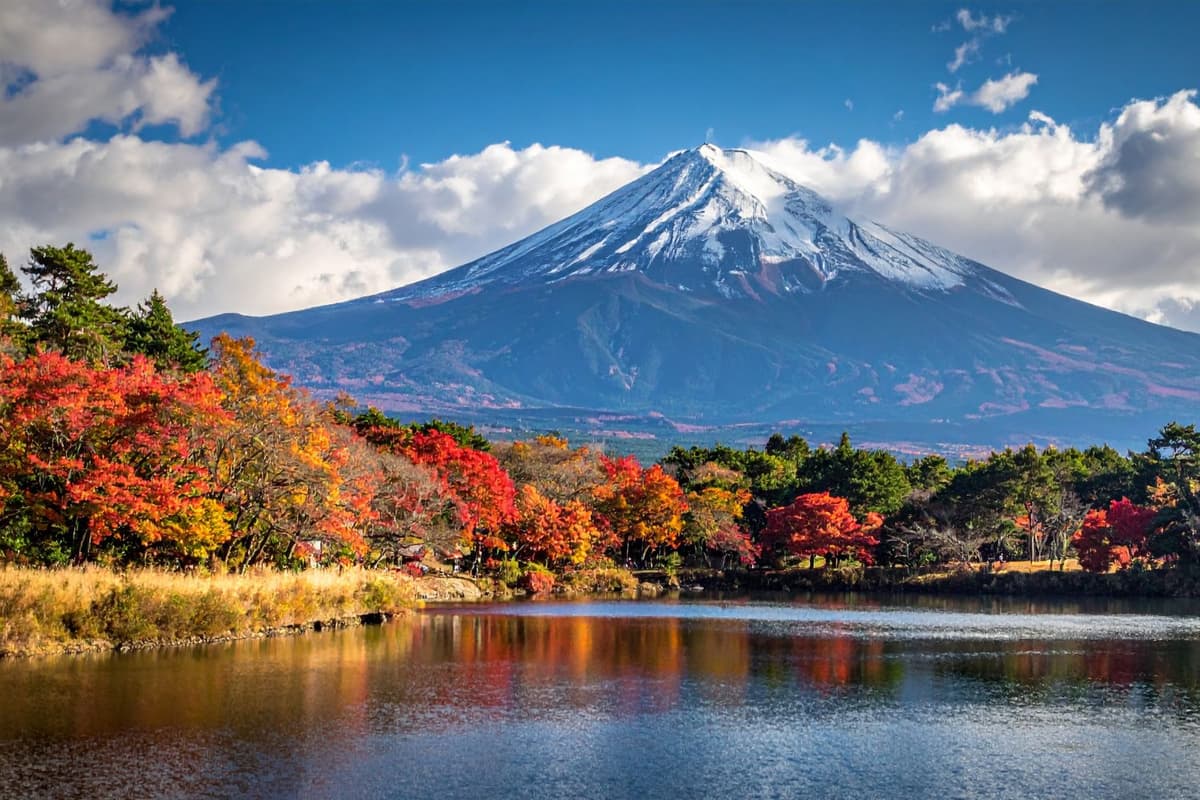
The iconic Mount Fuji reflected in the calm waters of the lake.
3. Gobi Desert, Mongolia
The Gobi Desert is nothing like the endless seas of sand you might expect, and it remains one of the famous places in Asia that continues to surprise first-time visitors. As the sixth-largest desert in the world, and the biggest in Asia, it's mostly made up of rocky plains, gravel flats, dramatic cliffs, and dry grassland, with sand dunes covering only about 5% of the land. Sitting at 900 to 1,500 meters above sea level, the Gobi is actually a cold desert, temperatures can hit 40°C in summer and drop to -40°C in winter, sometimes leaving snow scattered across the dunes.
One of the most incredible sights here is Khongoryn Els, known as the "singing dunes." These dunes stretch almost 100 km and rise up to 300 meters high, and when strong winds blow across them, they let out a deep, rumbling sound. Climb up for a sunset view over the whole landscape, then hop on a two-humped Bactrian camel for a ride across the golden sand, one of the most classic Gobi experiences you can have.
Another must-see is the Flaming Cliffs, or Bayanzag, where the red sandstone glows a deep, fiery color at sunrise and sunset. This is where explorer Roy Chapman Andrews found the world's first dinosaur eggs back in the 1920s, a discovery that made the Gobi famous among scientists and put it on the map as one of the most important fossil sites on the planet.
To finish off the trip, spend a night with a local nomadic family in a traditional ger, one of the most authentic places to go in Asia for experiencing nomadic culture firsthand. Try homemade Mongolian food, taste airag (fermented mare's milk), learn about life on the steppe, and finish the evening under one of the clearest night skies on Earth. With almost no light pollution out here, the Milky Way spreads across the sky in incredible detail.
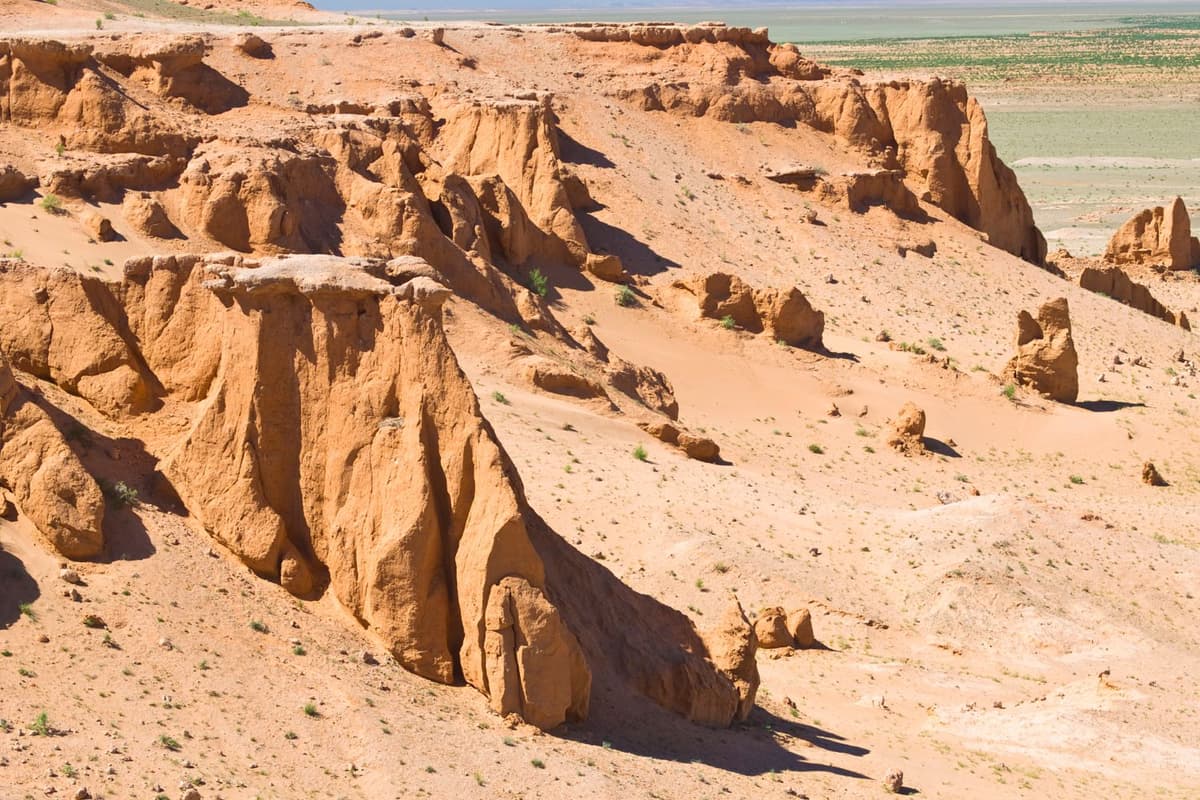
The flaming cliffs site in the Gobi Desert near Bayanzag.
4. Phong Nha - Ke Bang National Park, Vietnam
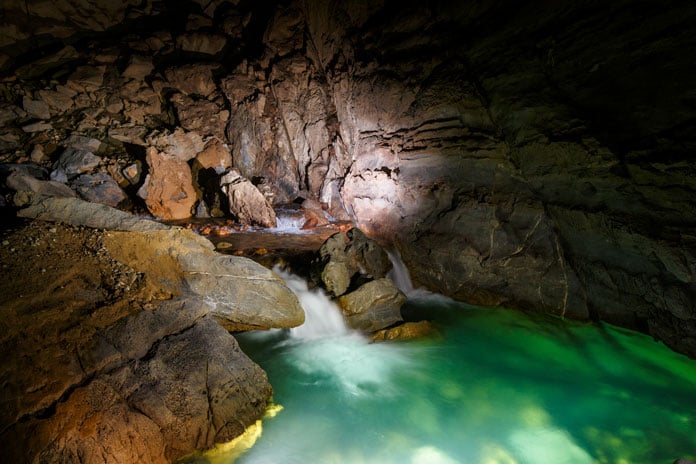
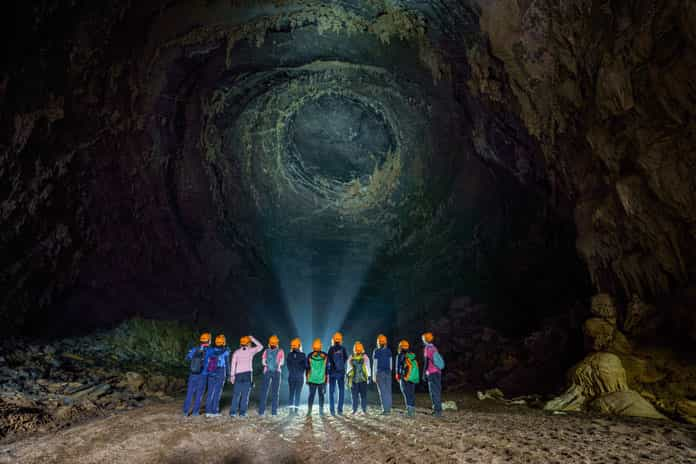
Imagine trekking through pristine rainforest before stepping into a cave so vast it has its own jungle and weather system. That's what awaits at Phong Nha - Ke Bang National Park in Quang Tri Province, Vietnam, one of the most beautiful places in Asia for anyone chasing an unforgettable adventure. With 472 surveyed caves and one of Asia's oldest karst landscapes, formed more than 400 million years ago, this UNESCO World Heritage Site is a dream destination for adventure lovers.
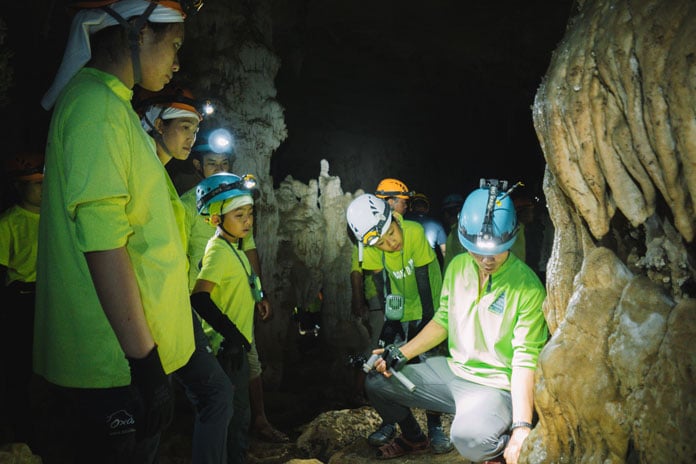
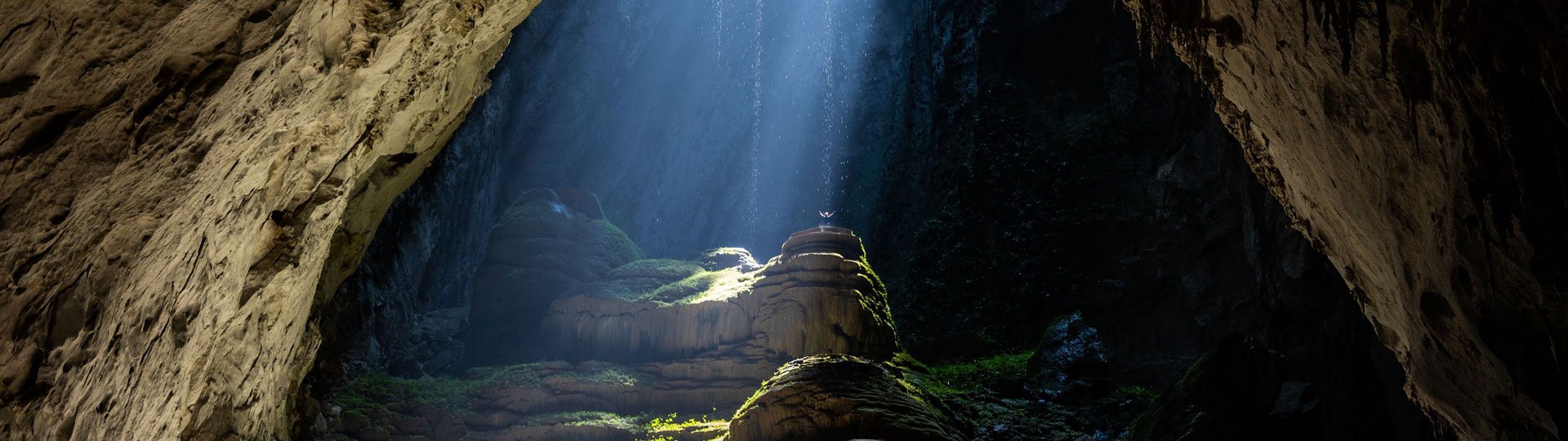
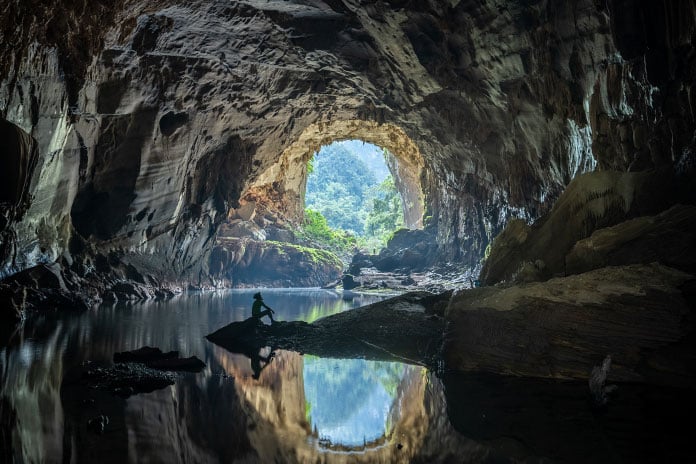
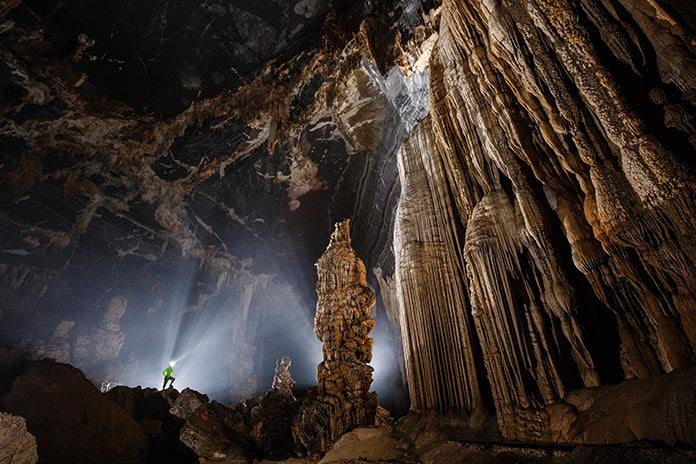
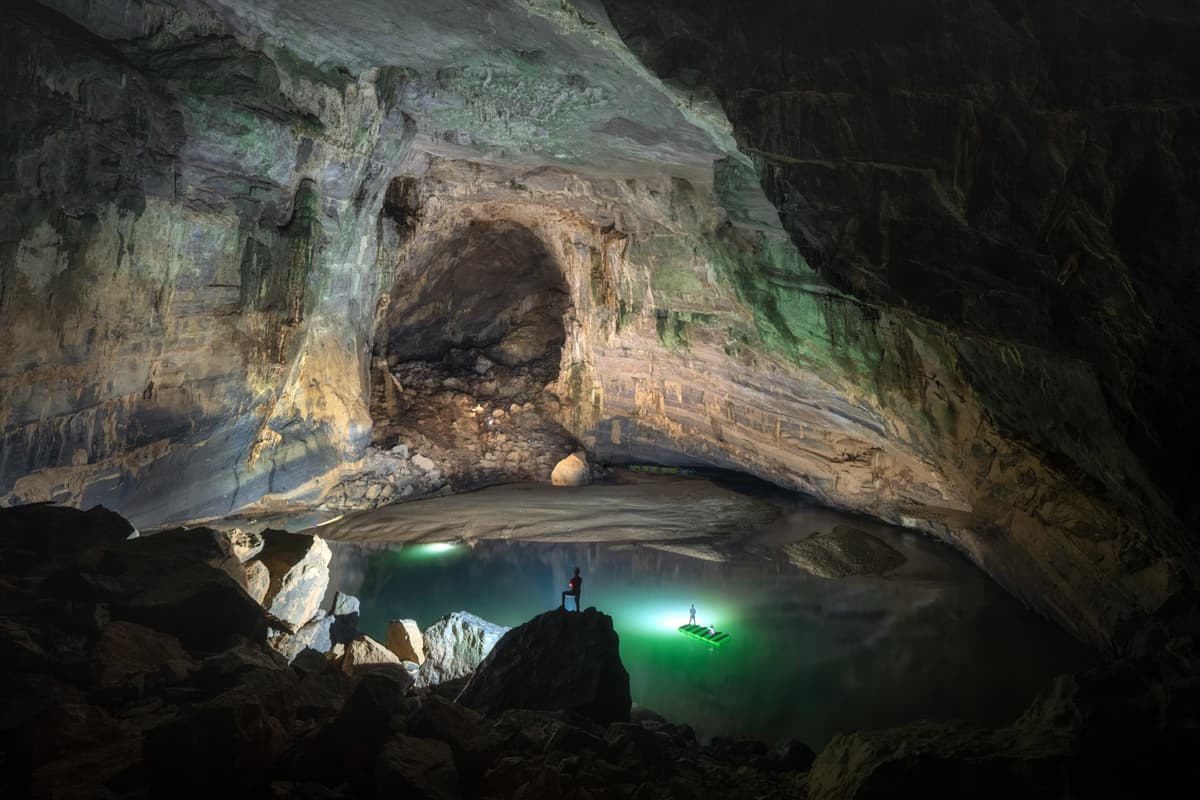
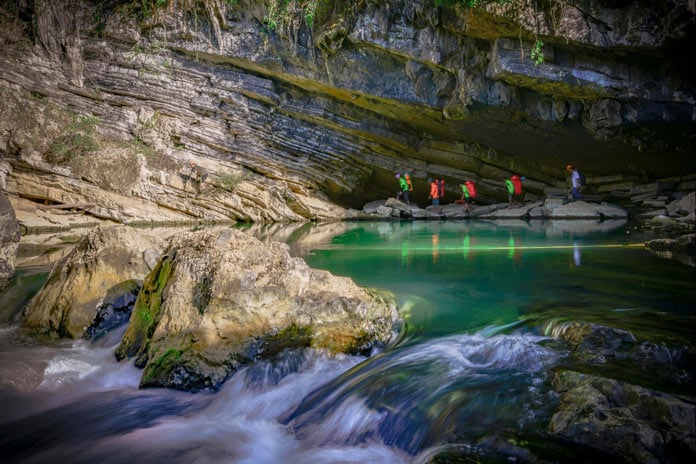
The biggest draw is its world-class cave expeditions. Adventure travelers can join the exclusive Son Doong Cave Expedition operated by Oxalis Adventure, the only company licensed to take visitors into the world's largest natural cave. Inside, you'll find an underground jungle, a river, and even its own weather, a landscape you won't find anywhere else on Earth. If you want something shorter, Hang En is amazing too, with a giant entrance and a campsite right by the river. Hang Va is another favorite, known for its rare cone-shaped stalagmites and crystal-clear underground streams.
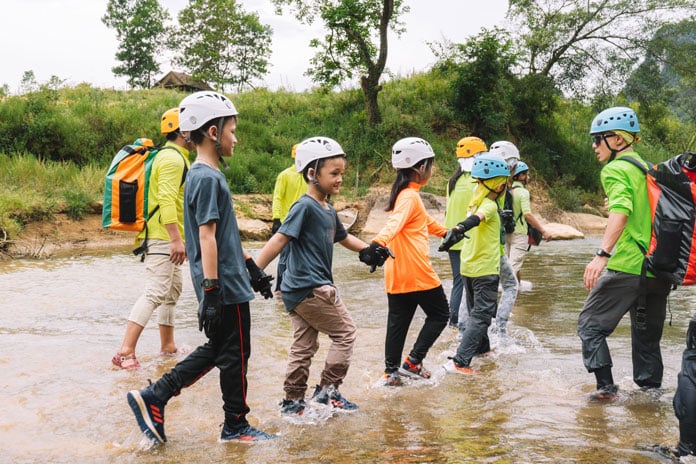
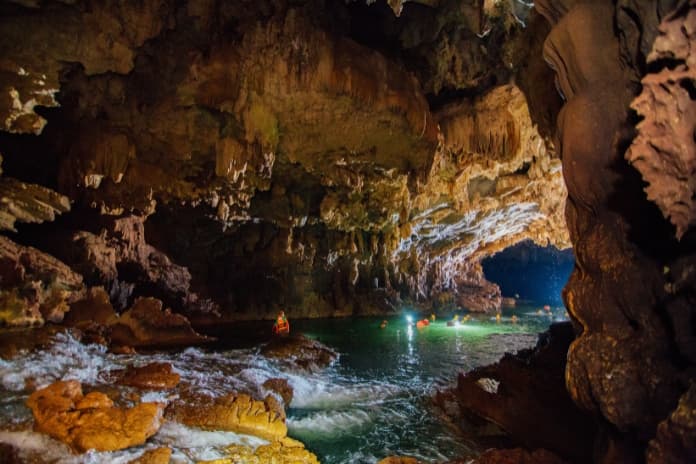
Exploring these caves isn't just sightseeing, it's a real adventure. You'll walk several kilometers through thick rainforest, cross rivers, climb over rocky paths, and sometimes even abseil down walls or swim through underground passages. But the reward is worth it, massive cave chambers, tall stalagmites, sunlight beaming down through sinkholes, and the chance to sleep deep inside a cave for the night.
Beyond the caves, Phong Nha offers plenty of outdoor adventures. Soar across the river on a zipline at Chay River, paddle a kayak on emerald waters, enjoy a natural mud bath inside the Dark cave, or cool off in the refreshing streams of Mooc Spring.
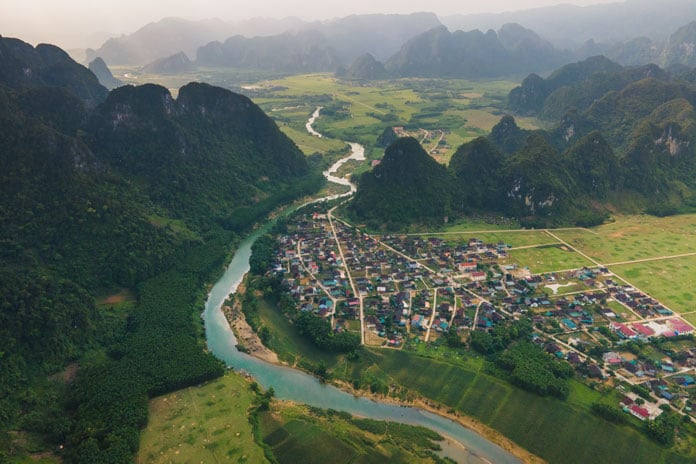
After days of adventure, slow down and experience another side of Phong Nha, one of the places to go in Asia where adventure and countryside charm meet in equal measure. Relax at a nature retreat like Blue Diamond Retreat or Chay Lap Farmstay, visit The Duck Stop to try the famous "duck leader" experience, and enjoy freshly grilled free-range chicken at a countryside garden restaurant. It's the perfect way to discover the charm of rural Vietnam beyond its world-famous caves.
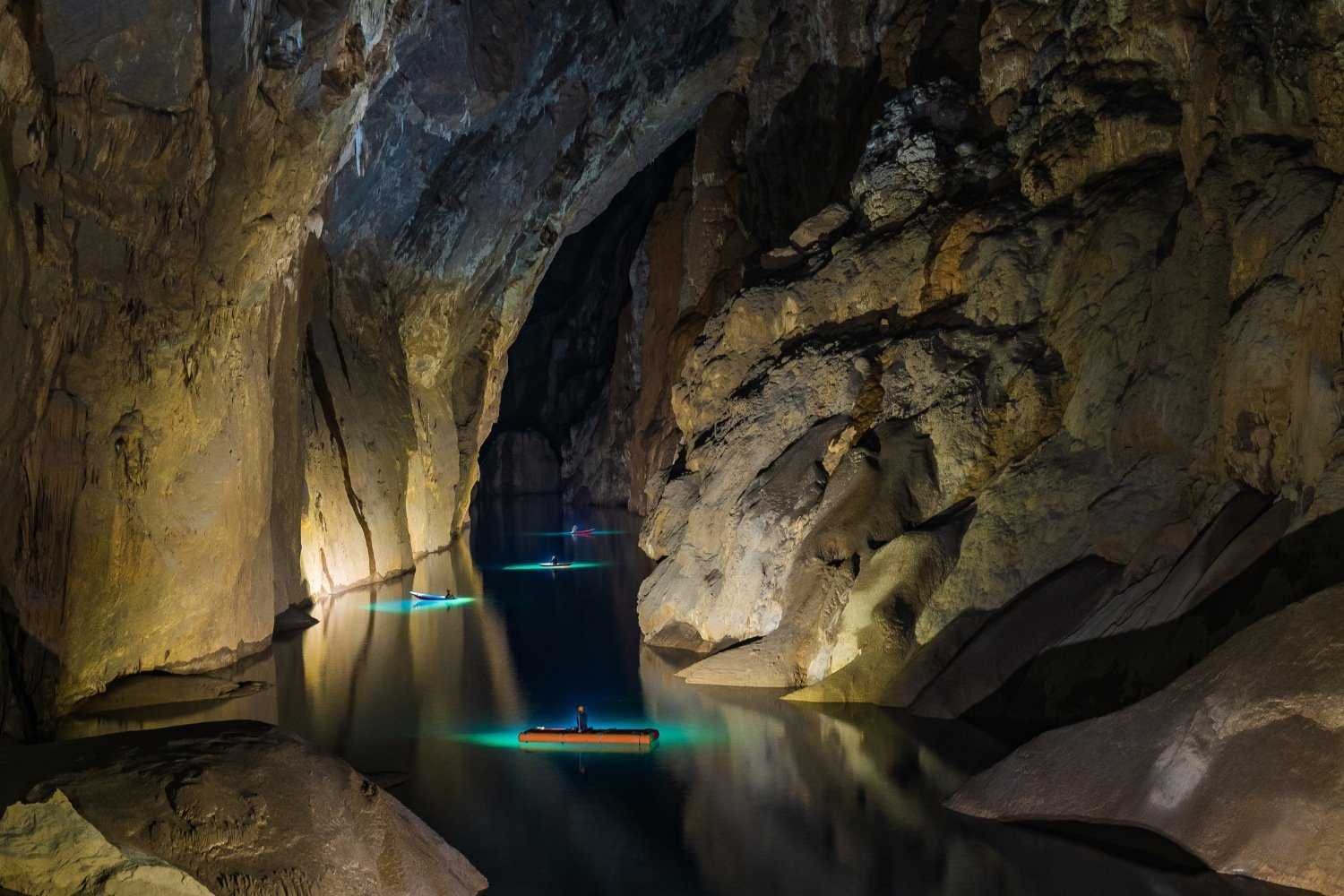
The underground river at the far end of Son Doong Cave, the world's largest cave.
5. Ha Long Bay, Vietnam
Ha Long Bay is only 165 kilometers from Hanoi, in the northeast of Vietnam, and it's easy to see why it ranks among the famous places in Asia that live up to every bit of their reputation. It is a place that looks almost too beautiful to be real. The bay has 1,969 limestone islands rising out of calm, green-blue water. Many visitors stop and stare when they first see it. UNESCO made it a World Natural Heritage Site in 1994, and it has become even more famous since then.
When you take a boat trip, you can watch the islands pass by for hours. Each one has its own shape, and some look like animals or objects. Local people gave many of them names, like Hon Ga Choi, Hon Lu Huong, and Hon Canh Buom. But it's also fun to look at the rocks and decide for yourself what they look like. Inside some islands, you can find amazing caves, such as Sung Sot Cave, Thien Cung Cave, and Đau Go Cave. Light shines through the caves in a beautiful way that is hard to describe, you really need to see it yourself.
If this is your first time visiting, there are many tours for different budgets and travel styles, which is exactly why Ha Long Bay consistently ranks among Asia's top places to visit no matter your trip length or budget. Some people choose a one-day trip, but many now prefer an overnight cruise. This way, they can slow down and enjoy the bay more. You can wake up in the middle of the bay and watch the sunrise, go kayaking in a quiet area, swim in the sea, or just relax on the boat with a coffee.
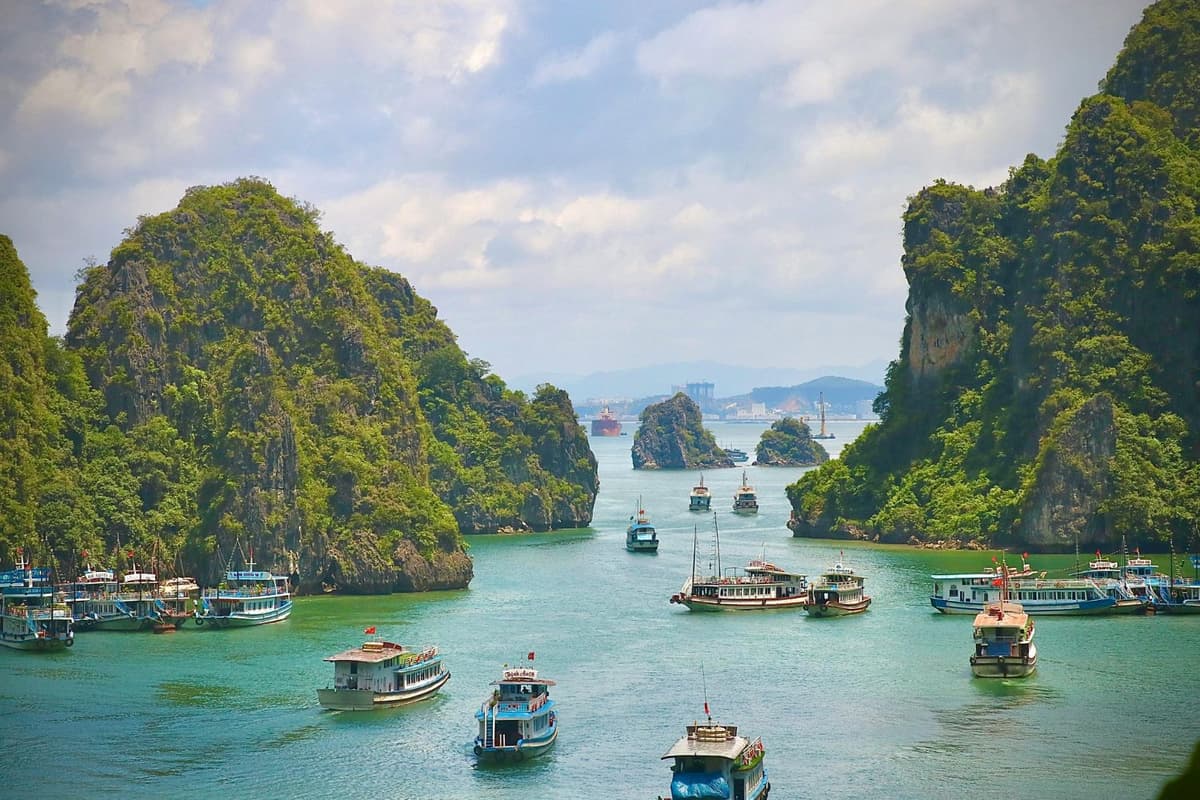
The emerald waters and limestone karsts of Ha Long Bay, a UNESCO World Heritage Site.
6. Bangkok, Thailand
Bangkok, the capital of Thailand, is one of the most vibrant cities in Asia and one of the best cities to visit in Asia for anyone seeking a perfect blend of tradition and modern energy. From gleaming golden temples to bustling markets and glamorous malls, Bangkok has a way of satisfying every kind of traveler.
No trip here is complete without the Grand Palace, a dazzling complex of golden spires and intricate mosaics built in 1782 for Thailand's kings. Inside its grounds sits Wat Phra Kaew, home to the sacred Emerald Buddha. Just across the river, Wat Arun rises in a towering spire covered in colorful ceramic pieces, glowing beautifully at sunset, while the nearby Wat Pho houses a massive 46-meter reclining golden Buddha and is considered the birthplace of traditional Thai massage.
For shopping, Bangkok truly earns its title as Southeast Asia's shopping paradise. Chatuchak Weekend Market, the largest weekend market in the world, offers everything from vintage finds to street food across more than 15,000 stalls, while ICONSIAM impresses with its riverside luxury and SookSiam, an indoor floating market celebrating Thailand's regional cultures, another reason this city keeps showing up on lists of famous places in Asia.
And when night falls, Yaowarat Road comes alive in a blaze of neon, its Chinatown streets filled with sizzling street food, from grilled seafood to mango sticky rice, making it one of the most exciting places to go in Asia to eat after dark.
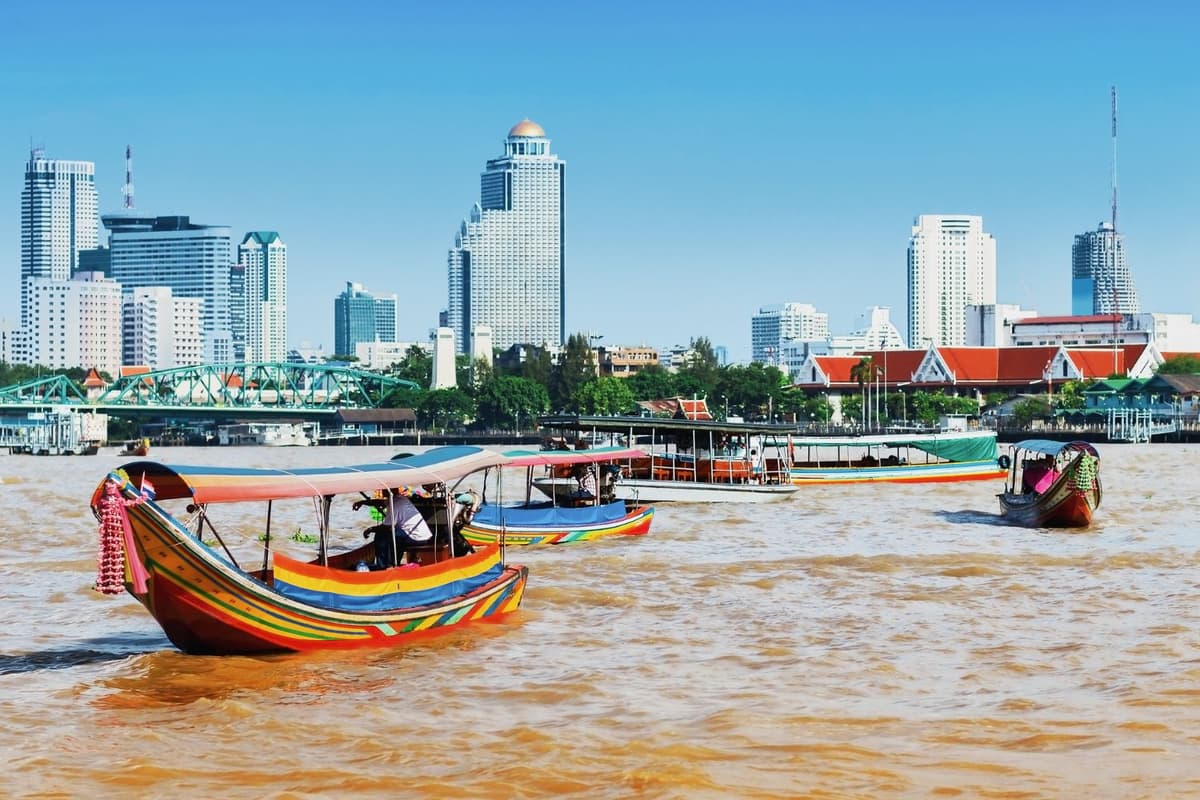
Bangkok - A vibrant city shaped by the Chao Phraya River.
7. Con Dao Island, Vietnam
Once known as "hell on earth" during Vietnam's colonial past, Con Dao Island has transformed into one of the most captivating islands in the country. Today it offers a striking mix of history, spirituality, and untouched natural beauty. History comes alive at the Con Dao Prison Complex, built by French and later American forces to hold Vietnamese revolutionary prisoners. Walking through sites like Phu Hai Camp, and the infamous "Tiger Cages," gives visitors a powerful sense of the island's dark past and the resilience of those who survived it.
For a lighter side of the island, head to Dam Trau Beach, widely considered Con Dao's most beautiful stretch of coastline, with soft golden sand, blue water, and dramatic rock formations. Since it sits right next to Co Ong Airport, you can even catch planes gliding low overhead as they land. Nature lovers shouldn't miss Con Dao National Park, where rainforest meets the sea. Trekking trails here lead through untouched jungle, home to rare wildlife and some of the freshest air in Vietnam.
For something truly special, visit Bay Canh Island, home to the largest sea turtle nesting ground in the country. From April to October, an overnight stay arranged through the national park lets you watch mother turtles lay their eggs, and even help release baby turtles into the sea.
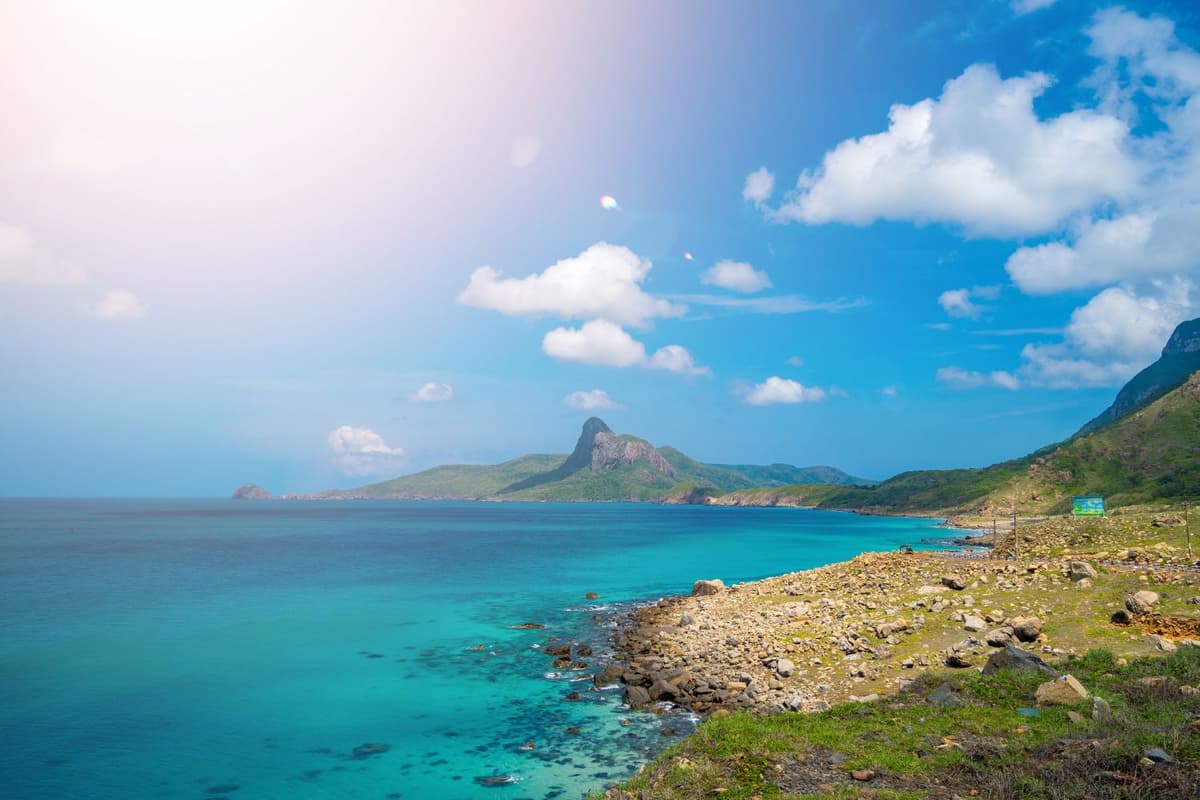
The untouched coastline of Con Dao Island invites you to slow down and reconnect with nature.
8. Ladakh, Indian Himalayas
High in the Indian Himalayas, Ladakh offers a landscape unlike almost anywhere else in Asia. This remote region trades palm trees and rice paddies for barren moonscapes, turquoise lakes, and monasteries clinging to cliffsides, earning it the name "Little Tibet." If you're searching for somewhere that feels genuinely otherworldly, this is it.
Start in Leh, the region's capital, where the thin mountain air and golden evening light make everything feel a little more magical. Climb up to Shanti Stupa at sunset, and watch as the entire valley turns gold beneath a giant golden Buddha statue, the snow-capped peaks glowing pink in the distance. Not far away, Thiksey Monastery rises from a hillside like something out of a storybook, its whitewashed walls stacked twelve levels high, echoing Tibet's legendary Potala Palace. Step inside, and the scent of butter lamps and the low hum of chanting monks pull you into a world that feels centuries removed from anywhere else.
Then there's Pangong Tso, a lake so vast and so vividly blue it barely looks real. Stretched beneath jagged brown mountains at 4,250 meters, its water shifts from turquoise to deep sapphire as the sun moves across the sky, a scene made famous by the Bollywood hit "3 Idiots." Spend the night camping on its shores, and you'll wake up to the lake glowing all over again at sunrise, silence all around you.
For something even more surreal, head to Nubra Valley, where towering sand dunes rise improbably in the shadow of snow-covered mountains. Climb aboard a shaggy, double-humped Bactrian camel, found only in this corner of the world, and ride slowly across the cold desert sand as the light turns soft in the late afternoon.
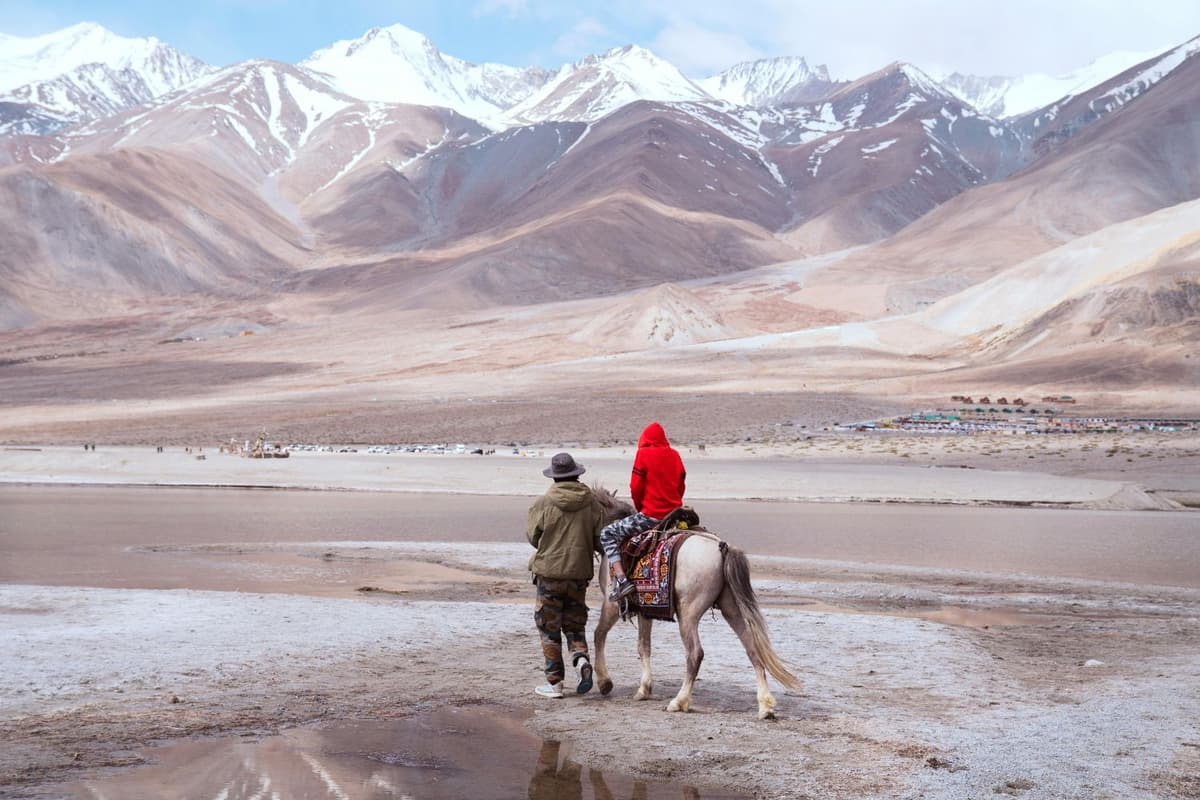
Scenic Horseback Ride in Pangong Lake, Ladakh.
9. Ninh Binh, Vietnam
Just under 100 km from Hanoi, Ninh Binh is a natural masterpiece and one of the best places to visit in Asia for travelers craving dramatic scenery. Towering limestone mountains rise above rice paddies, rivers wind through hidden caves, and centuries of history linger in the air. The landscape even served as the backdrop for "Kong: Skull Island."
The best way to see it is by boat. In Trang An, a UNESCO World Heritage Site, small wooden boats drift through crystal-clear water, mysterious caves, and past ancient riverside temples. Nearby, Tam Coc offers a similarly dreamy ride along the Ngo Dong River, passing through three caves and, during harvest season, golden rice fields framed by limestone cliffs.
For sweeping views, climb Mua Cave, often called Vietnam's mini "Great Wall." Nearly 500 steep steps lead to the top, rewarding you with one of the most beautiful places in Asia to photograph, the Ngo Dong River curving through the rice fields of Tam Coc below.
History lovers shouldn't miss Hoa Lu, Vietnam's first imperial capital, and Bai Dinh Pagoda, one of the largest religious complexes in Southeast Asia, home to the biggest bronze gold-plated Buddha in Asia.
Nature lovers can explore Cuc Phuong National Park, Vietnam's first national park, known for ancient trees and, from late April to May, millions of white butterflies filling the forest. For something quieter, Van Long Nature Reserve offers still, mirror-like water and a chance to spot the rare Delacour's langur, making Ninh Binh one of the places to go in Asia for both adventure and calm.
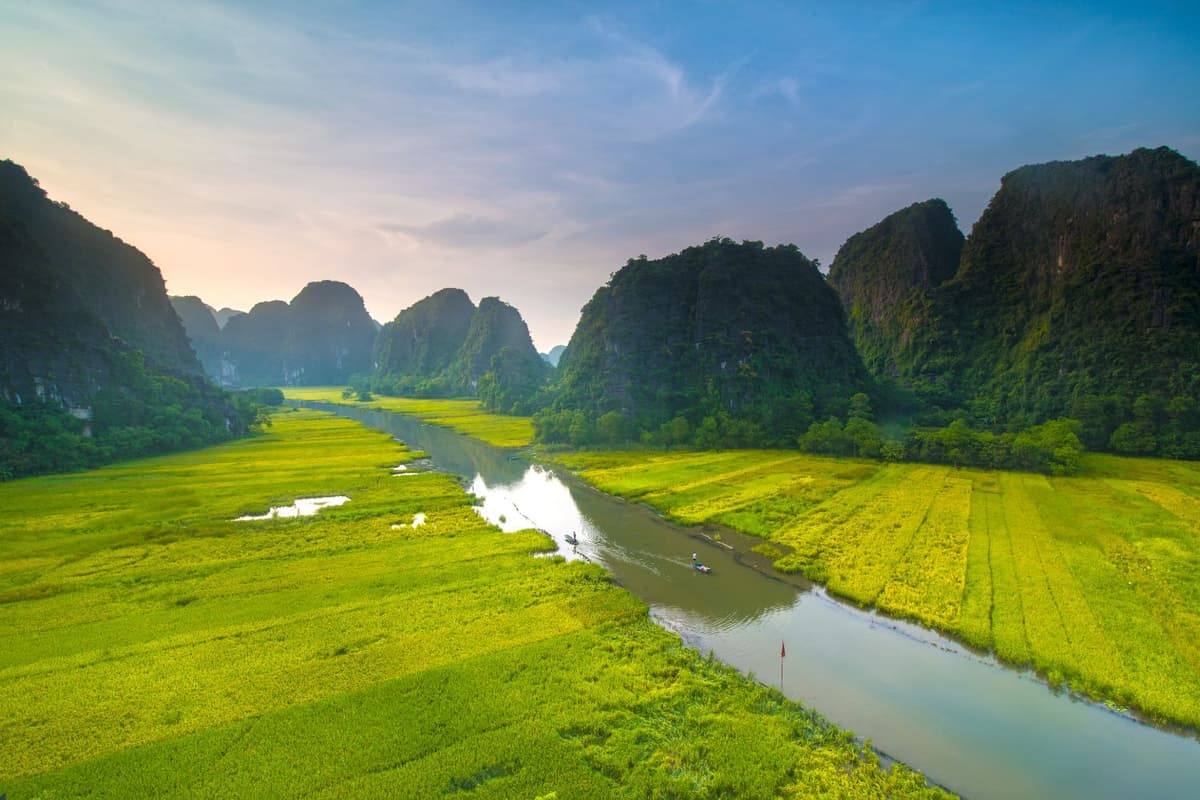
Ninh Binh unfolds in a beautiful landscape of winding rivers, green rice fields, and limestone peaks.
10. Mount Kinabalu, Malaysia
Mount Kinabalu stands 4,095 meters tall in Kota Belud, Malaysia, making it the tallest mountain in Southeast Asia and one of the best places to visit in Asia for travelers chasing an unforgettable summit sunrise. The best part is that you don't need special climbing skills to reach the top, you just need good fitness and a strong will. Most climbers take two days and one night to complete the journey. On the second day, they wake up very early, while it's still dark, and walk the last steep path up to Low's Peak. They arrive just in time to watch the sunrise rise over a sea of clouds, a moment many travelers say they will never forget.
For those who love extreme adventure, there's also the Via Ferrata, a climbing path with steel cables and steps fixed onto the rock face. It is the highest Via Ferrata in the world and the first one built in Asia, taking climbers up to heights between 3,200 and 3,600 meters, with breathtaking views down into deep valleys below.
You don't have to reach the summit to enjoy everything Kinabalu has to offer. At the base of the mountain lies Kinabalu Park, a UNESCO World Heritage Site full of natural wonders. Here, you can walk peaceful forest trails, spot rare birds, and admire unique orchid flowers found nowhere else. If you're lucky, you might even catch a glimpse of the Rafflesia, the largest flower in the world, which blooms for only a few days at a time.
Before you plan your trip, keep a few things in mind. Only 160 to 185 climbers are allowed on the mountain each day to protect its natural environment, so it's important to book your permit and tour months in advance. Climbing alone is not allowed, every visitor must be accompanied by a certified local Mountain Guide. It's also worth remembering that the Kadazan-Dusun people, who live in this region, consider Mount Kinabalu a sacred place, so travelers are encouraged to show respect throughout their visit. Finally, the best time to climb is between February and April, when the weather is usually dry and stable, giving you the best chance for clear skies and unforgettable views.
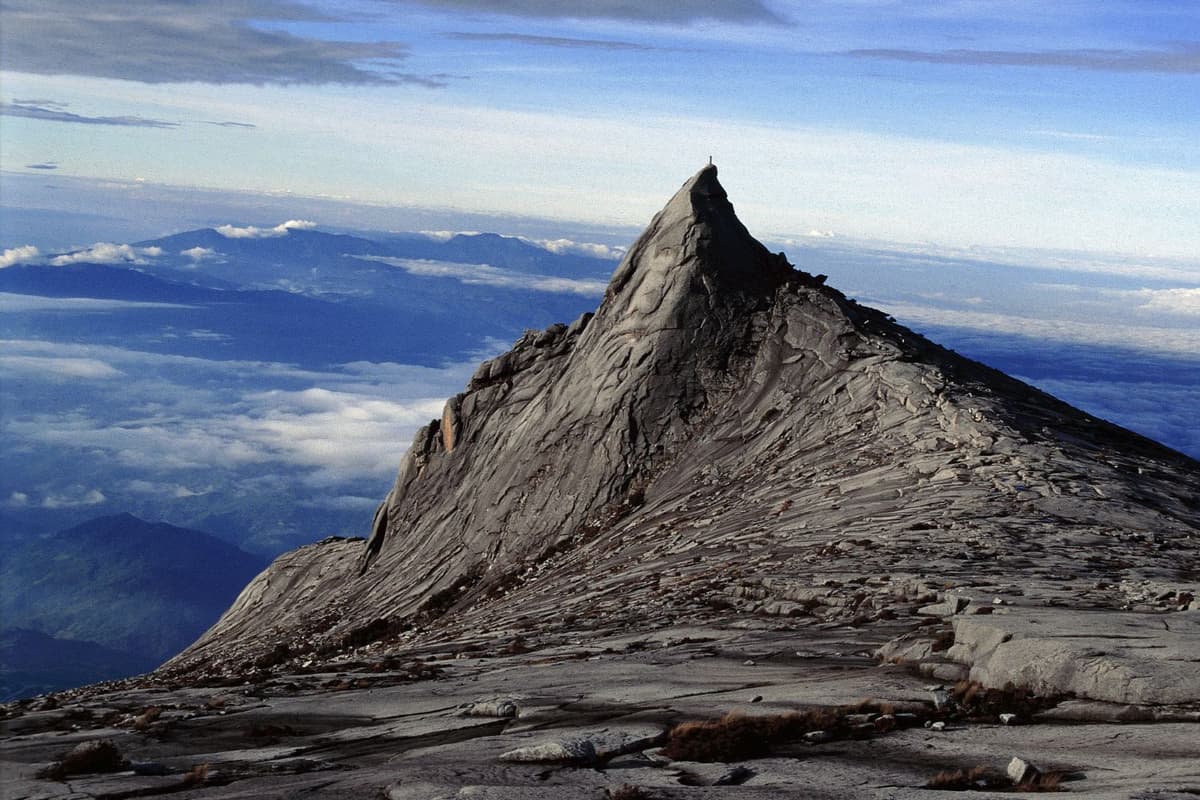
The majestic granite peaks of Mount Kinabalu, Malaysia's highest mountain.
11. Istanbul, Turkey
Istanbul stands as one of the world's most extraordinary cities, the only one straddling two continents, Europe and Asia, and one of the most famous places in Asia with a story unlike anywhere else. Once the capital of three great empires, Rome, Byzantium, and the Ottomans, Istanbul today blends ancient history, sacred Islamic culture, and vibrant modern life.
The city's architecture tells its story best. Hagia Sophia was the world's largest Christian church for nearly 1,000 years before becoming a mosque, then a museum, and now a mosque again, with a massive dome and glowing gold mosaics. Just across the square, the Blue Mosque gets its name from the tens of thousands of hand-painted Iznik tiles lining its walls, casting the space in a soft blue glow.
For a deeper look into the past, Topkapi Palace, home to Ottoman sultans for 400 years, feels like a city within a city, filled with grand courtyards and royal treasures. Beneath the streets, the Basilica Cistern offers an eerie, atmospheric walk among towering marble columns rising from still water.
Shopping is an experience of its own at the Grand Bazaar, one of the world's oldest covered markets with over 4,000 shops, and the nearby Spice Bazaar, filled with the scent of spices, tea, and Turkish Delight. To see it all from the water, take a sunset boat ride along the Bosphorus Strait, passing palaces, traditional wooden houses, and old fortresses, one of the best places to travel in Asia for watching two continents meet.
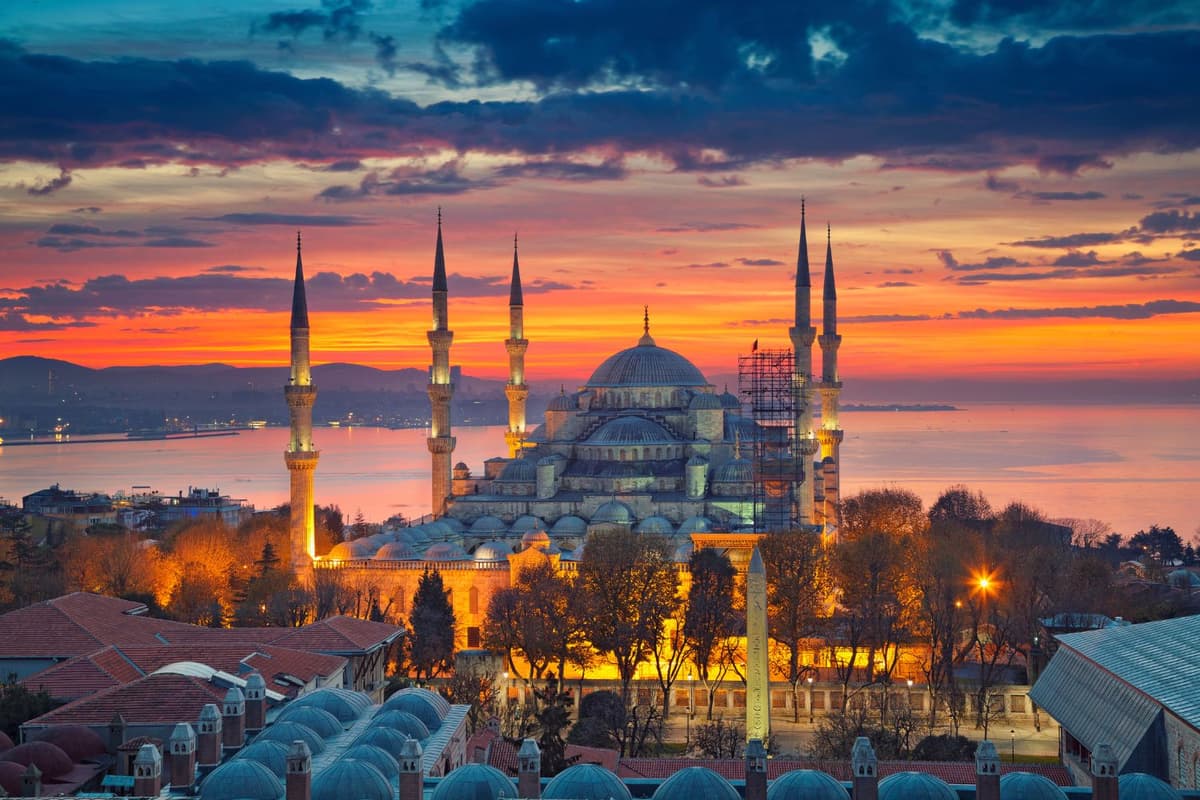
The Blue Mosque in Istanbul, Turkey.
12. Komodo National Park, Indonesia
Home to the Komodo dragon, the largest living lizard on Earth, Komodo National Park stands as one of Indonesia's most extraordinary natural treasures and one of the best places in Asia to visit for a genuine encounter with the wild. Found nowhere else on the planet, these ancient predators can grow up to 3 meters in length, drawing travelers and scientists from around the world. Accompanied by an experienced park ranger, visitors can trek through the wild, sun-baked forests of Komodo or Rinca Island for a rare and unforgettable encounter with these prehistoric giants roaming freely in their natural habitat.
For those seeking breathtaking panoramas, the climb up Padar Island is not to be missed. The ascent takes some effort under the tropical sun, but the view from the summit makes every step worthwhile. Three sweeping bays curve around dramatic, jagged hills, each cradling a beach of a different color, white, black, and rose pink. It is widely regarded as one of the most iconic and photographed viewpoints in all of Southeast Asia, particularly at sunrise, when the landscape glows in soft golden light.
Down at sea level, Pink Beach offers an equally remarkable experience, and it easily ranks among the most beautiful places in Asia for a beach that looks nothing like any other. Its delicate rose-colored sand, tinted naturally by fragments of red coral, meets waters so clear and turquoise they seem almost painted. Here, travelers can swim, unwind, or simply take in the beauty of one of the most unique beaches found anywhere in the world.
But perhaps the best part of the trip happens after the sun goes down. Instead of staying in a hotel, most travelers spend the night on a traditional wooden Phinisi boat, sailing slowly between quiet, untouched islands over several days. Falling asleep to the sound of the sea, waking up to nothing but ocean all around, and looking up at a sky full of stars are the moments that make a trip to Komodo National Park truly unforgettable.
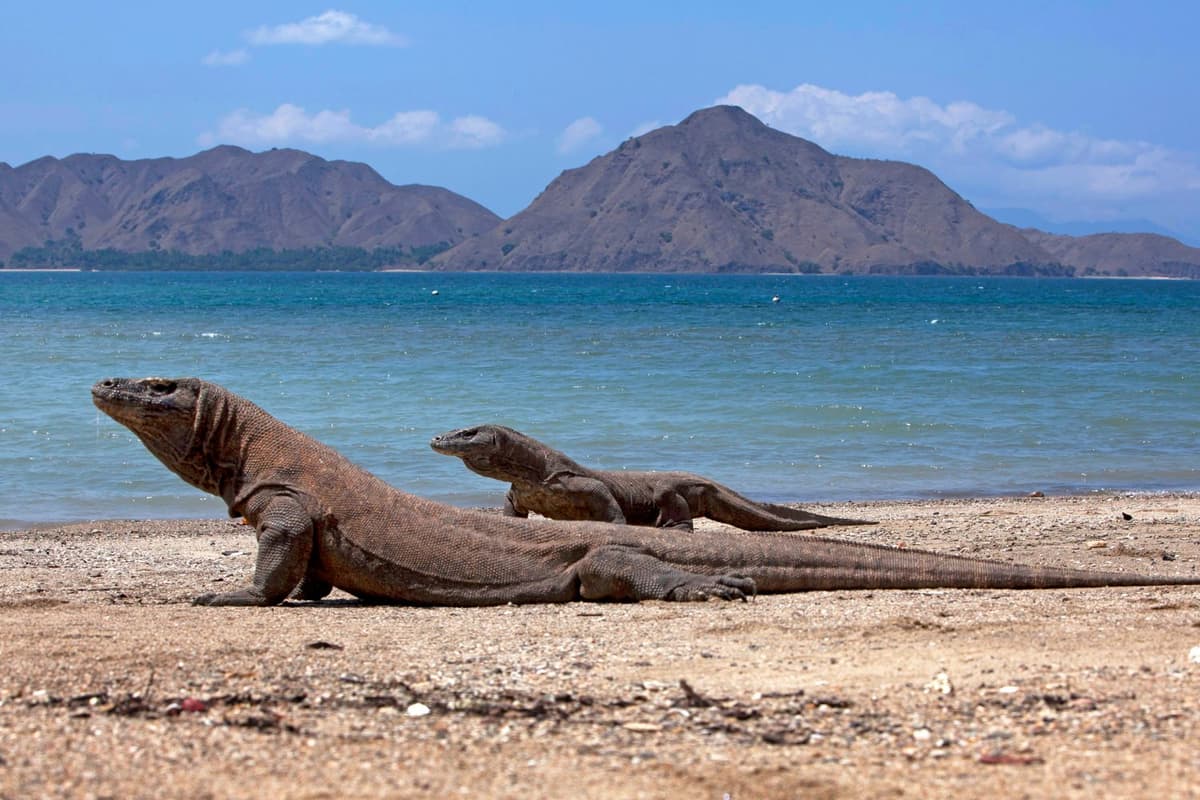
Komodo Dragons on the Beach.
13. Khao Yai National Park, Thailand
Located just two to three hours from Bangkok, Khao Yai feels like a completely different world, and it's easy to see why it consistently ranks among the best places to visit in Asia. As the first national park in Thailand and a UNESCO World Heritage Site, this vast wilderness covering 2,168 square kilometers is the second largest in the country. It is home to elephants, tigers, gaur, gibbons, hornbills, and more, including the largest population of wild elephants left in Thailand today.
The Night Safari in the park is an experience you should not miss. Riding through the darkness in an open jeep while rangers sweep spotlights through the trees in search of nocturnal wildlife is genuinely thrilling. Spotting a herd of wild elephants crossing the road is a moment you will never forget. By day, easy scenic treks lead to some of the most beautiful waterfalls in the park. Haew Suwat is famous as the filming location for the cliff jump by Leonardo DiCaprio in the movie The Beach. Haew Narok is even more breathtaking, plunging 150 meters through a cool and misty haze as the largest and most powerful falls in the area.
For travelers who love a great view, the climb to Nong Phak Chi watchtower rewards you with sweeping vistas over open grassland. Pha Diao Dai, also known as Lonely Cliff, offers one of the most magical sunrise views in Thailand, with mountains rising through a sea of morning mist. For the full experience, you can spend a night camping beside Lam Ta Khong Lake, which is exactly why this park keeps showing up on every list of places to go in Asia for wildlife and stargazing alike. Falling asleep under a canopy of stars and waking up to birdsong and wild deer grazing calmly nearby is the kind of moment that stays with you long after the trip ends.
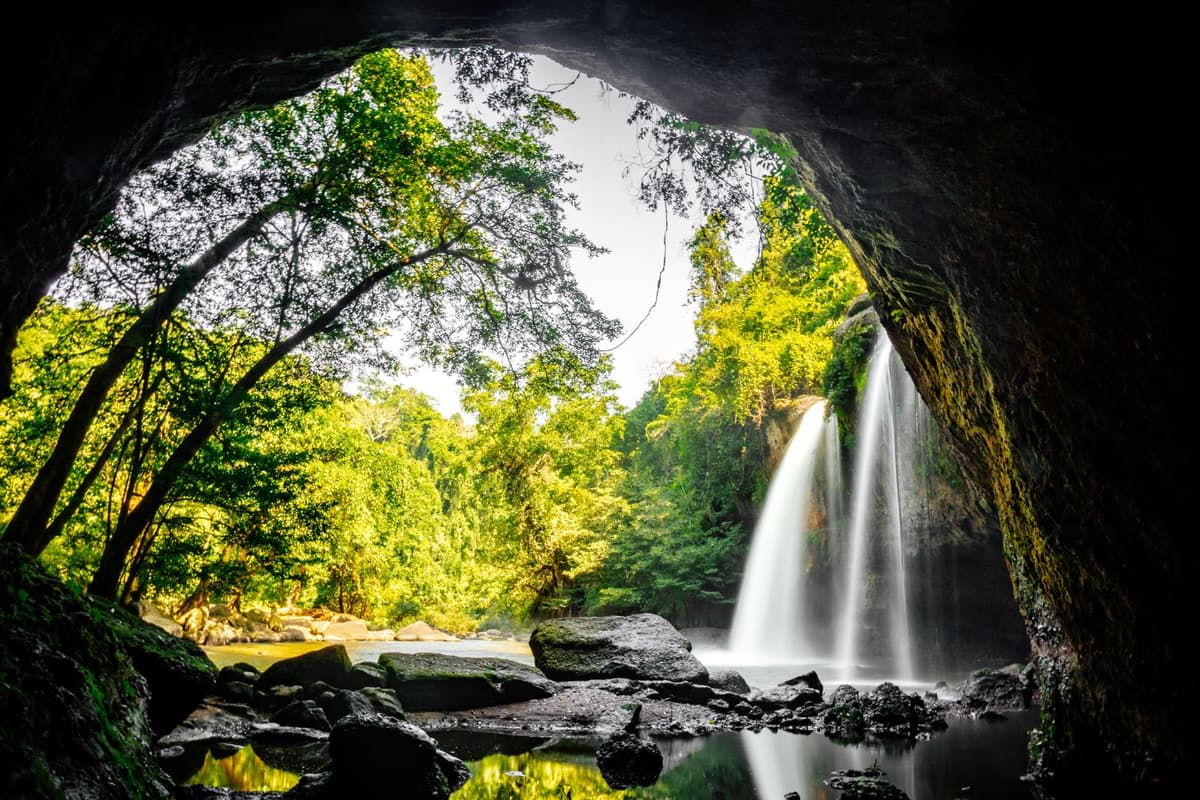
Haew Suwat Waterfall in Khao Yai National Park.
14. Mount Bromo, Indonesia
Set within Bromo Tengger Semeru National Park in East Java, Mount Bromo is one of Indonesia's most famous active volcanoes and one of the most beautiful places in Asia for a sunrise you won't forget. With its vast sea of sand, constant plumes of white smoke drifting from the crater, and dramatic mountains rising all around, Bromo offers one of the most striking natural experiences in Southeast Asia.
If you love a spectacular view, watching the sunrise here is an absolute must. Head out by jeep, or trek on foot, to well-known viewpoints like Penanjakan 1, Seruni Point, King Kong Hill, or Love Hill. From there, you'll watch the sun slowly rise above a sea of clouds, casting a golden glow over Mount Bromo, Mount Batok, and Mount Semeru in the distance. It's also the perfect moment to capture some of the most iconic photos the park has to offer.
For travelers who want to get closer to the action, hiking up to the crater of Mount Bromo is well worth the effort. After crossing the park's famous "Sea of Sand," it only takes around 250 steps to reach the crater rim, where you can watch sulfur smoke rising steadily from deep within the volcano. The trail isn't too demanding, making it accessible for most visitors with an average fitness level, another reason this park keeps appearing on lists of top 10 tourist destinations in Asia. If you'd rather skip the walk across the sand, local horses are also available to rent.
Beyond the landscape, Bromo is also home to the Tengger people, a Hindu community that has lived around the volcano for generations. Staying overnight in Cemoro Lawang village gives you the chance to experience local life firsthand, camp under a sky full of stars, and if your visit coincides with the Yadnya Kasada festival, witness the remarkable ritual of offerings being cast into the crater.
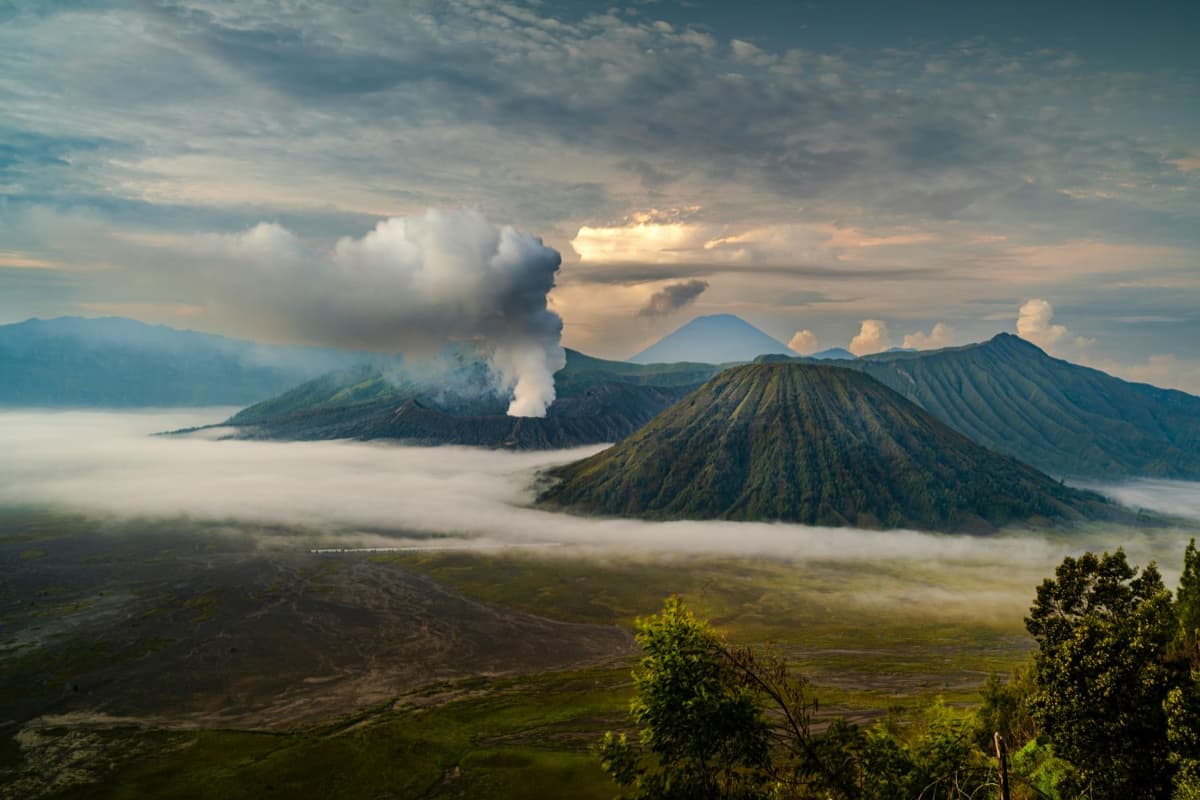
Majestic View of Mount Bromo at Sunrise.
15. Jeju Island, South Korea
Jeju Island welcomes you just a 90-minute flight from Busan, standing as South Korea's largest island and a dream destination for nature lovers, which is exactly why it ranks among the best places to visit in Asia. Formed by volcanic activity millions of years ago, Jeju is packed with diverse landscapes, from towering peaks and pristine beaches to waterfalls and unique lava caves.
For those who love the outdoors, Jeju offers something for every fitness level. Adventurous hikers can tackle Hallasan, South Korea's highest mountain, following trails through untouched forest before reaching the Baengnokdam crater at the summit. For an easier hike, Seongsan Ilchulbong, or Sunrise Peak, is a must. This UNESCO-listed extinct volcanic crater only takes 30 to 40 minutes to climb, rewarding visitors with a stunning sunrise and sweeping views over Jeju's coastline.
Beach lovers will find plenty to love here too. Hyeopjae Beach is known for its turquoise water and soft white sand, Hamdeok Beach's shallow, calm waters make it perfect for swimming and watching the sunset, and Gwakji Beach is a favorite for kayaking and stand-up paddleboarding. It's no surprise these coastlines keep turning up on lists of Asia's top places to visit. Nature lovers shouldn't miss Manjanggul Cave, one of the world's finest lava tube caves, the elegant Cheonjiyeon Waterfall, or Jusangjeolli Cliff, where dramatic hexagonal basalt columns were formed when flowing lava met the sea.
Beyond its natural beauty, Jeju also offers a glimpse into local culture at Seongeup Folk Village, one of the quieter places in Asia where old island traditions still live on. This has traditional thatched-roof houses, volcanic stone walls, and centuries-old island customs are still preserved today. After a day of exploring, be sure to try Jeju's famous black pork, fresh abalone, octopus, grilled hairtail fish, and the island's sweet, tangy citrus, known as Jeju tangerines.
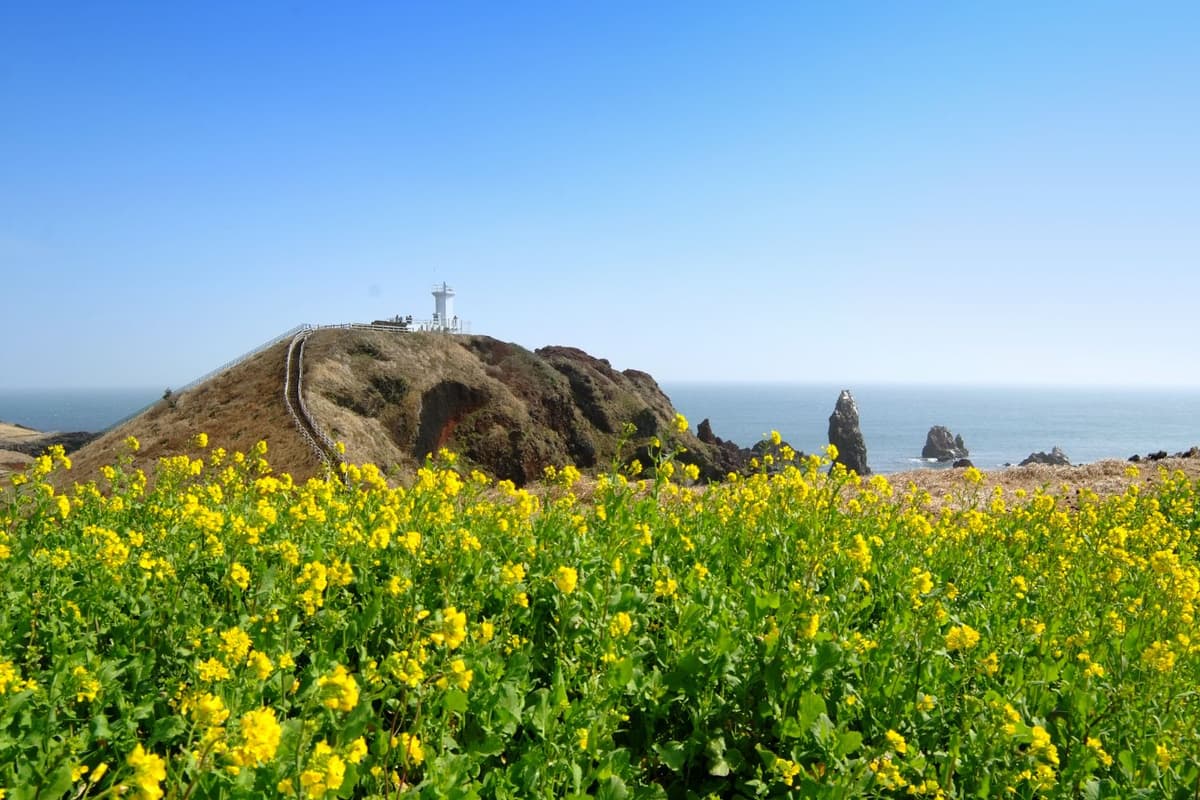
Vibrant yellow canola fields covering the landscapes of Jeju Island each spring.
16. El Nido, Philippines
El Nido sits at the northern tip of Palawan, about an hour's flight from Manila, and stands out as one of the most beautiful places in Asia for coastal scenery. With nearly 50 limestone islands rising from turquoise water, white-sand beaches, and rich marine life, it's one of the most beautiful coastal spots in the Philippines.
The top experience here is island hopping by traditional wooden boat, called a bangka. Tours take you to spots like Big Lagoon, Small Lagoon, Secret Beach, and Hidden Beach, where you can kayak between limestone cliffs, swim in clear water, and snorkel over colorful coral reefs. It's easy to enjoy, and it's the best way to see El Nido's beauty up close.
For a slower pace, visit Nacpan Beach, a long stretch of golden sand lined with palm trees, or watch the sunset at Las Cabañas Beach, one of the island's prettiest spots. If you want more excitement, try the zipline over the ocean for great views of the coast. For adventurous travelers, Taraw Cliff offers one of the best views of El Nido, but it takes a tough climb to get there, which is exactly why it keeps appearing on lists of places to go in Asia for travelers chasing a challenge. Don't miss Snake Island either, a curvy, S-shaped sandbar that only appears at low tide.
After a day on the water, enjoy fresh, affordable seafood, a bowl of Sinigang soup, or roasted Lechon pork. If you're feeling adventurous, try Tamilok, a famous local dish from Palawan. With beaches, nature, and water activities all in one place, El Nido is a great choice for any trip to the Philippines.
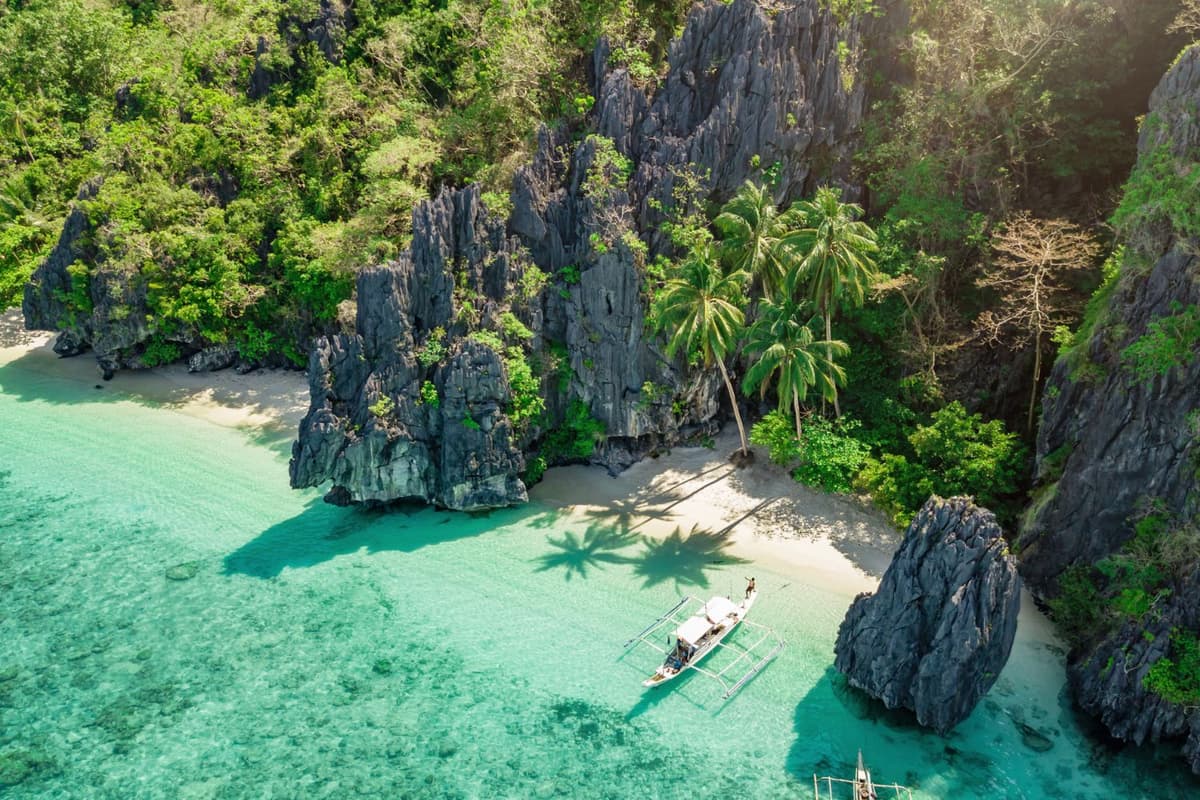
The crystal-clear waters and white sand beaches of El Nido, Palawan, Philippines.
17. Wadi Rum, Jordan
Wadi Rum lies in southern Jordan, about 300 km from Amman, and people often call it "Mars on Earth," making it one of the famous places in Asia unlike anywhere else on the continent. Here you'll find huge sandstone mountains, wide red sand valleys, and rock formations shaped by wind and time over millions of years. The scenery looks so otherworldly that it has been used as a filming location for famous movies like The Martian, Dune, Star Wars, and Lawrence of Arabia. The area is also home to thousands of ancient rock carvings and inscriptions, telling stories from over 12,000 years of human history.
The best way to explore Wadi Rum is by jeep tour. These rides take you across red sand dunes and through narrow canyons, with stops at popular spots like Lawrence's Spring, Khazali Canyon and its ancient rock art, and Burdah Rock Bridge, one of the highest natural stone arches in the world.
To really enjoy the desert, try to spend at least one night here, an experience that easily earns Wadi Rum its spot among the best places to travel in Asia for something completely different. You can stay in a traditional Bedouin tent, or try glamping in a glass tent under the open sky. When night falls, the sky fills with thousands of stars, since there's almost no light pollution out here. Many visitors also love riding a camel to watch the sunrise or sunset over the desert. Don't forget to try Zarb, a traditional Bedouin dish made by slow-cooking meat in an oven buried under hot sand.
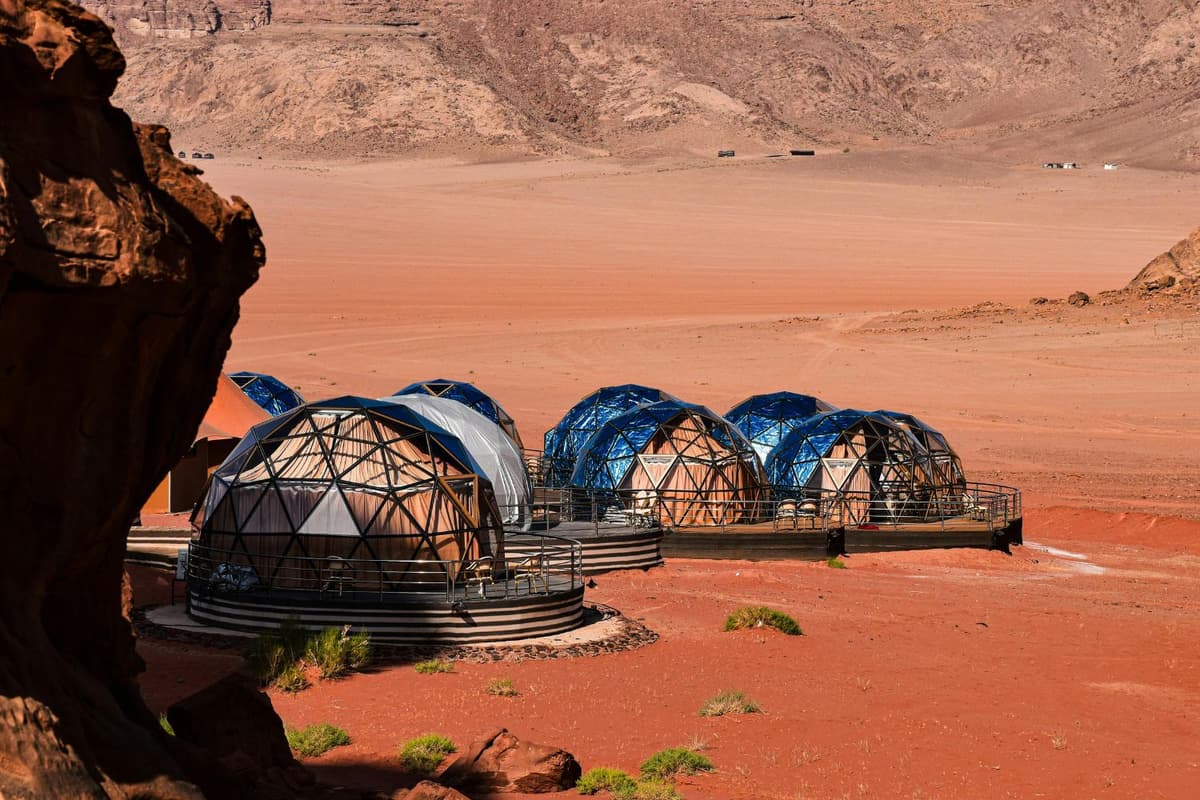
Aicha Luxury Camp on Wadi Rum Desert in Jordan.
18. Daocheng Yading, China
Daocheng Yading is one of China's most breathtaking destinations, often called "the last Shangri-La on Earth," and it's easy to see why it ranks among the best places in Asia to visit for travelers seeking untouched natural beauty. Sitting on the Qinghai-Tibet Plateau at an altitude of over 4,000 meters, it captivates visitors with towering snow-capped mountains, brilliant turquoise lakes, and vast open meadows. The highlight of any visit is seeing the "Three Sacred Mountains," a trio of peaks deeply revered by Tibetans, especially at sunrise, when golden light spreads across the snowy summits in a stunning display known as "sunlit golden mountains."
For those who love adventure, trekking to Milk Lake and Five-Color Lake is an experience not to be missed. Milk Lake stands out for its soft, milky turquoise color, framed by snow-capped peaks and white rocky terrain, while Five-Color Lake is known for its water that constantly shifts in color depending on the light, making it a sacred site in Tibetan culture. You can also take a peaceful walk across Luorong Pasture, one of the quiet places in Asia where yaks and horses graze beneath snowy mountains, or visit Chonggu Monastery to experience the serenity and beauty of Tibetan Buddhism.
With cool weather year-round and landscapes that remain largely untouched, Daocheng Yading is a perfect destination for trekkers, photographers, and anyone looking to immerse themselves in dramatic nature and rich Tibetan culture.
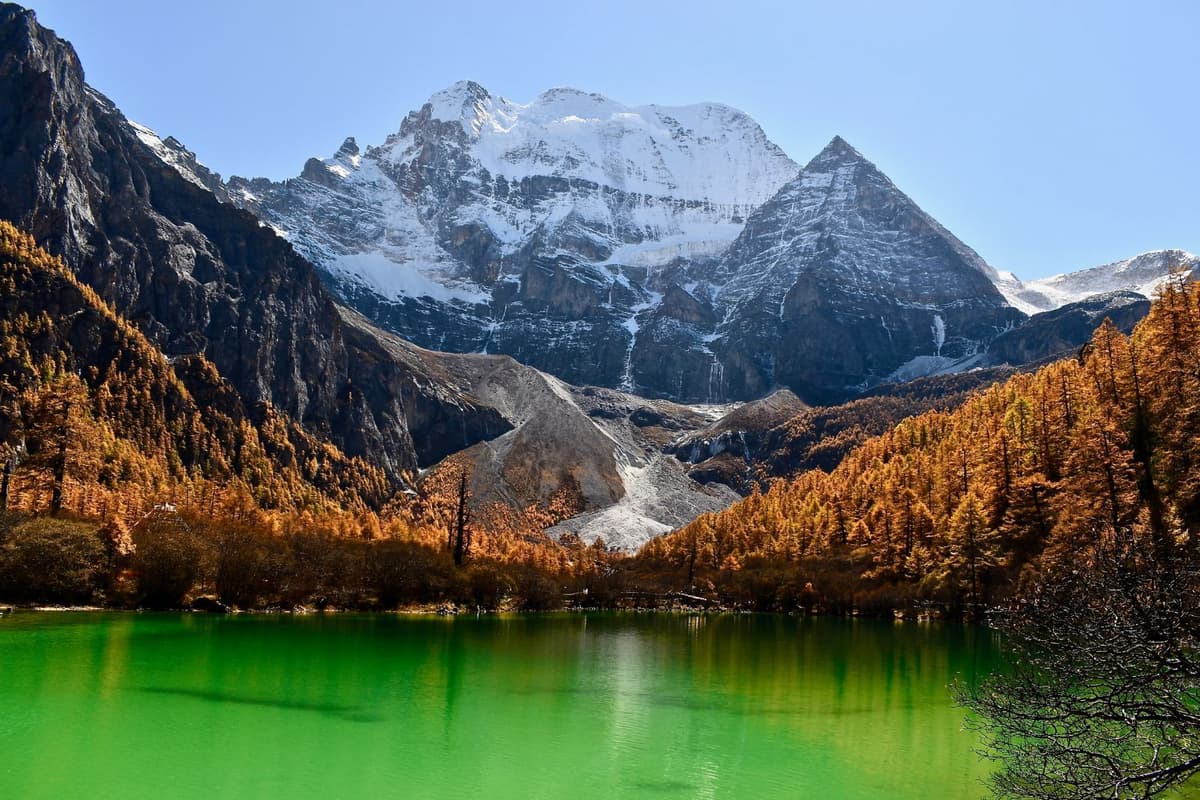
The crystal-clear waters of Pearl Lake, framed by the majestic Mt. Chenrezig (6,025 m), in Daocheng Yading Nature Reserve, Sichuan, China.
19. Cat Tien National Park, Vietnam
Cat Tien National Park is one of Vietnam's most important biosphere reserves, recognized by UNESCO for its rich, untouched ecosystem. For birdwatchers, this is one of the best places to visit in Asia, home to over 340 bird species, more than 40% of all species found in Vietnam. Photographers from around the world come here chasing rare and colorful birds like the Germain's peacock-pheasant, bar-bellied pitta, blue-rumped pitta, red-and-black broadbill, green peafowl, and the striking great hornbill with its massive curved beak.
The heart of the park is Bau Sau, or Crocodile Lake, a vast wetland home to endangered Siamese crocodiles. Getting there means renting a bike or riding part of the way by park vehicle, then trekking about 5 km through primary forest. The reward is a scene of complete stillness and wilderness, gliding by boat across the quiet lake, watching crocodiles swim freely alongside you, and catching flocks of water birds filling the sky at sunset.
Deeper in the forest, ancient giants await. The most iconic is a roughly 400-year-old Tung tree, its massive roots sprawling across the forest floor in shapes large enough to fill a room, creating a scene straight out of a fantasy film. Nearby, a hundred-trunked fig tree drapes its tangled roots over a small stream, equally mesmerizing.
For a deeper, more immersive experience, consider joining a Cat Tien Safari tour. Rather than sticking to the main trails, you'll trek alongside park rangers deep into the core zone of the forest, areas most visitors never get to see. Along the way, rangers share firsthand stories about conservation work in the park, from anti-poaching patrols to species monitoring, giving you real insight into what it takes to protect this ecosystem. As night falls, the tour continues with a night hike through the dark forest, using thermal imaging cameras to spot nocturnal wildlife that would otherwise stay completely hidden, from civets and deer to owls and other elusive creatures moving through the trees. It's a rare, hands-on way to experience Cat Tien not just as a visitor, but almost as a temporary member of the team working to protect it.
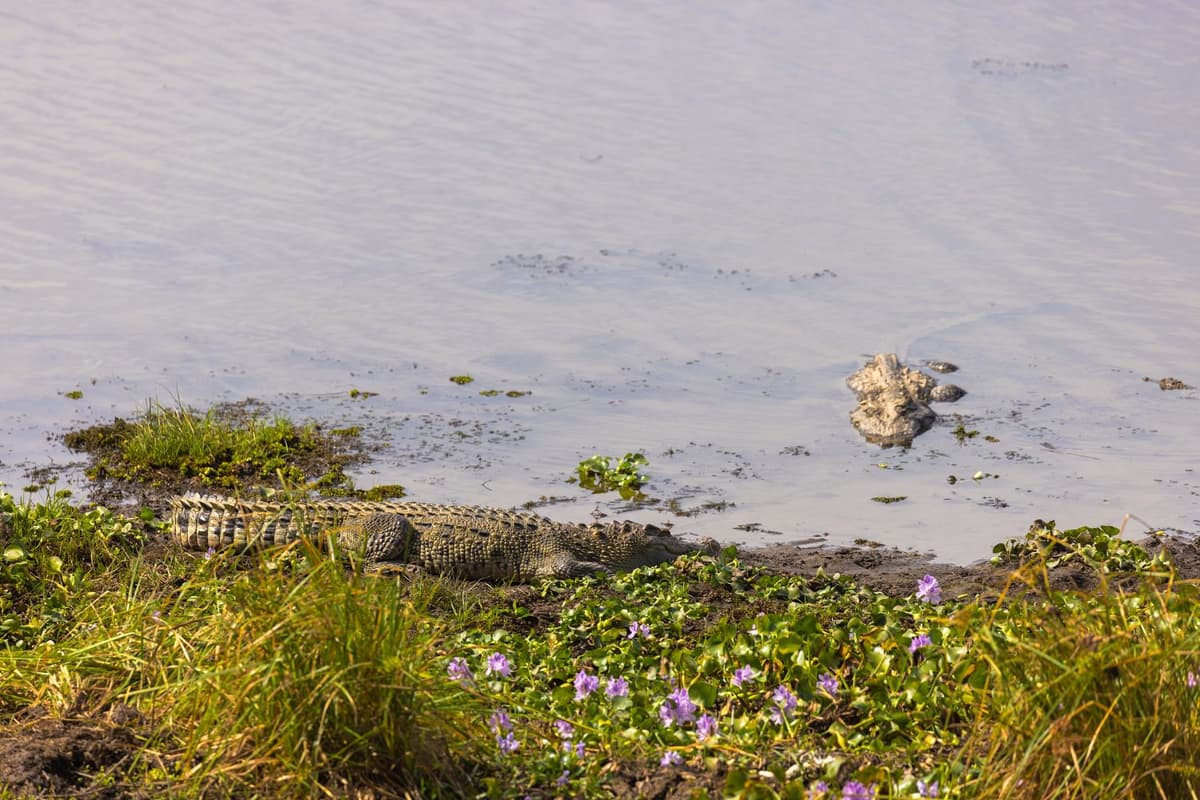
The wetlands of Cat Tien National Park offer a fascinating glimpse into Vietnam’s wild side.
20. Nusa Penida, Indonesia
Off the southeast coast of Bali, Nusa Penida offers a wilder, more dramatic beauty than the main island. With soaring limestone cliffs, crystal-clear ocean, and hidden beaches around every bend, this island has become a dream destination for adventure seekers and photographers alike.
The west coast of Nusa Penida is where most first-time visitors begin, home to the island's most iconic sights. Kelingking Beach is the star of the show, its cliffside rock formation famously shaped like a T-Rex dinosaur when viewed from above. The clifftop view alone is breathtaking, but for those with the stamina, a steep staircase leads all the way down to the pristine white sand below. Nearby, Broken Beach reveals a massive natural stone arch carved by the sea, while Angel's Billabong sits just beside it, a stunning natural infinity pool formed among coral rocks, best visited at low tide when the water is calm and glassy. Round out the west coast with Crystal Bay, one of the easiest beaches to reach, perfect for swimming, snorkeling, and watching the sunset behind a small island rising from the bay.
For travelers craving something even more raw and remote, the east coast rewards the climb. Diamond Beach lives up to its name, with jagged limestone formations rising from the sea like diamonds, reached by a striking white staircase carved into the cliffside, one of the most photographed spots in all of Bali. Not far away, Atuh Beach curves into a beautiful hidden bay, framed by cliffs, soft white sand, and gentle waves, especially magical at sunrise.
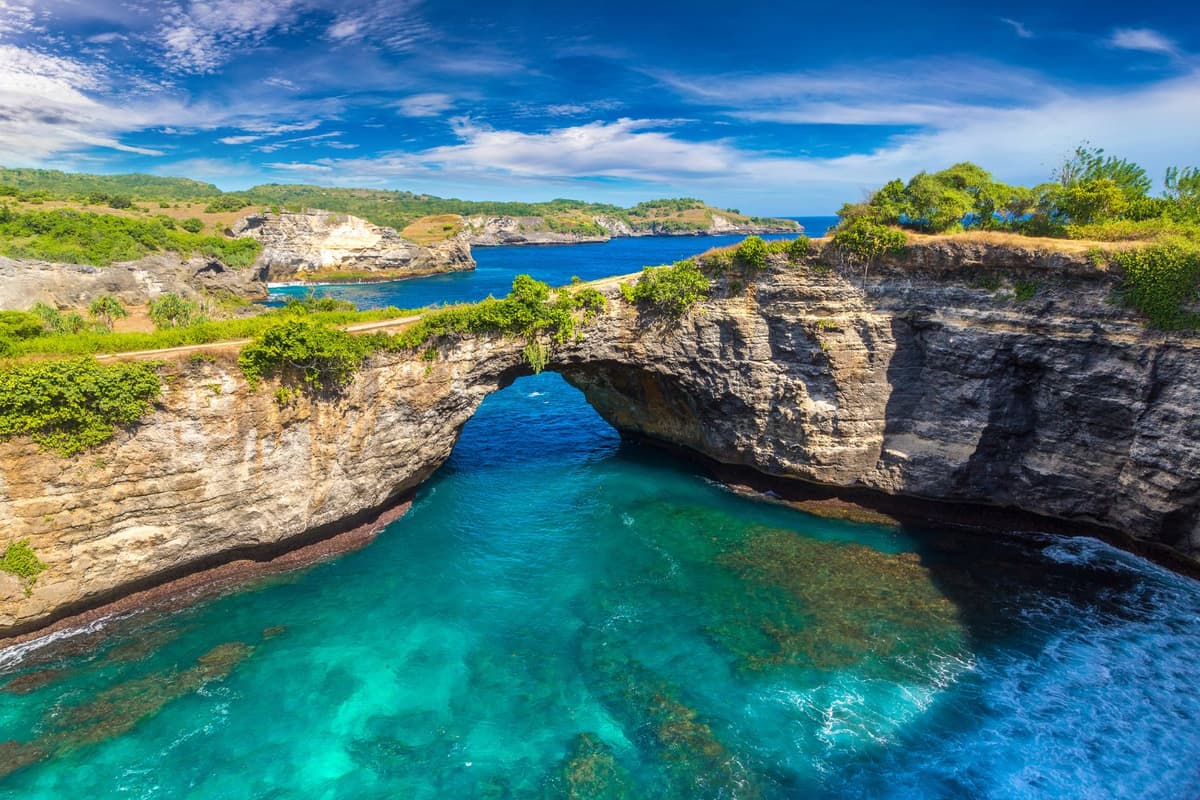
The dramatic coastline of Nusa Penida reveals some of Indonesia’s most breathtaking seascapes.
21. Siem Reap, Cambodia
In northwestern Cambodia, Siem Reap is the gateway to one of the world's greatest heritage sites, the Angkor temple complex. With ancient history, spiritual culture, and lively nightlife, it's one of Southeast Asia's most compelling destinations.
At the heart of it all is Angkor Wat, the largest religious monument on Earth, built in the 12th century with lotus-shaped towers and intricately carved corridors. The classic experience is watching sunrise here, as the temple's silhouette reflects in the still ponds below. Nearby, Angkor Thom holds the Bayon Temple, its towers carved with over 200 smiling stone faces, while Ta Prohm, made famous by "Tomb Raider," has been swallowed by giant tree roots wrapping around its crumbling walls.
Beyond the temples, Tonle Sap Lake, Southeast Asia's largest freshwater lake, is home to floating villages like Kampong Phluk, where stilted houses, floating schools, and markets drift on the water, especially beautiful at sunset. At night, the calm of the temples gives way to Pub Street, where you can enjoy a cold Angkor beer, try Khmer dishes like fish amok or beef lok lak, or watch a traditional Apsara dance show, once performed only for Khmer royalty.
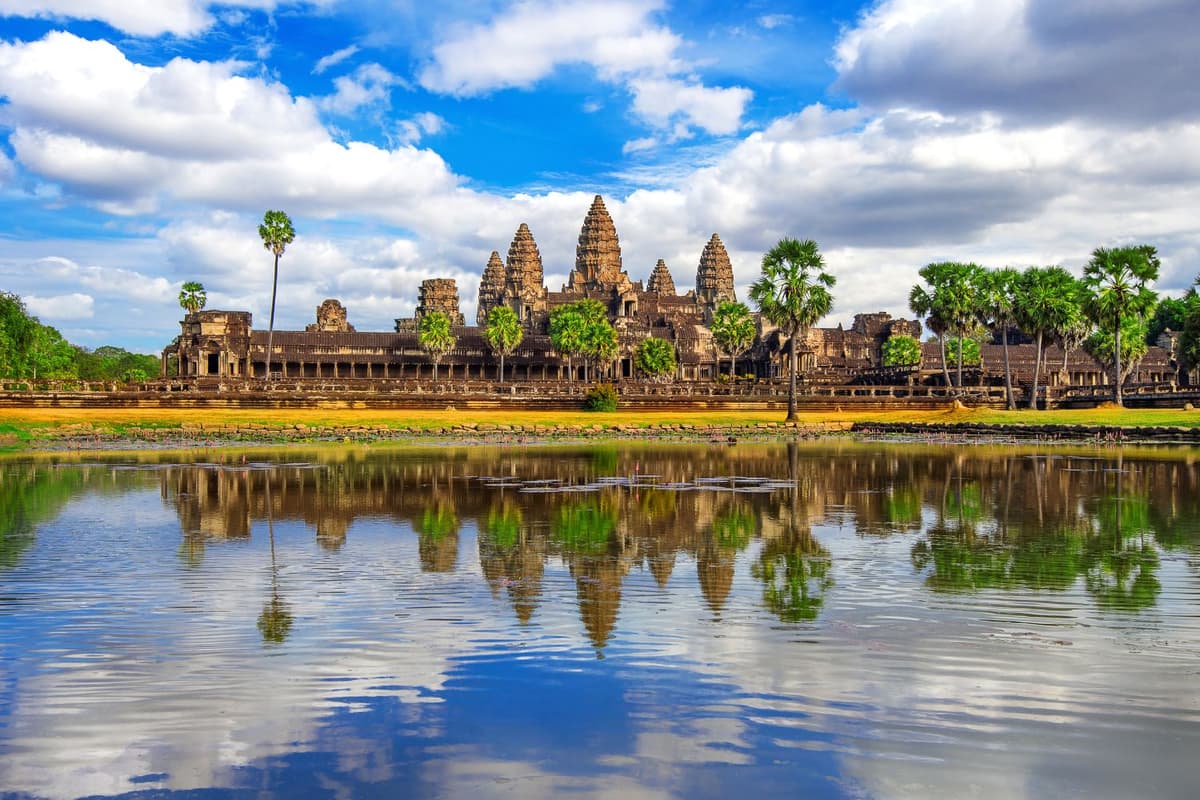
The ancient wonders of Siem Reap tell stories of a civilization that has endured for centuries.
22. Zhangjiajie National Forest Park, China
Zhangjiajie National Forest Park is a must for anyone who wants to see one of China's most amazing landscapes, and it's one of the top 10 tourist destinations in Asia for good reason. Located in Hunan Province and listed as a UNESCO World Heritage Site, it's famous for its more than 3,000 giant stone pillars rising straight up from the valley floor. The scene looks so surreal, it feels like stepping into another world. In fact, this unique landscape inspired the floating Hallelujah Mountains in the movie Avatar.
When you visit, don't miss Yuanjiajie Scenic Area, home to the Hallelujah Pillar, the real rock that inspired the film's floating mountain. You'll also find the Number One Bridge Under Heaven, a natural stone bridge connecting two mountain peaks high above the ground. Another unforgettable experience is riding the Bailong Elevator, the tallest outdoor elevator in the world. It lifts you over 320 meters up a cliff in less than two minutes.
From Tianzi Mountain Nature Reserve, you can enjoy amazing views of clouds drifting between the stone peaks below. For something more peaceful, walk along Golden Whip Stream, one of the most beautiful places in Asia for a quiet walk through untouched forest, home to playful wild monkeys. With scenery that feels like a fantasy world come to life, Zhangjiajie is perfect for nature lovers, photographers, and anyone who wants to see one of Asia's most beautiful national parks.
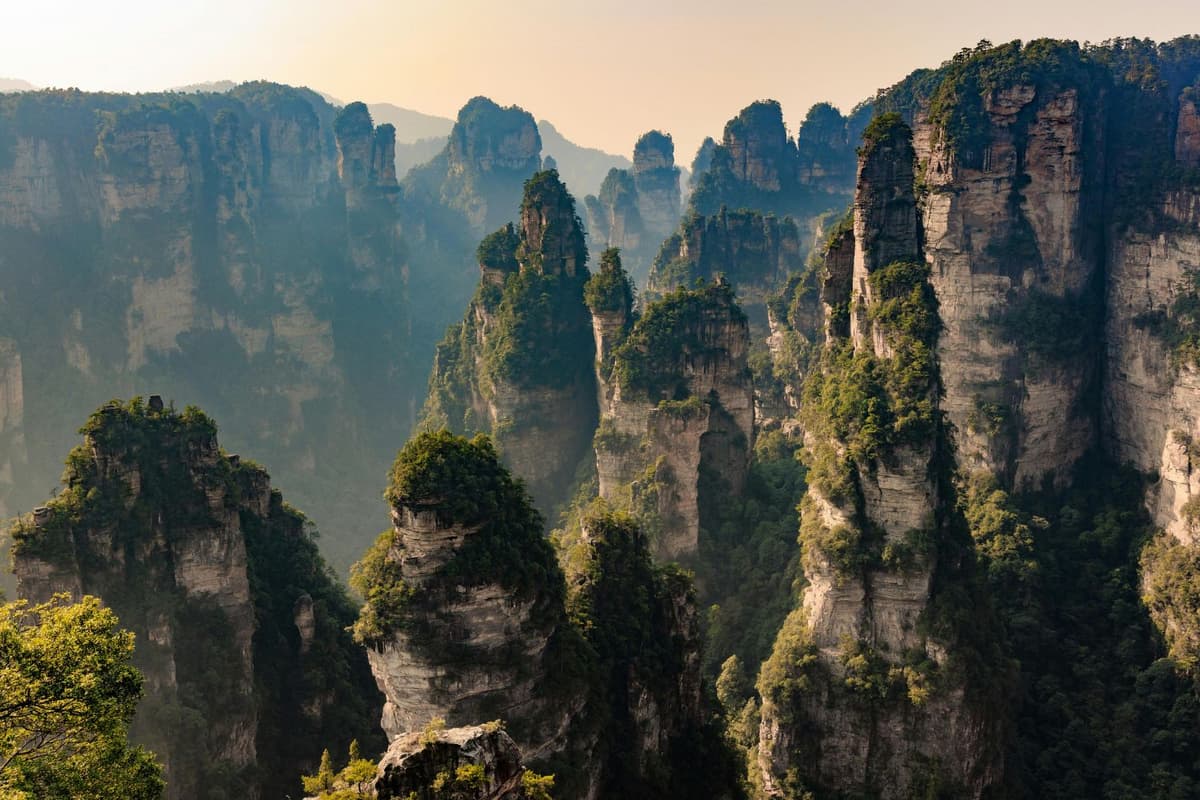
Towering sandstone pillars rising through the mist in Zhangjiajie National Forest Park, China.
Asia's natural wonders prove that adventure and beauty come in endless forms. Whichever of these destinations you choose, one thing is certain, you'll come away with memories that last far longer than the trip itself. So pick your favorite from this list of places to go in Asia, pack your bags, and let Asia's wild side show you why it's one of the most rewarding places on Earth to explore.
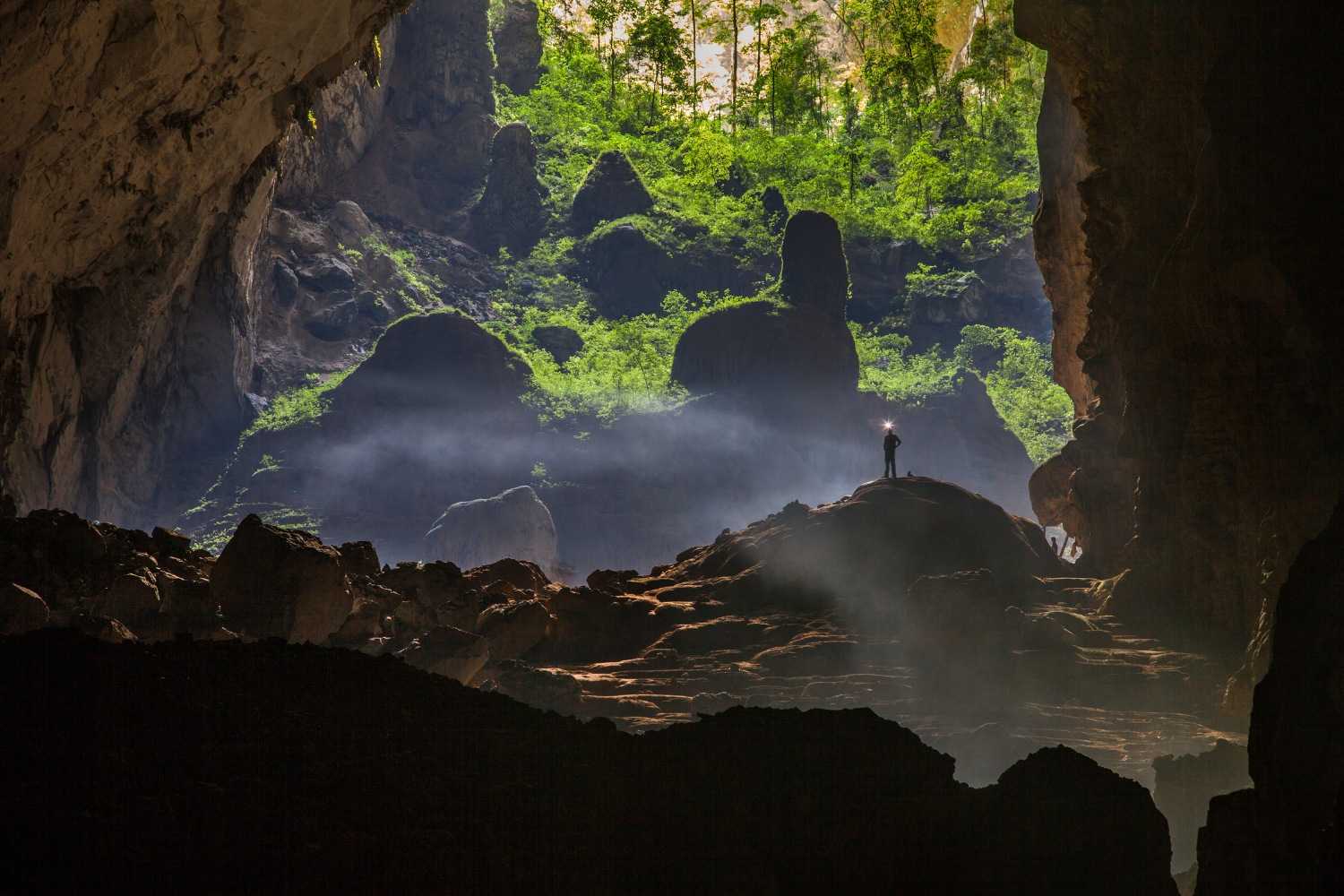
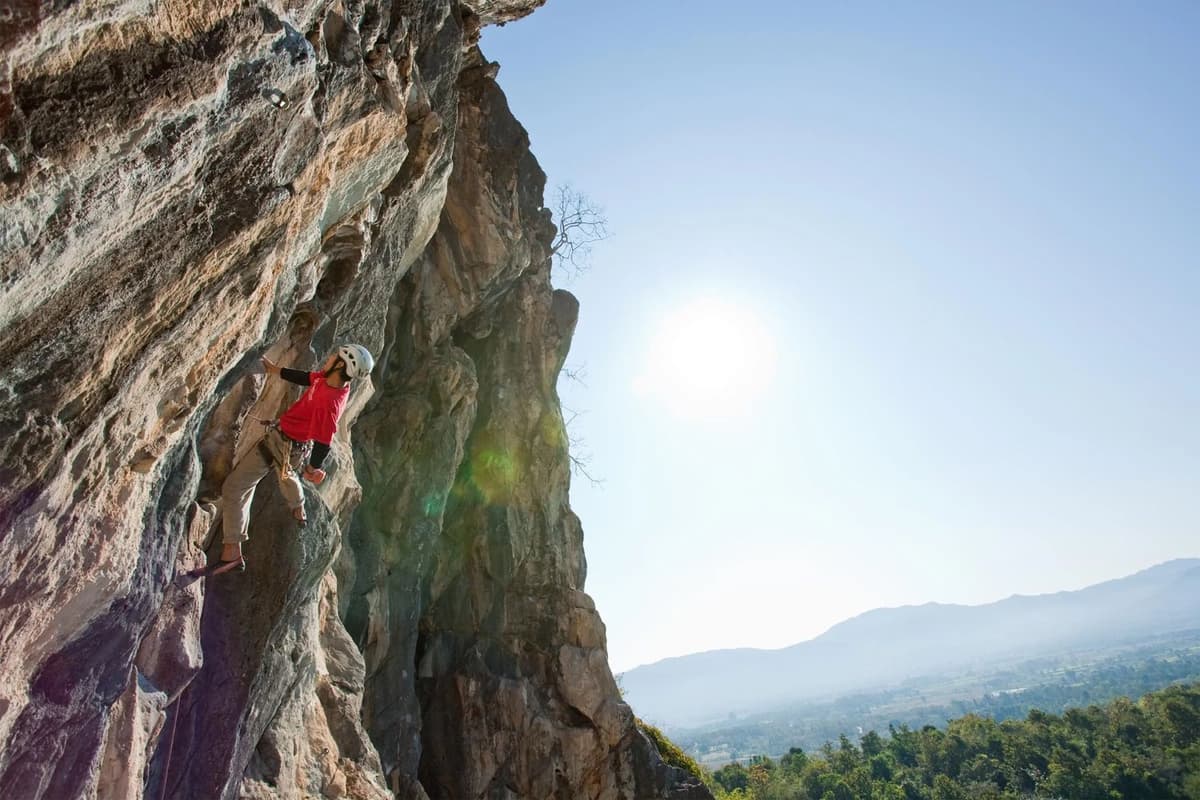


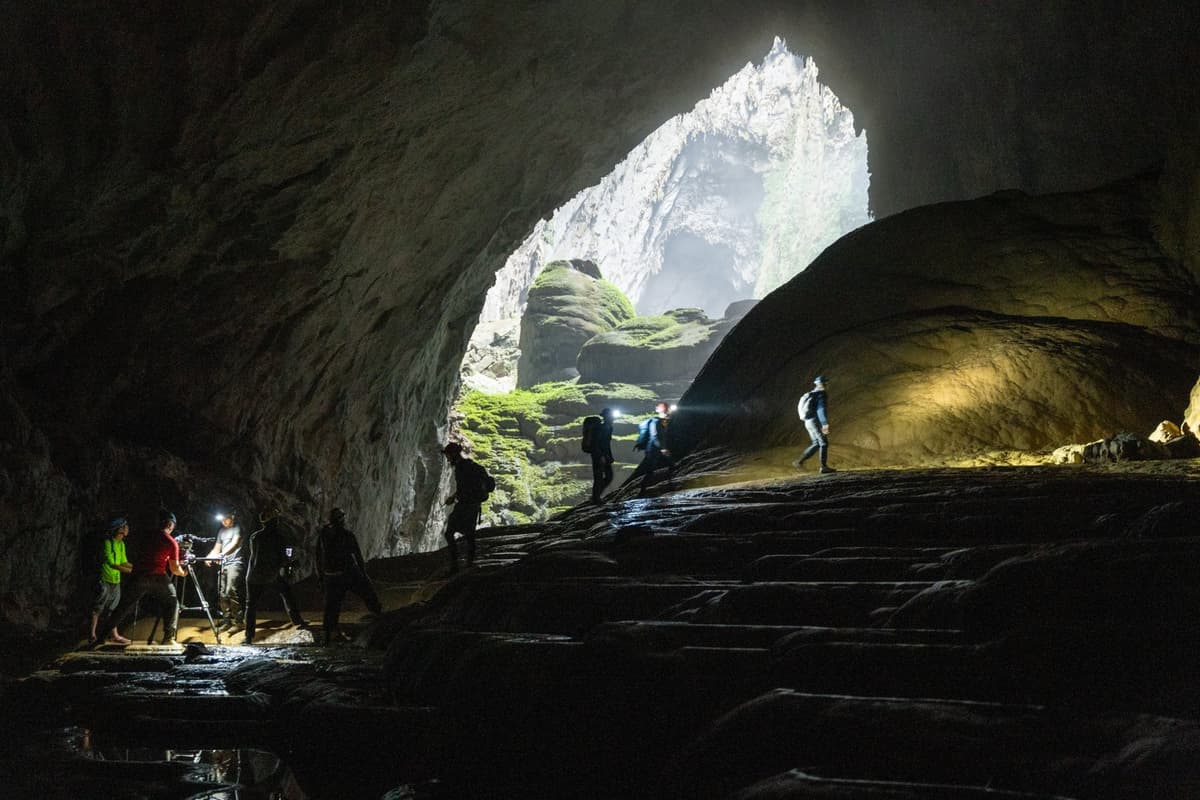
Whether you prefer long treks, camping in a cave, sleeping under the stars in the jungle, swimming underground in river caves, explore the huge dry caves or just taking an exploratory day trip, Oxalis Adventure Tours can provide the right amount of adventure just for you.
__637051782550081035.jpg)
__637051780703588520.jpg)
__637051765075307793.jpg)
__637051774329206026.jpg)
__637740499994967442.jpg)