
Overview
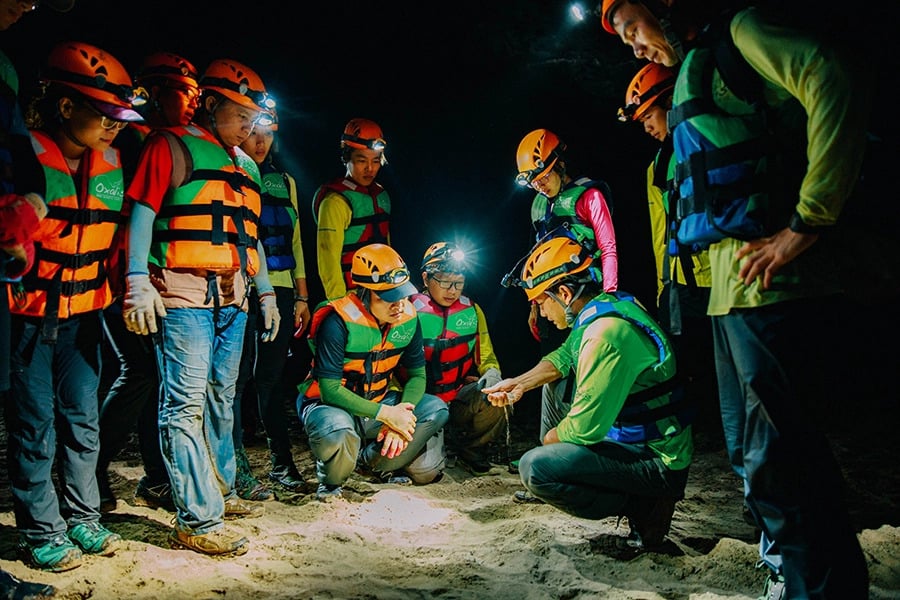
  • Safety is the number one priority for both customers and staff at Oxalis Adventure – without compromise.
  • All guides follow a comprehensive training program and are assessed regularly. Only fully qualified and experienced guides run the Oxalis Adventure tours.
  • Oxalis only uses the highest quality equipment imported from France, the UK and Switzerland.
  • The Oxalis Adventure tours are exactly what the name implies: An adventure. However, we demonstrate that it is possible to run adventurous tours without compromising on safety.
Safety Statement

Oxalis Adventure has over 15 years of experience organizing adventure tours to some of the most spectacular caves in Quang Binh Province, now Quang Tri Province. Throughout these more than 15 years of operation, Oxalis has not recorded any flood-related accidents, thanks to its unwavering commitment to making safety the top priority. This commitment is upheld through the following principles:

  1. All Oxalis overnight cave expeditions and multi-day tours deep in the forest operate exclusively during the dry season, from mid-November to mid-September of the following year. All tours are suspended during the rainy season, from mid-September to mid-November.
  2. Most of the caves explored by Oxalis have multiple entrances, allowing tour groups to enter or exit through different routes when necessary.
  3. The caves explored by Oxalis are very large, with many areas situated above flood levels. As a result, when water levels rise, these caves are not entirely submerged, unlike smaller caves.
  4. In the event of unexpected weather conditions, such as sudden storms or heavy rainfall, we have pre-prepared contingency plans for each route. These may include changing the itinerary, moving to higher ground, or suspending the tour.
  5. All tours are led by professional, highly experienced guides and cave experts who have extensive knowledge of the terrain and a thorough understanding of safety procedures.
  6. When crossing rivers or streams with rising water levels or strong currents, all guests and staff participating in the tour are required to wear life jackets and helmets. Depending on actual conditions, they must also use boats or specialized river-crossing ropes. All Oxalis guides and safety assistants receive regular training in safe river-crossing techniques and swift-water rescue procedures.
Oxalis Adventure Difficulty Levels

Oxalis classifies its tours using a Difficulty Level system to help guests assess and choose tours that best match their fitness levels and abilities. The levels are developed based on recommendations from cave experts and the Oxalis management team, along with years of customer feedback. If you are still unsure which difficulty level is right for you, please contact our tour consultants for personalized assistance, or refer to our guide on how to choose an Oxalis tour here.

Difficulty Level: Easy

  • Suitable for: Suitable for almost everyone.
  • Fitness requirements: Prior participation in outdoor walking or picnic/day tours is required. Participants must possess a baseline physical fitness level, demonstrated by completing both of the following activities (performed independently, not necessarily consecutively): an outdoor 3 km run within 30 minutes and climbing 5 flights of stairs continuously, without experiencing symptoms of dizziness, lightheadedness, headaches, nausea, abnormal shortness of breath, or chest pain/tightness. Participants must not suffer from any medical conditions included in the restricted list for trekking and caving activities as recommended by Oxalis.
Tours in this level: Tu Lan Experience (1 Day), Hang Tien Cave Day Trek (1 Day), Hang Tien-Tu Lan Discovery Tour (2D1N), Tu Lan Family Experience (1 Day), Tu Lan Family Adventure (2D1N), Phong Nha: Nuoc Nut Cave Discovery (1 Day).

Difficulty Level: Moderate

  • Suitable for: Guests with trekking experience and good physical fitness.
  • Fitness requirements: Within the past 12 months, participants must have completed at least one overnight camping trek in a forest/mountain setting or 1–2 day treks (each covering a minimum of 6 km per day over rocky and steep terrain, with a total elevation gain of at least 500 m across the entire journey). Participants must possess a baseline physical fitness level, demonstrated by completing both of the following activities (performed independently, not necessarily consecutively): an outdoor 5 km run within 45 minutes and climbing 5 flights of stairs continuously, without experiencing symptoms of dizziness, lightheadedness, headaches, nausea, abnormal shortness of breath, or chest pain/tightness. Participants must not suffer from any medical conditions included in the restricted list for trekking and caving activities as recommended by Oxalis.
Tours in this level: Hang Va Expedition (2D1N), Hang En Cave Adventure (2D1N), Tu Lan Cave Encounter (2D1N), Hang Tien Endeavour (2D1N).

Difficulty Level: Challenging

  • Key feature: These are the most challenging expeditions within Oxalis's adventure portfolio.
  • Suitable for: Regular trekkers and mountaineers with excellent physical fitness.
  • Fitness requirements: Within the past 12 months, participants must have completed at least one overnight camping trek in a forest or mountain setting (covering a minimum of 8 km per day over rocky and steep terrain, with a total elevation gain of at least 1,000 m across the entire journey). Participants must possess a baseline physical fitness level, demonstrated by completing both of the following activities (performed independently, not necessarily consecutively): an outdoor 5 km run within 45 minutes and climbing 5 flights of stairs continuously, without experiencing symptoms of dizziness, lightheadedness, headaches, nausea, abnormal shortness of breath, or chest pain/tightness. Participants must not suffer from any medical conditions included in the restricted list for trekking and caving activities as recommended by Oxalis.
Tours in this level: Hang Tien Expedition (HT3), Tu Lan Expedition Tour (5D4N), Son Doong Cave Expedition (6D5N), Hang Ba Deep Jungle Expedition (3D2N).
Oxalis guide Levels

Oxalis Adventure currently employs 29 full-time professional guides and 78 safety assistants, all of whom share responsibility for ensuring the safety of guests on all Oxalis Adventure tours.

The risk assessment, safety assurance, and rescue procedures for each individual tour are personally designed by the Operations Director and Safety Expert. They also conduct annual training sessions for Oxalis Adventure guides and safety assistants to ensure that the team is well prepared to handle the specific challenges of each tour.

Guide competencies are assessed every 6 months.

Level Description
Trainee Guide

Trainee guides undergo a 6-month training programme, including theoretical and practical training in first aid, rescue, and other safety techniques.

They also learn how to operate tours, deliver safety briefings, and provide guests with the necessary information and knowledge.

Depending on their abilities, trainee guides may assist senior guides and lead Level 1 tours under close supervision.

Following an assessment of their competencies by the Operations Director and Safety Expert, they may be promoted to Junior Guide and begin leading single-day tours independently.

Junior Guide

Junior Guides are divided into three levels: Junior 1, Junior 2, and Junior 3.

In accordance with internal regulations, Junior Guides may lead tours lasting one to two days. Upon reaching Junior 3, they may be assigned to lead certain three-day tours.

Experienced Guide

Experienced Guides are divided into three levels: Experienced 1, Experienced 2, and Experienced 3.

In accordance with internal regulations, Experienced Guides may lead tours lasting one to four days.

Upon reaching Experienced 3, they are qualified to lead all existing Oxalis Adventure tours, including the Son Doong Expedition.

Senior Guide

This is currently the highest guide level at Oxalis Adventure. Senior Guides have developed advanced technical, rescue, and first aid skills.

In addition to leading all existing Oxalis Adventure tours, they may also take charge of filming projects, high-level delegations, and other special assignments.

Beyond their tour-leading responsibilities, Senior Guides also participate in training new guides as assigned by management.

Safety Assistant

Safety assistants are carefully selected from the porter team based on their physical fitness, technical skills, behavioural competencies, and discipline.

All safety assistants must complete competency-based training in communication, safety equipment use, basic first aid, rescue techniques, and river crossing, and pass the required assessments to qualify for the role.

They accompany guests throughout their expeditions and provide assistance to ensure their safety.

Guide and Safety Equipment Training

All guides and safety assistants are required to participate in the company’s training programmes, which include theoretical instruction, practical exercises, competency assessments, and updates on the latest knowledge and techniques.

Oxalis has established a highly professional training system, with every training course carefully documented and managed. During the rainy season, when tours are temporarily suspended (from mid-September to mid-November each year), regular training sessions are conducted for guides and safety assistants. These cover first aid, search and rescue, evacuation procedures, emergency response activation, and other essential safety protocols.

Each year, Martin Holroyd, Oxalis Adventure’s Rescue and Training Expert, works with the Safety Experts and Operations Department managers to develop a training programme for all guides and safety assistants, tailored to their individual competencies and qualification levels.

Below are photos and videos showcasing safety training sessions for the Oxalis Adventure guide team:

Safety FAQs

General Safety
  • Do I have to wear a life jacket if I am a good swimmer?

    Wearing a life jacket is mandatory for everyone, regardless of swimming ability. Underground river currents can be strong, and some areas contain submerged rocks or cold water. In certain caves, swimming distances can also be considerable. A life jacket is therefore the best way to help ensure your safety. It also allows you to enjoy the unique sensation of floating along with the cave waters. Life jackets are also available at swimming areas near campsites for guests who are not confident in their swimming abilities.

  • Why am I not allowed to jump from heights into pools, rivers, or streams inside caves or at campsites?

    Strong currents, submerged rocks, broken branches, and other underwater obstacles can cause injuries if you jump into the water from a height.

  • Why does Oxalis require guests to wear shoes while trekking?

    Forest and cave terrain can be challenging, with muddy paths, steep slopes, and sharp rocks along the routes. Wearing shoes you have used before and find comfortable is the most convenient option. Oxalis can provide basic jungle trekking boots in sizes 36–44. If you use Oxalis-provided boots, you should bring thick socks and two pairs of insoles to help prevent blisters. A cleaning fee of VND 50,000 also applies.

  • How can I protect electronic devices, such as cameras and phones, during the tour?

    Electronic devices that you only need at the campsite should be handed to the porters, who will transport them directly to the campsite. You can carry cameras and mobile phones that you wish to use along the trail in your own backpack. Before swimming, your guide will collect these devices and place them in a waterproof container to protect them throughout the swimming sections.

  • How can I contact the outside world in an emergency? Can guests use a satellite phone?

    Oxalis guides always carry satellite phones and can contact the outside world when necessary. Your guide can assist you in making a call in an emergency.

  • Why do guests need to wear long-sleeved clothing and long trousers while trekking?

    Along the trails, you may encounter thorny plants, irritating vegetation, sharp rocks, and hairy caterpillars. Some sections may also be slippery, increasing the risk of falls. Long-sleeved clothing and long trousers help protect you from scratches, cuts, and insect bites. Long sleeves also help prevent sunburn during summer.

  • How does the climate and weather vary by season? Does it significantly affect the tour itinerary?

    Winter (October–December) and spring (January–March) can be cold and rainy at times, while summer (April–June) is hot and humid. We recommend checking the weather forecast a few days before your tour so you can prepare accordingly. Tours are generally affected only by extremely heavy rain or flooding. In such cases, the itinerary may need to be changed or the tour departure postponed.

  • Why does Oxalis impose minimum age requirements for its tours?

    To ensure that all members of a group have reasonably comparable fitness levels, Oxalis does not accept guests under 18 for the Son Doong Expedition, under 12 for the one-day Phong Nha–Ke Bang National Park Discovery tour, or under 16 for other group tours. Children may join private tours with their parents if they meet the physical fitness requirements approved by Oxalis experts.

  • Are there tours suitable for families with children? What is the minimum age for private tours with Oxalis?

    Oxalis offers several options suitable for families. Private tours are particularly suitable for children aged 12 and above. Children under 12 may also be considered if they meet the health and fitness requirements and have substantial experience in sports activities.

  • Can guests who cannot swim join an Oxalis tour?

    Oxalis offers tours that do not require swimming. If you wish to explore water caves but are not confident in your swimming abilities, you will still be required to wear a life jacket. Our safety assistants can provide additional support, or you may choose to travel by boat or raft where available.

  • Why must guests follow the instructions of guides and safety assistants while moving through caves or forests?

    Our guides and safety assistants are carefully selected and thoroughly trained in survival skills, safety procedures, and rescue techniques. They have extensive experience in wilderness environments and are responsible for leading the group along the correct routes and identifying potential hazards, such as snakes and irritating plants. They select routes that are as safe as possible for guests while minimizing the impact on the surrounding environment.

  • Can I swim or observe wildlife at night after dinner?

    Swimming at night is not permitted because it involves additional safety risks. Nighttime wildlife observation is also prohibited, as it may disturb the natural behavior of nocturnal animals.

  • Why must guests wear helmets throughout cave exploration and when traversing difficult terrain?

    Caving helmets are specially designed to help protect your head from impacts with rocks, stalactites, branches, and unexpectedly falling stones while walking or in the event of a fall. The helmets also accommodate headlamps, allowing you to keep both hands free while exploring the caves.

  • What happens if heavy rain causes water levels to rise above normal during a tour? Why must I wear a life jacket even when traveling by boat?

    When water levels rise above normal, we will help guests cross difficult sections using specialized ropes and river-crossing techniques or boats, depending on the water level and current at each crossing point. If conditions exceed the safe operating limits of these methods, the group will wait for the water to recede or follow an alternative route. Our guides and safety assistants are thoroughly trained to respond to sudden rises in water levels. You simply need to follow their instructions. During heavy rain, currents can become strong and unpredictable, potentially making boats unstable. Therefore, everyone must wear a life jacket, including when traveling by boat.

  • Why must at least one safety assistant supervise guests swimming in deep water near the campsite?

    To help ensure guest safety, at least one safety assistant supervises the group whenever guests swim in the campsite area. Rescue equipment is kept readily available so assistance can be provided promptly if an incident occurs.

  • If I do not want to swim in cold winter weather, can I still join a Tu Lan tour or another Oxalis tour?

    If you prefer not to swim during winter, you can book a tour that does not require swimming, such as the Hang Tien tour, Hang En tour, or one-day Phong Nha National Park tour. For tours involving swimming, such as Tu Lan, boat or raft transportation may be available when temperatures are below 18°C.

  • What if I cannot walk as quickly as the other members of my group? Will I be sent back to the starting point?

    Our safety assistants are always ready to slow down and provide assistance whenever you need it. You will only be escorted back to the starting point if the guide or Safety Expert determines that you are unable to complete the route. However, this situation is very rare.

  • Can I join an Oxalis tour if I have no previous experience in caving or mountain trekking?

    Yes. As long as you exercise regularly and have a good level of physical fitness, you can join an Oxalis tour. Many Oxalis guests have no previous caving or mountain trekking experience but still enjoy wonderful adventures with us. If you meet the required health and fitness conditions, you can prepare for your expedition with confidence.

  • Is the lighting provided by Oxalis sufficient and safe for swimming and exploring caves?

    Oxalis safety equipment is imported and quality-checked by experienced cave experts. The headlamps provided by Oxalis offer sufficient illumination to help guests move around safely while swimming and exploring caves. Our guides and safety assistants also carry more powerful lights to assist guests in navigating challenging terrain and taking photographs in low-light conditions.

  • What should I bring while trekking?

    You should bring essential personal items for the day, including a drinking water bottle, helmet, sunglasses, sunscreen, mobile phone, camera, and any personal medication you may need. For a more detailed checklist, please refer to the Preparation section on the relevant tour page of the Oxalis website.

  • Do I need to bring my own trekking backpack, or can I borrow one from Oxalis?

    For Tu Lan tours, Oxalis provides backpacks because these itineraries involve extensive swimming. For other routes, such as the Son Doong and Hang En expeditions, swimming is not required, so guests must bring their own backpacks.

  • Can I bring beer or alcohol on the tour to drink or share with other guests?

    To protect the safety and health of guests participating in Oxalis Adventure tours, alcoholic beverages, including beer and spirits, and other stimulants are prohibited. If a guide, Safety Expert, or safety assistant discovers that a guest has brought alcohol or stimulants, the guest will be required to leave the tour without a refund. Guests are therefore advised not to bring alcoholic beverages for personal consumption or to share with others.

  • Do I have to carry my own camping equipment during the tour?

    To provide guests with the best possible experience and make it easier to navigate challenging terrain, Oxalis arranges for porters to transport camping equipment and guests' personal belongings directly to the campsite ahead of the expedition group. They also set up the tents before the group arrives. Personal bags left at the Oxalis office are sealed, labelled, and stored securely. Throughout the trek, you only need to carry essential items, including your helmet, cave exploration headlamp, drinking water bottle, gloves, sunscreen, and personal medication.

  • I would like to take lots of souvenir photos. Can Oxalis help?

    On group tours, staying with the group is essential for everyone's safety and overall experience. Oxalis always allows sufficient time for guests to take photos and videos at the most scenic and safe locations. Our guides and safety assistants have extensive experience arranging photo opportunities and lighting, and they will be happy to help. We also ensure that every member of the group has enough time to capture memorable moments.

  • I dislike having wet feet while trekking. Can I change my shoes and socks before and after crossing streams?

    No. Adventure travel involves many specialized activities, and crossing rivers and streams is part of the experience. Since these crossings occur frequently, often throughout the route, changing shoes each time is unnecessary. In summer, wading through water can also help cool you down, make the trek more comfortable, and help you regain energy.

  • Can I try wild fruits while trekking?

    We do not recommend eating wild fruits. Our tours focus on exploring and conserving nature, so activities that may negatively affect the environment should be avoided. In addition, wild fruits may cause unexpected and potentially serious allergic reactions.

  • Can I finish the tour early to catch an early flight, train, or bus to Hanoi or Ho Chi Minh City?

    Oxalis tours generally finish with guests being dropped off at their hotels in the Phong Nha area between approximately 5:00 pm and 7:00 pm, depending on weather conditions. If you wish to finish earlier, you must arrange for an additional safety assistant to escort you out of the forest and a private vehicle to transfer you from the tour's endpoint to the airport or railway station.

  • Am I allowed to smoke during the tour?

    As we operate ecotourism tours, activities that may negatively affect the environment should be minimized. If you smoke, you should do so only in areas designated by the Safety Expert and guide. Oxalis has established designated smoking areas to avoid disturbing other members of the group.

  • What should I do if I get lost in the forest?

    For groups of eight guests, Oxalis assigns a guide to lead the group and a safety assistant to bring up the rear, helping ensure that everyone stays safe and follows the planned route. If you accidentally become separated from the group, remain where you are and call out loudly from time to time to signal your location. We conduct headcounts at regular intervals along the route, so we should identify your absence promptly and send someone to assist you as soon as possible.

  • What types of shoes are suitable for trekking? Can Oxalis provide shoes if I do not have my own?

    Tour terrain varies considerably. Some sections involve climbing rugged limestone rocks, while others require walking through muddy trails, wading through streams, or swimming. The best footwear for forest trekking is therefore a pair of comfortable, well-fitting shoes with sturdy soles, good grip, and adequate drainage. If you do not have suitable footwear, you can use the military-style boots provided by Oxalis during the pre-tour briefing before departure. If you plan to use Oxalis-provided boots, please prepare insoles and socks in the appropriate size.

Equipment

  • Do I need to prepare my own safety equipment for the expedition?

    No. Oxalis provides all safety equipment required for cave exploration activities during the tour, including helmets, gloves, lights, specialized ropes, and safety harnesses, depending on the tour. All Oxalis equipment is imported directly from Europe, meets international safety standards, and is inspected regularly by experts to ensure it remains safe to use.

  • Can I join a tour if I have never used caving equipment before?

    Yes. You do not need previous experience using cave exploration equipment. Our guides will explain in detail how to use each piece of equipment and will assist you and check the equipment before any adventure activities begin. All anchor points and fixed safety rope systems are also inspected regularly by experts.

  • What types of lights are used for cave exploration?

    Oxalis provides lights imported from the well-known European brands Petzl and Hope. Petzl lights offer some water resistance, making them suitable for water caves. Hope lights provide high brightness and are suitable for the large chambers inside Son Doong Cave. We also keep spare lights and backup batteries available for use when needed.

Equipment provided on tours

Fear of Heights

  • Can I join a tour if I have a fear of heights?

    If your fear of heights is not too severe, you may be able to join most Oxalis tours. Our guides and porters will accompany you throughout the journey and provide support whenever needed. Steep sections are equipped with fixed specialized ropes and safety harnesses to help protect all group members. If you have any concerns, please contact an Oxalis tour consultant directly for further advice and assistance.

Health Concerns

  • Why do I need to provide Oxalis with information about my health and medical conditions?

    We need to know about any existing medical conditions or health concerns you may have to help ensure your safety throughout the tour. Oxalis Adventure tours involve exploring caves deep inside forests, where medical facilities are very limited and generally provide only basic first aid. If you have a medical condition that requires special attention, we need to know in advance so we can prepare appropriately and take the necessary precautions.

    All information you provide will be kept confidential by Oxalis. You should also inform us of any allergies to food, beverages, or medication so we can take these into account when preparing your meals and organizing your tour.

  • Are there any health concerns I should be aware of before joining a tour?

    The most common health issues that may occur during a tour include dehydration, heat exhaustion, scratches, and blisters. These issues can generally be prevented or managed with proper preparation. We recommend wearing suitable shoes and socks, long trousers, and long-sleeved clothing, and bringing sunscreen and a hat during summer. You should also make sure to drink enough water throughout the tour.

  • Do I need to bring my own first aid kit?

    Oxalis guides always carry a basic first aid kit. If you are allergic to any medication ingredients, please inform us when booking your tour. If you are receiving treatment for a medical condition or regularly take specific medication, you should also bring your own prescribed or regularly used medication as needed.

  • Do I need to bring drinking water? Where does the water provided during the tour come from?

    Oxalis provides each guest with a drinking water bottle before the tour begins. Our staff carry water filtration equipment that meets European standards and use it to replenish your drinking water along the route. At the campsites, boiled water is also available for making tea and coffee.

Claustrophobia

  • Will I have to crawl or squeeze through narrow sections of caves?

    Most caves explored by Oxalis are large, although some short sections may require you to squeeze through narrow passages. Our guides and porters will provide assistance along the way. If you have concerns about confined spaces, please contact an Oxalis tour consultant directly for further advice.

Wildlife During the Tour

  • Will I encounter wild animals along the way? Are they dangerous?

    Most forest animals are naturally afraid of humans and will generally avoid people or move away when they hear noise.

    Snakes may occasionally be encountered. However, an Oxalis guide always leads the group and is therefore in the best position to spot potential hazards first. A safety assistant follows at the rear to observe the group and provide assistance when needed. Please follow your guide's instructions and do not tease, approach, or get too close to wildlife for photographs.

    You may also encounter millipedes, centipedes, mosquitoes, bees, leeches, bats, and irritating plants such as poison ivy. These rarely cause significant problems if you wear long trousers, long-sleeved clothing, and thick socks, use insect repellent, disclose any allergies when booking, and avoid touching or disturbing them.

Weather

  • Will the tour proceed if it rains heavily?

    Rain during the dry season generally has little impact on Oxalis Adventure tours. In fact, it can make the forest cooler and more pleasant than on sunny days. Our guides receive professional training in safe river and stream crossing techniques for rainy conditions and are equipped with the necessary safety equipment to help maintain guest safety. Campsites, dining areas, changing tents, and toilet facilities are all covered.

  • What if the weather is too cold?

    When temperatures are low, Oxalis recommends bringing thermal base layers to wear underneath your trekking clothes, along with a jacket for use at the campsite. Hot tea and coffee are available at the campsite, and exploring nature in cooler weather can be a unique experience. Some swimming sections may be replaced with boat or raft transportation.

  • Will it be too hot to join a tour during summer?

    Our tour consultants will provide weather updates when you make your booking. During the summer months, temperatures can range from approximately 35°C to 40°C. Most tours include swimming in caves or in rivers and streams near the campsites, offering a refreshing way to cool down. If you are joining a summer tour, please prepare sunscreen, a hat, and electrolyte supplements to help you stay comfortable throughout the expedition.

Hygiene and the Environment

Oxalis strictly implements sanitation and hygiene procedures and continues to improve them.

To maintain a reliable supply of domestic water and ensure safe drinking water for guests, Oxalis operates a closed-loop water supply system at its campsites consisting of three steps:

  • Water collection: Water is pumped from natural streams into storage tanks using solar-powered pumps or portable generators.
  • Water treatment: Water passes through a multi-stage filtration system using sand, gravel, and activated carbon to remove sediment and impurities and reduce odors. Chlorine treatment is also applied to help control E. coli and Coliform bacteria.
  • Water distribution: The treated water is transferred to storage tanks and supplied to facilities such as toilets, showers, and kitchens.

All water intended for drinking by guests and staff must be thoroughly boiled before consumption to help ensure food hygiene and protect health. Oxalis also advises all staff not to participate in tours when their health conditions make it unsafe to do so.

Hand sanitizer is always provided for guests and staff. Soap and handwashing water are also available at campsites. Our cooks receive training in hygiene standards, including preventing cross-contamination between raw and cooked food, wearing gloves when handling food, washing cooking utensils with soap, and disinfecting them with boiling water.

Oxalis is committed to building its business on the principles of sustainable tourism and environmental protection. We encourage everyone involved in our operations to help protect nature and the environment.

We implement strict policies to minimize the impact of trekking through forests and exploring caves. We use gas for cooking and carry all waste generated during tours out of the forest. Guests are provided with reusable water bottles and rechargeable lights.

We maintain small-group tours and limit visitor numbers through a quota system to minimize impacts on caves and the surrounding environment. Every tour must follow a carefully planned route. Only a small number of branches or wild plants that obstruct the trail or pose safety hazards may be trimmed, and only with permission from the relevant management authority.

All staff receive training in cave and forest conservation. They are expected to have a genuine appreciation for nature and a strong commitment to sustainability. We carefully explain tour restrictions to guests, and our guides receive training in geography, cave systems, and local culture so they can provide guests with detailed and informative explanations.

Another important aspect of sustainability is our relationship with local communities. Oxalis employs many local residents, creating livelihoods and supporting the regional economy.

We established the Oxalis Foundation to carry out charitable projects, including helping disadvantaged children attend school, building libraries, constructing floating houses in flood-prone areas, building septic toilets, and teaching children to swim. Through these initiatives, we aim to work alongside local communities to improve living conditions and health, minimize environmental impacts, and ensure that local residents share in the benefits of sustainable tourism.