The 10 deepest caves in the world: Depth, darkness, and discovery
Despite the perils, the temptation of the unknown drives explorers to venture into the world’s deepest caves. These underground wonders reveal breathtaking rock formations, hidden rivers, and unique ecosystems. From record-breaking depths to awe-inspiring chambers, each cave holds secrets waiting to be unearthed.
Ready to journey into the Earth’s depths? Read on to discover more!
1. Krubera-Voronja Cave (Georgia) - 2,224 meters
Krubera Cave (also known as Voronja or Voronya Cave) ranks 1st as the deepest cave in the world. The cave is located in the Arabika Massif of the Gagra Range in the Western Caucasus in the disputed region of Abkhazia, Georgia.
Krubera Cave lies at an elevation of 2,256 meters above sea level in the Ortobalagan Valley. The cave has six entrances, the highest of which is called Arbaika. Krubera Cave’s deepest explored point reaches 2,199 ± 20 meters below its highest entrance, making it one of the most extreme environments known to humans.
Systematic exploration of Krubera Cave began in 1980, spearheaded by Ukrainian speleologists who made significant progress in mapping its depths. In 2003, Krubera officially became the world’s deepest cave when the Ukrainian Speleological Association reached a record depth of 1,910 meters. Further expeditions pushed even deeper, with the cave surpassing the 2,000-meter mark in 2006, a historic first in speleology.

A group of cavers descending a deep tube in Krubera Cave. Source: Flickr
Krubera Cave is one of only two caves deeper than 2,000 meters, alongside Veryovkina Cave (ranks 2nd on the list) in the same mountain range.
Beyond its remarkable depth, Krubera is home to unique life forms, including endemic springtails. In 2010, researchers discovered a species of springtail living at a staggering depth of 1,980 meters, making it the deepest terrestrial animal ever recorded.
Exploring Krubera Cave presents extreme challenges due to its narrow passageways. Despite its remoteness, it remains a major focus for speleologists worldwide, offering insights into the limits of life and the uncharted depths of our planet.
2. Veryovkina Cave (Georgia) - 2,209 meters
In the same mountain range as Krubera Cave lies Veryovkina Cave (also known as Verëvkina Cave), the second-deepest cave in the world. Situated on the pass between Krepost and Zont mountains, near Mount Krepost, its entrance lies at an elevation of 2,285 meters above sea level. Despite its small entrance, measuring just 3 meters by 4 meters, Veryovkina Cave plunges to a confirmed depth of 2,209 meters.
Originally named S-115 when it was first discovered in 1968, only the first 115 meters were explored at the time. It was later renamed in 1986 to honor Alexander Verëvkin, a caver and cave diver who tragically lost his life while exploring another cave in Russia.
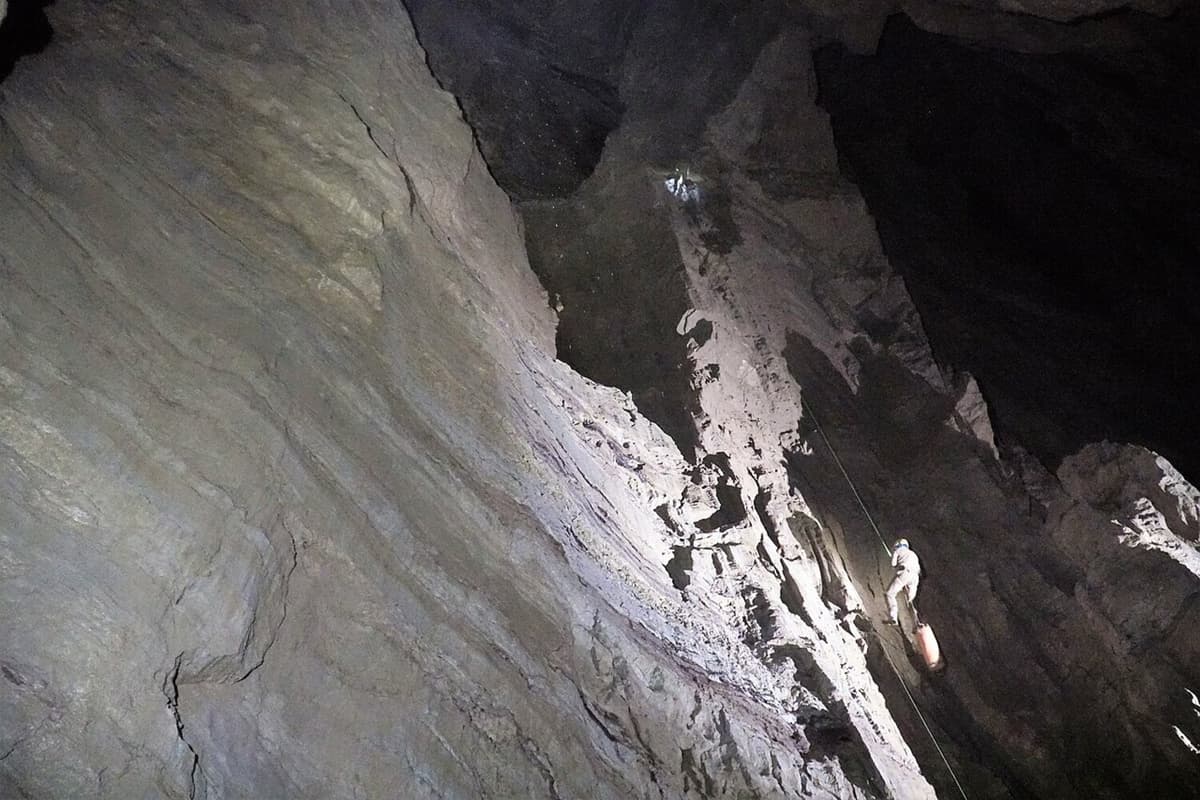
Veryovkina Cave is the second-deepest cave in the world.
For decades, Veryovkina Cave remained largely unexplored until a series of expeditions between 2016 and 2017 significantly extended its known depth. By February 2017, explorers had mapped it to 1,832 meters, and by August of the same year, they reached an incredible 2,204 meters. Further explorations revealed an extensive system of more than 6,000 meters of subhorizontal passages beyond 2,100 meters.
In August 2023, an expedition increased the cave’s known depth to 2,223 meters, but in August 2024, the confirmed depth was revised to 2,209 meters.
Veryovkina Cave isn’t without its dangers; in 2021, the body of a caver who had attempted a solo descent was discovered at 1,100 meters. Despite this, its extreme depth makes Veryovkina Cave one of the most famous caves in the world.
3. Sarma Cave (Georgia) - 1,830 meters
As the third cave located in the Arabika Massif of Abkhazia, Georgia, Sarma Cave is the third-deepest cave in the world. Discovered in 1990, its current depth of 1,830 meters was only measured in 2012, making it one of the most challenging caves on Earth.
Characterized by its vast, eerie halls and intricate maze-like channels, Sarma Cave has captivated explorers and scientists alike. The cave lies at an elevation of 2,000 meters above sea level and consists of multiple levels connected by tunnels. The upper section extends from the entrance to a depth of 420 meters, while the lowest section begins at 900 meters and descends to its current maximum depth.
However, some researchers believe that further exploration may reveal additional passages, potentially extending Sarma Cave’s depth beyond 2,000 meters.
Sarma Cave isn’t just another geological marvel in Georgia but also a site of biological interest. Scientists have discovered two species of amphipods within its depths. One species is found at depths no greater than 350 meters, while the other inhabits the deeper aquatic zones between 1,270 and 1,700 meters.
Due to the cave’s extreme conditions and hazardous terrain, only highly skilled expedition teams are permitted to explore its depths. Sarma remains one of the most mysterious and potentially deeper caves yet to be fully understood.
4. Snezhnaya Cave (Georgia) - 1,760 meters
Snezhnaya Cave is the fourth-deepest cave in the world and, once again, is located in Abkhazia. First explored by Soviet cavers in the late 1960s, its true depth remained largely unknown until the 1990s. Today, Snezhnaya Cave is recognized as one of the most complex and mysterious cave systems in the world.
The cave’s name, “Snezhnaya,” meaning “snowy,” comes from its unique entrance. It begins with a 50-meter-deep pit, at the bottom of which lies an enormous, year-round pile of snow. The height of this snow mound fluctuates dramatically, sometimes reaching over 60 meters—equivalent to an 18-story building. This striking feature makes Snezhnaya Cave unlike any other in Abkhazia, Georgia.
Deep within the cave lies an interconnected network of underground waterways known as the Snezhnaya-Mezhennogo-Illyuziya system. This vast web of submerged passages adds to the cave’s mystique, creating a challenging environment for explorers.
Notably, Snezhnaya boasts two of Abkhazia’s largest underground chambers: the Throne Hall and Hall X. The Throne Hall stretches 309 meters in length, 109 meters in width, and reaches a ceiling height of 40 meters. Hall X, though slightly smaller in floor area at 250 meters by 70 meters, has an even taller ceiling at 50 meters.
Explorations of Snezhnaya Cave are ongoing, and researchers and speleologists believe that the system could extend even further.
5. Lamprechtsofen (Austria) - 1,735 meters
Goodbye, Georgia! We’re moving on to Austria in Central Europe. Lamprechtsofen, also known as Lamprechtshöhle, is a vast limestone karst river cave in Salzburg, Austria. With a depth of 1,735 meters, Lamprechtshöhle ranks as the fifth-deepest cave in the world. Located just two kilometers northwest of Weißbach bei Lofer in the Leogang Mountains, it’s also one of the most well-known caves in the region.
Unlike many of the world’s deepest caves, Lamprechtsofen has been known for centuries. Legends of hidden treasure lured explorers inside, leading to its entrance being walled off in 1701 to stop this. The bodies of several individuals—likely treasure hunters—were discovered within the cave in 1905. That same year, a 600-meter-long section of the cave was opened to the public as a show cave.
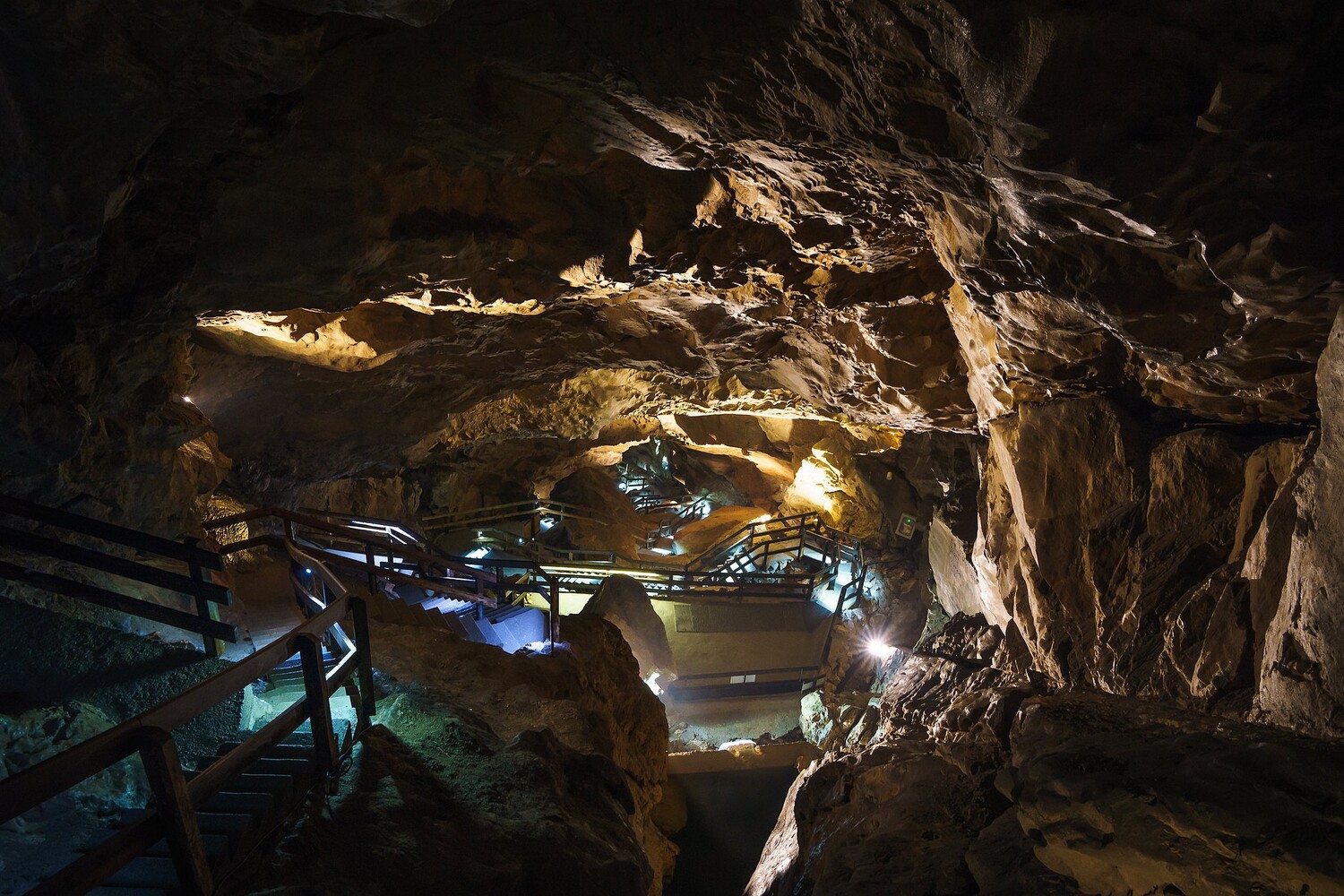
Staircase leading down into the public section of Lamprechtsofen. Source: Flickr
What makes Lamprechtsofen unique is that exploration has primarily been conducted from the bottom upward rather than the typical top-down approach used for vertical caves. In 1998, a Polish caving team discovered a connection between Lamprechtsofen and another cave system, establishing a total depth of 1,632 meters. A later Polish expedition in 2018 extended the known depth to its current record of 1,735 meters.
Today, the public portion of Lamprechtsofen remains a popular tourist attraction, spanning a 70-meter altitude difference. However, due to the cave’s river, heavy rainfall and melting snow can cause flooding, occasionally trapping visitors and explorers. Despite its dangers, Lamprechtsofen remains a site of ongoing discovery.
6. Gouffre Mirolda (France) - 1,661 meters
Gouffre Mirolda, located in the Haut-Giffre mountain range of Haute-Savoie, France, is the country’s deepest cave, with a known depth of 1,661 meters. It’s part of the Lucien Bouclier cave system and ranks as the sixth-deepest cave in the world. The cave’s name derives from the forenames of three cavers—Michel Schmidt, Roland Chenevier, and Daniel Trouilleux—who tragically lost their lives in a cave flood in France in 1976.
Originally discovered in 1971 by a shepherd, Gouffre Mirolda remained largely unexplored until 1976, when an upper entrance was found at 2,324 meters above sea level. However, early explorations were limited, only reaching the base of a 30-meter shaft. It wasn’t until 1980 that cavers descended to 850 meters, followed by the discovery of an underground river at 1,100 meters in 1981.
By 1993, expeditions had pushed the depth to 1,520 meters, then to 1,610 meters in 1998. In 2003, cave divers explored the terminal sump, extending the depth to 1,733 meters, though later surveys adjusted to its confirmed 1,661 meters.
The highest entrance of Gouffre Mirolda is at 2,330 meters, and the cave’s lowest known point remains an area of intrigue. The bottom has only been explored once, leaving the potential for further discoveries. Therefore, Gouffre Mirolda continues to challenge speleologists and promises even more mysteries waiting to be uncovered.
7. Gouffre Jean-Bernard (France) - 1,612 meters
Gouffre Jean-Bernard is the seventh-deepest cave in the world and the third-deepest cave in Europe (as Georgia is a transcontinental country). Located in the Alps near Samoëns, France, it has a known depth of 1,612 meters. The cave is named in honor of Jean Dupont and Bernard Raffy, two of the cavers who discovered it in 1963 but tragically lost their lives later that year in an unrelated expedition.
Exploration of Gouffre Jean-Bernard began in 1963 when cavers reached a depth of 100 meters. Over time, additional entrances were discovered—currently numbering at least thirteen—with the highest entrance sitting at 2,333 meters above sea level.
By 1968, expeditions in Gouffre Jean-Bernard had reached 450 meters in depth, and a major expedition in 1969 brought explorers down to a sump at 623 meters. Subsequent attempts in 1976 led to the discovery of a part at 1,298 meters.
In 1979, Gouffre Jean-Bernard made history by becoming the world’s deepest cave then, reaching a depth of 1,358 meters. However, it held this title only until 1998, when Gouffre Mirolda surpassed it. Further explorations in 1983 extended the depth to 1,500 meters, but progress was halted by a water-filled passage. More recent expeditions pushed the known depth to 1,612 meters, where it stands today.
With its extensive system of entrances and unexplored passages, Gouffre Jean-Bernard remains an exciting challenge for speleologists, promising further discoveries.
8. Sistema del Cerro del Cuevón (Spain) - 1,589 meters
Sistema del Cerro del Cuevón is the deepest cave in Spain and the eighth-deepest cave in the world, with a known depth of 1,589 meters. This karst cave system, consisting of two interconnected sumps, is located in the Picos de Europa mountain range in Cabrales, Asturias (an autonomous community of Spain). Its exploration began in 1998 when a team of Franco-Spanish cavers set out to uncover its depths.
Sistema del Cerro del Cuevón is renowned for its extreme difficulty. Unlike other deep caves with multiple access points, Sistema del Cerro del Cuevón has no intermediate entrances, making the descent a grueling three-day journey. Cavers must navigate a series of abyssal drops, with no solid ground to rest on. Many explorers spend two nights suspended in midair before reaching the lowest depths, making Sistema del Cerro del Cuevón one of the most challenging spelunking experiences in the world.
The cave has two entrances. The main one, Cerro del Cuevón, is located at 2,019 meters above sea level, while the second, Saxifragas, sits at a lower altitude of 1,590 meters. Both are interconnected. Inside, an underground stream called the Marbregalo River flows at about 10 liters per second, winding through more than 100 wells.
With its immense depth and challenges, Sistema del Cerro del Cuevón may not be the deepest cave in the world but is definitely one of the most formidable.
9. Sistema Huautla (Mexico) - 1,560 meters
Sistema Huautla is the deepest cave system in the Western Hemisphere and the ninth-deepest cave in the world. The cave is located in the Sierra Mazateca mountains of Oaxaca, Mexico. With a depth of 1,560 meters and nearly 100 kilometers of mapped passageways, it’s one of the most extensive underground networks on the planet. It also ranks as the 29th-longest cave in the world, significantly smaller than Mammoth Cave in Kentucky, which holds the world record at 686 kilometers.
Exploration of Sistema Huautla began in 1965, and over the decades, more entrances have been discovered—bringing the current total to 30. A significant breakthrough occurred in 1977 when cavers reached the system’s deepest known point after setting up multiple underground camps. However, efforts to explore further down using scuba diving in 1979 and 1981 proved it was logistically impossible.
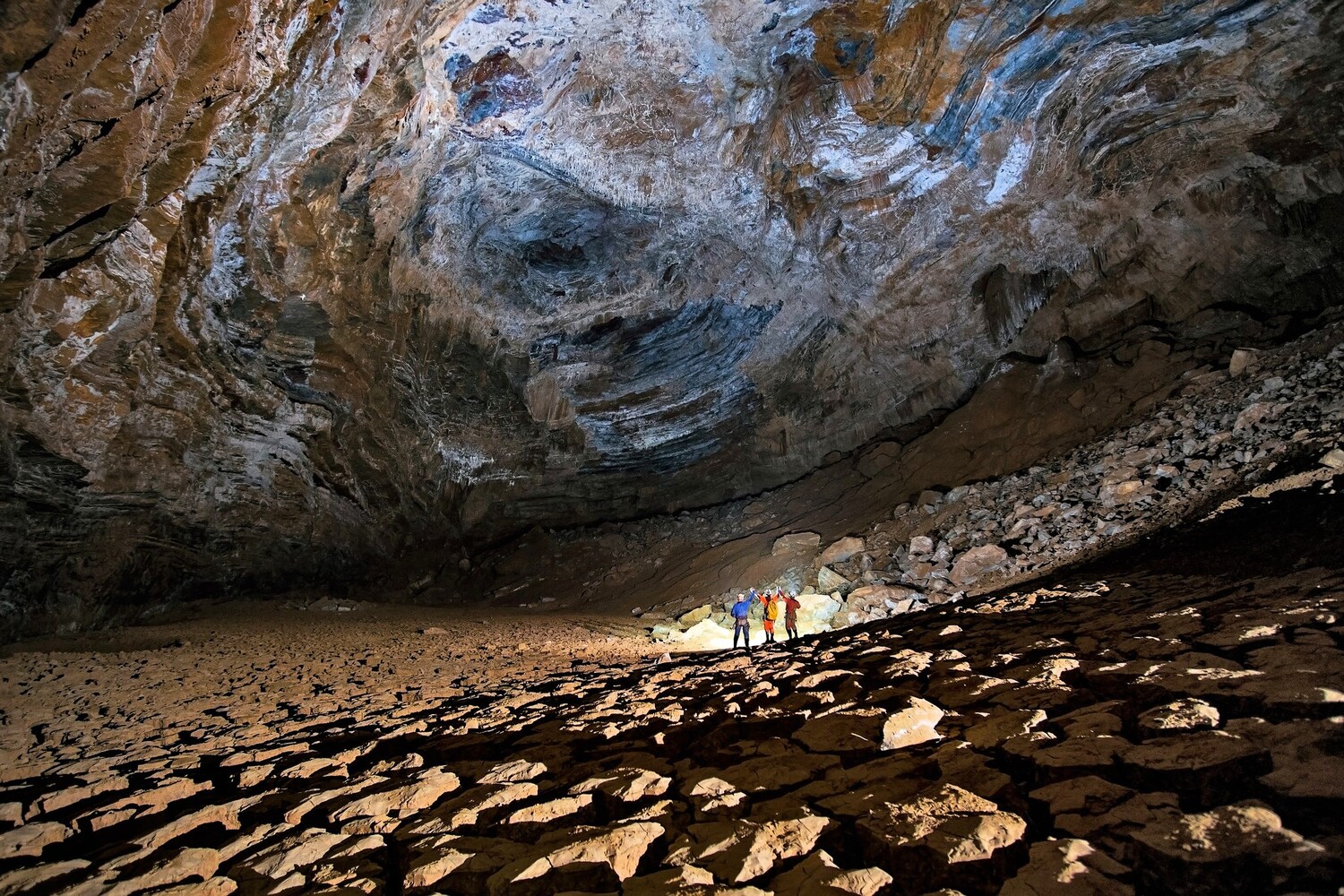
Cavers exploring a large chamber inside Sistema Huautla. Source: Flickr
A landmark expedition in 1994, lasting an incredible 135 days, involved 44 cavers mapping different sections and identifying an upstream tunnel that led to the only known exit. Another major exploration in 2013 set a new record depth at 1,545 meters. Since then, annual expeditions have continued to push the boundaries of the cave’s known depth and length. By 2022, the system’s full current length was reached.
Sistema Huautla remains one of the most challenging and fascinating cave systems in the world, drawing explorers eager to uncover its deepest secrets.
10. Hirlatzhöhle (Austria) - 1,559 meters
With a depth of 1,559 meters, Hirlatzhöhle ranks as the second-deepest cave in Austria after Lamprechtsofen and the tenth-deepest cave in the world. Located in the Dachstein massif near Hallstatt, it stretches over 118 kilometers, making it the third-longest cave in Austria and the 21st-longest cave in the world.
Exploring Hirlatzhöhle is a major challenge due to its hazardous environment. Of its six known entrances, only one is efficiently usable for deep exploration, as the others require climbing steep rock faces or diving through submerged passages.
This limitation results in multi-day expeditions, requiring teams to navigate deep underground through narrow, dangerous routes. Step aids, ladders, and footbridges assist explorers, but dangers persist, including unstable rock formations. In fact, a controlled blast was once carried out to prevent a collapse.
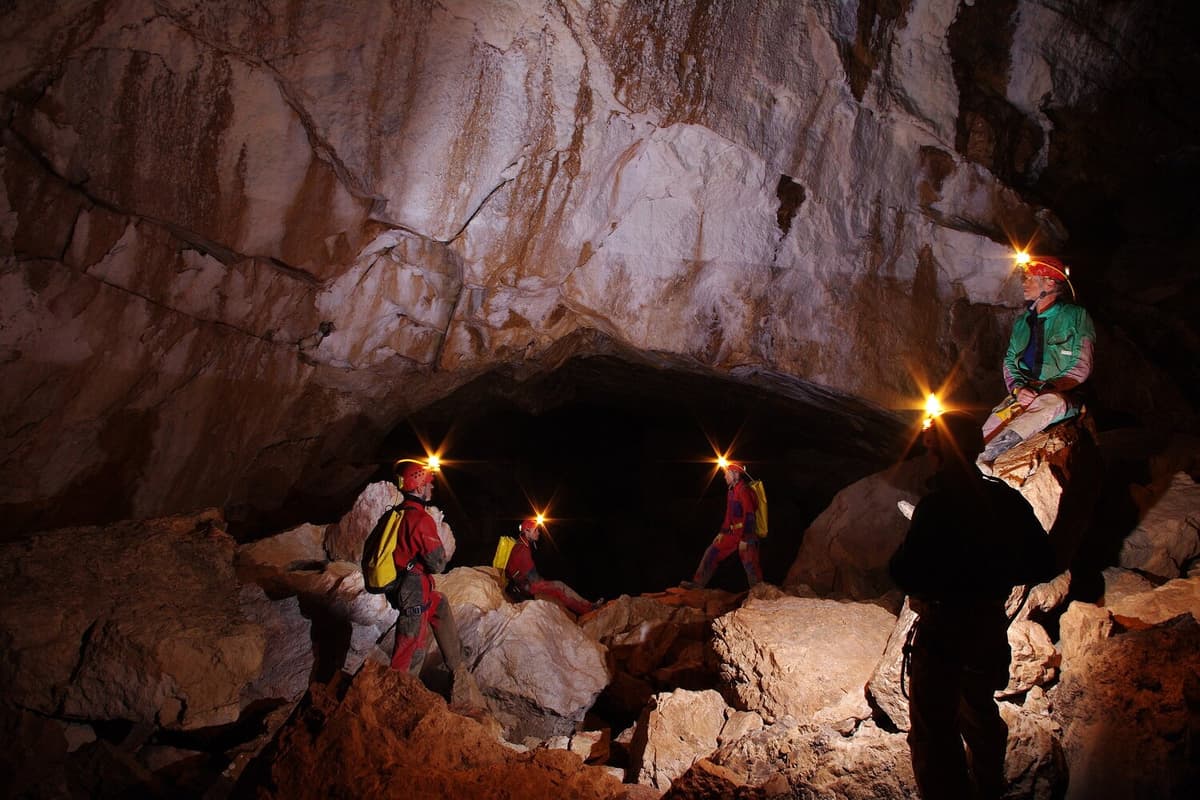
Exploring Hirlatzhöhle is a challenge due to its hazardous environment. Source: Flickr
One of the biggest obstacles to further exploration is Dark Star, a vast vent reaching over 270 meters in height. This section remains largely unexplored due to its unstable rock formations and the extreme difficulty of climbing. Cave diving is impossible to organize, as transporting equipment through the cave’s tight passages takes several days.
Due to seasonal flooding risks, exploration is only possible from January to March. Even with these challenges, cavers continue to push the boundaries of Hirlatzhöhle.
Exploring the world’s deepest caves reveals a whole lot of mystery, danger, and discovery. As expeditions continue, who knows what hidden wonders still await beneath our planet’s surface? The journey underground never ends.

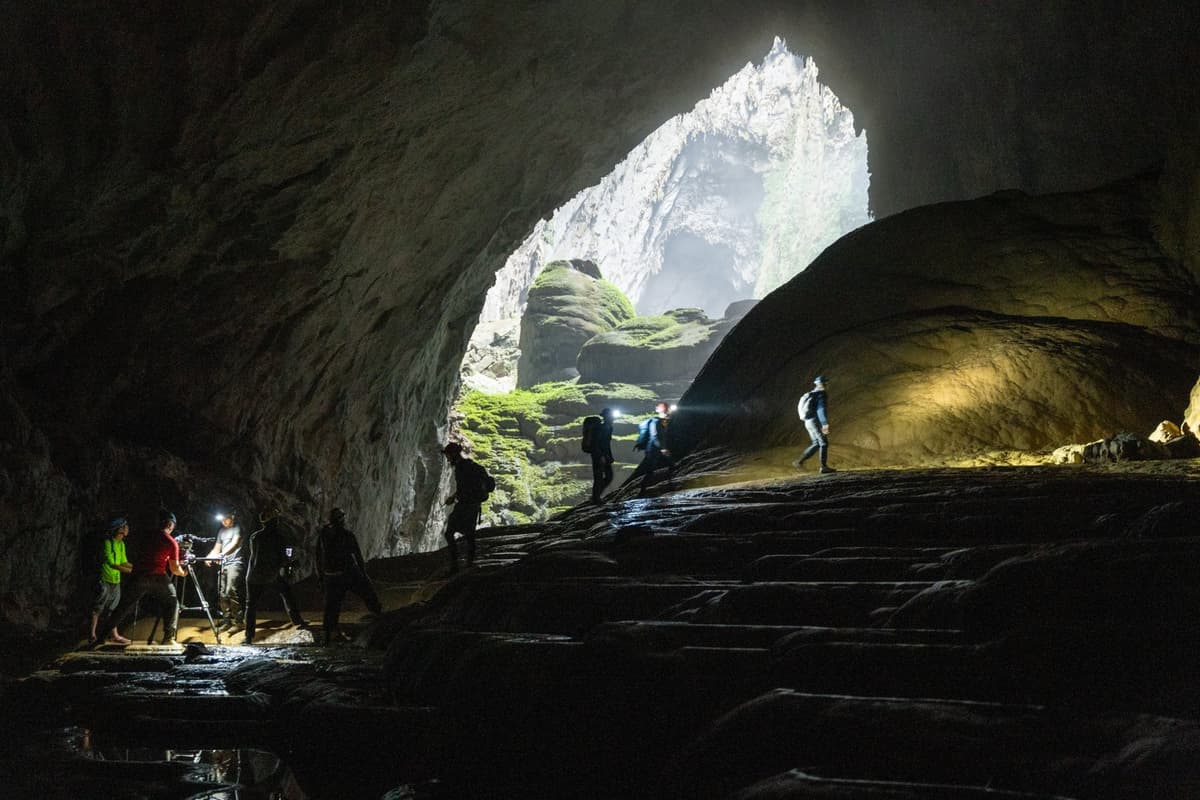
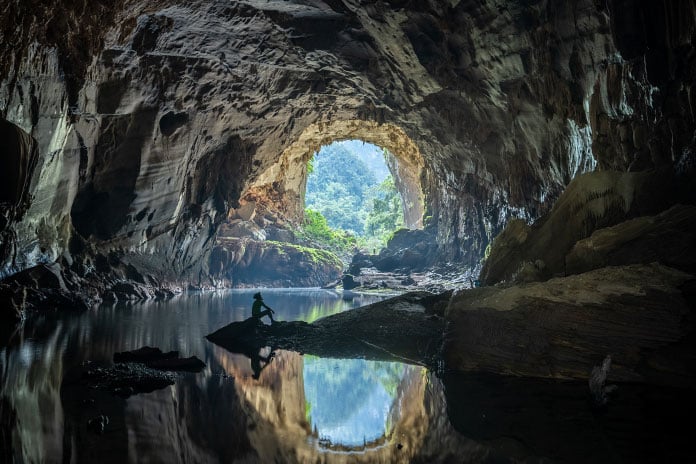
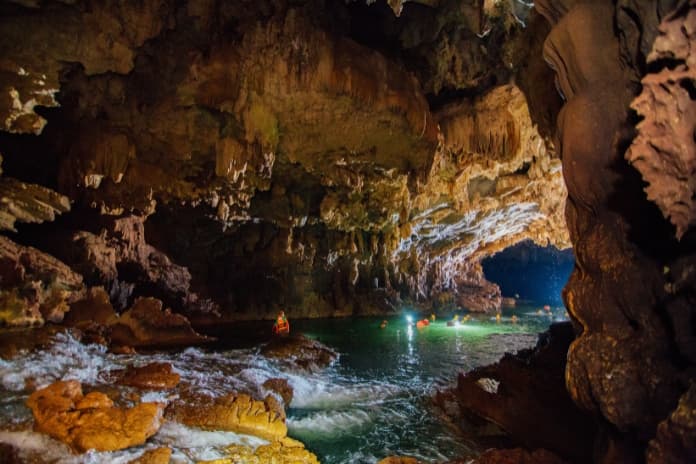
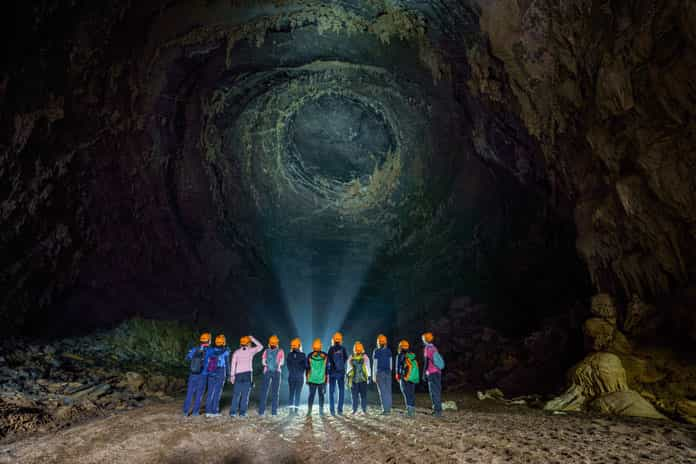
Whether you prefer long treks, camping in a cave, sleeping under the stars in the jungle, swimming underground in river caves, explore the huge dry caves or just taking an exploratory day trip, Oxalis Adventure Tours can provide the right amount of adventure just for you.
__637051782550081035.jpg)
__637051780703588520.jpg)
__637051765075307793.jpg)
__637051774329206026.jpg)
__637740499994967442.jpg)