
Phong Nha Center for Rescue, Conservation, and Development of Creatures: Giving Rare Wildlife a Second Chance
The Phong Nha Center for Rescue, Conservation, and Development of Creatures is dedicated to rescuing, treating, and rehabilitating thousands of endangered wild animals before they are returned to their natural habitats. Although located directly opposite the Phong Nha Botanical Garden, the Center is not open to the general public, as a quiet environment is essential for wildlife rescue, veterinary care, and rehabilitation.
In this guide, Oxalis takes you inside this remarkable wildlife rescue center at the heart of Phong Nha - Ke Bang National Park. You'll discover inspiring rescue stories, learn about the Center's conservation efforts, and find out how to combine a visit to the nearby Phong Nha Botanical Garden to gain a deeper understanding of the ongoing work protecting this UNESCO World Heritage Site.
Overview of the Phong Nha Center for Rescue, Conservation, and Development of Creatures
The Phong Nha Center for Rescue, Conservation, and Development of Creatures is one of the key conservation units within Phong Nha - Ke Bang National Park. It is responsible for rescuing, treating, rehabilitating, and conserving endangered wildlife and rare plant species throughout the region.
Often described as a wildlife rehabilitation center, the facility receives animals that have been confiscated from the illegal wildlife trade, injured by snares or accidents, or voluntarily surrendered by local residents. After receiving medical treatment and behavioral rehabilitation, suitable animals are released back into the wild.
Beyond wildlife rescue, the Center also plays an important role in protecting the biodiversity of the UNESCO World Heritage Site through scientific research, environmental education, and sustainable ecotourism programs that promote public awareness of nature conservation.
Location and Contact Information
The Center for Rescue, Conservation, and Development of Creatures is a public non-business unit operating under the Management Board of Phong Nha - Ke Bang National Park and is partially self-funded in accordance with Vietnamese regulations.
The Center is located in Phong Nha Commune, Quang Tri Province (formerly Phong Nha Town, Bo Trach District, Quang Binh Province), directly opposite the Phong Nha Botanical Garden, making it easy for visitors to combine a trip to the botanical garden with learning about the Park's conservation initiatives.
If you encounter an injured wild animal or need to contact the Center, you can reach them via:
- Wildlife Rescue Hotline: +84 915 659 417
- Email: [email protected]
Main Roles of the Center for Rescue, Conservation, and Development of Creatures
Wildlife Rescue and Rehabilitation
One of the Center's primary responsibilities is rescuing, treating, and rehabilitating endangered wildlife and rare plant species.
Most rescued animals are confiscated from illegal wildlife trafficking cases, collected as evidence during criminal investigations, or voluntarily handed over by individuals and organizations.
Each rescued animal undergoes a comprehensive health assessment, quarantine, medical treatment, and behavioral rehabilitation. Once conservation experts determine that an individual is physically healthy and capable of surviving independently, it is released back into the forests of Phong Nha - Ke Bang National Park, helping restore wild populations.
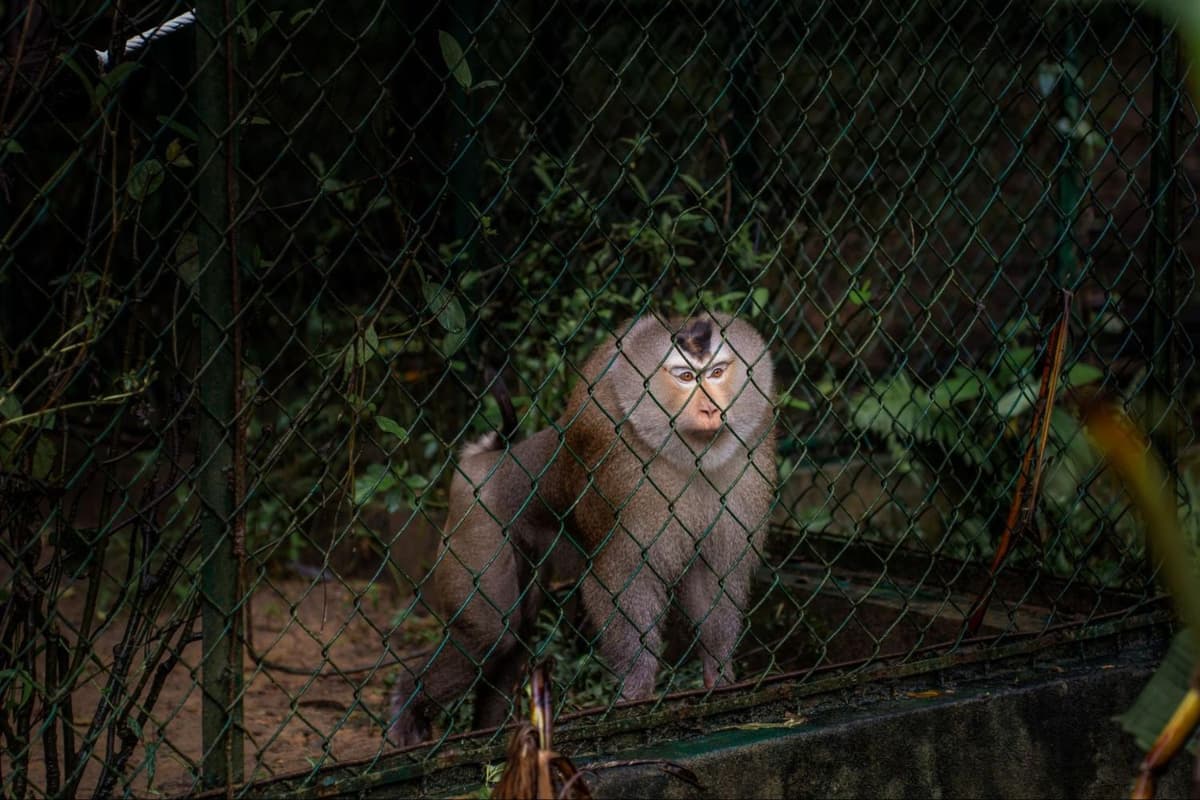
Pig-tailed macaque being cared for at the wildlife rescue center.
Species Conservation and Scientific Research
In addition to wildlife rescue, the Center carries out long-term conservation programs, including captive breeding of threatened species, preservation of valuable genetic resources, specimen collection, and research on the unique ecosystems of the Truong Son Mountain Range.
The Center also collaborates with both Vietnamese and international organizations on scientific research projects, knowledge sharing, and the application of modern conservation techniques to strengthen biodiversity protection.
Environmental Education and Ecotourism
Environmental education is another important mission of the Center. Regular educational programs are organized for students, local communities, and visitors to raise awareness about forest protection and wildlife conservation.
The Center also manages several ecotourism products that combine nature interpretation, visitor experiences, accommodation, and sustainable tourism activities. Through these programs, visitors gain a better understanding of both the extraordinary biodiversity of Phong Nha - Ke Bang and the conservation efforts taking place behind the scenes.
Facilities and Conservation Areas
The Management Board of Phong Nha - Ke Bang National Park has assigned the Center to manage three major conservation areas:
- Phong Nha Botanical Garden, which preserves and showcases native plant species.
- Nui Doi Semi-wild Release Zone, where rescued animals regain their natural behaviors before release.
- Animal Rescue Station, where animals receive veterinary care, rehabilitation, and long-term monitoring.
These facilities include specially designed enclosures and habitats for different groups of wildlife, including primates, birds, turtles, reptiles, and many other native species. Each enclosure is designed to minimize stress while providing an environment that supports physical recovery and behavioral rehabilitation.
Supported by experienced conservation staff and purpose-built facilities, the Phong Nha Center for Rescue, Conservation, and Development of Creatures has become one of the most important institutions in the biodiversity conservation network of Phong Nha - Ke Bang National Park. Its ongoing efforts continue to protect endangered wildlife while preserving the outstanding natural values of this UNESCO World Heritage Site.
Key Wildlife Species and an Impressive Rescue Success Rate
The Phong Nha Center for Rescue, Conservation, and Development of Creatures is one of the leading wildlife rescue facilities in Central Vietnam. Every year, the Center receives numerous endangered animals that have been illegally traded, kept in captivity, or injured in the wild. After receiving professional care and rehabilitation, animals that meet release criteria are returned to their natural habitats. The Center's long-standing achievements demonstrate the effectiveness of combining wildlife rescue with long-term conservation.
A Wildlife Rescue Success Rate of Over 90%
Wildlife rescue requires specialized expertise, years of experience, and extraordinary patience. Most animals arriving at the Center are severely weakened, injured, or have spent years in captivity, making rehabilitation both challenging and time-consuming.
Despite limitations in infrastructure and resources, the Center has consistently maintained an outstanding rescue success rate. Between 2015 and 2020, nearly 90% of rescued animals were successfully treated and released back into the wild. In recent years, that figure has increased to more than 93%, reflecting the expertise of the veterinary team and the effectiveness of the Center's rehabilitation protocols.
A Comprehensive Rehabilitation Process
Every rescued animal follows a carefully designed rehabilitation program to maximize its chances of survival after release.
Upon arrival, each individual is registered, given a complete health examination, and placed in quarantine to prevent disease transmission. Throughout treatment, veterinarians closely monitor the animal's condition and perform a range of diagnostic procedures, including physical examinations, laboratory testing, ultrasound imaging, and endoscopy whenever necessary.
Animals that have spent extended periods in captivity or lost their natural survival instincts undergo an additional behavioral rehabilitation program. After recovering physically, they are transferred to semi-wild enclosures, where they gradually relearn essential skills such as foraging, climbing, hunting, or flying. Only after conservation specialists determine that an animal can survive independently is it approved for release back into the forests of Phong Nha - Ke Bang National Park.
Endangered Wildlife Protected by the Center
The Center cares for a remarkable diversity of wildlife, ranging from large mammals and primates to rare birds, reptiles, and freshwater turtles.
Large mammals and primates
Among the Center's most notable residents are 7 Indochinese tigers, rescued from an illegal wildlife trafficking case. As one of the world's most endangered tiger subspecies, these animals require specialized long-term veterinary care and dedicated facilities.
The Center also regularly rescues some of Vietnam's rarest primates, including the Ha Tinh Langur, an endemic species of the Truong Son Mountains and an iconic symbol of Phong Nha - Ke Bang National Park. Other rescued primates include the Red-shanked Douc Langur, Stump-tailed Macaque, Northern Pig-tailed Macaque, Rhesus Macaque, Northern Slow Loris, and Pygmy Slow Loris. Many of these animals have successfully regained their natural behaviors and have been released back into the wild.
Rare birds
The Center also provides care for a variety of threatened bird species, including the Great Hornbill, Crested Serpent Eagle, Grey-faced Buzzard, Green Peafowl, and Grey-backed Scops Owl.
Birds rescued from illegal wildlife trafficking or suffering from injuries receive veterinary treatment and flight rehabilitation before conservation specialists evaluate their suitability for release.
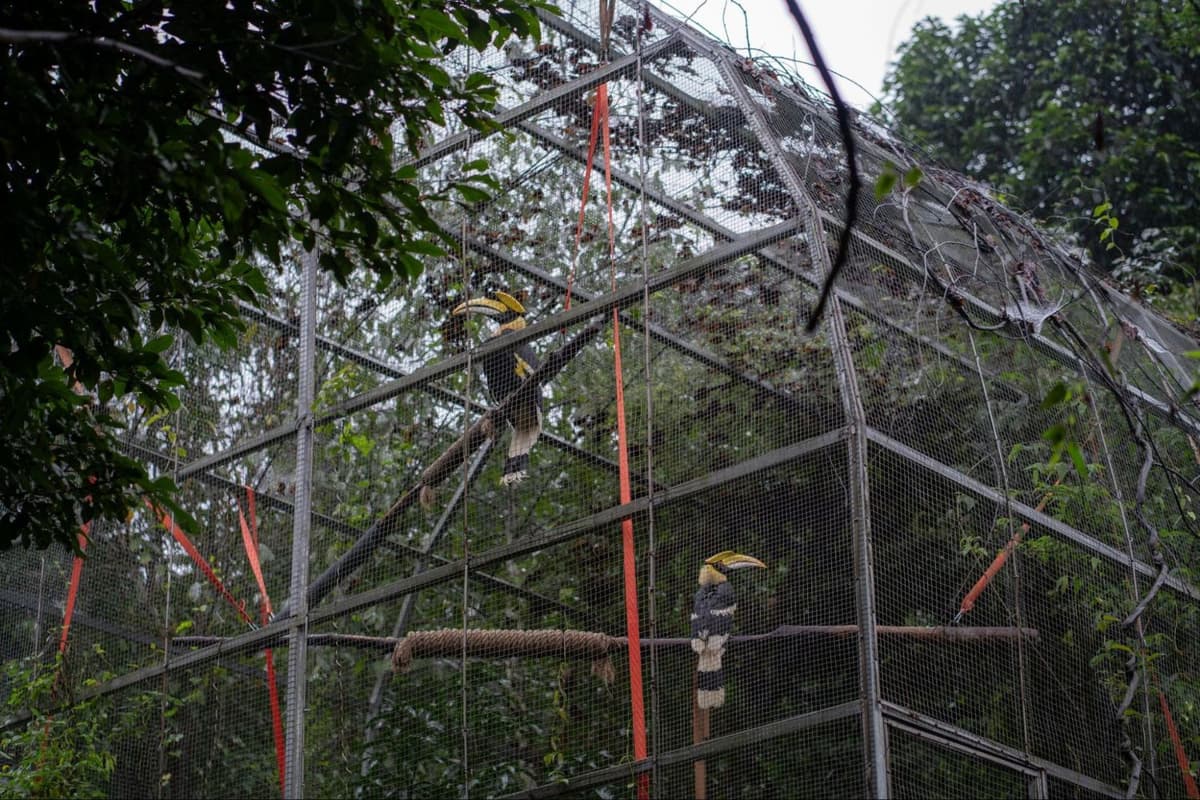
Rare Indochina Great Hornbill safely cared for in the sanctuary.
Reptiles and endangered turtles
The Center is also home to numerous threatened reptiles, including the Reticulated Python, Burmese Python, King Cobra, and Clouded Monitor Lizard. In addition, conservation efforts focus on several endangered turtle species, such as the Asian Leaf Turtle, Indochinese Box Turtle, Big-headed Turtle, and the Central Vietnamese Box Turtle, one of Vietnam's most threatened freshwater turtle species.
These animals face increasing pressure from habitat loss, illegal hunting, and the wildlife trade. Through rescue, captive conservation, rehabilitation, and carefully managed releases, the Phong Nha Center for Rescue, Conservation, and Development of Creatures plays a vital role in protecting the biodiversity of Phong Nha - Ke Bang National Park and the wider Truong Son Mountain Range.
Inspiring Wildlife Rescue Stories from the "Wildlife Hospital"
Behind the impressive rescue statistics and successful releases are countless stories that few visitors ever hear. Every animal brought to the Phong Nha Center for Rescue, Conservation, and Development of Creatures has its own story. Some were rescued from the illegal wildlife trade, others spent years as pets, while many arrived suffering from severe injuries caused by snares or human activities.
For the Center's veterinarians, wildlife keepers, and conservation staff, the work goes far beyond medical treatment. They spend sleepless nights keeping newborn animals alive, devote months to helping primates regain their natural instincts, and care for large predators that will never be able to return to the wild. These remarkable stories have earned the Center the nickname of a true "wildlife hospital."
Chung, the Pig-tailed Macaque Who Refused Freedom Three Times
Among the thousands of animals rescued over the years, none is more famous than Chung, a male Northern Pig-tailed Macaque weighing nearly 18 kilograms.
Chung was voluntarily surrendered by local residents from the Viet Trung Farm after spending many years in captivity. Having lived alongside humans for so long, he had almost completely lost his natural survival instincts.
During his first months at the Center, Chung was known as the "troublemaker." Stressed and unfamiliar with life in a natural environment, he frequently attacked his caretakers, injuring five staff members with bites and scratches.
What surprised the conservation team even more was what happened after his rehabilitation. The Center attempted to release Chung back into the forest on three separate occasions. During one release, staff even used mild sedation to reduce stress during transportation. Yet only two days later, Chung somehow found his way back to the rescue center.
The second and third attempts ended exactly the same way. Instead of disappearing into the forest, Chung quietly returned to the familiar enclosure where the people who had cared for him were waiting. The staff eventually realized that years of captivity had left him without the skills needed to survive independently. Releasing him again would likely result in starvation or conflict with wild macaque troops.
Today, Chung lives permanently in the Center's semi-wild enclosure. There is also a humorous ending to his story. After being paired with a female macaque, the once aggressive "boss" became noticeably calmer. Staff jokingly say that Chung has become famous for being "afraid of his wife," bringing moments of laughter to an otherwise demanding profession.
A Winter Night Spent Saving 2 Baby Northern White-cheeked Gibbons
One of the most unforgettable memories for the Center's long-serving staff dates back to the winter of 2009. Forest rangers brought in two Northern White-cheeked Gibbon infants that had been rescued from wildlife poachers. Both were extremely young and suffering from dehydration, malnutrition, and the loss of their mother's care.
That night, temperatures in Phong Nha dropped sharply. One of the infants became so weak that it barely responded to stimulation. Fearing that the young gibbon would not survive in a regular incubator, veterinarian Tran Ngoc Anh carried it into his own room. Throughout the freezing night, he wrapped the infant in blankets, used his own body heat to keep it warm, carefully monitored its breathing, and bottle-fed it small amounts of milk.
Almost no one slept that night. Their dedication paid off. After several weeks of intensive care, both young gibbons gradually regained their strength, learned to climb, forage, and behave naturally once again. When the day finally came to release them into the forest, hearing their calls echo through the jungle became the greatest reward for everyone involved in saving their lives.
The Remarkable Recovery of 7 Indochinese Tigers
One of the Center's greatest conservation challenges began in 2022, when 7 Indochinese Tigers were transferred from Nghe An Province. The tigers had been rescued after authorities dismantled an illegal wildlife breeding and trafficking operation in August 2021.
When they first arrived, each tiger weighed only 50 to 60 kilograms. Having spent their early lives in captivity, they were underdeveloped, physically weak, and lacked normal movement and behavioral development.
To provide appropriate long-term care, the Center built specialized enclosures of approximately 26 square meters for each tiger, complete with insulated roofing, swimming pools, and exercise areas. Their diets were carefully planned and consisted of beef, pork, chicken, and rabbit to meet their nutritional needs at every stage of development.
More than three years later, the transformation has been extraordinary. Several tigers now weigh between 120 and 160 kilograms, measure over 1.5 meters in body length, and display the powerful physique and striking coat typical of healthy Indochinese Tigers.
Although they remain natural predators, they have become accustomed to the daily routines of their caretakers. Veterinary staff can now conduct health observations from close range using specially designed enclosures without causing unnecessary stress to the animals.
Because they were raised in captivity and never developed natural hunting skills, these tigers cannot be released back into the wild. Instead, they will spend the rest of their lives under the Center's care, serving as living reminders of the devastating consequences of illegal wildlife trafficking and the importance of conservation.

Indochina tiger recovering its health at the center's specialized rescue area.
Visitor Guide to the Center for Rescue, Conservation, and Development of Creatures Phong Nha and Phong Nha Botanical Garden
Location and How to Get There
The Center for Rescue, Conservation, and Development of Creatures is located directly opposite the Phong Nha Botanical Garden, just 20 meters away. From the Botanical Garden entrance, visitors can easily see the Center across the road.
However, the Center for Rescue, Conservation, and Development of Creatures Phong Nha is not open to the general public. Restricting public access helps provide the quiet environment needed for wildlife treatment, rehabilitation, and conservation.
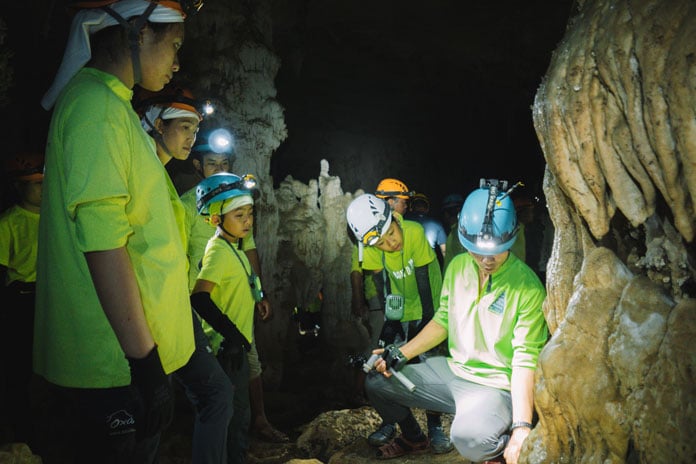
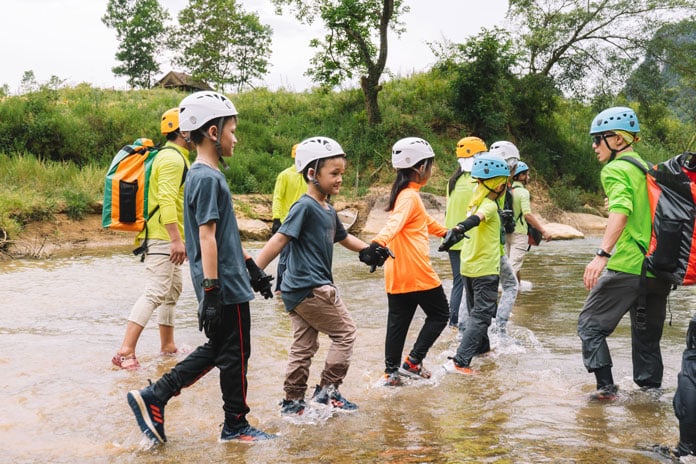
One of the few opportunities to visit the Center is by joining the Hang Ba Deep Jungle Expedition, operated by Oxalis Adventure. Developed from more than a decade of experience in combining adventure tourism with conservation, and with guidance from UNESCO Vietnam, the International Union for Conservation of Nature (IUCN), and the Management Board of Phong Nha - Ke Bang National Park, this expedition takes travelers deep into the Park's strictly protected core zone, an area rarely visited by people.
Built on the principle that conservation comes first, the expedition offers far more than cave exploration. It gives visitors a deeper understanding of biodiversity conservation and the ongoing efforts to protect one of Vietnam's most important ecosystems. On the first day of the journey, participants visit the Center for Rescue, Conservation, and Development of Creatures Phong Nha to learn about wildlife rescue, veterinary care, and rehabilitation before continuing their trek into the rainforest and exploring Hang Ba Cave.
For visitors interested in experiencing the biodiversity of Phong Nha - Ke Bang National Park, the Phong Nha Botanical Garden is the best alternative. The garden features scenic walking trails where visitors can discover native plants, waterfalls, and wildlife in their natural habitat.
Located approximately 12 km from Phong Nha Town, the Botanical Garden can be reached in around 20 minutes by car or motorbike.
Opening Hours and Entrance Fee
Phong Nha Botanical Garden is open daily from 7:00 AM to 5:00 PM.
Admission fees are:
- Adults: VND 80,000
- Students: VND 40,000
- Children under 1.3 meters: Free
Visitors can choose from several walking routes based on their available time and fitness level:
- Short Trail (30-60 minutes): Specimen Exhibition House → Gio Waterfall (30 meters high)
- Medium Trail (70-90 minutes): Specimen Exhibition House → Vang Anh Lake → Gio Waterfall
- Long Trail (2-3 hours): Includes all attractions above, plus the century-old Vietnamese Hopea tree and Panorama Hill.
Tips for visiting Phong Nha Botanical Garden:
- The best time to visit is from December to August. Visitors traveling between September and November should be prepared for heavy rain and slippery trails.
- For the best chance of spotting wildlife such as monkeys, birds, and squirrels, start your hike between 7:00 AM and 8:00 AM.
- Wear hiking shoes with good traction and bring insect repellent, drinking water, and light snacks, especially if you plan to complete the longer trails.
For detailed information about trekking routes, entrance fees, maps, and practical travel tips, read our complete guide: Phong Nha Botanical Garden.
Whether you prefer long treks, camping in a cave, sleeping under the stars in the jungle, swimming underground in river caves, explore the huge dry caves or just taking an exploratory day trip, Oxalis Adventure Tours can provide the right amount of adventure just for you.