Floating houses in Tan Hoa Village: From flood adaptation to a tourism highlight
The floating houses of Tan Hoa Village symbolize the transformation of a place once known as the “flood basin”. For generations of residents, the rainy season meant floodwaters rising as high as the rooftops. Whole families would climb into the nearby mountains and live under tarpaulin shelters in the wind and rain, anxiously watching the water level rise and hoping their homes and livestock pens would not be lost to the flooding.
Under these conditions, Tan Hoa developed floating houses, bringing hope for a safer life during the annual flooding season. From simple floating rafts, the design has been continually improved to help residents adapt to local weather conditions. Today, floating houses help residents live with seasonal flooding while opening up tourism opportunities, creating livelihoods, and increasing incomes for many families in Tan Hoa.
Tan Hoa Village and the challenges of its “flood basin” terrain
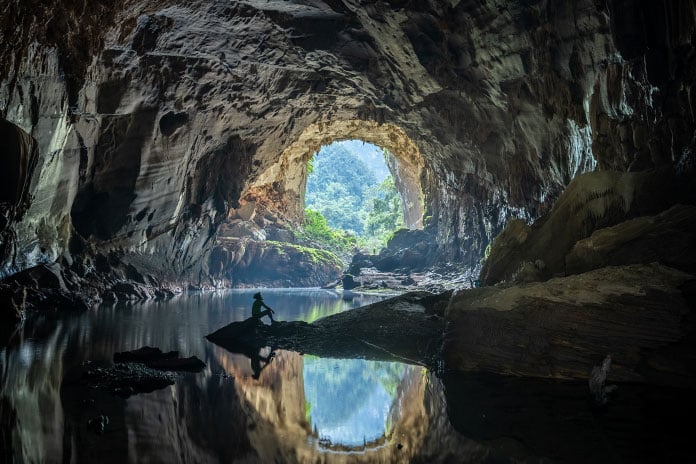
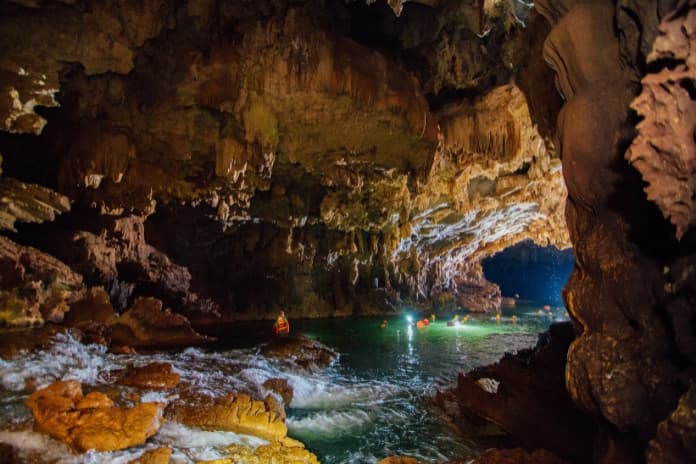
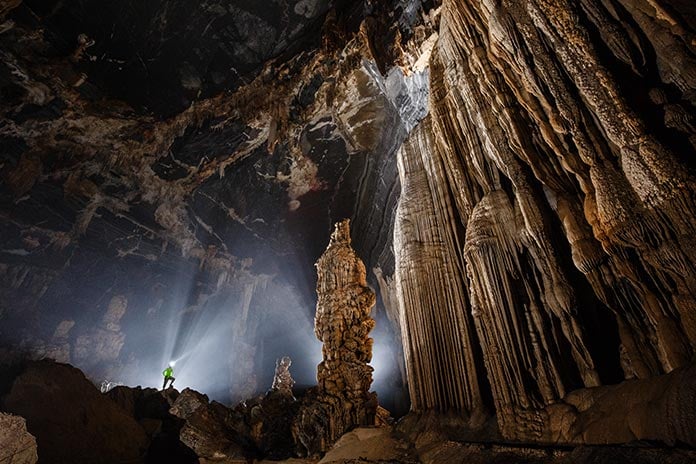
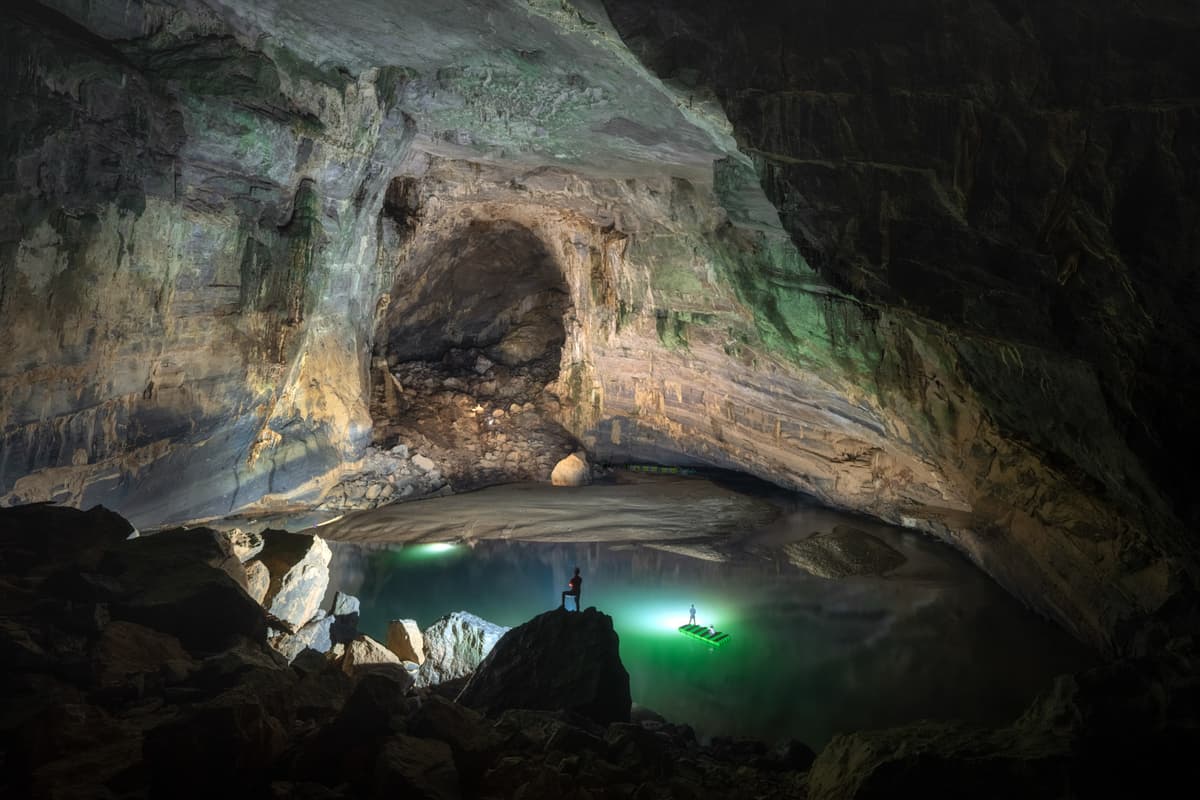
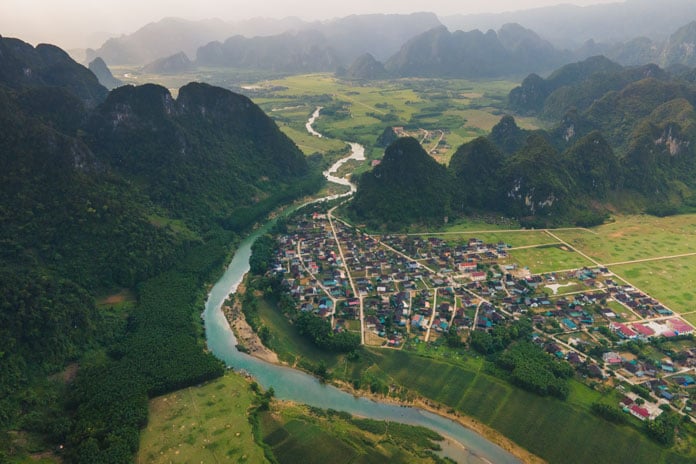
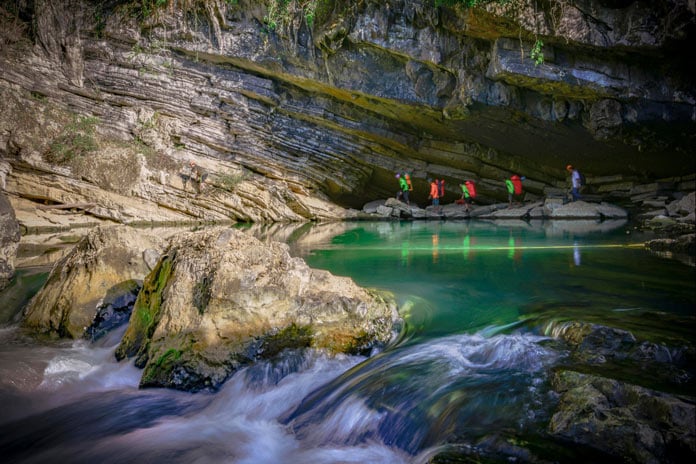
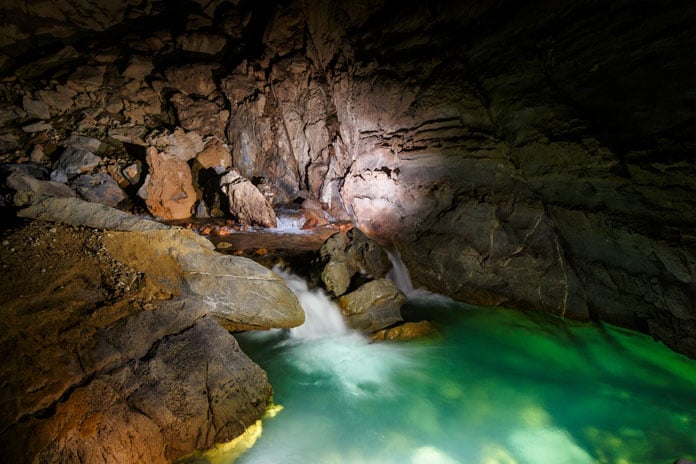
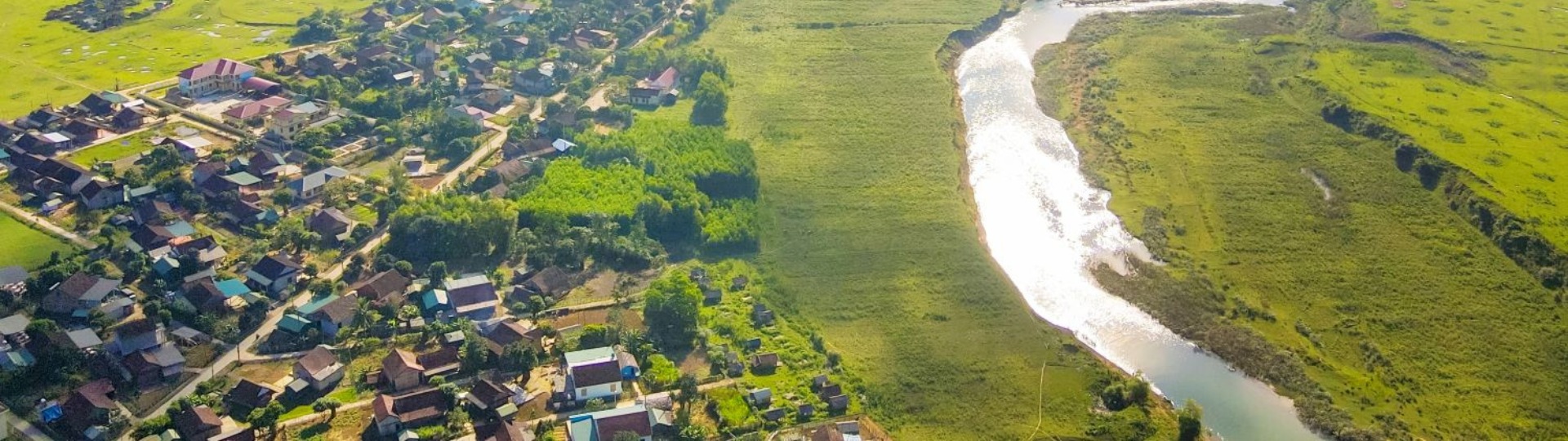
Tan Hoa Village home to the Nguon people, is located in Kim Phu Commune, Quang Tri Province (formerly Tan Hoa Commune, Minh Hoa District, Quang Binh Province, before the provincial merger). The village lies in a broad valley surrounded by limestone mountains, with the winding Rao Nan River leading to the Tu Lan cave system.
Covering about 71.8 km² with nearly 3,600 residents (around 715 households), Tan Hoa is a community whose daily life is closely tied to nature and traditional farming. Every rainy season, from September to November, water from upstream collects in the valley but can only drain out through the caves at its far end, which causes deep and prolonged flooding. Residents have to carry food, livestock, and valuable belongings up into the mountains, where they set up tents and tarpaulin shelters and wait for the water to recede.
Over the years, Tan Hoa Village has lived through countless seasons of inundation. For many people, the historic flooding of 2010 remains an unforgettable milestone. The water submerged large areas and caused heavy losses across the country, leaving 245 people dead, 50 missing, and more than 360 injured.
Property damage was estimated at 15 trillion VND (about 790 million USD at the 2010 exchange rate). Thousands of houses were destroyed, and hundreds of thousands more were damaged. Agriculture was also badly hit, with hundreds of thousands of hectares of crops waterlogged and large numbers of livestock and poultry lost to the floodwaters.
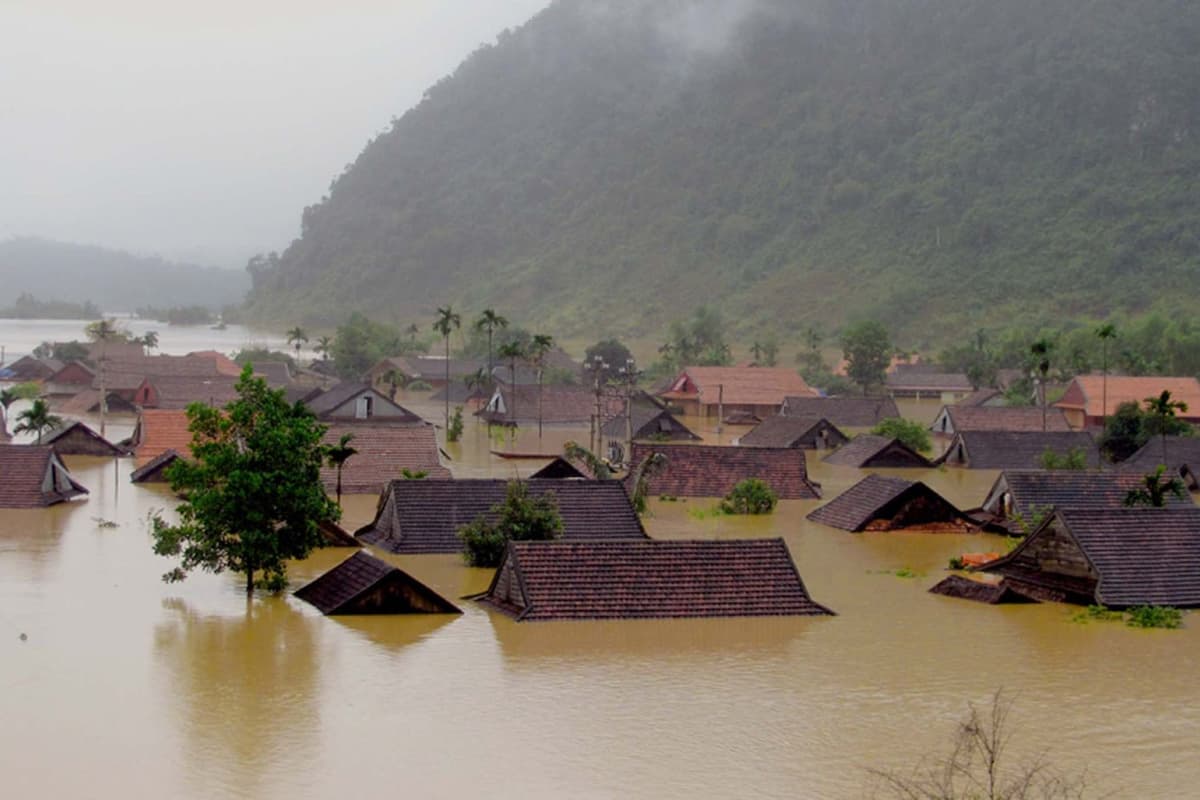
The historic floods of 2010 submerged Tan Hoa Village, causing extensive property damage.
Tan Hoa Village was also severely affected, with water levels rising to 12 metres and submerging more than 600 homes. Residents lost almost all their belongings and livestock to the flooding. Since then, the name “flood basin” has become even more closely associated with Tan Hoa.
Recognizing the dangers and unpredictability of natural disasters, local authorities proposed several solutions. For example, relocating Tan Hoa Village and cutting through the surrounding mountains to allow water to drain from the valley. However, residents were reluctant to leave the land their families had called home for generations. The mountain-cutting proposal also proved unfeasible due to its high cost and potential impact on the ecosystem.
Residents began to shift their approach from fighting seasonal flooding to learning to live with it. In 2011, villagers drew inspiration from raft houses on rivers in Vietnam’s Mekong Delta to build their first floating house, an early version of those found in Tan Hoa today. It brought hope to a community long caught in a cycle of working hard, saving what they could, seeking shelter from flooding, and rebuilding their lives from scratch.
How Tan Hoa’s floating house design evolved
The origins of Tan Hoa’s floating houses
For many years, villagers in Tan Hoa had used simple rafts made from wooden planks supported by barrels. They placed poultry, household items, and other belongings on these rafts, covering them with tarpaulins to keep out the rain. The idea drew inspiration from floating fish-farming houses in Vietnam’s Mekong Delta.
After the historic flooding of 2010, many families in Tan Hoa began building similar rafts. They improved the design with a square frame and empty barrels fixed underneath, then placed their belongings on top. At that time, the rafts had no roof. Families simply covered them with tarpaulins to keep the rain off. Better-off households expanded the rafts and added walls and thatched roofs. Families with fewer resources made do with banana trunks or other buoyant tree trunks as a temporary solution.
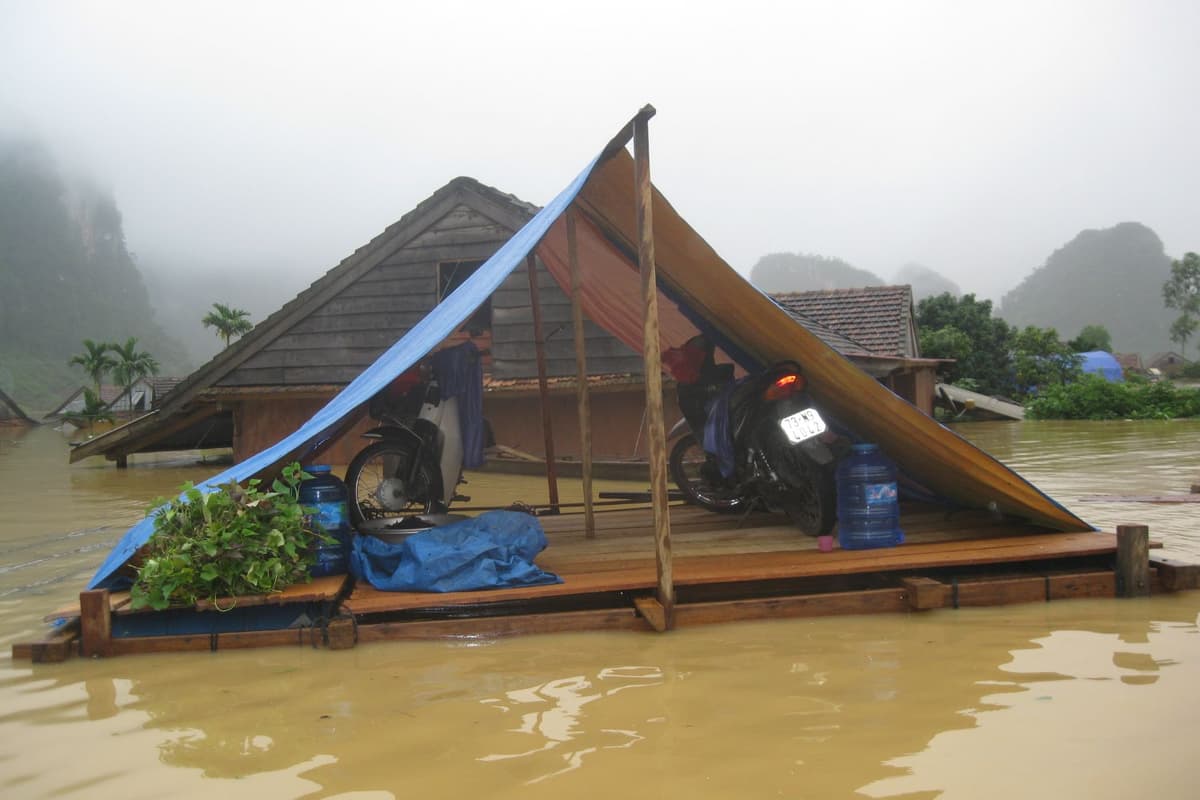
The floating raft was the precursor to Tan Hoa’s floating houses.
During the same flood, Mr Thai Xuan Luc stayed on his raft to watch over his family’s pigs. Seeing how steadily the raft floated on the water, he came up with the idea of turning it into a house sturdy enough for his whole family to live in during the flood season. He later spent nearly 100 million VND (around 4,800 USD at the time) on about 20 barrels and materials such as iron, galvanised wire and corrugated metal sheets. He then designed and built Tan Hoa’s first floating house himself.
During the 2011 flood season, many households had to evacuate as homes across the village went underwater. Meanwhile, Mr Luc’s floating house on the banks of the Rao Nan River stayed safely afloat. The sight caught the attention of people throughout the area and pointed to a new way of adapting to the floods.
Seeing the success of this model, many households began to learn from it and follow suit. Starting with basic rafts, residents reinforced the frames and added walls and roofs so they could stay on them for longer periods. Later, with support from the local authorities, the design was further refined into floating houses with wooden or steel frames. Each covers about 20 m², providing enough space for a whole family to live safely during high water.
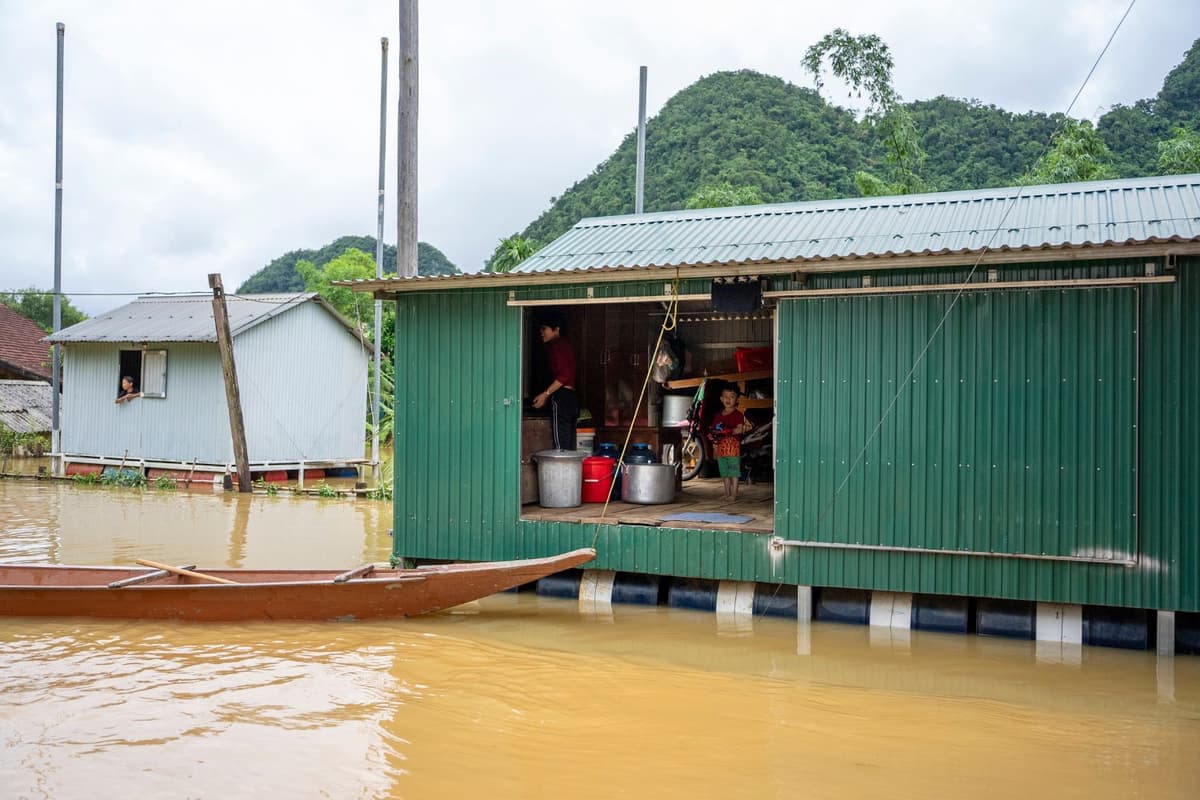
The floating houses have been improved over time, allowing Tan Hoa villagers to live safely during the flooding season.
Tan Hoa’s floating house initiative spreads through the community
At the time, Oxalis Adventure was already running tours to explore the Tu Lan cave system near Tan Hoa Village. Most of the staff supporting these tours were local residents. Through stories shared by these staff members and the local authorities, Oxalis Adventure came to understand the hardships villagers faced every flood season.
The company organised the Tu Lan Race to raise funds for building floating houses for disadvantaged households who could not afford to build their own. Each house covers about 30 m², with enough space for a family of around six to live and store essential supplies.
The steel frame is held in place by a system of anchor posts. The walls and roof are made of corrugated metal sheets, which keep out rain and wind and help retain warmth. When floodwaters rise, the house floats up with the water level, then settles back into its original position as the water recedes. Between 2015 and 2020, through the Tu Lan Adventure Race and contributions from individuals and organisations, Oxalis Foundation helped build 90 floating houses for residents of Tan Hoa.
The effectiveness of the floating house model soon drew interest and support from many other organisations and individuals. To date, more than 650 floating houses have been built in Kim Phu Commune. As a result, every household living in frequently flooded areas now has a safe shelter during the flood season.
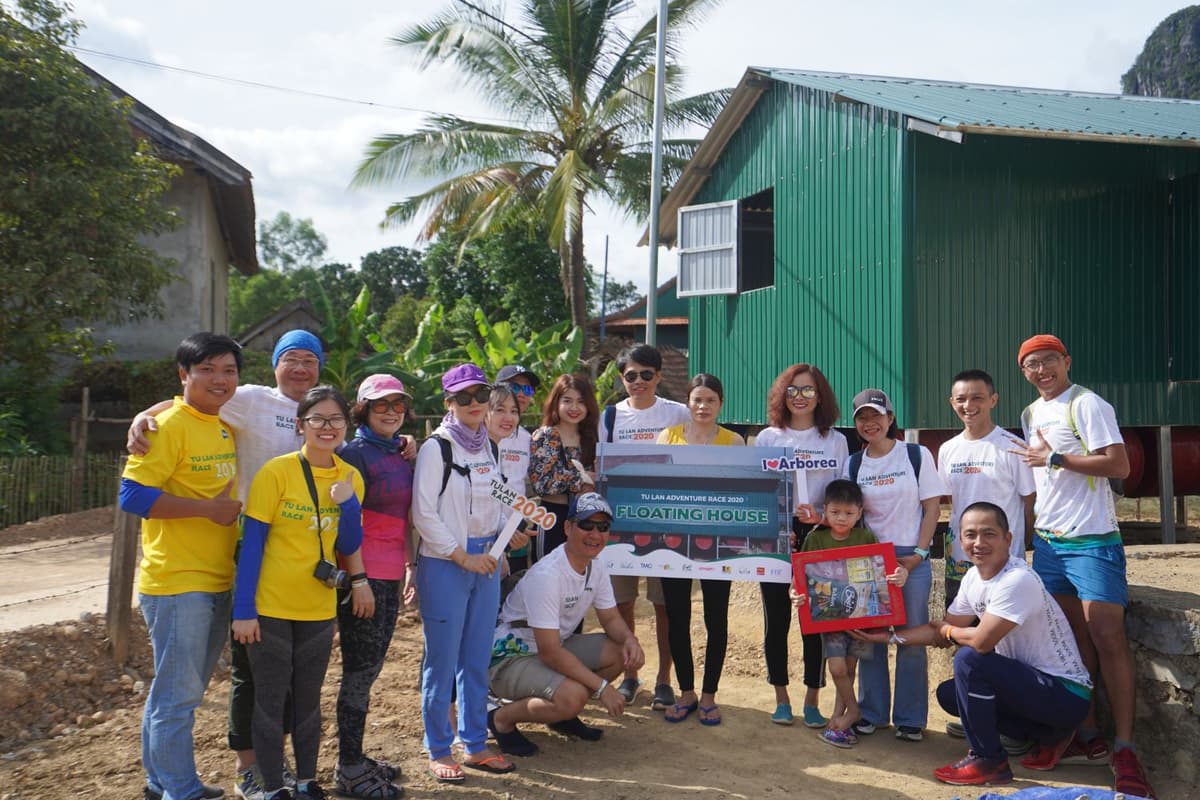
Teams taking part in the Tu Lan Race will meet the local families receiving support to build floating houses.
Tan Hoa Village embraces community-based tourism
The first change: Floating houses spread across the village
Once known as a “flood basin” under the constant threat of seasonal flooding, Tan Hoa has undergone a major transformation as floating houses have become more widespread. When the flooding season arrives, residents move their valuables, food, and enough clean water for seven to ten days into these houses, where the whole family stays. They lead their livestock to higher ground in the mountains and travel by boat each day to cut grass for their buffaloes and cattle.
Floods still return every year, but people no longer look as worried. They go about their daily lives, travelling, trading and carrying on as the waters rise. Beyond helping villagers respond to natural disasters, these floating houses have also laid the foundation for a model of “weather-adaptive tourism”.
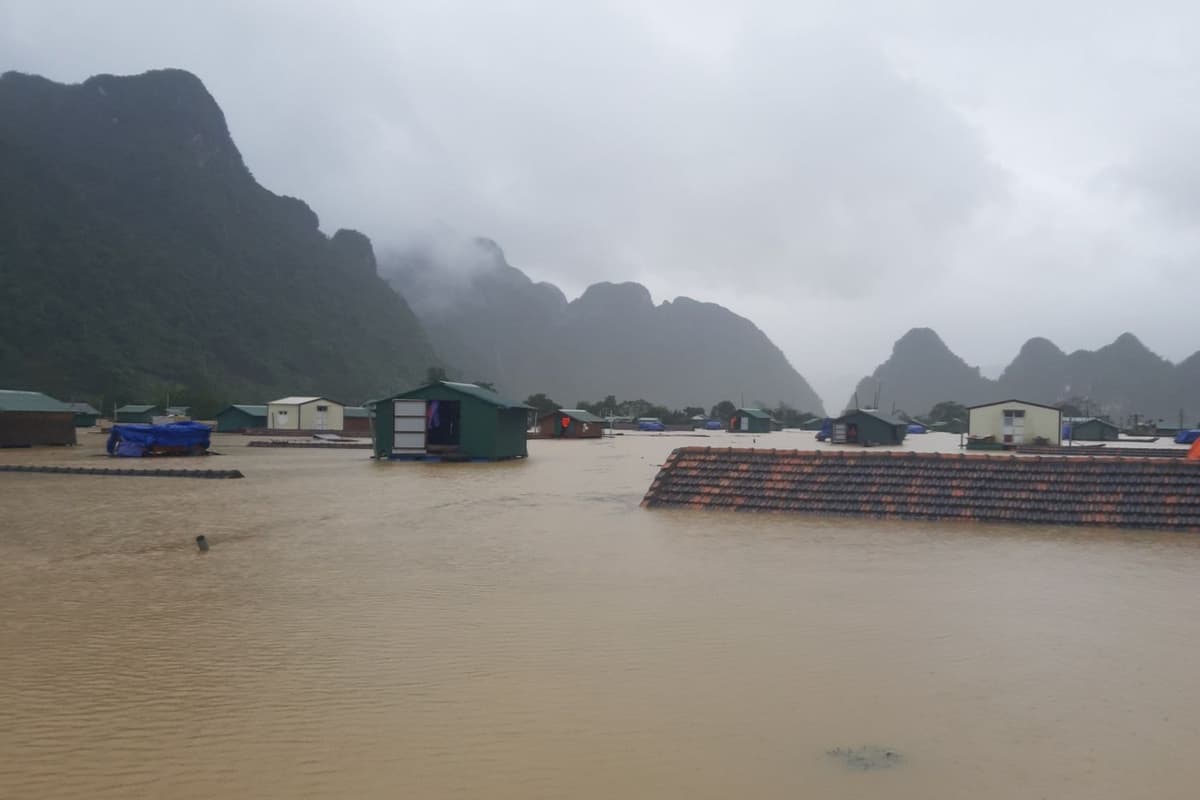
Tan Hoa villagers have replicated the flood-resilient floating house model at minimal cost.
Community-based tourism takes shape in Tan Hoa Village
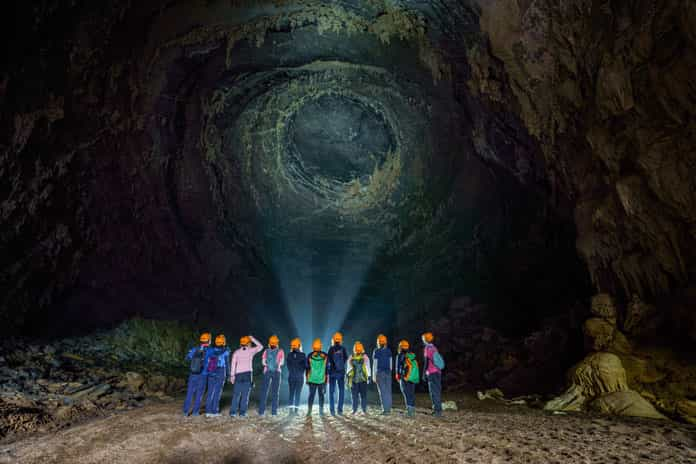
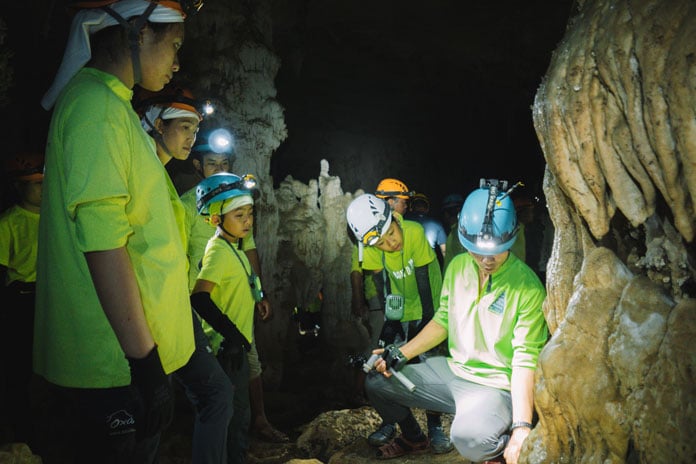
The growth of cave exploration tourism in Tu Lan has created direct and indirect jobs for around 100 households. Residents of Tan Hoa Village now take part in tourism activities and receive training in safety skills, hospitality, cooking and other areas.
Local men work as porters carrying gear for expedition guests, as cooks on tours, or receive specialist training to become safety assistants. Many women work as housekeepers, cleaners and in other service roles. Over time, those with the ambition and ability to advance receive further training for more skilled positions, such as tour guides, safety assistants, operations staff and receptionists.
Tourism-related jobs have given residents a more stable life and brought the beauty of their homeland closer to visitors. More importantly, steady work has encouraged many young people from Tan Hoa to return and build their lives in their home village.
Alongside accommodation and dining services, a local supply chain for clean food has also taken shape, with four households supplying chicken, eggs, and vegetables for the tours and Tu Lan Lodge. Some households also offer village tour experiences, such as visits to VAC farms (Garden, Pond, and Livestock Pen). Others sell OCOP products as souvenirs, which are local specialities certified under Vietnam’s “One Commune One Product” programme.
With floating houses to keep them safe and steady jobs bringing in a reliable income, many people who had left to make a living elsewhere, including Mr Luc, have returned to live and work in their home village. Today, his family is one of the households supplying clean food to Tu Lan Lodge and the cave expedition tours in Tu Lan.
Rural Homestay: A weather-adaptive stay in a floating house
In 2023, Oxalis invested 1.5 billion VND to convert the floating houses of ten local families into Rural Homestay. The initiative gives travelers a closer connection to local life while creating additional livelihoods for residents of Tan Hoa. Each house was upgraded with comfortable beds and mattresses, air conditioning, hot water, and a private bathroom with a wastewater treatment system. It offers a comfortable stay that retains its local character.
Unlike conventional accommodation, Rural Homestays are designed to adapt to the weather conditions unique to Tan Hoa. When floodwaters rise, the houses float with the water level and can continue welcoming guests as usual. This allows visitors not only to stay in local homes but also to experience the way of life of a community that has learned to live with floods - an experience rarely found elsewhere.
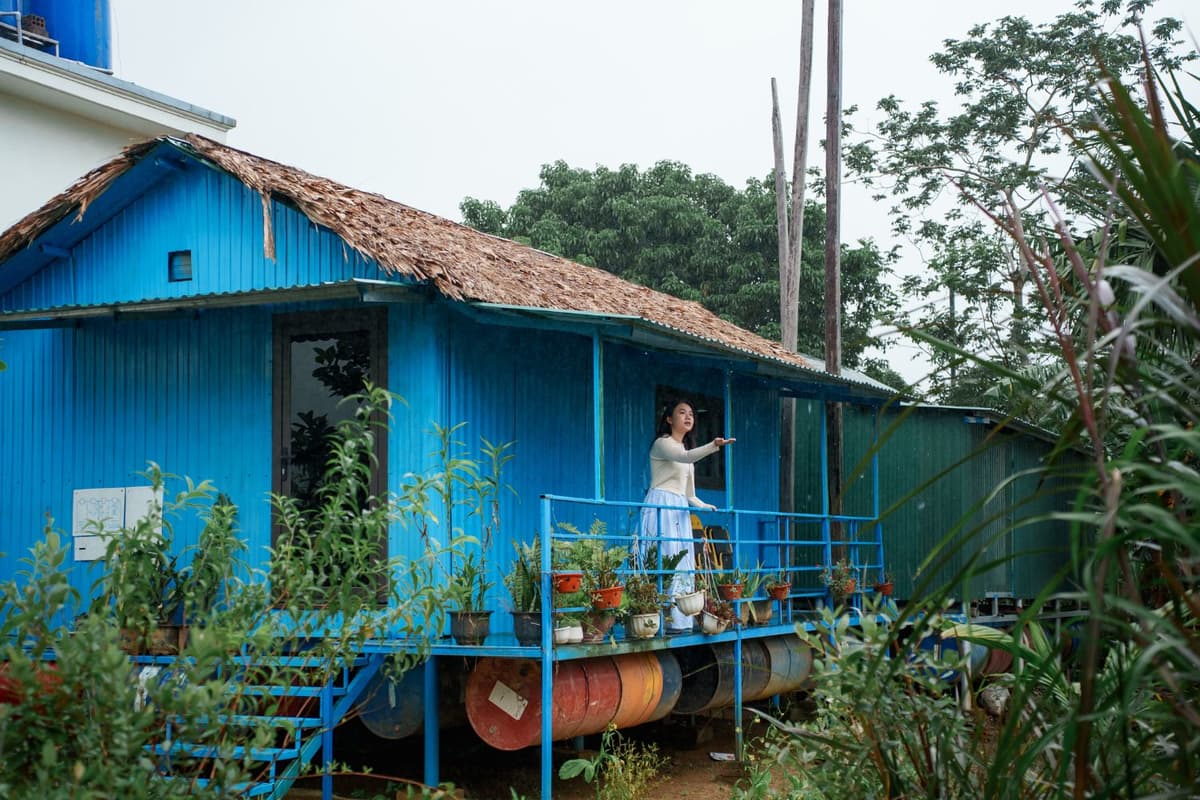
Floating houses have been converted into Rural Homestays, welcoming travelers into local family homes.
To run the homestays, host families receive training in accommodation services, customer care, housekeeping, and guest communication. In early 2026, they also began attending conversational English classes to feel more confident when welcoming international visitors. Once farmers whose lives revolved around their fields, they have gradually become friendly and professional homestay hosts. Today, they take a direct part in community-based tourism from their own homes.
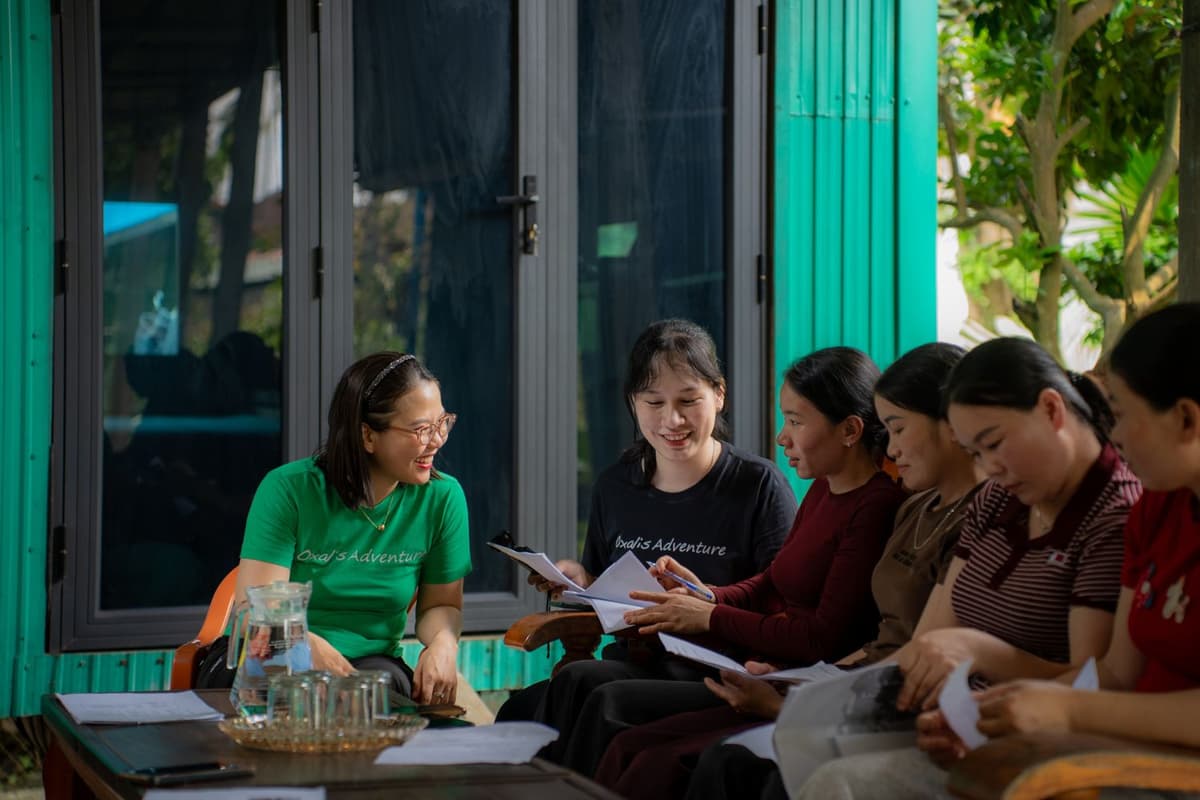
Homestay owners learn English together to communicate with international travelers.
Oxalis assigns guests to the homestay families on a rotating basis, so that the opportunity to take part in and benefit from tourism is shared fairly evenly across the community. A steady flow of visitors from the Tu Lan cave expedition tours has given each household an additional income of 7 to 10 million VND (around 270 to 380 USD) per month. This has helped create sustainable livelihoods and improve living standards in the village.
In the second half of 2026, Oxalis continued to run training courses aimed at helping homestay owners manage their accommodation independently. After completing the training, households can list their own rooms, handle bookings and host guests directly. This marks an important step for the Rural Homestay model. What began as an add-on to cave expedition tours is becoming a community-run accommodation service that can welcome a wider range of travellers. Those wishing to explore Tan Hoa’s rural scenery, learn about local life and spend a night in a floating house can now book through Tu Lan Lodge or contact the homestay owners directly.
For travellers looking to pair this experience with a nature adventure, Oxalis’s Hang Tien - Tu Lan Discovery tour (2 days, 1 night) includes an overnight stay in a floating house in Tan Hoa. After a journey through forests, mountains and caves, guests can rest in a local family’s living space and learn more about how the community adapts to the flood season.
Tan Hoa Village’s remarkable rise
In October 2023, Tan Hoa Village was named one of the Best Tourism Villages 2023 by the United Nations World Tourism Organization (UNWTO). Tan Hoa has since become a leading example of sustainable rural tourism in Vietnam. It also stands out as a model of weather-adaptive tourism in the face of global climate change.
Since 2022, Tan Hoa Village has continued to develop new tourism experiences, such as dinners with local families, Rural Homestays, and cycling tours to explore VAC farms. More than 22 households now take part in community-based tourism as owners of their own tourism products. They are supported along the way by a team of experienced professionals.
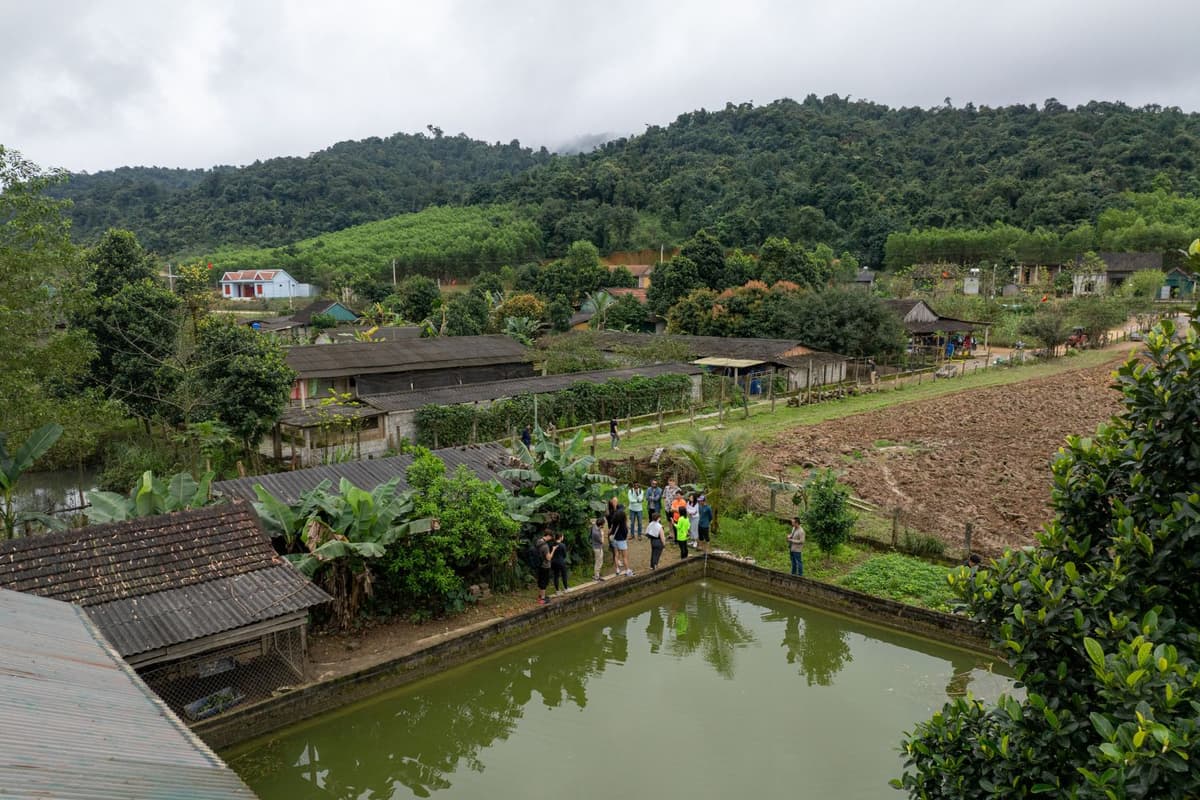
Travelers explore the integrated garden, pond, and livestock farming model with a local guide.
Over 10 years, Tan Hoa’s economy has grown steadily. The poverty rate fell from 85.7% of households in 2010 to 2.6% in 2024. By 2020, 80% of children in Tan Hoa had completed their secondary education. Between 2022 and 2024, 12 local workers received sponsorship to study a tour guiding programme at Saigon Tourism College. Having started out as porters, they have since become tour guides and safety assistants on Oxalis expedition tours.
Looking ahead, floating houses are expected to remain an important part of Tan Hoa’s tourism journey. They will continue to help residents adapt to the flood season while offering visitors a closer look at local life. As community-based tourism grows, these floating houses tell the story of how villagers have overcome the hardships of natural disasters. They also help preserve local cultural identity, create sustainable livelihoods, and open up new opportunities for Tan Hoa in the years to come.
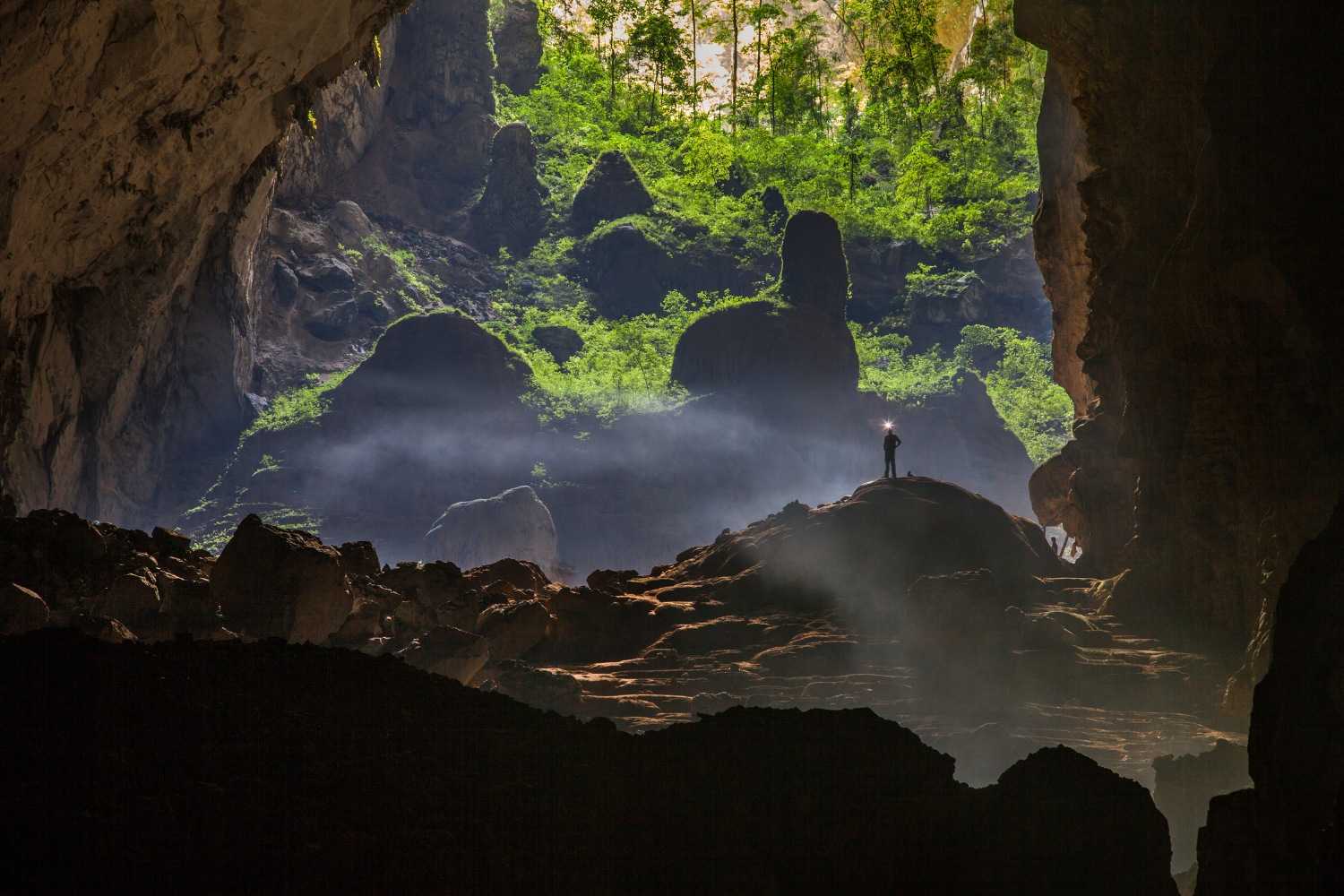

Whether you prefer long treks, camping in a cave, sleeping under the stars in the jungle, swimming underground in river caves, explore the huge dry caves or just taking an exploratory day trip, Oxalis Adventure Tours can provide the right amount of adventure just for you.